The Universe is One Unending Sentence

These early mornings, I’m writing an article about my novel, dissecting how I use language, and explaining the impact of Ernest Fenollosa’s writing about Chinese poetry on my own Vermont book, from the overall arc to the characters’ interior lives. And so on, and so forth…..

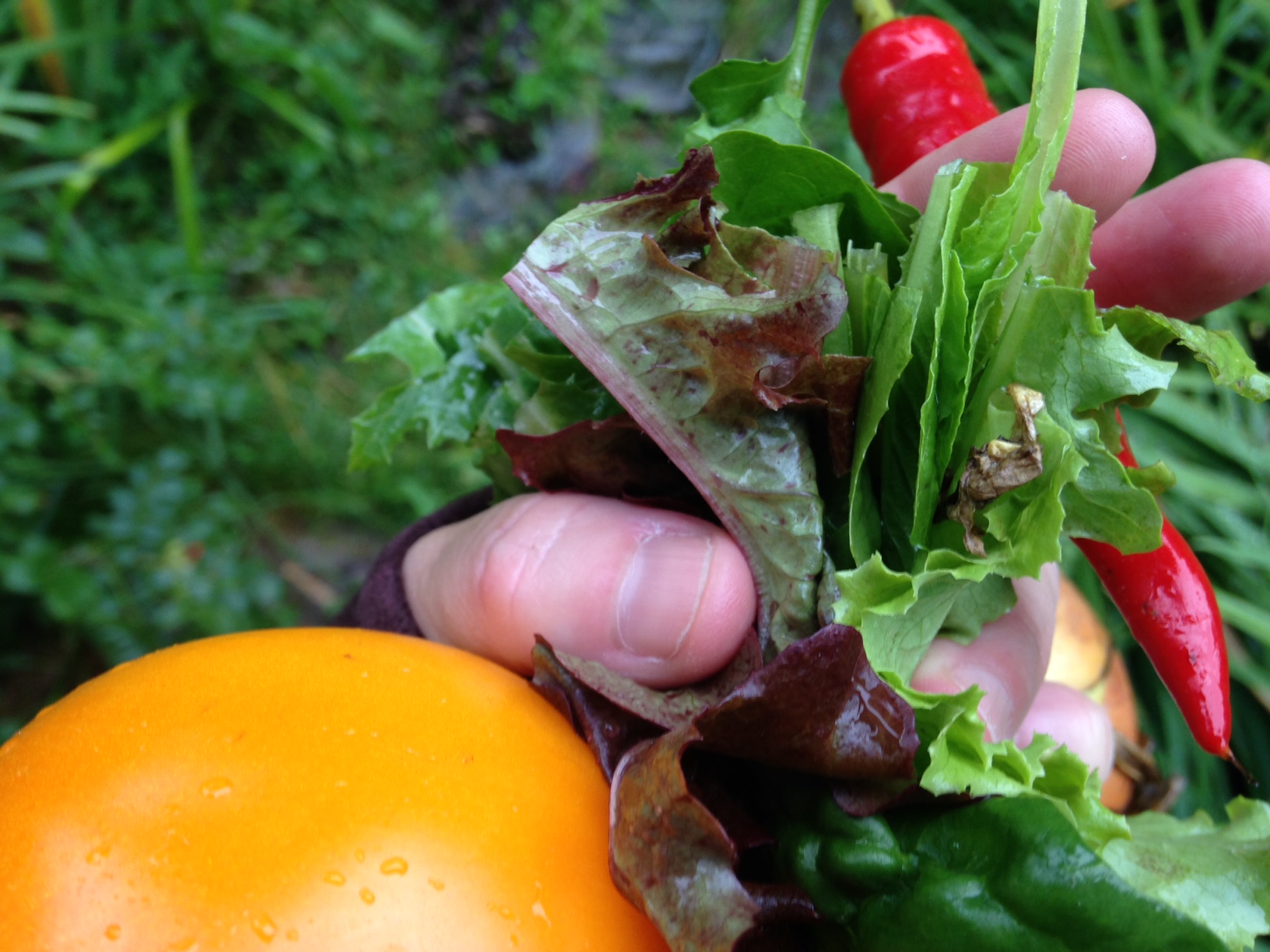
A once-upon-a-time philosophy major, I’m capable of writing up a fury of abstraction, but, really, the gem of Fenollosa’s writing is its concreteness. This afternoon, walking in a foggy rain laced with hues of yellow and red leaves, I picked a cucumber, a brandywine, a crimson red pepper – those jewels of pepper plants keep giving – a handful of mesclun. Separate, discrete things? Or all joined in my arm, in my garden, beneath this misty veil, at this turning place in the season?

The truth is that acts are successive, even continuous; one causes or passes into another…. motion leaks everywhere, like electricity from an exposed wire. All processes in nature are interrelated; and thus there could be no complete sentence …. save one which it would take all time to pronounce.

–– Ernest Fenollosa

IMG_0025

Lady Moon

Small town post office chatter today centered around last night’s eclipse and the remarkably balmy weather. In the quiet night, I had woken my younger daughter from a sound sleep and taken her upstairs to the balcony in my room, where, half asleep yet, she rubbed her eyes and tipped her face up to the heavens. Years from now, I wonder if her memory of this night and the shadow over the rusty moon will be woven in with those strings of her broken dreaming. In the dark that smelled of cut grass and leaves beginning to rot, we stood under the eternally deep sky, the moon so clear her light spilled over our faces. I held my daughter’s warm hand in mine.

…Yet, nothing in nature changes, from that day to this,
(the moon) is still the mother of us all.
I can see the drifting offshore lights,
black posts where the pelicans brood.

And the light that used to shine
at night in my father’s study
now shines as late in mine.

–– Louis Simpson

_MG_2624

This incredibly fantastic photo was taken by Diane Grenkow of Mackville, Vermont, a 19th century mill village.

The Silence Means Something, Too

A few days ago, I inserted Lucille Clifton’s “The Lost Baby Poem.” In graduate school, a professor passed around copies of this poem at the beginning of one workshop. We all sat there, silently, and then a friend of mine began to cry, tears streaming down her face, soundlessly.

My professor cleared his throat and said sadly, Nothing said about this poem is enough said.

My house of females has a lot of talking, but sometimes I remind my daughters that silence can be just as mighty, the absence of words as powerful – for good or ill – as speaking or writing. That sometimes enough is really enough.

To underestimate the appeal of art is to underestimate not only poetry but also human nature. Our hunger for myth, story, and design is very deep…. If we are not in love with poems, the problem may be that we are not teaching the right poems. Yet ignorance of and wariness about art gets passed on virally, from teacher to student. After a few generations of such exile, poetry will come to be viewed as a stuffy neighborhood of large houses with locked doors, where no one wants to spend any time.

–– Tony Hoagland

FullSizeRender

Woodbury, Vermont

Moon Rise

This evening, we finished dinner late, and my older daughter hurried out the door, saying she’d wash the dishes as she tugged on her sweatshirt. The younger daughter rushed, too. Let’s go out, she insisted. Twilight descends rapidly now, and even along our nearly untraveled dirt road it’s too dark for a child to bike in the dark. Independent at ten, she nonetheless walked closely beside me, marveling that her older sister was not afraid. I told her I had been afraid of the dark until I was an adult, and only cured myself by walking back and forth from the sugarhouse to the house in very late nights, in snow and rain and sharp cold. I remember quite clearly how utterly impenetrable I found the dark, and how long it was before my fear lessened, and an even greater time before I welcomed the night as a familiar friend.

I assured my younger daughter she wouldn’t be afraid of the dark forever, either. Walking, we talked about why the songbirds aren’t singing now and about her school monarch butterfly project, and then as we ascended an incline, the moon abruptly appeared from behind the trees, so luminously alive it was like gazing into a pail of fresh milk, luscious with cream. We stopped, shivering a little. As the dusk fattened, my older daughter in her white shirt appeared out of the gloaming, laughing at finding us in the dark.

In all the many things of today, here’s the deepest:  the almost-full moon rising over a mountain, greeting my daughters and me in this cool Vermont night.

O Nietzsche, how wrong can you be, though
I like the way you sublimated your rage
into the colic of apoplectic, apocalyptic prophecy.
I don’t know if the world’s bad enough to deserve you,
or if chaos has miscarried at the birth of your dancing star,
but blessings on your head and house, anyway, wherever you are.

–– Patrick White

Photo by Molly S.

Photo by Molly S.

This Child I Nursed

Sixteen summers ago, I was selling maple syrup and homemade ice cream at the little Hardwick Farmers Market. The market was so small then, sometime we had just a few vendors. One lovely Vermont July afternoon I sold a bowl of ice cream to a woman in her fifties who ate the ice cream while chatting with me. Just me and the baby had come in the old pickup, and when she began to fuss, I sat on a cooler and nursed her. The woman and I kept talking, and she finally said, I’m so glad you can do that. When I had babies, women had to hide away when we nursed.

I think back now on my scrappy self then, in cut-offs and a t-shirt faded from infinite washings, my absolutely gorgeous red-cheeked baby in my arms, so young I believed my youth would last forever, and I realize that was the first time I had seen my personal life as political.

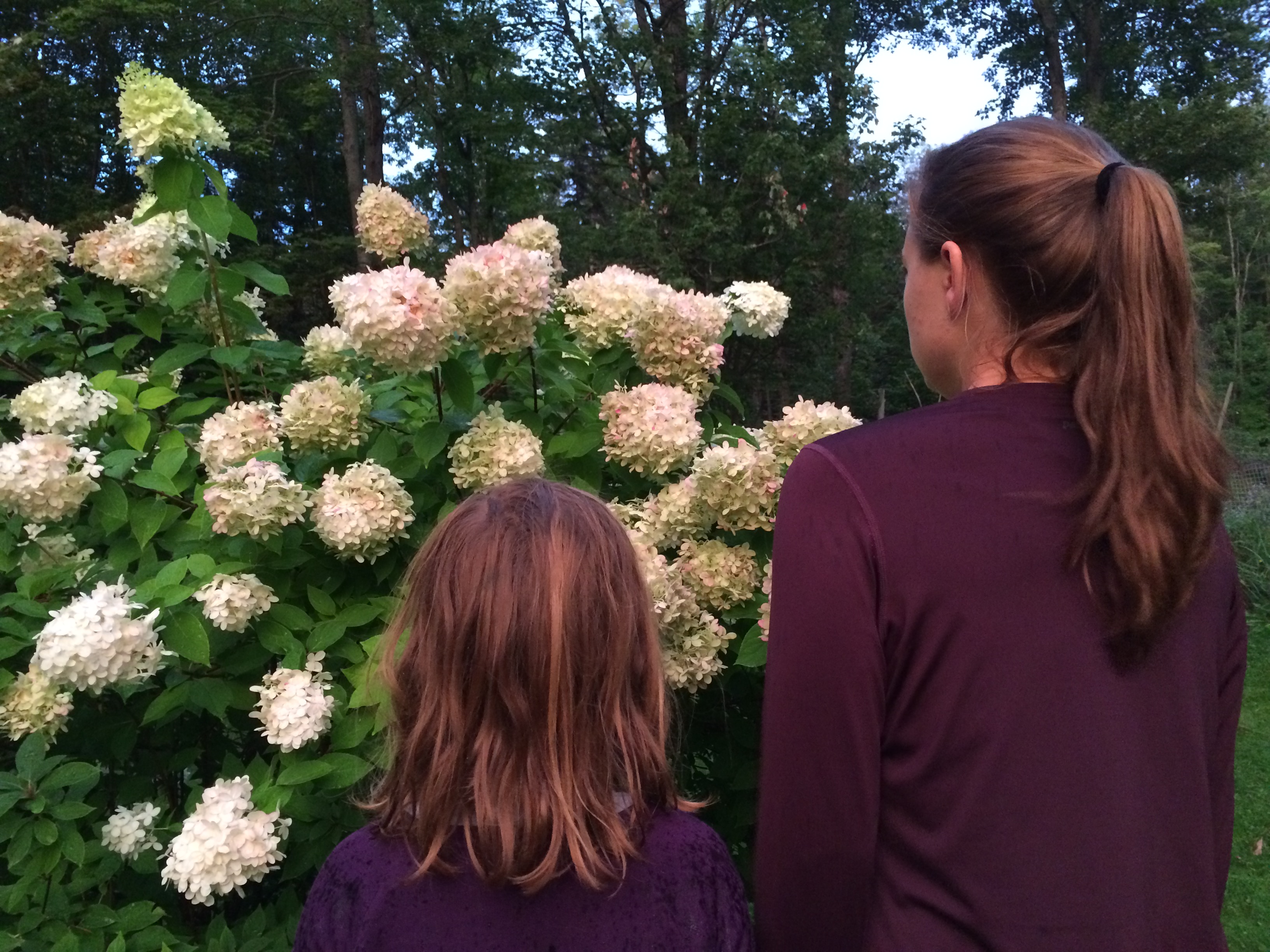
Tonight, this girl all stretched out into her own lengthy self, dressed up in new black boots and dangling earrings she bought with baby-sitting money, drove my car to her first high school dance.

Where did all that go, I sometimes wonder, my le leche league fervor, my farmers market zest? But if anything, my energy has intensified and strengthened, as a stream running down a mountain gains force, momentum, might. The channel of my force has diverted – to writing a book, keeping a small school open, guiding my oldest toward adulthood. The shadow of that much younger woman is yet deep within me, and someday, when my girls have their own beloveds, I intend to offer my daughters a bowl of ice cream while they nurse.

the lost baby poem

the time i dropped your almost body down
down to meet the waters under the city
and run one with the sewage to the sea
what did i know about waters rushing back
what did i know about drowning
or being drowned

you would have been born into winter
in the year of the disconnected gas
and no car we would have made the thin
walk over genesee hill into the canada wind
to watch you slip like ice into strangers’ hands
you would have fallen naked as snow into winter
if you were here i could tell you these
and some other things

if i am ever less than a mountain
for your definite brothers and sisters
let the rivers pour over my head
let the sea take me for a spiller
of seas let black men call me stranger
always for your never named sake

–– Lucille Clifton
IMG_2530

We are Our Own Stories

Part of this day I spent rewriting an essay on myth, beginning:

The first day of eleventh grade, my daughter returned in the afternoon, dropped her backpack on the floor and sprawled at the kitchen table, her upper lip curled in that dissatisfied way I recognize as disgust for the adult world. We’re doing myth this year in English class. Myth, she repeated, who needs that old junk?

Rewriting this essay made me realize, again, how fundamental is logos – story – to us. My ten-year-old daughter is busily creating the story of her child life these days:  lacing up new high tops, the adventure books she reads and swaps with her friends, an attack of flying insects the other afternoon, soccer practice and watermelon for snack and what, exactly, her big sister is doing. Her life is imbued with meaning, her Story of Being Ten writ real and lovely. The old junk is us; but it took me years to realize that the word made flesh wasn’t just a poetic line, that we are, in fact, our own stories.

Eat, drink, be happy.
Accept the miracle.
Accept, too, each spoken word
spoken with love.

–– Mary OliverIMG_8999