Zeke, the New Friend

My 12-year-old returns from the southwest with the story of a bobcat who slept in the raingutter in her grandparents’ roof. She’s worried about the wild cat, who she thinks is too thin, unlike her own glossy, well-fed kittens.

The cat is my daughter’s main story of her faraway trip — this wild beast who seems remarkably tame and drinks from her grandmother’s bird bath.

Driving home in the dark, I’m listening to my two daughters’ disparate conversations about enchiladas and pueblo ruins and a stranger’s delayed flight. My daughter in the backseat keeps mentioning Zeke.

Who’s Zeke? I ask.

She answers, We named the bobcat Zeke.

IMG_1767.JPG

Separate Travels

When I was a new parent, I mistakenly searched for our family life to even out. Oh, so this is what being a mother is like —  as if our family would steady into evenness. Maybe family life does work that way for some people, but I doubt it. Our life kept changing, because the infants grew into round-kneed babies, who grew into curious toddlers, then little girls who made houses from blankets, and teenagers who rode bikes and shared secrets with friends. Because the very heart of life is change.

And yet, we’re still us, who like to play card games and take walks at night. My daughters are on a trip to the southwest, the two of them on cusps in their own lives, one beginning young womanhood, the other her adolescent years. In the intensity of young motherhood, I never imagined our lives would not so much diverge but widen.

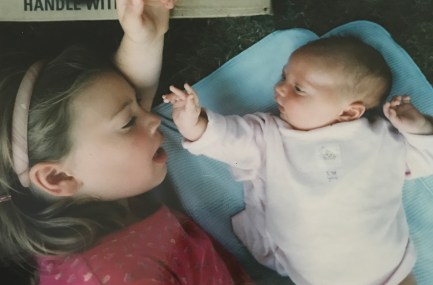
Someone asked my younger daughter if she was afraid to go so far alone. She answered, I’m not alone. I’m with my sister. 

Here’s a (perhaps unrelated) few lines from Tod Olson’s terrific kid’s book, Lost in the Amazon:

Even the naturalists, who spent years studying the plants and animals of the Amazon, never understood the jungle as well as the men who paddled their boats. Richard Spence, the Englishman who marveled at the size of the rainforest, once overhead a native man talking about him behind his back. “This man knows nothing,” he scoffed. “I doubt he can even shoot a bird with an arrow.”

IMG_1709.JPG

Burlington, Vermont

And Then We Receive This Day

As if the air is transformed into honey, the afternoon moves languorously. I prop open the library door — an everyday event in the summer — but fresh now, the parents and I leaning in the open doorway. I’ve been rearranging, and my arms are full of children’s books about the moon landing and the Middle Ages.

The children in short sleeves play in the mud, even the big boys in the sandbox, and tromp over what remains of the icy patches of snow. Crocuses bloom against the library.

A man who lives in town and helped build the library, years ago, returns books and pauses to talk, telling us about a close call he had with a tree falling on his shoulder — a lightening, averted brush with disaster. He’s alive and well on this fine April day.

He tells one of the littlest boys that he married the boys’ parents, as a Justice of the Peace. The boy is serious, amazed. Could his parents ever have been not married? Not together?

The afternoon wanders along, as if out of time, suspended in sunlight. Spring.

You need to expect the unexpected, to embrace it.

— Maggie O’Farrell’s terrific I Am I Am I Am: Seventeen Brushes With Death

IMG_1658

Summer days selling syrup at the Stowe Farmers Market….

Art For The People

What I might lamely describe as rain and the middle school girls laughingly referred to as moistiness, we stopped at the two painted silos. Beautifully painted with agricultural scenes, these two silos stood empty by the side of Route 15 for years.

I walked through a puddle-ish field. The girls, impetuous, ran.

I’ve been aching for weeks now for some brightness of color — and here it was — art transforming the landscape.  Around the back of the further one was a barred owl I hadn’t seen. The girls wandered over cement pad around the silo, talking about what might have once been here.

Four more cars had parked around mine. We took one last look and headed off into the mist and rain — the moistiness — again.

In art, either as creators or participators, we are helped to remember some of the glorious things we have forgotten, and some of the terrible things we were asked to endure…

— From Madeline L’Engle’s Walking on Water


Succor

When I was twenty-eight and living in a hunting camp with my husband, I read Ernie Hebert’s The Dogs of March. The building was heated — well, we attempted heating — with a barrel stove designed for coal. The little insulation in the walls had been gnawed to just about nothing by mice. But this isn’t a story about how young I was then, how naively starry-eyed for so very long, but my first introduction to that word. I was so innocent then I thought the word was out-of-place in that novel.

Much later, my daughter’s kindergarten teacher suggested families acquire the habit of repeating the same family walk, no matter the weather. We had already established this, and likely because my husband and I had walked all through our childhoods. Even now, in a different house, one of the first things the girls and I did — and unconsciously — was try different walks. Where’s a better view? A running creek?

Today, I realized one of our walks has been downtown Montpelier and around the state house — again, in every kind of weather — and in the enormous crowds at the 2017 women’s march.

Walking is succor, a lifting up and an assistance. A widening from the narrowness of ourselves, a reminder of sky above, the eternal steadiness of the earth beneath our feet. The robins nesting in the maples on the state house lawn. Nearly 13 summers ago, on hot July and August days, I nursed my baby beneath those maples while the 6-year-old ate cookies and ran barefoot on the grass.

One repeated the same old mistakes. Each of us has a blind spot in his thinking that defeats him time and again against all teaching and experience and pain.

— Ernest Hebert, The Dogs of March

IMG_1602.jpg

Montpelier, VT, April 15

Sign of Spring, Hardwick, VT #9

Come what may — more April snowflakes, cold rain, glittery frost in the weeds against the barn — in our corner of Vermont we’ve stepped across the line to spring.

Yesterday, in a chilly rain, my daughters and I peered beneath the pear trees and along the thicket of roses, now merely a brown tangle of prickly vines. But the earth reeked of thaw, of soil melting its cold frozen heart, releasing its mysteries of worm and grasping root.

Thaw begins not with warmth, but with the subtle gradations of less cold. And how darn good our earth smells, breathing.

Sparrow singing–
its tiny mouth
open.

— Buson

IMG_1576.jpg