“As you walk, you make your own road…”

[Traveler, your footprints]

By Antonia Machado 

Translated by Mary G. Berg and Dennis Maloney

Traveler, your footprints

are the only road, nothing else.

Traveler, there is no road;

you make your own path as you walk.

As you walk, you make your own road,

and when you look back

you see the path

you will never travel again.

Traveler, there is no road;

only a ship’s wake on the sea.

Trainwreck.

On the year anniversary of beginning chemotherapy, childishly I crab at my siblings. It’s a small thing—a bad internet connection, a request to make a phone call that might have taken 10 minutes—and I’m angry as all get-out, fury galloping in my blood. The common lingo is that chemo equals nausea, like a bad flu. That is not true, or was not true for me. Enduring chemo was like lying between two burning rails while a train sped over me. I held myself still as could be to survive that months-and-months-long train (how could something be so large?) rattling over me. Sure, there’s a few moments where the train slows, and you think maybe I’ll survive this, but steaming metal rushes right over your face, your mortality far closer than spitting distance. While the rest of the world is immersed in meetings or drinking wine in Spain or skiing, there you cringe, the pain so intense in your bone marrow that morphine means nothing.

In the first round, I had a common and horrific reaction to one of the drugs, rituximab, which stole my breath and shook my bones so hard the bed rattled. The room filled with people in scrubs. I did not know one person’s name. They kept talking to me, and I could not understand a single word. I was under that train, remember, the wheels hammering on tracks.

I never considered myself a warrior battling cancer. But my body was a war zone between two matched enemies: would the chemo quell the lymphoma, or would all of us go down together? A year later, in remission, I’m suffused with gratitude for my life, for so many people who got the train off me. And yet, a year later, there are days I’m still turning the pieces of my life over and over, wondering WTF? Like anyone, jab a shovel into the soil of my life, and the layers appear infinite. Twenty-two years ago, I left my crying four-year-old (“I want to come!”) behind and drove to the airport with my brother in my sister’s time of need. I had left in such a rush that I’d forgotten my driver’s license. It was not long after 9/11, and I had to cry to get on the plane without ID, but I finangled it. Coming home, we hit a snowstorm. My friend and her four-year-old drove over the White Mountains in a white-out to bring me home. At the crest of Franconia Notch, she pulled over. I got out to clean snow from the windshield and lights. No one else was on the road. Snow billowed through a freezing wind. I looked through the window at her son in his carseat between us. I had bought him a little toy, a hexagon of blue fluid with a yellow fish, and he was turning it around and around in his hand, so the fish would swim. It seemed like we were the last three souls on the planet. Such a long and treacherous way home to my little daughter and her twiggy braids. But my friend drove carefully in her red pickup. That story shook out into all’s-well, something that needs no bow-tie of a moral. Simply, all were saved. Our lives went on.

So many pieces of a life. On this Thanksgiving morning, how grateful I am to remain yet here, disease-and-treatment battered, broken by fate and my own rough actions. The terrain of the living.

… And last, I’m honored to have been nominated for a Pushcart Prize (a secret dream of mine) by Under the Sun for my essay “Weeds.”

How We Spend Our Time…

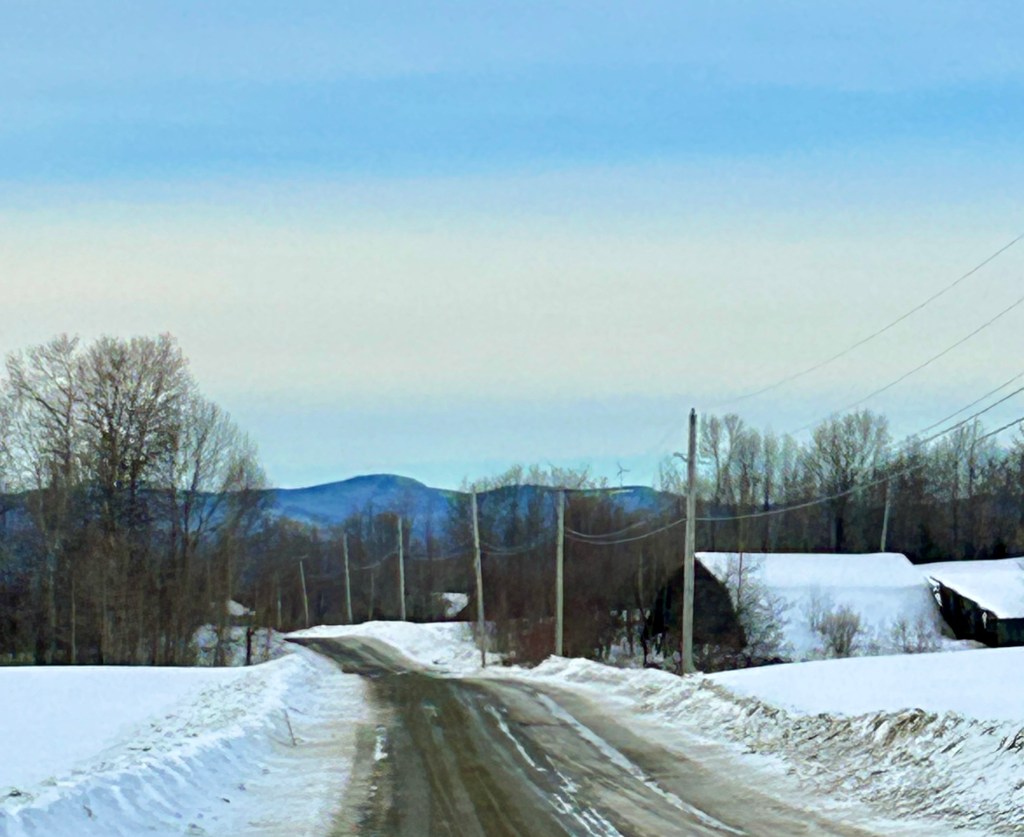
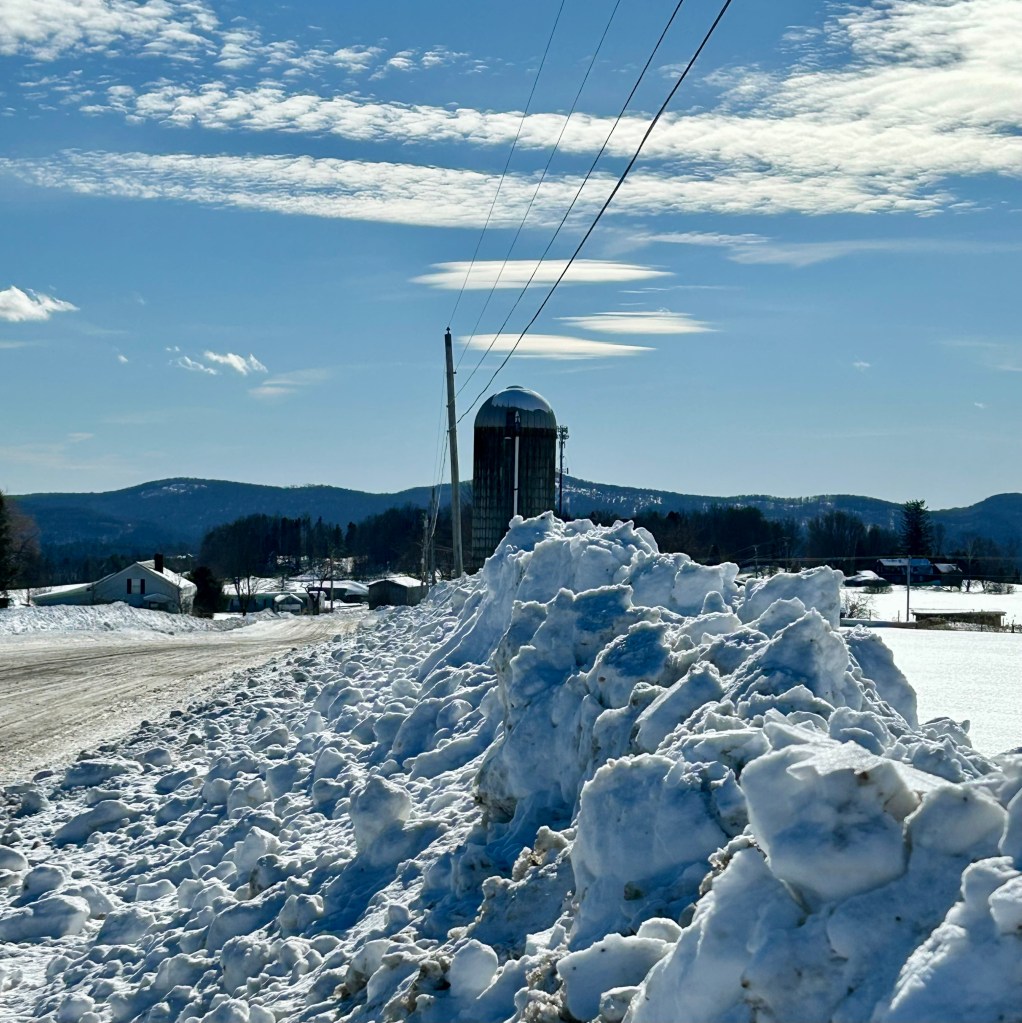
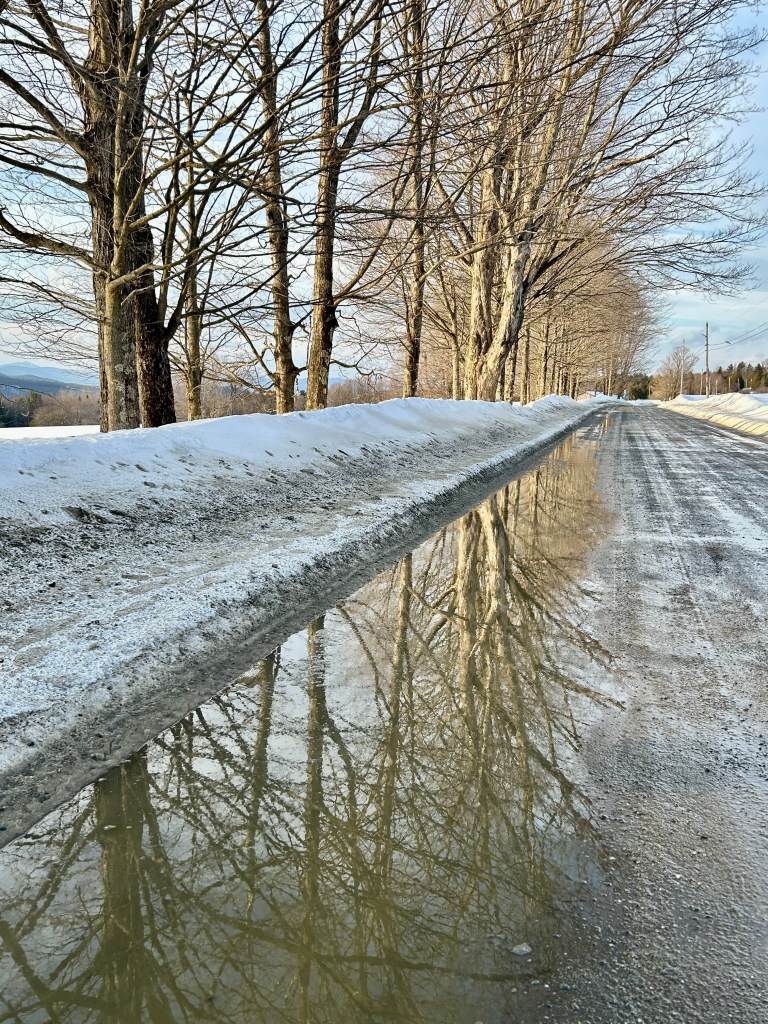
Sunday, I ask a friend to take a walk. It’s been a morning of housekeeping and writing chores, vacuuming and laundry, and the easiest thing would be to lie on my couch all afternoon and read. A light snow falls — pretty flakes and scant accumulation. As we walk, I pull off my hat and take off my mittens. It’s not the swimming season, not an afternoon where we meet at #10 Pond and talk about kids and work, about old parents and gardening, the loons calling and the sunlight thick with pollen. November is the honed-down season, stick and bone season, where your eye admires the landscape’s starkness. On these back roads, we pass farms, fields scattered with equipment, the shorn-down remains of last summer’s crops.

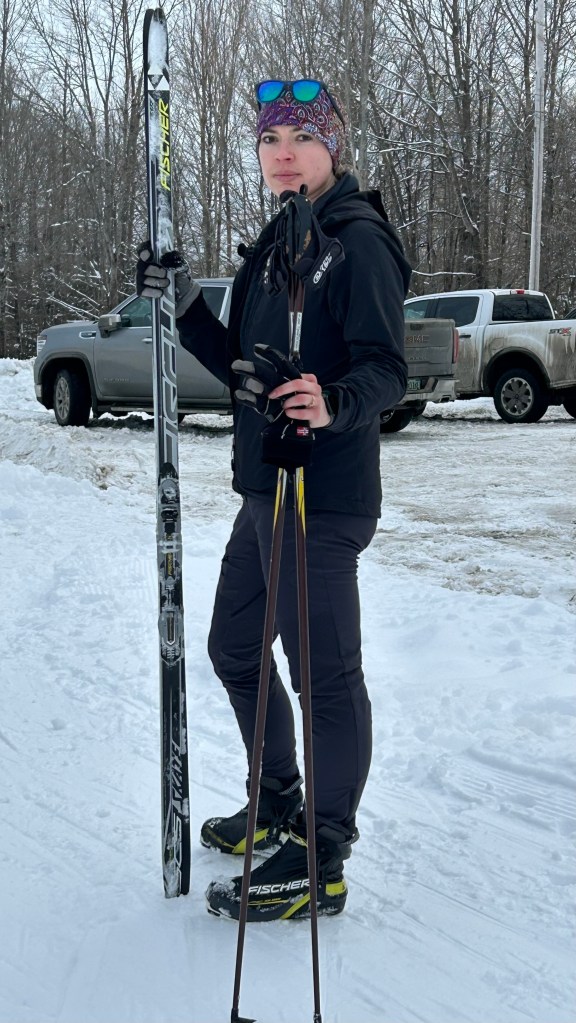
For so much of my life, I seemingly always had somewhere to be — and, raising kids, I probably did. I hurried to work and home to make dinner, or to pick up a daughter at school or a soccer game. Now, my girls are grown, with their own places to be; how hungrily I’m anticipating the abundance of our small family and apple pie this holiday. But this Sunday, I leave my post-it list on the kitchen table, check the woodstove dampers, and lace up my boots.

A year ago, I was for the first time in the Dartmouth-Hitchcock ER, in the trauma room with my daughters and the first oncologist I met. I was so new to the cancer patient world that I did not yet understand IVs and fluids and pain meds. That night, a surgeon told me I had to have surgery right now, immediately or I may not live, and I might not live through the surgery, either. It was the first time I had gone under in an operating room and woke in a dim recovery room and wondered, what now?

What now is the privilege of the living, and my god, I embrace that.

A year later, a few hours in the afternoon on a slippery dirt road. Later, I arrive home as twilight falls, the darkness so impenetrable in late autumn, back to my clean house and the cats who insist upon their dinner immediately, my solitary and sometimes un-solitary life, and what I’m making of my mortal time: fiercely writing, keeping the cats and myself fed, the hearth glowing, a holiday meal imminent. These earthly joys.

“… how we seek to spend our time may depend on how much time we perceive ourselves to have.” — Atul Gawande

Disease as Teacher.

About a year ago, a friend asked to borrow knitting needles, a request I almost certainly ignored as I could hardly walk up the stairs in my house, and forget the effort of opening the closet door and searching through my needles. A year ago, my family moved my bed downstairs, and I wondered, Well, is that? Am I now confined to one floor like an old woman? I was not, thankfully.

Half a year out from chemo and surgery, my family moved my bed back upstairs. The first morning I wake, I stand at the window looking down at the mock orange planted decades ago. In June, this giant bush is covered with small white blossoms, but in November, the bush is mostly sticks, save for a few withered leaves.

Standing there staring down, I felt suffused with profound grief. Almost immediately, I chastised myself. Why grieve when I survived a terrible illness? When this might have easily gone otherwise? And yet, grief.

Nearing the holidays, I think often of my mother who died not so long ago. She and I had years ago separated our lives for reasons both silly and profound. Only at the end of her life did I begin to have empathy for her and see her not merely as my mother but a woman in her own right. So that morning, thinking of her, my grief is for her absence, for what might have been between her and my daughters and myself. So many years I invited her to holiday meals, and all those years, she refused to join us. How I would love to invite her this year. Surviving cancer (thus far) broke me in so many ways, shoved me right up against the fragility of the world, revealed my own meager strength, but it also allowed me to grieve the loss upon loss that is not endemic to me but woven integrally through our mortal lives. Cancer empowered me to hold that grief without rage, to acknowledge simply what is.

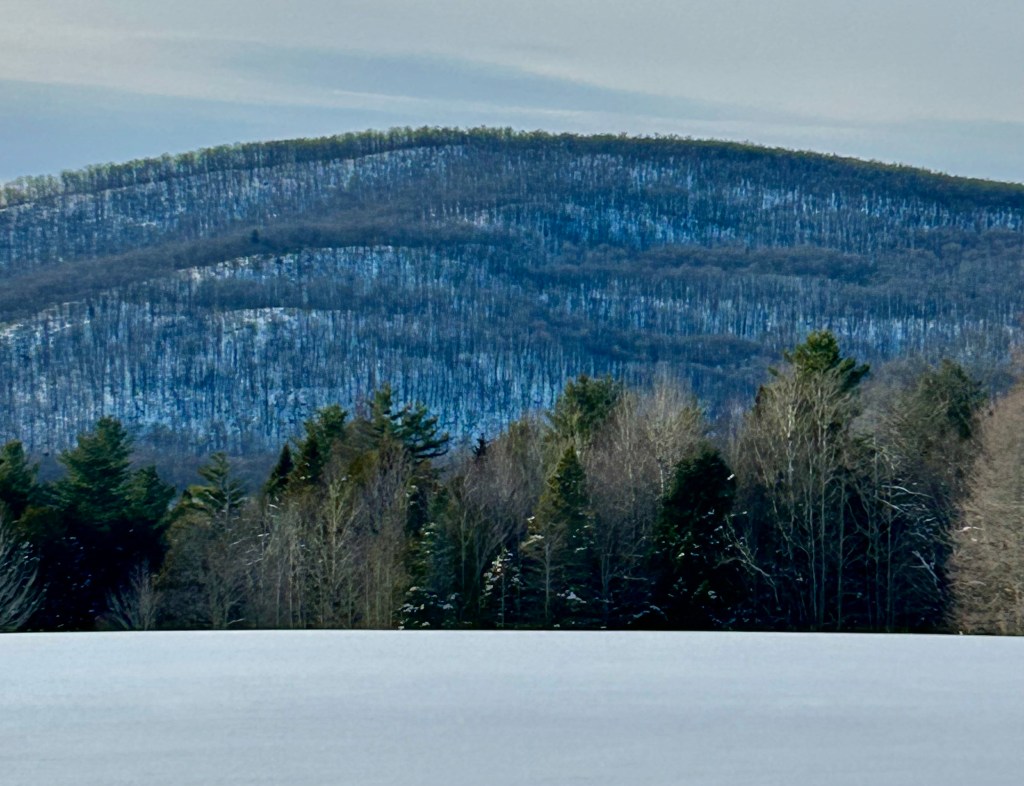
But sadness, of course, is one variation of the complex symphony of our lives. Yesterday, walking along a hillside dirt road in the November sunlight, hat pulled off my head and in my hand, eyes on the spine of the Green Mountains in the distance freshly covered with snow, pure joy suffused me at simply being in the world. Six months ago, my companion had walked with me from my house to Main Street. It wasn’t at all certain to me that I could manage that short walk there and back. Now, the two of us moved quickly through the world, talking poetry and plans. How remarkable is that?

What if we embraced the messy, evolving, surprising, out-of-control happening that is life and reckoned with its proximity and relationship to death? What if, instead of being afraid of even talking about death, we saw our lives in some ways as preparation for it? What if we were taught to ponder it and reflect on it and talk about it and enter it and rehearse it and try it on? What if our lives were precious only up to a point? What if we held them loosely and understood that there were no guarantees? So that when you got sick you weren’t a stage but in a process? And cancer, just like having your heart broken, or getting a new job, or going to school, were a teacher? — Eve Ensler

Stopping in the Snowy Forest.

In the woods, I hear voices and pause, thinking a cluster of children might emerge over the hill. Instead, a flock of clangorous geese wings low overhead, then a second V, a third. Town traffic sounds filter into the woods. I am not in the deep wilderness, not so far from high school and road and village, but for this hour, it’s just me and the sweep of wind and drifting snow and the human and dog prints of whoever walked here before me.

As a kid, my father was never one to be daunted by adversity. Evenings, he often set down his coffee cup and took us on walks to the library or around the block, and around the block often meant across a thin-grass soccer field to the woods. Who owned those woods, I never knew. We jumped across the stream and along worn logging roads, past the piles of New Hampshire boulders and stone walls in the forest where fields had dominated not so many years ago. The woods were alive with rabbits and deer, birds and ferns. We wondered about the Natives who lived here and the colonists who cut down the trees, and then the trees grew up again.

On this twilight Monday, I lean against a hemlock, snow in my eyelashes, remembering when my daughters filled their snowsuit pockets with tiny hemlock cones. Intentionally or not, my father instilled love and not fear of the forest in his kids, the understanding that our feet could carry us to unexpected and miraculous places.

Here’s that classic New Hampshire poem threading through my childhood, my daughters’, and so many others:

Stopping by Woods on a Snowy Evening

By Robert Frost

Whose woods these are I think I know.   

His house is in the village though;   

He will not see me stopping here   

To watch his woods fill up with snow.   

My little horse must think it queer   

To stop without a farmhouse near   

Between the woods and frozen lake   

The darkest evening of the year.   

He gives his harness bells a shake   

To ask if there is some mistake.   

The only other sound’s the sweep   

Of easy wind and downy flake.   

The woods are lovely, dark and deep,   

But I have promises to keep,   

And miles to go before I sleep,   

And miles to go before I sleep.

The Survivable.

It’s dark as the inside of my fist at five o’clock. I’m driving into spitting snow, my brand-new studded snow tires grinding. My companion and I are talking about all kinds of things — how language shapes our worldview and the personalities of tuxedo cats and dentists. I’m driving more by faith than anything else, not particularly fast, headlight beams filled with snow. As if cued, a deer waits in the forested roadside. I slow, then stop, people and deer staring at each other. Then the deer vanishes into the woods.

On this backroad, I’ve passed no other vehicle save a UPS truck, so I wait for a moment for the deer to return, for a companion to leap across the road.

My passenger says, apropros of some conversational thread, that I’ve shed bad karma in my months of cancer treatment, of struggling to survive. My devotion has always been my pencil or keyboard, not the meditation cushion. And yet…

I roll my car forward through the swirling snow. I’ve long adhered to that ancient Aristotelian notion that action defines character. When I realized I had cancer, a year ago, I was rapidly veering towards sepsis. I could not indulge any opinion. To survive, I had to strip away illusion. What were the facts? What was the wisest way forward? None of this was simple.

Cancer narrowed my world. Through weakness and the possibility of a fatal infection, I was confined to my few downstairs rooms, to Emergency Rooms, and hospital rooms. But unexpectedly, cancer widened my life, too, gave me the gift of friendships forged in rough experiences, reinforced for me that this world is propelled by cause-and-effect, that actions have consequences, and that I often grasp only the slenderest knowledge.

New England November drives us into the season of early darkness, blackness so profound our eyes struggle to navigate. When I left Dartmouth-Hitchcock after that last long stay, I felt old, aged in bone and flesh, and concurrently, miraculously restored to my twenties, those years when my lust for living and creating was ravenous and I did not yet comprehend the immutability of time. At the end of this evening drive, I stand for a few moments in this velvety and freezing darkness, snow hissing on the hot car hood, a slender strand of white lights twinkling in my kitchen window. I clench my mittens in my cold hands. Around me, beguiling night.

“When you survive something that was thought to be unsurvivable, the obvious is gained. You have your life—you have time. But it’s only when you get there that you realize your survival has come at a cost.”
― Suleika Jaouad

And last… my story “Tiny Towns” appears in the new collection: 2050: Vermonters Take a Swipe at the Future. Reading tonight in St. Johnsbury….