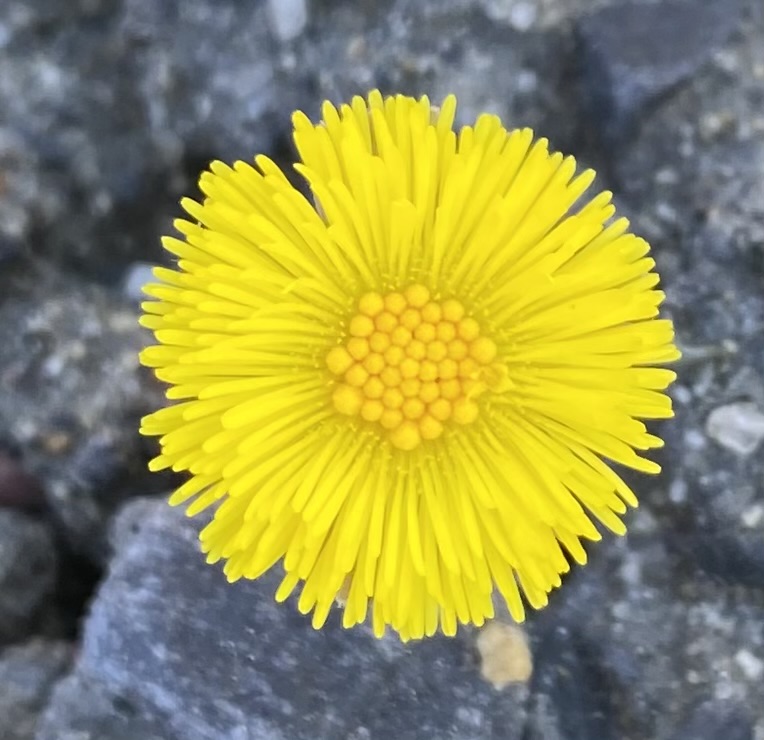
Cloud, Lake, Crackers.

Ever enthusiastic, my oldest buys a blow-up paddle board, and we set off on a Saturday afternoon. Her sister wonders if the lake will be frozen yet. In 70 degree temps — a strange April spike — ice seems impossible, until it’s not.

While she paddles in the patch of open water, her sister and I sit on the dock that isn’t yet pulled into the lake, either. We’re in a marshy area where the peepers are mightily going at what they do best, and redwing blackbirds yodel their throaty calls. Two ducks cruise by, intent on something else that entirely eludes us, too, the male with his emerald head trailing the brown female.

We’re in t-shirts and shorts, spring giddy, eating crackers and some of that cheese the lovely Cabot Library gifted me for a talk. When I returned home that night, my youngest opened the box of cheese with joy. The chionodoxa blue flowers are blooming.

Joy, on.
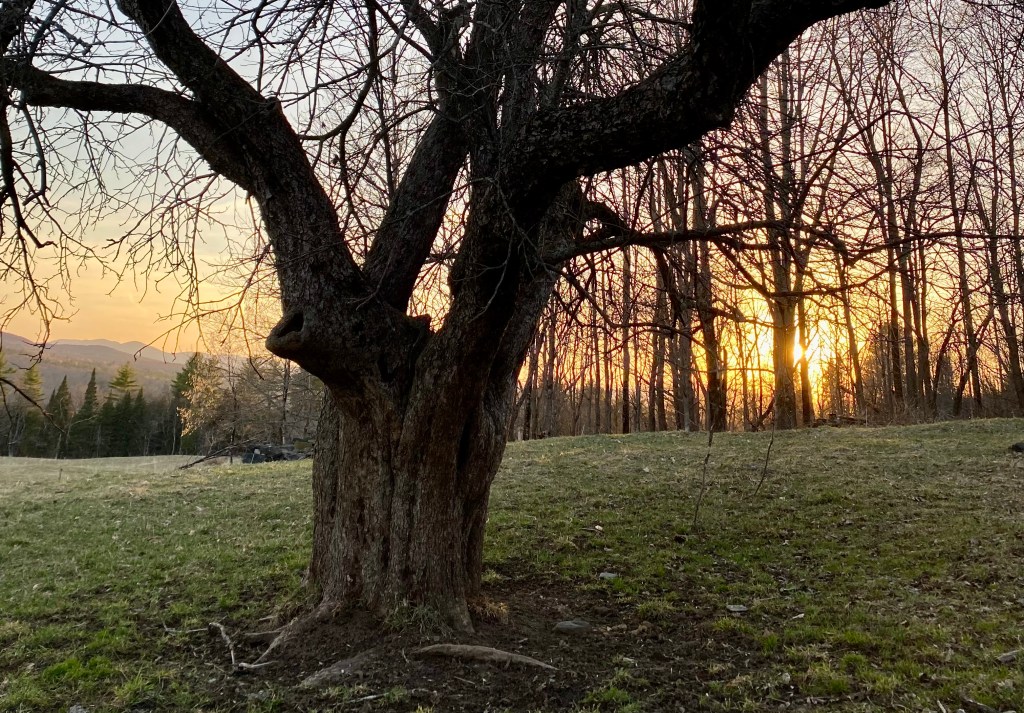
The Past, Rising, Falling.

The news here is that the peepers have returned. In the evening, I walk past the two ballfields where the little kids and then the big kids are playing baseball, and up the hill where pavement turns to dirt. Right at the edge of town, there’s a neighborhood where people are living rough. Along the roadside, I spy empty milk cartons and a clear plastic bag jammed with Christmas bows. There’s a swathe of hemlock and cedar, and then the fields and maples begin.

A few days before, I was writing in the local coffee shop when a woman I once knew fairly well stopped in. She sat down with her latte, and we talked for a little bit about the nursery school we once started and where our kids are now.

Then she turned the conversation and acknowledged that something lay between us. I closed my laptop and slid it in my backpack. We spoke about a fire, a burned construction site, a rekindling of the fire, and losses to both our families. It’s early morning yet. We’re in a corner by the window. The baristas are laughing at the counter, and no one can overhead our words. Quickly, we pair up our memories, and it’s shocking how our memories sync of that time. Until we diverge. We pause at the mention of the third family. I have about a 100 questions I want to ask. My shock appears mirrored in her eyes. She’s forgotten all about her coffee.

How do you ever understand the past? We’ve both divorced, moved houses and towns, raised children, created new working lives. And yet there it is, running like a subterranean stream, the past.

Her acquaintance walks in, and she stands up. I slip my notebook in my backpack, say goodbye, have a nice day to the barista, and walk down the sidewalk to the post office.

Talking.

Old friends/neighbors appear on the other side of the cemetery fence. She’s wearing shoes with a hole in one heel and steps carefully through the patchy snow that remains. In the thin late afternoon sunlight, I’m in the brown garden, searching for nubs of green, an elbow of garlic, a toe of daffodil. It’s been so long since I’ve seen these people, in that long ago time known forever now to us as pre-pandemic, that I need a moment to determine, yes, yes.

We are all three of us worse for wear, but they dive right in, talking about my house and the wood piles, the forsythia I planted that’s sprung crazy, the picnic table beside the apple tree. Things have happened here. Life has gone on.

He leans on the fence where my youngest tied a pink strip of old t-shirt years ago, marking where she and a friend planted a time capsule. What’s in there I can no longer recall, and likely she can’t, either.

Six years ago, in April, I decided to move into this house. No one was living here then. I leaped over the fence and tore a hole in the back of my leggings. I headed to work afterwards, and the kids teased me. What have you been doing? That April was a warm one, too. I leaned against the house and studied the declination of sunlight as I guessed it would rise.

As we talk, the wind picks up. The robins are ecstatic in the neighbors’ maples, really belting out their songs. Overhead, the turkey vultures float, eyeing us. We keep talking, tossing at each other, “remember this? remember this?” Oh laughter….

The bud
stands for all things,
even for those things that don’t flower,
for everything flowers, from within, of self-blessing…
— Galway Kinnell

Small Things.

Early April, hot midday sun, I spy a Mourning Cloak butterfly darting over frozen Caspian Lake. The water has thawed blue holes in sporadic places around the shore, but the snow still crumbles into my boots as I follow the butterfly. The butterfly darts into a stand of cedars and disappears. On this afternoon, how lovely the lake lies, just me and the boarded-up summer cottages, the rusting can used for worms or smokes emerging from its wintering over beside a porch post. The ice spreads out in varying ribbons of pale blue and pearl.

On my back through town, my boot avoids the first of miniature grape hyacinths, tiny buds and furled leaves emerging from gravel.

This spring day, Van Gogh is on my mind, his immense talent, troubled mind, these words: “Great things are not done by impulse, but by a series of small things brought together. And great things are not something accidental, but must certainly be willed.”

Monday.

Small Citizen.

A few streets over, the neighbors are out with their little girl. She’s wearing a helmet and holds the handles of a pink bike that I’m nearly certain is new to her from the cautious way she thumbs the handgrips, as if still thinking through what this might mean. This alone is good news for this windy April day, a girl and her bike and an imagination sparking in her eyes. As I pass by, I wave, but the girl is in her world, and the adults are bickering about dog shit under the front yard’s single tree. I laugh because, well, what else? Been there, on both sides of that equation. When I return from the post office, the girl is making long slow circles in an empty street, the adults are leaning against a fence, sharing a cigarette, and the sun promises to shine all afternoon — cold, brisk, exactly what we expect in Vermont’s April.

And, for no reason at all, one of my favorite poems….

Citizen of Dark Times

by Kim Stafford

Agenda in a time of fear: Be not afraid.
When things go wrong, do right.
Set out by the half-light of the seeker.
For the well-lit problem begins to heal.

Learn tropism toward the difficult.
We have not arrived to explain, but to sing.
Young idealism ripens into an ethical life.
Prune back regret to let faith grow.

When you hit rock bottom, dig farther down.
Grief is the seed of singing, shame the seed of song.
Keep seeing what you are not saying.
Plunder your reticence.

Songbird guards a twig, its only weapon a song.

Reasons…

Rainy afternoon. I wander through the neighborhood where I once considered buying a house. Someone else lives there now. With new paint and two rocking chairs on the front porch, I need a moment to recognize the house, to remember the kitchen door I went through, envisioning in those days how my life might bend.

These years, walking by, I’ve watched the vehicles’ license plates change from Maine to Vermont, a tricycle appear, a front step break, two hydrangeas expand in the front yard.

April: season of mud and rain, snow and patience. Some reasons are obvious. Snow vanishes first on south-facing slopes, but other patches around us aren’t so readily knowable. Why does snow cling to some fields and not others? Quickly running water beneath, perhaps, the softening of what our human eyes can’t see, the knowledge gained only by years of our wandering footsteps.

So it goes. April, thaw, brown to pea green.

The world begins at a kitchen table. No matter what, we must eat to live.

The gifts of earth are brought and prepared, set on the table. So it has been since creation, and it will go on.

We chase chickens or dogs away from it. Babies teethe at the corners. They scrape their knees under it.

It is here that children are given instructions on what it means to be human. We make men at it, we make women.

At this table we gossip, recall enemies and the ghosts of lovers.

Our dreams drink coffee with us as they put their arms around our children. They laugh with us at our poor falling-down selves and as we put ourselves back together once again at the table.

This table has been a house in the rain, an umbrella in the sun…

From Joy Harjo’s “Perhaps the World Ends Here”