Salt, Not Sentimentality

Every afternoon, I drive to pick up my younger daughter at school, and just as I leave the small town of Hardwick, right where the wetlands begin, I pass the construction site of a Dollar General store.  Apparently, the presiding view is that the town needs more cheap stuff.  I wouldn’t presume to criticize what people are or are not buying, but it’s worth noting that the outer landscape of Hardwick has appreciably changed.

In Vermont, landscape is a word often bandied about as if landscape is background for work or play — the landscape with Jersey cows mentality — but landscape is the point, as the cows, and the maples along the dirt roads, and the ridge lines, are actually inseparable from who we are.

This Dollar General feeds a real appetite in our society, this need to consume stuff, a great deal of it, and preferably as cheaply and abundantly as we can.  It’s an ugly aspect of our society, disguised and ameliorated somewhat by its genericness.  Richard Yates, in one of my most favorite novels, Revolutionary Road, wrote “this whole country’s rotten with sentimentality” — this notion of flatlining the culture under the Almighty General of the Dollar.  Writing — art — by and large pursues the antithesis of what capitalism champions, which is perhaps why art and literature are so belittled and disparaged in our society.  But to adhere to this generic status quo, to feed ourselves commercial products from boxes and cans rather than what grows in the farm down the road or in your own window boxes, to judge ourselves in terms of tax brackets, or nourish our inner lives with dullness, diminishes us.  Revolutionary Road epitomizes the longing of Frank and April Wheeler to break out of the constraints of upwardly middle class American life — to follow their hearts’ desires in opposition to everyone around them — and depicts the Wheelers’ crushing failure to achieve this.

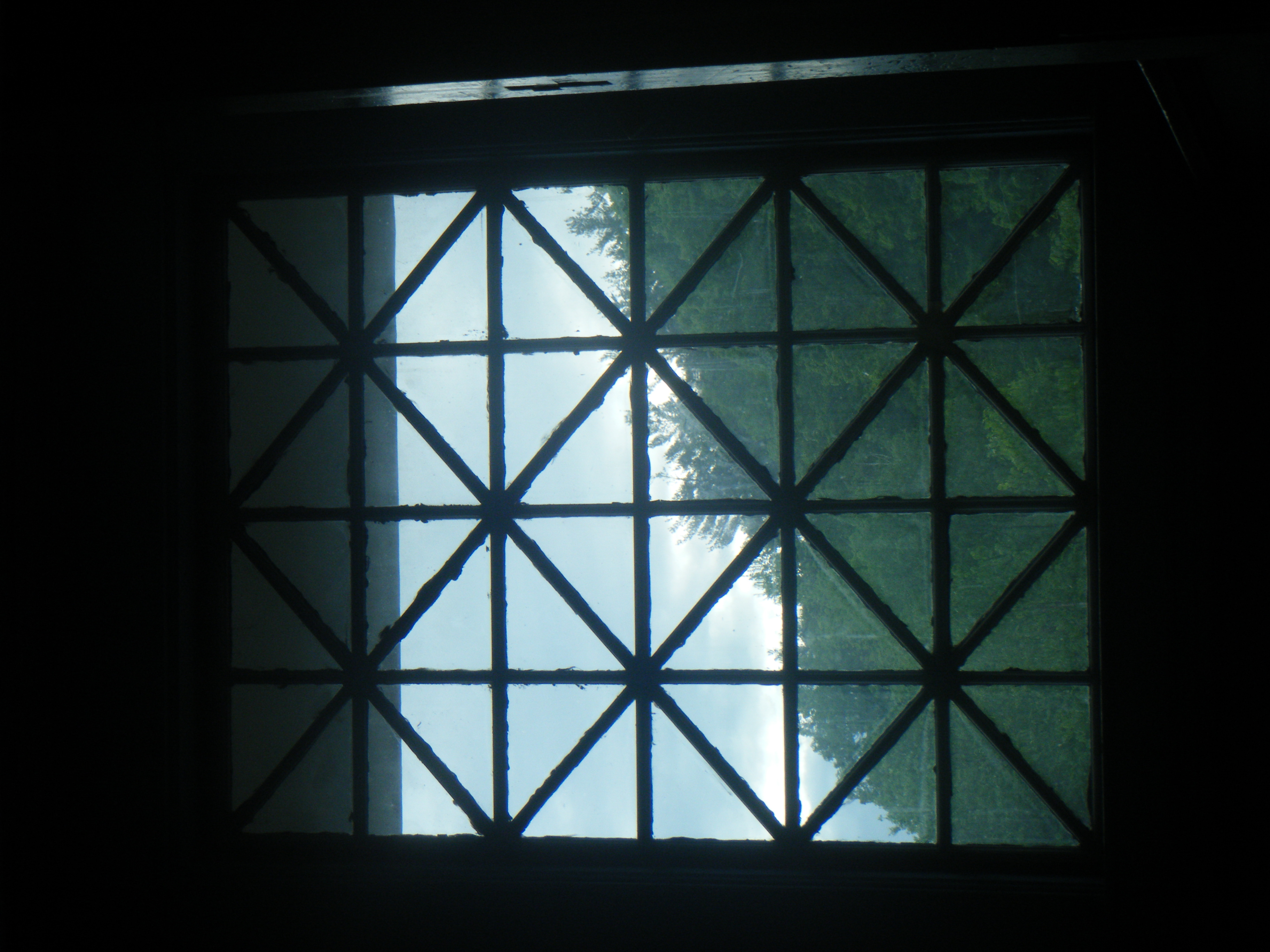
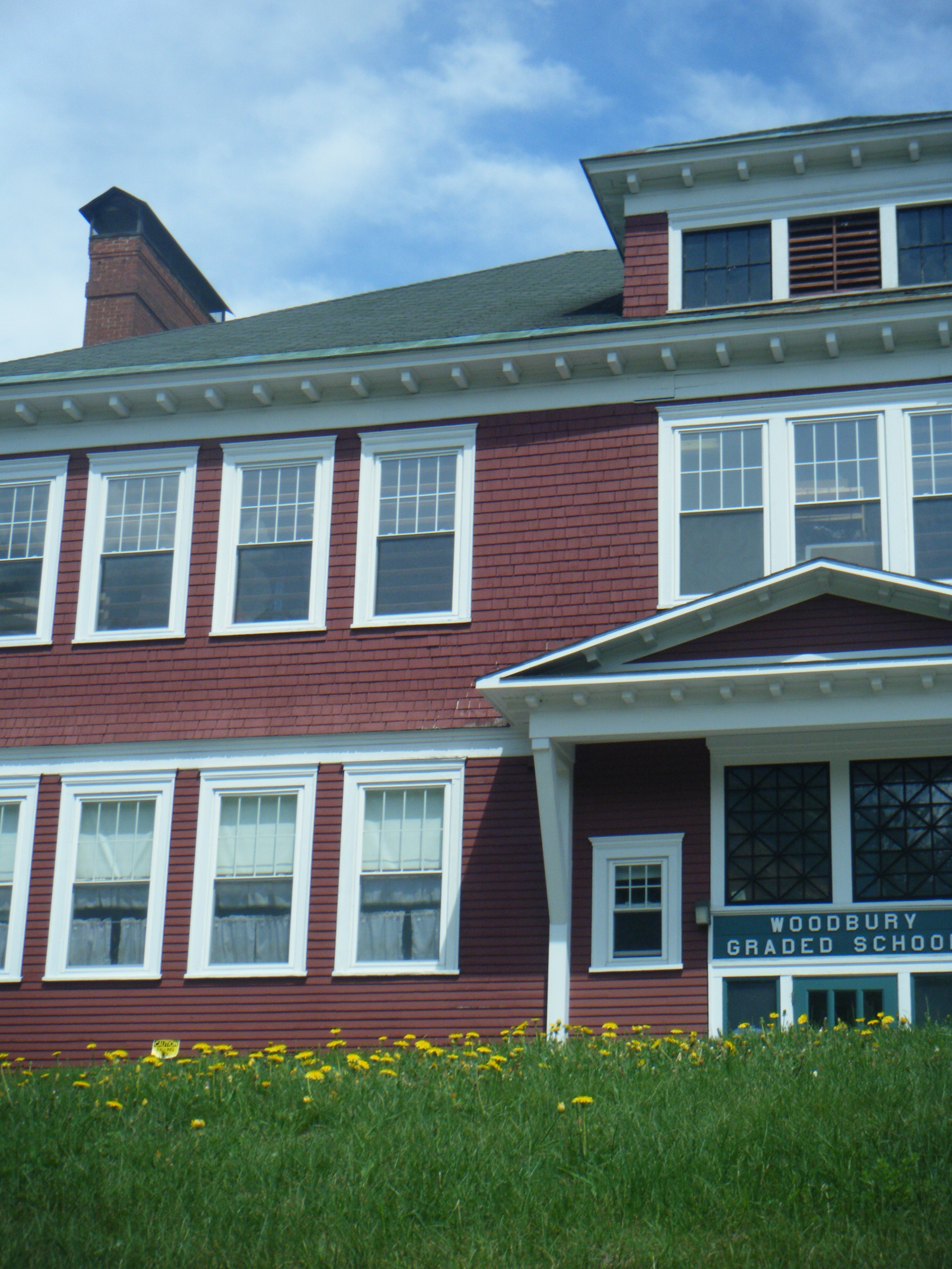
But, unlike the suburban Wheelers, I luckily live in Vermont.  I drive up the narrow, shaded gulch, pass two slivers of lakes, and then I’m in the little village of my town. Architecturally, the elementary school is a far distance from the dollar store.  Over a hundred years old, no public elementary school would be built like this today, all wood and windows, with two enormous brick chimneys, and pressed tin interior walls.  The schoolhouse is dropdead gorgeous, built with craft and care.

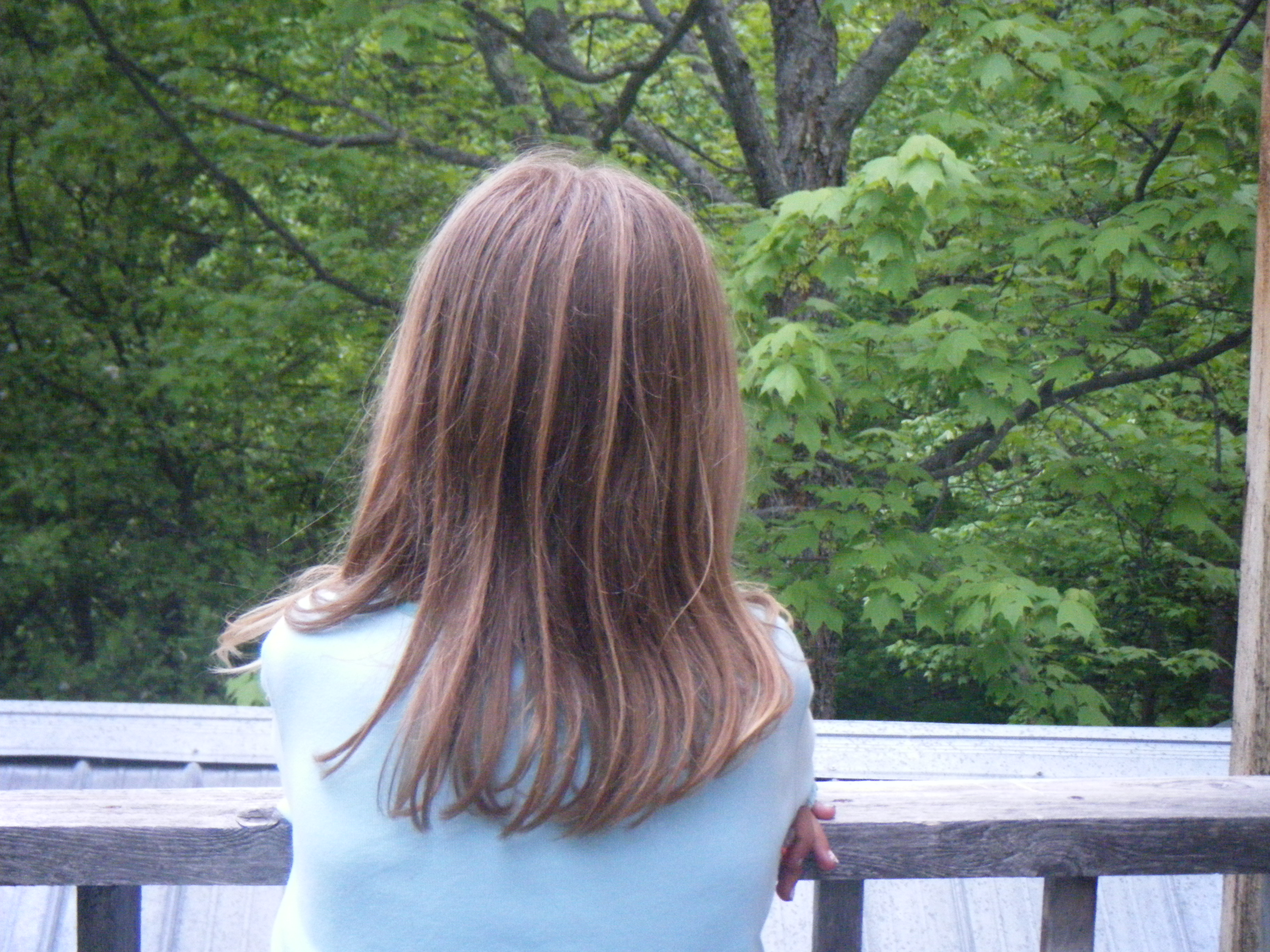
All buildings, in their own ways, have resonance and depth, holding the stories of their people within them.  But this lovely schoolhouse hums with beauty, too.  Does this landscape of light and wood matter to my child?  This setting in a literary world?  Here’s how deeply this landscape presses into my child:  when I see my girl at the end of her school day, I often touch my face to the top of her head and kiss her.  All day we’ve been apart, she to fourth grade, and I at my work.  My daughter’s hair has the colors of a wheatfield, myriad and rich, lighter with sun strands in these warming days.  All afternoon and into the evening, her hair has one distinctive scent.  My older daughter says, Crayons, mom, it’s crayons.  All elementary schools smell like that.  But it’s not crayons.  In my kitchen I have a mason jar of good salt, pink-hued, and every night, cooking dinner, I unscrew that jar and add salt.  Salt:  the mineral Gandhi used to launch a revolution.  The mineral vital to human life. When I kiss my daughter’s hair, breathing in her day, that’s what I smell:  salt.
DSCF9894

Of the Green Light and One Pig

My younger daughter had a concert at her elementary school tonight, and I made the older daughter attend, too, which made her complain, as she has pages upon pages of The Great Gatsby to read.  How could I argue against reading Gatsby, one of my most favorite books (and hers, too), and yet I insisted.  Music and literature, I argued in one of my most annoying mother versions.

I’m reading Maureen Corrigan’s So We Read On:  How the Great Gatsby Came to be and Why It Endures.  (Yes, it’s true, I confess I hear Maureen Corrigan’s NPR voice as I read this book.  You will, too.)  She writes:  “… during the years he was living in Hollywood, Fitzgerald would try to buy it (Gatsby) as a gift for friends, but when he went into bookstores and asked for The Great Gatsby, he’d be greeted by blank looks.”  Imagine that, a novel now ubiquitous in American literature courses — if you’ve read nothing else, you’ve likely read The Great Gatsby — and yet the author in his own lifetime often couldn’t purchase his own novel.

Which leads me back again to all that we see is but a portion of our reality.  What is inherently true and fine in Fitzgerald’s book was lost for a bit in the shuffling scrim of a society plummeting from the Jazz Age into the dusty Depression, and yet this book, American to the core, devoid of sentimentality, surfaced.

I first read Gatsby at the same adolescent age, and what fun it is to talk with my daughter about that novel, the green light, and Daisy — whom my daughter has far more sympathy for than I do — and the watchful eyes of Dr. Eckleburg.  As a teenager, I read this book more as a puzzle, how to fit images with characters, match them up with themes, and write an essay.  As an adult, I love the language’s beauty; I’m mystified by its marvelous craft; and yet I read a genuine ugliness in Fitzgerald’s American landscape I wholly missed as a teenager.  These layers upon layers:  writing reflecting life.  Parenting a teenager pushes you into those depths, makes you head out into the cooler part of the lake, and give what you thought was solid ground a second, third, even a fourth look. Socrates, after all, wouldn’t have abided with the status quo.

And yet…. our world really is often a mystifying realm.  Think of Fitzgerald and the booksellers’ blank looks.  This book, so labored upon, came upward again.  In contrast, my younger daughterafter she read a chapter in Charlotte’s Web tonight, leaned her cheek on the book and remarked, I hope this isn’t a sad book.  I like that pig.  To this, at least, I could honestly say, I think the pig’s going to be just fine.  Gatsby’s green light will forever hover terribly out of reach, but Wilbur at least will still be standing by his trough, nose up to the wind, happy.

DSCF9897

Why Read Literature, Anyway?

For my seventeenth birthday, my dad gave me a slim copy of Point of Departure, a slim collection of nineteen stories of adolescence.  That was back when you could buy a paperback for a buck and a half, read the book over and over, and the pages wouldn’t fall out.  Thirty years later, I still have this book.  Some of these stories I read over so many times, I could reiterate passages.  “A Summer’s Reading” pointed me to Bernard Malamud.  Even though I didn’t grow up in a city, I could envision myself, like the main character, George, skulking around the nighttime summer streets.  Updike’s “A&P”? What I wouldn’t have given to have sashayed through those aisles.

At seventeen, I was fortunate to have the world seem so inherently possible.  The options for my life were so manifold and mysterious, and, frankly, much like my own adolescent daughter now, I couldn’t wait to step into my future.

But two scenes in these stories resonated most powerfully, and tonight I found them immediately.  One was in a Saroyan story, “Seventeen.”  At the story’s end, the mother calls to the father that their son is crying.  The boy had a profound experience of grief and uncertainty — “the impossibility of laughter” — and the mother realizes their son is entering adulthood.  The second scene concludes the Nadine Gordimer story, “A Company of Laughing Faces.”

The girl heard, but felt no impulse to tell her mother — knew, in fact, that she would never have the need to tell anyone the knowledge that had held her secure since the moment she looked down into the lagoon:  the sight, there, was the one real happening of the holiday, the one truth and the one beauty.  

This one truth and one beauty, assuredly, is not a photo-opt view of the Grand Canyon or a rosy sunset; the girl discovers a drowned boy in a lagoon.  These stories center on adolescents who experience a complex shift in paradigm, from childhood’s relatively cosseted innocence to the substantially more dynamic range of adulthood.  Yet, in each of these nineteen stories thrums the heartthrob of beauty.

That’s my two cents on the appeal of literature:  relentless quest for wisdom suffused all the way through — even when it aches — with beauty.

DSCF9880

Becoming

This clayey soil, so poorly suited to vegetable farming, and yet:  here I live.  Just a few years back, this was a forest of mixed hardwoods, an understory of ferns and trilliums and trout lilies.  We cleared this patch, picked a mountain of stones, pulled roots that fiercely clung to their ground.  This patch of earth has endured six consecutive seasons of lime, manure, alternating cover crops of peas, oats, buckwheat.  My efforts with shovel and compost yield good results, but this will never be the midwest’s fabled topsoil.

Our guests on this Memorial Day, first time visitors to our house, were gracious, companionable, and — best of all — engagingly funny.  Fine croquet players, too.  Walking through the garden and its evening black flies, they said they could see how beautiful the garden could be.  Listening, I realized how all in my head my garden currently lies.  These early leaves of broccoli plants, these carrot seeds, the pea fences, the bean poles, the tomato plants just nestled in their beds, the basil hardly more than scraps of green debris.  A month along, and this story will be wholly different.  Knee high much of the garden will be, the peas beyond my waist.

But for now, this is all rough potential, a lumpy pile of manure, the arch of the sunflower house not yet sown, the sweet peas that by July will trail fragrantly over this half circle not yet germinated.  Faith is in the potential, sown in the experience that becoming will persevere in becoming.

Gardening, nothing is as simple as bury a seed in the soil and gather a handful of sweet peas X number of days hence.  Too much or too little rain, weeds, insects, animals, a running toddler, all create havoc with this orderly plan.  Or, my orderly plan.  The universe has perhaps an entirely different notion altogether.  Which made me think of this line:

…. emotions are essentially physical forces, and if they seem to express themselves at the strangest moments, it is because, like physical forces, they must sooner or later emerge….  (Allen Shawn, Twin)

In this spring season of raw, harrowed up earth, what will emerge from my garden soil? In writing, what will emerge from a rough draft, if I sow seeds and step back to appraise? What’s different from what I had intended?  Have pumpkin seeds from the compost volunteered into the brassica, determined to take root?  I opened my garden gates for these new neighbors, the youngest of this family a little boy who repeated one of his few words over and over tonight:  look, look, look.  Look, I whispered to my daughter tonight, brushing my finger over the line on her upper arm where her skin turns from white to nut-brown from her playing hours in the sun.   In what ways will these newly-met people shape and turn our lives?

What is essential is invisible to the eye.  This piece of Vermont earth has thawed.  A gentle rain falls on the tin roof outside my opened window.  The universe, seen and unseen, shifts.

DSCF9871

Fishing My Place in the River

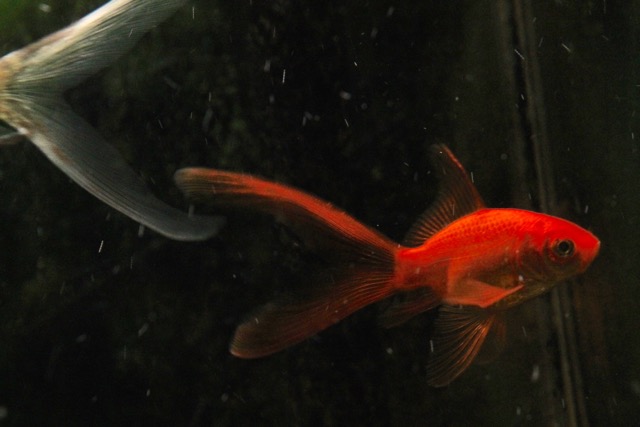
This morning, my daughter’s friend tapped the fishtank and remarked, “Fish are like birds.”

Busy picking up stray socks or something, I nodded and said, “Right, yeah, they’re all in the animal kingdom.”

But something made me turn and look and forget those socks for a moment.  Kneeling beside the tank, the girl’s face stared upward at the water, mesmerized by the gray and bright copper fish a neighbor had gleaned from his pond a few years back.  “Birds are up in the trees.  Fish are in the water.”  This could have been one of those well, duh moments, but the girl was so transfixed.  Maybe what she was seeing was fish hovering in the water, birds fluttering through the air, and us — the human world — plodding along earthbound.

In a recent New Yorker, Sharon Olds writes of her friend Galway Kinnell’s death:

… you fish your side

of the river, I’ll fish mine, you said

it meant – and I can see us, decades,

fishing both sides of the river,

together, sharing the catch.

Writing, as John Cheever famously said, is not a competitive sport.  Where I fish in my shallow part of the river shouldn’t impinge on your territory.  Why not eat each other’s fish and poems?  This girl reminded me that I should push the map of my world deeper and wider, beyond my daily geography.  The natural venue for birds is air, for fish water. Sharon Olds and Galway Kinnell knew a territory where a river of poetry looped through, a wild terrain where they worked separately and yet together partook of the river’s bounty.

All this poetry aside, the girl also remarked, “This fish tank really needs to be cleaned.” On that, too, I concur.

Photo by Molly S.

Photo by Molly S.

Routine Message of Survival

Flowering Plum

In spring from the black branches of the flowering plum tree

the woodthrush issues its routine

message of survival. Where does such happiness come from

as the neighbors’ daughter reads into that singing,

and matches? All afternoon she sits

in the partial shade of the plum tree, as the mild wind

floods her immaculate lap with blossoms, greenish white

and white, leaving no mark, unlike

the fruit that will inscribe

unraveling dark stains in heavier winds, in summer.

— Louise Gluck

Memorial Day weekend might as well be Hardwick Vermont Day.  Parade, fair, concessions.  My daughters were introduced to fried dough this afternoon, by a friend of my Older Daughter.  “Let me introduce you to a fine part of the world……”

The little, exquisite Jeudevine Library had a book sale, where I spent $1.50, rounded up to $2.00, and then released a few more dollars in the bake sale and coffee urn.  My own childhood library, the Goffstown Public Library, and the children’s librarian, Betsy Elliott (now long crossed over), are a place and a person prominent among my treasured memories.   I could go to the library everyday on the way home from school, check out books, read and return them, and check out more.  Some lucky days, Mrs. Elliott had even put aside new books for me!

Courtesy the book sale, here’s a Louise Gluck poem from The House on Marshland.  The woodthrush and I will be out in the garden early tomorrow morning, working on our routine message of survival: tomato plants, basil, cosmos and sweet peas, and that interior life.

IMG_1278

Photo by Molly S.