The Rainbow

This afternoon, driving out of Stowe, I hit a rainstorm so tumultuous I turned onto a side road just over the Morrisville line.  I pulled over on the shoulder, shut off the engine and lights, and simply sat there, the window still cranked open enough to throw bits of rain and wind across my face.  I had been inside all day, and I sat there listening to the rain pinging on the truck’s metal roof.

Without deliberating, I got out of the truck and walked down the road. Traffic whooshed by wetly on route 100, but no one appeared on this side road.  I was immediately drenched, within just moments, the rain running over my lips and into my mouth.  I hadn’t gone far when suddenly I stepped from pouring rain to sun.  I spanned the line of storm with my outstretched arms.  I did what anyone would have done:  I looked for a rainbow, but I didn’t find it until I was driving further down the highway, and there the rainbow was, hung over the village.  I passed beyond the village and then along the lovely stretch of road through tiny Elmore and around the lake, where the rainbow, in vibrant colors, spanned the cornfields.  I hadn’t seen a rainbow since the rogue January one my daughter and I discovered, and, driving today, I marveled at the rainbow’s sheer size, spread from hill to hill, and the intensity of its colors, neatly ordered, smoothly arched, infinitely beautiful.

And then my road home turned around the mountain, and the rainbow was gone.

On my drive, I had been listening to Walden, and when I stepped out of the truck, perhaps I was intending merely to shake my day’s labors from my woolly head, or to drop a problem that had been worrying and gnawing at me, chewing my thoughts irritatingly, all through that drive, my day, my listening, even, to Thoreau.  The rainbow, my brief companion, stretched over all of us in the corners of those towns nestled together, a skyward gem for all.

The better part of the man is soon plowed into the soil for compost. By a seeming fate, commonly called necessity, they are employed, as it says in an old book, laying up treasures which moth and rust will corrupt and thieves break through and steal.
DSCF0022

The Garden’s First Peas

Discovering the season’s first peas in the garden this morning, my little daughter was jubilant.  She picked pink zinnias, admired the emerald potato plants, and noted with a slight unease garlic scape pesto will soon appear on our table.  O joy!

A remnant from our Waldorf schooling days:

The silver rain, the golden sun.
The fields where scarlet poppies run.
And all the ripples of the wheat
are in the food that I do eat.

So when I sit for every meal
and say grace I always feel
that I am eating rain and sun
and fields where scarlet poppies run.

DSCF9977

Roses in our garden, rather than poppies, but also edible!

Coyote Song

My book is headed to galley printing on Wednesday; hence, the last minute flurry of rereading and tweaking — is this quite right?  Can I hone this better?  This chapter, here in its entirety, is Fern one Christmas morning, about as far from this day as possible.  Tonight, so near the solstice, the windows are wide open, a breeze tossing in the maple leaves, the chittering robins presumably sleeping.  There’s an awful lot of snow in this novel.  I mean, an awful lot.  A Vermont book.  Tomorrow, back to my garden.

Chapter 6

Late in the night, I woke.

Tansy cried.

I lifted my sobbing child from her crib and pressed her against my shoulder, humming a tuneless wordless ditty. Her body shook fiercely with distress. Hal’s feet clumped down the stairs. A light glowed from the living room below, and, caressing my daughter’s silky head, I thought of the heat from the woodstove whooshing up the staircase, fleeing into the frozen night through the ceiling of this plank-built uninsulated second floor. Through the window, stars hung in the nightsky, forever distant.

The little girl calmed, wrapped in a blanket and my arms. Her shuttering, gasping breath gradually quieted into sleep. Then I heard a sound I thought at first was an orchestra broadcast from outdoor speakers, as if a DJ had arrived: a trumpeting I mistook on this Christmas morning for Handel’s religious music. Then I thought perhaps it was the ancient sea, dolphins or whales, their voices raised in holy harmony. None of this was so: coyotes howled down the hill, somewhere near the sugarhouse. In the great ocean of night, I couldn’t see them, but I sensed their muzzles were raised to the cold sky, howling in long chimes, one into another and another, and another. With only the little bit of light trickling up the stairs and the stars icy bits, my slumbering child growing heavy in my tired arms, I leaned our weight back on my heels, entranced by the loveliness of this Christmas morning wild serenade.  And like that, the coyotes ceased, and the farmhouse was mute again.

Photo by Molly S.

Photo by Molly S.

Vermont Stony Soil

Excerpt from Hidden View:

Abruptly, the clouds rent apart, sprinkling the house with fresh-washed sunlight, and I stood there, marveling at the sudden unveiling of beauty. In a shaft of sunlight, the old farmhouse with all its crumbling paint and spreading rot appeared burnished bright, flawless, amazingly just built. The cornfield so glossy green held twinkling jewels of water in the myriad golden manes of tassels. Overhead, the ample sky spread its colors of roseate and sapphire and pearl. I had thought building the house and farm on this knoll a foolhardy vision, but I wondered keenly now what hands and eyes, what laughing voices and rampart lovemaking, had begun this farm.

Through the truck’s rain-smeared window, I saw my little daughter sleeping, the tip of her tongue kittycat-ish between her garnet lips. The cold and wet had rubbed a rosy sheen over her round cheeks. If I left, got back in that truck and high-tailed my way down the road, I feared I would never cease fleeing. Tumbled behind me, irredeemably attached to my heels, perpetually dogging me, would gnaw my own festering failures, a shackle I would never be able to cleave apart. Somehow, I had fomented a conviction this iridescent beauty demanded a stony soil, rank offal, the misery of illness: that to pretend otherwise was a foolhardy and misguided notion. I could not flee toward a world of rainbows and sparkly unicorns. I believed, crude-formed as I knew my thinking was, that we had sown the seeds of our daughter Tansy and Hidden View Farm, and now, in the midst of cultivation’s hard haul, I had to grit my teeth and suffer through the trials of evolving growth. Howling in my young body, over the rolling flux of seasons, of dying autumn and bleak winter and joyous summer, rang the experience that this farm was earned with far more than a requisite pound of flesh. I believed Hal and I would come back to each other, this rift between us a rainy season that would, eventually, disperse and clear. I believed we would grow old together, that we would come to know the sharp lines around our eyes, the aged quiver of our hands, the thinness of spotted skin over knuckles as our hands gradually slowed. I believed to get to there, I had to endure through here. All things in due course. Hands to the shovel. Lean into your work. Persevere.

DSCF9890

Photo by Molly S.

Wanderlust

Last Saturday when I arrived to open the bookshop, a high school girl was waiting outside.  I unlocked and let her in, and she knew immediately where she was heading.  She had been waiting, that warm summer morning, for me and my key to arrive, to buy a copy of On the Road.  Her English teacher had recommended the book.  She bought the copy and stood outside, reading.

Later that day, another young woman, who said she was twenty-one, bought a Rand McNally Atlas.  She had relinquished her apartment and her job, but not her car.  I asked where she was headed, and she smiled and said, I don’t know.  Somewhere.

Those two sales alone made my day at the bookshop a pleasure.  Youth, wanderlust, reading material.

My parents always loved to pack the car and head out on the highway, the map wedged somewhere in the front seat.  As I’m buying another car shortly, I suggested to my girls we pack up, hit the road, and not mind sleeping in a field or two along the way.  Dew on your cheeks in the morning is a terrific beginning.

Then, reading the end of HARRIET THE SPY with my daughter tonight, I read:  There was a cold wind off the water, but the day was one of those bright, brilliant, shining days that made her feel the world was beautiful, would always be, would always sing, could hold no disappointments.

My young daughter had that kind day of today, her eyes joyful tonight, laughing.

Maybe we won’t be hitting the road this weekend.  I have a deskful of work; the garden needs tending; and the children (at this moment) are satisfied.  But I could hardly restrain myself from asking of those young women, Send me a postcard.  Tell me your stories…….

DSCF0010

Rot and Raging Beauty

My garden is not yet wholly in, and already the brassicas are riddled with root maggots, that old pest from last year raging up again.  Ignore it, ignore it, I foolishly did last summer, and the maggots have returned in force.  I’ll yank the plants, unable to see their slow wither and rot, these former beauties I seeded and tended.

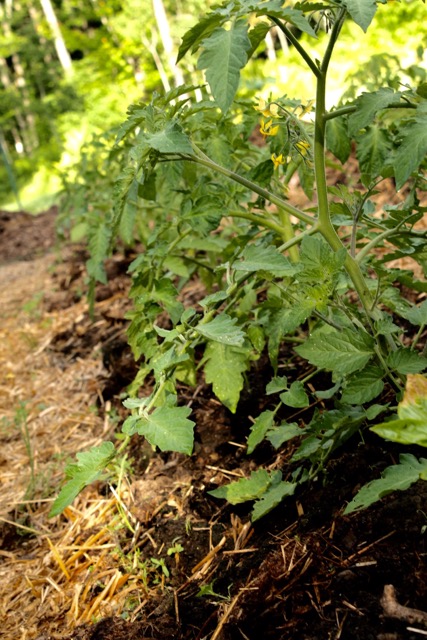
But the tomatoes flourish.

MY LITTLE CHERRY TOMATO PLANT

You will grow my little ones
You will rise my tiny ones
Into a bush then a tree
And to the sky, you will be free!

You will be ever green and spark
You will be tallest than the sea’s shark
Your tomatoes with the green leaves
Like Christmas decorations on Christmas Eve

You will be sweet my little plant
I love you always I shall grant
So rest my fellow, breath fresh air
Sleep now, rest and grow ever Fair!

–– Maya Took

IMG_6607