Reading with Daughters

When I first started to read, I was given a series of  books at school with stories about traveling through magical lands, unlocking doorways with magical keys, and appearing abruptly in green fields with Mt. Fuji-like mountains in the distance. I was tiny, so the books seemed large to me, like the size of the Vermont Gazetteer, which they couldn’t possibly have been, and the illustrations were koda-chrome beautiful. I have no idea what those books were; I’ve never seen them again (no doubt they’re out of print), but I keenly remember the joy I found, proficient at reading and slipping into that world.

Isn’t that one of the great joys of reading? Not leaving this world, but unlocking doors with unexpected keys and going down deeper into our own unpredictable world?

We’ve hit a new reading phase at our house. The other night at dinner my older daughter read The New York Times review of Harper Lee’s book aloud, with much discussion, and the next day she checked out Go Set a Watchman from the library. What a pleasure to read with her last night, as she periodically lifted her eyes and said, “You won’t believe this, mom,” while the younger daughter ate grapes, deep in her own fairy book series.

I’m reading Shape of the Sky, so keenly well-written I’ve put in a few late nights. Here’s Shelagh Connor Shapiro’s line about a teenage boy:  Within the song is both the pleasure and anger of being fifteen or sixteen or seventeen – the untapped potential of those years, and the yearning to be more than he is, to be in another place and time. And yet, to love where you are.

Ripening raspberry on the vine by Molly S.

Ripening raspberry on the vine by Molly S.
Stopping by the Edge Garden

This afternoon, while on my way from here to there, I stopped by a garden. With just a few minutes, I ran down the hill through the crown vetch and looked briefly to see what was growing. Cinquefoil, creamy yellow.

This garden, like so many Vermont gardens, is an edge garden, between a place of domestically cultivated flowerbeds, carefully tended, in the height of bloom, and just beyond this vegetable garden is a wetland with a lilypad-rich pond, where I’ve seen blue heron, deer, an eagle. Between one place and another, the edge is fertility, creation, growth, a joining of one place to another:  bank to water, field to forest, sickness to health, fruit to decay. So, bending over, in two moments of quiet before I hurried back up the hillside to my daughters, I thought to pull a few weeds away from a cucumber plant, and found instead wild cinquefoil thrust over the seedling, so amazingly alive in this unpeopled place I withdrew my hand.

Instead, as I walked back, I snipped a few stalks of wildflowersThe edge is multi-layered, endlessly changing, the brilliant sunlight soon dimmed to night, harborer of sweet wild raspberries, leeches, box turtles and snapping turtles, toads the size of my thumbnail. Today, surrounded by those wildflowers tall as my elbows, I thought, Well enough. Let it be.

My daughter, at eleven
(almost twelve), is like a garden….

Oh, little girl,
my stringbean,
how do you grow?
You grow this way.
You are too many to eat…..

– Anne Sexton

Wildflowers by Molly S.

Wildflowers by Molly S.

Summer Evening

One simple and incredibly marvelous piece of our summer so far has been making a ring of rocks into a fire pit. The small daughter has naturally seized on this as a daily s’more opportunity. With the fairly regular rain, we’ve put up my old farmers market tent, and now we seem to be moving more and more outside. Dinner? I stir fried peas and garlic scapes and carried the skillet outside, while the girls roasted sausages. Sadly, our chocolate s’more supplies are depleted. The other morning I twisted my ankle leaping off the porch and spent the bulk of the day with my laptop outside. Since I couldn’t walk, that pretty much eliminated chores, which – while as a long-term scenario is hugely unappealing – for a July day really was an odd kind of opportunity. In summer, I’d rather live outside than in, and the smoke dispels some of the opulent bug life….

Whereas he baled hay. I baled sentences into paragraphs of prose. The meadows revealed themselves as pages, and the barn itself became the equivalent of the book where it all goes, to feed the mind and soul.

– Julia Shipley

IMG_6793

Flux

My daughter, picking peas in the garden, reached down and plucked a pod chewed ragged by tiny snails, the little creatures with their whorled homes still climbing on the green. Next bed over, a black swallowtail caterpillar munched the parsley. Early this morning, not long after dawn, as my daughters and I drove across Vermont, we saw a fawn sprawled over the pavement, two porcupines, a raccoon. Weeds, breeze, pollinators: the ten thousand things wildly grasp these long July days. Nothing still, nothing static. Even the children, asleep at last, lie breathing softly with dreams murmuring through their minds.

… the ten thousand things (are) in constant transformation, appearing and disappearing perennially through one another as cycles of birth and death unfurl their generations: inside becoming outside, outside inside. This is the deepest form of belonging, and it extends to consciousness, that mirrored opening in which a heron’s flight can become everything I am for a moment…

– David Hinton

DSC01028

Flowers and Sustenance

In my first gardening days, I planted few flowers, hoarding what little space I had in those days for vegetables – work to eat, work to eat.  How years unravel and unwind.  Today, the garden is lush with vegetables, but my beloveds are the blossoms.  This morning, the reseeded calendula is nearly open.  My earlier days, with nursing babies and accumulating bills, were a scramble to plant and weed and harvest.  These days, I pause and watch the traveling pollinators at their work.  Sustenance.

Your peonies burst out, white as snow squalls,
with red flecks at their shaggy centers
in your border of prodigies by the porch.
I carry one magnanimous blossom indoors
and float it in a glass bowl, as you used to do.

– Donald Hall

DSC01046

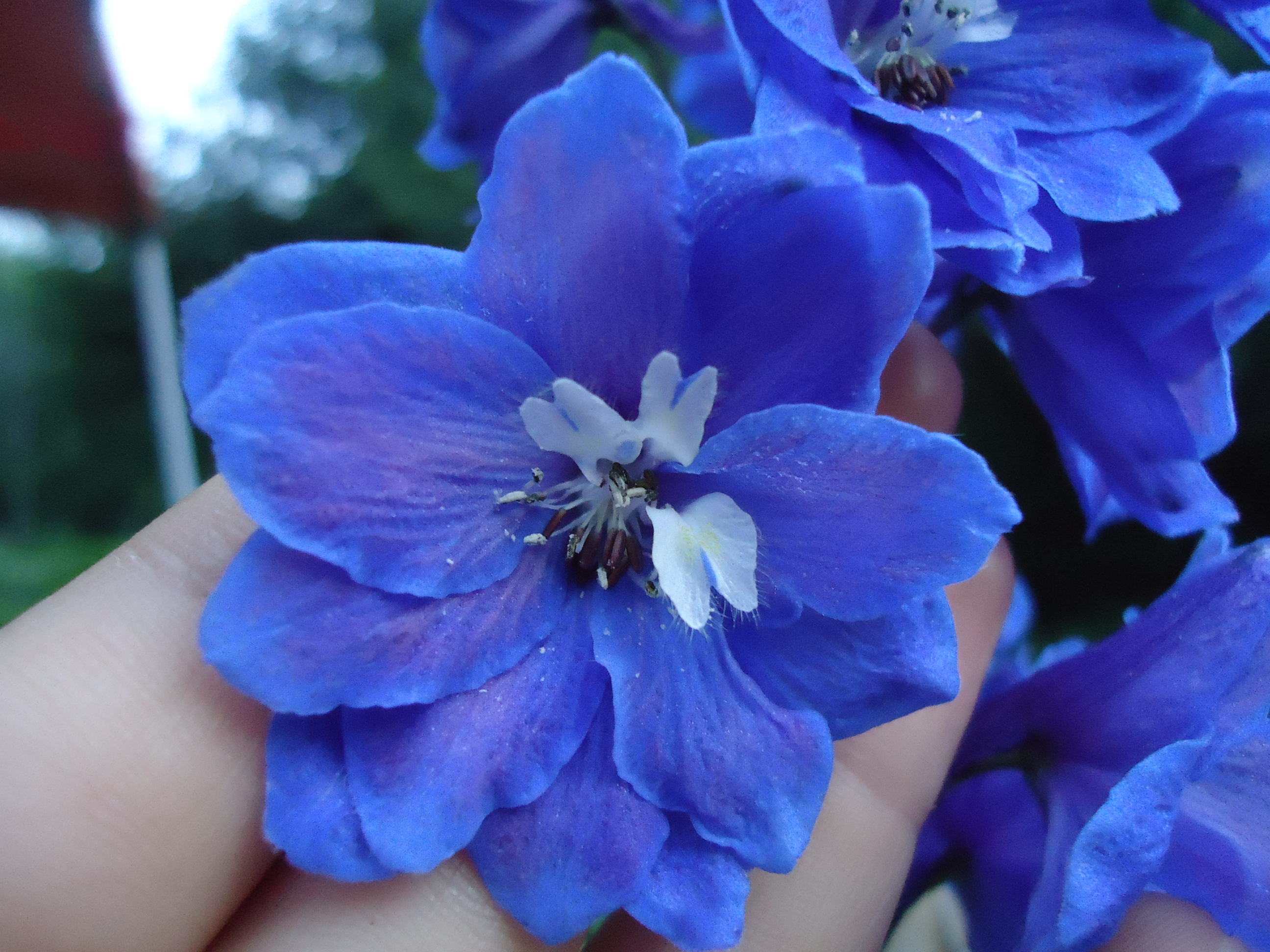
Blue delphinium by Gabriela J. Stanciu

Heaven Under Our Feet

Here’s a bit of my Thoreau paper on sense of place – with snow. Then back to weeding the garden.

Imagine Walden a sphere, where all elements within are constantly in motion and inherently connected, from the most minute level – for example, the weight of perch – to the cosmological. Within this Walden sphere, all aspects knit into the natural world…  Standing on the snow-covered plain, as if in a pasture amid the hills, I cut my way first through a foot of snow, and then a foot of ice, and open a window under my feet, where, kneeling to drink, I look down into the quiet parlor of the fishes… Heaven is under our feet as well as over our heads.

DSC01033

Floor, Concord, MA, Masonic Lodge.