Place in Writing

Abbreviated intro to the reading I did tonight at the Greensboro Writers’ Forum, which leads, more importantly perhaps, to Lorca.

The most important thing I can say about place and writing is that we are place. Landscape is not merely green fields dotted with cows. My thinking around place has been significantly influenced by Lorca’s essay on duende: on what he calls this “mysterious force that everyone feels and no philosopher has explained which is… the spirit of the earth.” The power of literature arises from our soulful connection to the earth–with all the light and also all the darkness that encompasses.  My book, set on a rural Vermont farm, unwinds as the characters evolve from a youthful idealism to the day-to-day reality of struggling to earn a livelihood from agriculture. All farms confront failure in one way or another; whether in small doses or wholesale catastrophe–much as we do in our own lives. In the end, perhaps, that’s the rub in this world–that mixed, gray place between intense joy and utter sorrow–where our own human stories unfold, and that’s where literature thrives.

So, then, the duende is a force not a labour, a struggle not a thought. I heard an old maestro of the guitar say: ‘The duende is not in the throat: the duende surges up, inside, from the soles of the feet.’ Meaning, it’s not a question of skill, but of a style that’s truly alive: meaning, it’s in the veins: meaning, it’s of the most ancient culture of immediate creation.

–– Lorca

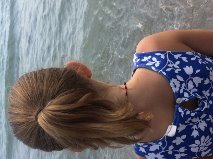
IMG_7546

Photo by Molly S.

Long Pond Cape Cod

Ten-year-old Gabriela Stanciu is a guest blogger today. She loves to eat watermelon and read Harry Potter.

I was on a vacation at Cape Cod a few days ago and we had just gone swimming in the ocean so we thought we should wash the salt water off by swimming in a fresh water pond. We went to Long Pond. It is a Pond in Wellfleet Cape Cod. so we showed up and parked. Me, my Grandparents, and my dad got out of the car. When we got in it was really warm compared to the ocean. It was a beautiful lake. The water was crystal clear all the way through. And it was really shallow. When I got like a third of the way out into the lake it was only like five feet deep. The sand at the bottom was really soft and there wasn’t any rocks. Like 15 minutes later my sister and aunt showed up. My sister didn’t want to go swimming but my aunt did. When my aunt got in she got in over my head so I hopped on my dad’s back since I can’t swim very well. We swam for a little more and then got out.

Next we went to this store that we call the floatie place even tho we have never been there. Well, it has a ton of giant floaties all over the building. They probably have any floatie you can think of in that place but we did not go there to get a floatie we went there to get a life jacket so I could float around in the sea. My favorite floaty was the giant flip flop but it probably wouldn’t fit in our car. But what we did get did fit in our car.

GetAttachment-1.aspx

My Woodchuck Companion

The air was cool this morning when I reached over and turned on the light. It was a little after four, and with the windows and screen door wide open the room had cooled overnight from the day’s heat. I woke thinking of the woodchuck I’d seen in my garden the day before, a long flashing swatch of him running alongside my onion bed. Earlier that day, from the balcony, I’d seen the woodchuck on the huge rock pile across the small field. The animal lay on his variation of a rock balcony–my neighbor across the buckwheat–preening itself. I could see the lushness of its pelt, brown and russet and red, before it turned, amazingly quick despite its size, and disappeared down the rock pile.

The creature’s been in my hoop house, eating tomatoes, these luscious beauties on my forty or so plants finally ripening after a late planting and a summer of rain. As I lay there, I imagined this impressively large animal gnawing away at my fruit, strewing the paths with partially chewed golden and red tomatoes, its head swiveling around, a little jumpy for the sound of my footfalls, its dark eyes shining in the early light.

While I lay there, the Dutch novel I’d been reading, The Twin, got mixed up in my thinking of the woodchuck, so I was riding along the dykes and looking through a window on a Dutch dairy farm. In and out of this spell loomed the wild creature with its glistening white teeth and shaggy pelt–the fur that, on some fearful level, I longed to touch. In the end, I picked up my book and read for a while before getting up to work.

My tomatoes? Or the woodchuck’s tomatoes? A year ago, the fierce gardener in me would have risen up in rake-welding fury. Now, I’m thinking to pick what I can, and perhaps not so bitterly begrudge this rampaging feast. Likely, the woodchuck wishes I would pull up stakes and head out for new territory. As I wish for him.

There’s one chuck left. Old wily fellow, he keeps
me cocked and ready day after day after day.
All night I hunt his humped-up form.I dream
I sight along the barrel in my sleep.
If only they’d all consented to die unseen
gassed underground the quiet Nazi way.

–– Maxine Kumin “Woodchucks”

DSCF9977

Sacred Space

Although living with kids is as joyous and often as outright fun as I could imagine, like anyone else, I need at least small slivers of sacredness. Briefly today, I walked out to one of my favorite places, a little beyond my daughter’s elementary school. Like any resounding place, I’ve come here in all kinds of weather–radiant sun, sleet and mist and even the deepest of cold. I’ve come lightly with happiness; I walked that short distance so burdened with misery my heart seemed stone. But always, even a few moments yield me a tenor of stillness we human creatures crave.

For many years, I had a picture I’d torn from The New Yorker on the wall near my desk. It’s a photo taken of a miserable-looking Marina Oswald shortly after her husband shot JFK. Behind her, in this black-and-white photo, is a clothesline hung with diapers. Among doubtless many other things, in those terrible days Marina Oswald was washing diapers, because her baby needed the diapers.

As a female writer in a heavily patriarchical society, I know it’s particularly keen for women to continue doing what needs to be done to keep house and home and family together, but not to fall into the trap that a broom for the soiled kitchen floor is the same as paintbrush. This evening, making pickles, brine stung the cuts in my palms from a fierce weeding in the garden. Washing the salt off, I thought how a little running water can ease bitterness.

For those to whom a stone reveals itself as sacred, its immediate reality is transmuted into supernatural reality. In other words, for those who have a religious experience all nature is capable of revealing itself as cosmic sacrality.

––– Mircea Eliade, The Sacred and the Profane

DSCF0023

Listening and Writing

With my children gone for a few days, I vacuumed the considerable debris from the living room floor and then took my ream of a manuscript and laid it on the wood floor, in piles of chapters and scenes. I walked around, bent down, lifted a page, then sat on the floor and read. I was immersed in the territory of a novel-in-draft-writing. I wasn’t looking for a good sentence, a decent paragraph, a chapter with potential. Instead, I aimed to listen, to look down deep, and figure out what may lie at the dead-center of this book.

My laptop was shut; the clock turned to the wall. I determined not to answer the phone unless my girls called. I had a good three-inch stack of a draft, much likely to be discarded along the way, mere steps to get to the end.  To listen and read so hard, to come at this work without prejudice or prejudgement is difficult at best. At last, I began to scribble, notes for characters, a possible plot-line arc, and then, at the end, I wrote one true word: hunger. The book is about hunger.

That was most of Sunday. I painted a few kitchen windows and weeded the garden.

In the early evening, my girls called. I left my basket half-filled with tomatoes, and leaned against the garden post, listening for the heart of their stories.

We are afraid of writing, even those of us who love it. And there are parts of it we hate. The necessary mess, the loss of control, its ability to betray us… how to feel at ease with all this? How just to let one’s work be?… The answers you want can come only from the work itself. It drives the spooks away.

–– Bonnie Friedman, Writing Past Dark

DSCF0007 1

The Fish Experience

My guest blogger, Gabriela Stanciu, is ten-years-old, and an avid biker and fish-watcher.

When I first got my fish I was 7 years old. We went over to the neighbors because they were giving us the fish and the fish tank. I was really excited the neighbor had the fish in a plastic bag that was kind of weird. We went back to my house put the fish in the tank and started the motor. I had eight of them. One big one, three gold fish, and four brown fish. Most of the time I sat in front of the fish tank in my red rocking chair and ate peanuts. The fish swam around and looked at their new home.
A year later I was walking by my fish tank I looked in and there were seven fish the smallest one was gone!!!!! We think that the biggest one ate the smallest one.

A couple of days later I looked in and there was a fish just floating there with its eyes coming out!!!! We weren’t really sure what happened to that one so we just threw it in the compost. The other thing that was weird about the fish tank was that two fish that were brown were now golden. My mom said it might be the type of fish so when they are little they are brown and as they get bigger they turn golden. Since then the fish have been fine.

Photo by Gabriela

Photo by Gabriela