Saving…. Who?

One recent morning, on the lawn of the former schoolhouse where I work, signs appeared on the triangle green: Save Town Hall. Shortly afterward, with black spray paint, someone altered the signs to: Save Town.

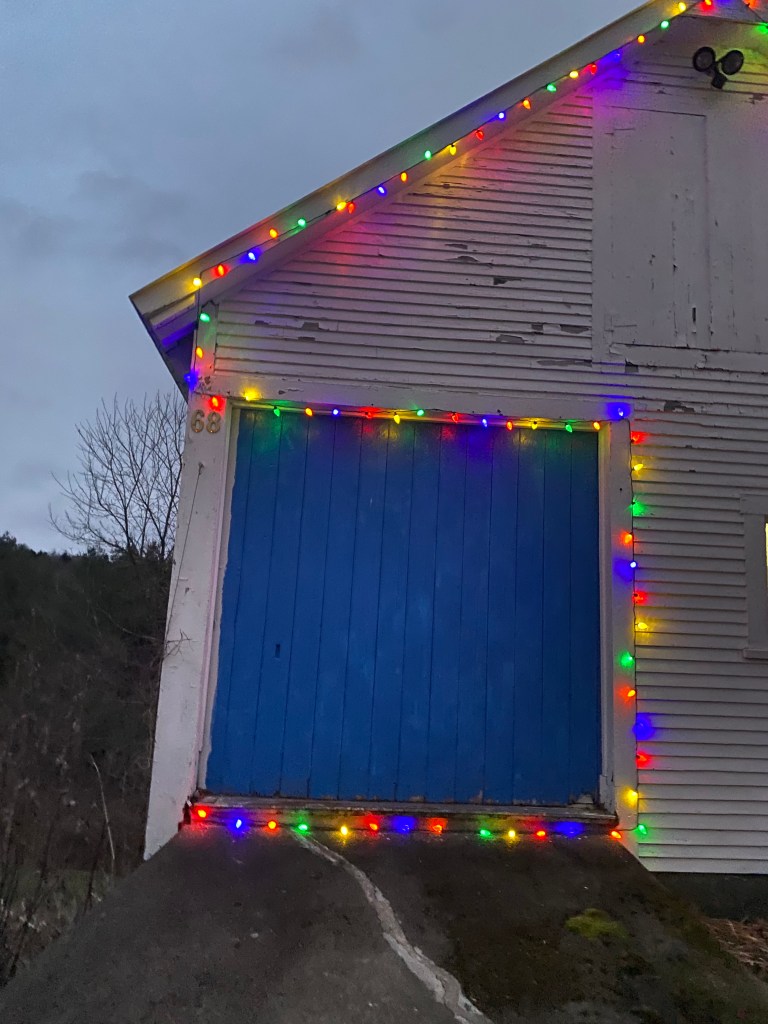
This building has been around since before Archduke Ferdinand was assassinated in 1914. The entire top floor is a gymnasium, the middle floor four classrooms, the basement originally must have housed a coal furnace. After a $14k heading bill one winter for a building largely empty, I urged the Selectboard to consider other options. Oh, the furor that suggestion has now caused.

All summer, walking into the basement, I kept saying, I smell mold, I can’t work in a basement, I can’t think straight, can’t breathe, in a repetition that was doubtlessly whiny and certainly dull. But like the people arguing around this building, the building isn’t stagnant, either. I take my laptop upstairs to the empty rooms, where it’s me and the dusty windows, the paint shedding from the pressed tin walls and ceilings, the beadboard molding higher than my head.

In this wet, wet summer, mold blooms, and I rally the tiny office staff. Let’s move! I grab my jade plant. In a few hours, we’ve moved upstairs into the empty rooms, opening the windows and letting in the sunlight and breeze. I prop open the doors and sweep up cobwebs. Behind us, we leave so much. In our rouge occupation, we women set up housekeeping. I take off my shoes and walk barefoot over the maple floors .

We hire a crew to move the heavy things, and the men walk around remembering when they went to school in these rooms. Art classroom here, lunch there. All day long, with the doors open, the public wanders in and offers suggestions and stories.

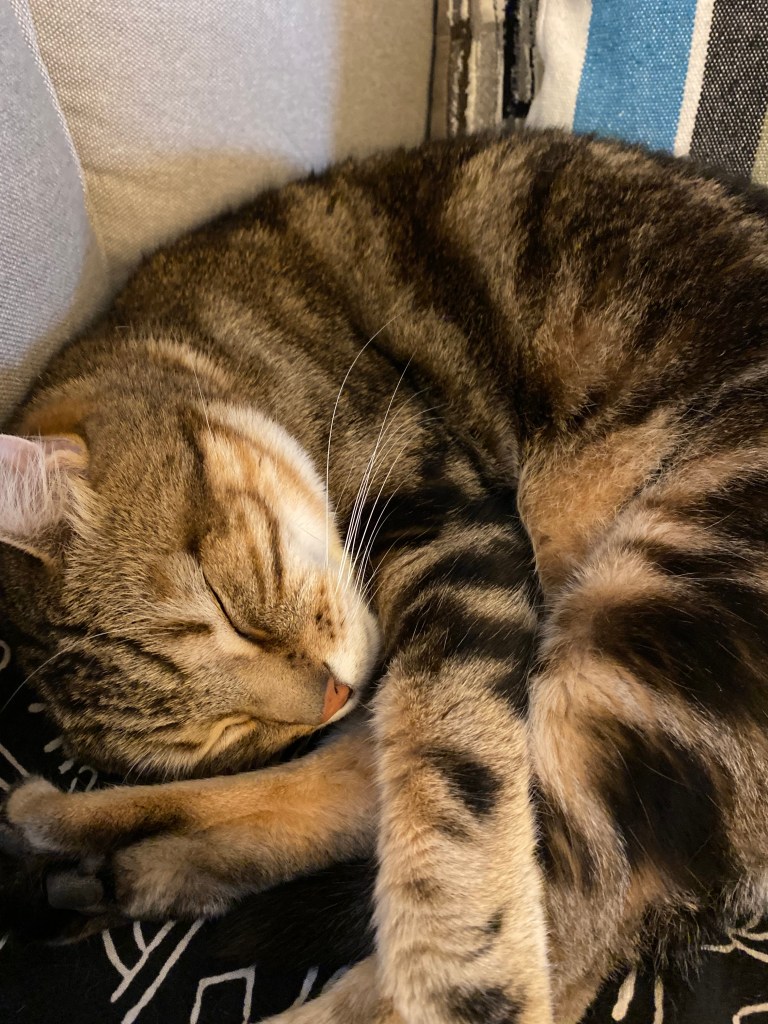
A woman asks what we need. I’d like a pair of kittens here, frankly, or maybe a small old dog who wouldn’t mind sleeping on the rug in the sunlight.

Save Town? A question that opens up into a Jacob’s Ladder of questions….. in the meantime, we’re at least moving up into the light….

Hard, Sweet Pears.

The couple who owned this house before me planted two pear trees in the front yard. The runt leans into the lilac hedge, as if hiding its crown. The taller has expanded into a pear tree version of pirouetting ballerina. Late afternoon, after pulling out withered lily leaves from the flowerbeds, I pluck two hard sweet pears and head over to the neighbor.

She’s created an unusual little garden with little pools of running water, so the delight is for your ears, too. I hadn’t realized it was the anniversary of her husband’s passing. We sit in her garden while the sun sinks down, talking about random things — work and the school board and gardens. The little boys across the street bike into her driveway. She’s parked as far back as possible to give the children a little more space on our tiny street.

When chilly shadows cover the garden, I stand, throw my pear core into her weeds, say goodnight. The boys have been called in for the night. As the cold edges in, mist thickens in the valley below. I watch how those cloud layers drift, cushioning the village, layered work just for the night. Then I pick another pear for breakfast.

Some days I find myself wondering how I’ve landed in this town, what random circumstances drove me here. There’s that trite old phase that the only constant is change, but of course that’s not true, either. All around us flow the steadiness of children, of loss, of those ripening pears.

September: such a pretty, sweet month.

Blackberry Eating

By Galway Kinnell

I love to go out in late September
among the fat, overripe, icy, black blackberries
to eat blackberries for breakfast,
the stalks very prickly, a penalty
they earn for knowing the black art
of blackberry-making; and as I stand among them
lifting the stalks to my mouth, the ripest berries
fall almost unbidden to my tongue,
as words sometimes do, certain peculiar words
like strengths or squinched,
many-lettered, one-syllabled lumps,
which I squeeze, squinch open, and splurge well
in the silent, startled, icy, black language
of blackberry-eating in late September.

Imagining a fox, two strangers in a canoe…

A fox runs out in front of me as I leave the library, so quick the creature might have been my imaginings in the night. Upstairs, people are still talking and laughing, remnants from the Selectboard meeting. Behind me, the man who lives down the road, with neither water nor electricity and is often at the library at night, his phone plugged into an outlet in the foyer that’s left unlocked, perhaps for this reason, says, “Saw it, huh? Fox.”

The sunset has simmered down to a liquified gold spill in the darkness. I pull into the beach. I’m alone here, and I get out of my Subaru and lie down on the wet sand. I can feel the damp sand clump into my hair. The waves lap. The spill of light shrinks. The crickets are doing their sizzling thing, and goddamn, here it is again, end of August, a goodbye to the sunflowers not far in the offing.

I spent so many hours of my mothering life at this beach, and now this summer has slipped by without a single visit to this particular beach. The sun goes down. And here’s the weird thing: while I’m lying there, dampening, dampening, wondering what’s up with the universe anyway? Why does it always feel like loss, loss, loss, a canoe paddles by. In a funk, I don’t bother to sit up and chat with strangers, but the couple steers their craft right onto the shore and asks what’s up with me….

So, I sit up and talk.

Turns out, even strangers, we have strangely similar intersecting points. In the dark, the lake lapping at their canoe, we stand talking while the stars blink on, just a few, in the cloudy night. Then, instinctively, as if in some kind of pact, we reach out and shake hands. Then I’m off to my home and my hungry cats, and the couple paddles on…. maybe an imagining, maybe not….

Crash, smash, end of summer….

Sure, it’s hot again, but it’s a day without swimming. I’m in the nether in-between place where the youngest is headed back to college, and my life inevitably tips towards the not-so-fun adult things I’ve kicked down the proverbial road. Borrow a spark plug wrench and fix the lawn mower, walk down the hill and ask the young carpenter what to do about that stucco that crumbled from the house foundation, just behind the rose bushes that we sliced away last weekend, tearing away the moss to keep the moisture, moisture from my house.

We are inside and outside all day long, hanging up laundry and sweeping the porch, loading a car… The cats are confused. The kitchen floor is sandy. I think of this day and the next and the few following until I might meet my friend for dinner, exchange our mothering stories, ask what’s happening? what now? what next? This year, I have officially crossed over into the population of the dead mothers club. In a strange kind of way, I find this like membership in the new parents club: once you’re a parent, you’re in, a lifer, whichever way you’re going to take that ride. As for me — and maybe it’s really my suspicion I’ve been poisoned by mold at work — but I turned with an anathema against cattiness and pretense, as if my own death perches on my back just like my daughter now heading back to college classes who hung on my back not that many years ago, her miniature fingers curious against my ears, reaching for wild blackberries. Evenings, the August she was one, I walked her sleep every night as the twilight sank and then laid her, sodden with dreams, on our bed.

So it goes, this rich wild life.

On a whim, I buy a copy of Pearl by Siân Hughes in Montpelier. Oh, novel of my heart:

Had I stopped to think for a minute that the fracture in my family, the rift opened in my own heart, would be passed down to the next generation, through my own damage if nothing else? No, I hadn’t. It never crossed my mind….

The repair of the world might, indeed, be impossible…

In a gray drizzle/not quite drizzle, I stop outside the co-op to talk, my hands full with peaches, mozzarella, and Clif bars for my daughter’s hike the next day. The prediction is for temps at high elevation in the thirties.

My conversation companion is a woman I run into randomly, usually on the sidewalk, and inevitably we jump right into talking. It’s August and dreary with wildfire smoke and a sudden cold rain. My hands are full with those peaches and sweets, so I’m blinking in the misting rain. I’m laughing a little, because why not? but I sharpened up quickly as she’s not laughing at all. The strange thing is she’s listing some things that have been rattling around in my mind for months now – the collective frustration that bends dialogue to anger or sarcasm, the way the town’s Center Road is so unkempt grass grows through its middle, and the recent property tax bills that are are you kidding me?

And even though my daughter is at home waiting for the cheese for that pizza we’ll make from onions and basil and tomatoes I’ll snag from the garden, I leave my few groceries in my Subaru and follow my companion through the damp woody patch behind the co-op. We stand at the river’s edge. She leans far out over the water. Look, she says.

It’s drizzling, and even though I’d gone running just before stopping in for what I thought would be a few minutes’ worth of shopping I’m starting to shiver a little. But I have this sudden vision of what’s happening with this town where I live, how the river threatens to wash away this downtown of brick and granite and asphalt, trees and roses. Years ago I realized that brokenness is never one thing; all these unfixable things – climate swings and decades (centuries?) of ill-use and reliance on the Feds to fund these fixes, when that amorphous federal government… well, why say more there?

A few years back, I interviewed a well-known writer who advised me that a writer should always acknowledge her time and place. The rain’s fattening. The repair of the world might, indeed, be impossible. At home, our kitchen is warm and bright, and the cats are half-sleeping as cats do on the rug before the kitchen sink. I’ve always believed in domesticity as the antidote to the world’s inevitable callousness. Later, I wander over to the neighbor’s house and lean in her doorway for a bit. We talk randomly about nothing much at all, catbirds and rose thorns, no repair, but a strengthening of heart, surely.

Late August, given heavy rain and sun
For a full week, the blackberries would ripen.
At first, just one, a glossy purple clot
Among others, red, green, hard as a knot.
You ate that first one and its flesh was sweet
Like thickened wine: summer’s blood was in it….

“Blackberry-Picking” by Seamus Heaney

Immensity taps at your life…

Nearing the end of August, the wild around our village house is mightily fortressing. The path behind our house has been given up this summer by friends; those who visit arrive via the street where the grass has broken the pavement, too, crisscrossed the gray with emerald. In the ravine behind our house, the foxes have kitted again this year. Randomly, the youngsters come out to chase each other. My daughter, who unexpectedly met the hissing mama fox, gave up that path a few years back. Only I now claw my way through the blackberry brambles, whistling, scraping my bare knees in some kind of penance for passing through their realm.

This year, while the human world on a great and local level has worked at its less admirable traits, the natural world has flourished. My daughters and I hold the apples and pears, gauging not yet, not yet. All around, a rioting of blossom and vine of what I’ve sown — sunflowers and morning glories, love lies bleeding — and the lushness of goldenrod, wild honeysuckle, creeping cucumber.

Oh, sweet illusion of Vermont’s August, as if stark November will skip her own visit this year….. On this dewy morning, smoke-drenched from wildfires so far distantly north, a favorite poem from Jane Hirshfield.

“Tree”

It is foolish
to let a young redwood
grow next to a house.

Even in this 
one lifetime,
you will have to choose.

That great calm being,
this clutter of soup pots and books–

Already the first branch-tips brush at the window.
Softly, calmly, immensity taps at your life.”
― Jane Hirshfield