Living Sonnet for this Holiday

In my daughter’s geometry homework, she’s struggling to take a flat diagram and turn it into a three-dimensional object – harder than might be imagined, even for an art-minded kid. In this holiday break, with a teenager and a savvy ten-year-old, we talked with my brother about who we know and how their lives shape out, and the choices people make in their lives. That clarity of hindsight notion…

Sometimes it appears as though our lives unfold into myriad geometrical shapes, complex beyond any imaging. Walking in the garden this afternoon, around the beds banked over with raked leaves, we saw two fluttering moths, blooming johnny jump-ups, and purple ground ivy flowers in the hoop house. Those petals are a dimension not so long ago I would never have imagined in the month of December. What way will this story bend? All around us appears this mighty world, seemingly all-powerful, greater than any of us: and yet, here we are, a handful of people – my family – walking in our kitchen garden. Who is the folder of this shape?


Life, with its rules, its obligations, and its freedoms, is like a sonnet: You’re given the form, but you have to write the sonnet yourself.

– Madeline L’Engle

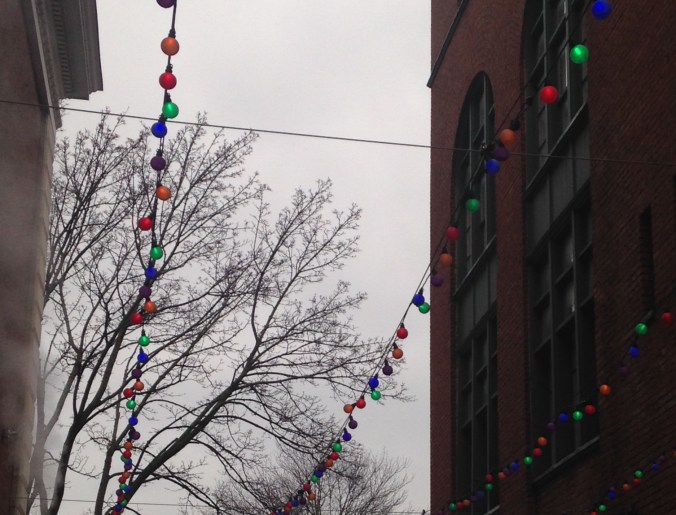
IMG_0487

Christmas Eve, December 2015, Woodbury, Vermont

Revision: Re-Envisioning

This Wednesday morning at my daughter’s elementary school, the littlest ones – the kindergarteners and first graders – shared some of their work. Their teacher had encouraged the kids to work on revision, with a method I found so familiar I might have written it myself: be specific, persevere, don’t be mean. The children showed their school – fifty students and a handful of teachers and parents – a science experiment, snowflakes they made, a girl’s story she had written four times. Excited about the holidays, the little girls wore sparkly dresses.

I didn’t encounter the revision word until high school. Revision was a hated word, a punishment, a sign of slacking or incompetence. Not until I hit the second half of college did revision become deeply engrained in me.

In graduate school,  I had a professor who told me, Revision is our life. Widen your lens: re-envision. Perhaps that’s why I found this morning so particularly interesting: at such a young age to begin looking at your doings, not in a spirit of despair or judgement, but in creativeness openness. That may be a long stretch for a five-or-six-year-old kid, but good habits took me an embarrassingly long period to learn.

For what it’s worth, Shelagh Shapiro (author of a fine Vermont novel The Shape of the Sky) interviewed me for her Write The Book Radio program (listen here). Listening to the podcast driving home last night, I thought, Slow learner. Which, perhaps, was why I enjoyed the little kids this morning. And the young authoress today did her own illustrations, as well.

Revision is one of the exquisite pleasures of writing.

– Bernard Malamud

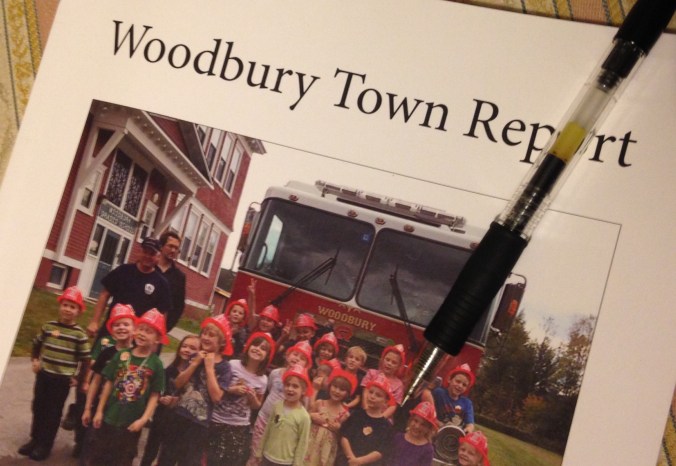
FullSizeRender

Montpelier, Vermont


On the Straw in the Manger….

My father had a saying in my childhood: Adversity builds character. That tenet doesn’t rear its head in many contemporary parenting manuals, but when I was pregnant for the first time, someone asked me what I wanted for my child. Health and happiness, of course, but I also wanted to nourish a rich inner life for her.  I couldn’t say exactly what that might mean, and my daughter has since said – more than once – “I’m sick of hearing about that inner life thing.” But when the time came (unexpectedly, as it perhaps always might) to draw on my own inner resources, I found those waters far sweeter and infinitely more plentiful than I ever could have imagined.

To my father’s advice, I might add Malcolm Gladwell’s exhortation to have blink, to keep your eyes savvy and parse up the scenario. These two come together, it seems to me, in this holiday season – which is, after all, in part the story of parenting. Despite our culture’s commodification, Christmas is the sacred innocent babe in the manger full of straw, his young parents turned away from the inn in their painful hour of need: literally, at the birth of their child. Born under an auspicious star, with a destiny to suffer enormous adversity, the story of this child of the wandering poor might impel us to reexamine the abandoned and dusty outbuildings of our lives, searching for what we least expect – perhaps even what we may not want –  and search the starry heavens, looking for counsel.


You may write me down in history
With your bitter, twisted lies,
You may trod me in the very dirt
But still, like dust, I’ll rise…

– Maya Angelou
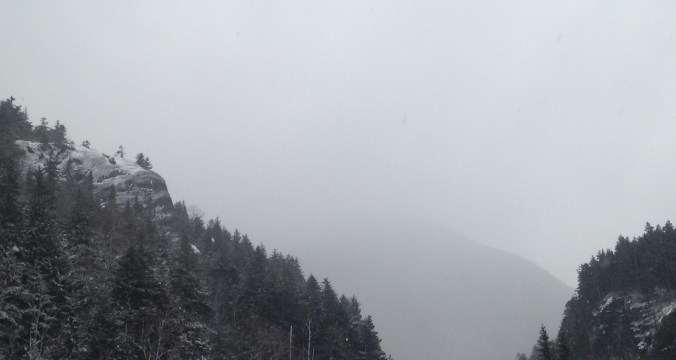
IMG_0456

Elmore Mountain, Vermont


December Solstice

Having kids means, in part, passing through childhood again, but with an entirely different lens, a perspective deeply entrenched in childhood, yet wholly beyond childhood. One slight thing I’ve learned over these decades is that our world, as still and stagnant as it sometimes appears, is always moving, always in flux, our bodies shedding skin while simultaneously producing new cells.

On the edge of this December solstice, with the threads of worldwide violence thickening and spreading and our own good, green planet poisoned and ill, it’s worth remembering the universe we inhabit always, in perpetuity, rotates back toward the light.

What does the solstice mean? my daughter asked. How to answer this primal question? Cusp, I answer. The place to open your heart and eyes and lungs, and breathe in.

In darkness things merge, which might be how passion becomes love and how making love begets progeny of all natures and forms.

– Rebecca Solnit, The Faraway Nearby

FullSizeRender

West Woodbury, Vermont

Bookselling & Stories

December is the best month to be a bookseller, because it’s the month when people give stories to one another. All day, folks stamp in from the cold and ask for a book for their ancient aunt who enjoys knitting and local history, or a baby not yet born who has a whole world yet to love. My favorite today was the young uncle who bought Roald Dahl for overseas nephews, but went home to reread James and the Giant Peach before mailing the novel.

Today, with the ground finally covered in our familiar snow, the light returned in the solstice kind of way we New Englanders know and love. This evening, a half moon glows on our piece of the earth, the clouds scudding back and forth over its pristine illumination.

Like this light, stories came in all day at the bookstore, not simply flowing out in wrapping paper and bags. We heard stories of the babies on their way, of the old who were babies themselves in this town; one, two, three stories that made me want to weep, the story of a woman buying an auto repair business in the Northeast Kingdom, and many more simply funny and joyous. Taken together, this was a bouquet of stories, all across the human realm. Fitting in a place for literature.

You can speak as though your life is a thread, a narrative unspooling in time, and a story is a thread, but each of us is an island from which countless threads extend out into the world.

— Rebecca Solnit, The Faraway Nearby

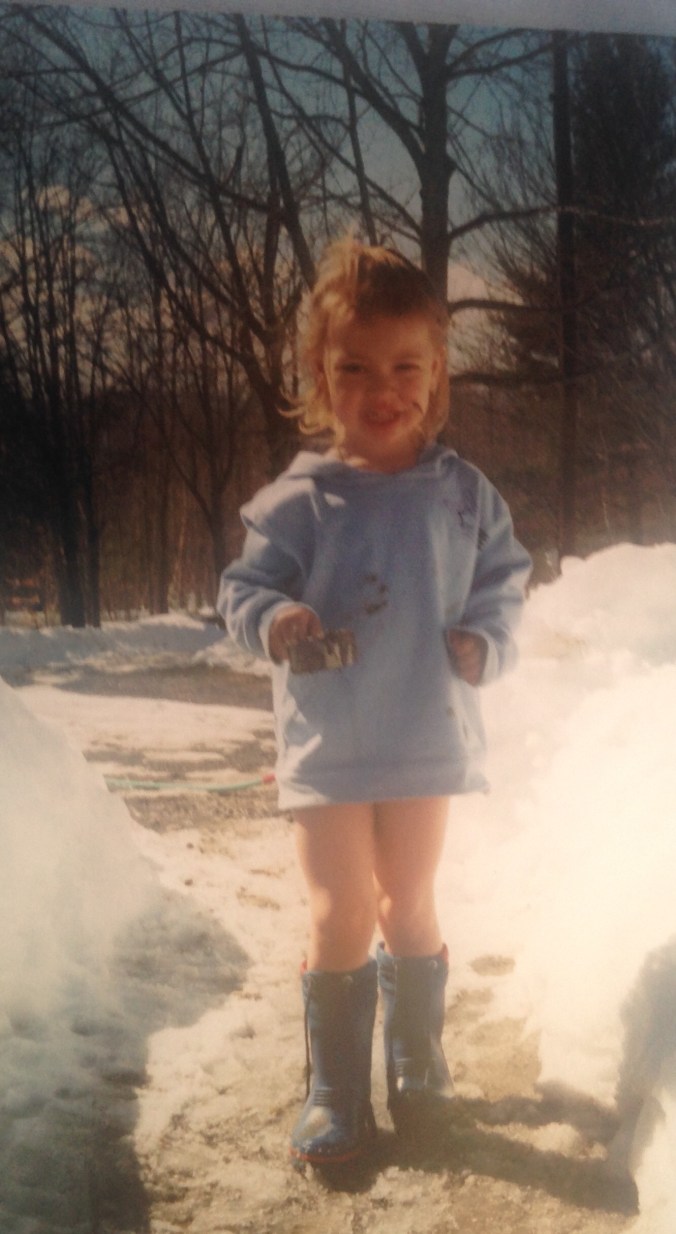
IMG_4067

Photo by Molly S.

Stories

Driving the kids home from basketball practice tonight, I listened to their discussion about the beginning of humankind. Did people come from monkeys or from God? My daughter eventually brought up the Big Bang. That must have been the beginning, but how did the Big Bang fit into God and the monkeys?

Eventually, I suggested maybe all these ideas might be true. The kids’ answer was to ask for more snacks.

I kept thinking about that idea of how we tell stories of ourselves. And where does one story begin and another end? I’d just been with a group of teachers asking, Tell me the story of what is it you do. I listened for the hard bones, the unseen, that jointed their stories together.

Long ago, I believed stories remained in books, interesting but tepid things. Now I know story is the absolute heart of who we are, at times suffused with finesse and grace, at others – as in Baltimore – swollen with the tangles of history and present outrage.

There’s a phrase we use in our house: an ax can be both tool and weapon. Story, too, can be utilized as either, but further, I’d say, as tool, weapon, and journey.

We tell ourselves stories in order to live, or to justify taking lives, even our own, by violence or by numbness and the failure to live; tell ourselves stories that save us and stories that are the quicksand in which we thrash and the well in which we drown, stories of justification, of accursedness, of luck and star-crossed love, or versions clad in the cynicism that is at times a very elegant garment.

— Rebecca Solnit, The Faraway Nearby

FullSizeRender-2

Photo by Molly S.