Summer Song

On this first day of summer, my daughters and I swam in Caspian Lake, the cold and beautifully clear water where we’ve swum for years. The earliest, this far north in Vermont, that I’ve swam there has been April, a month where the ice sometimes still knocks up against the shore. The latest was a sunny first of October, and that evening I knew I was pregnant with my second child.

Everyone must have their sacred spaces on this earth. Here’s one of mine, singing eternally the melody of the changing sky, water or ice, some measure of wind, and the children – happy, happy, happy, to be there. Yeah.

Juana sang softly an ancient song that had only three notes and yet endless variety of interval. And this was part of the family song too. It was all part. Sometimes it rose to an aching chord that caught the throat, saying this is safety, this is warmth, this is the Whole.

– John Steinbeck, The Pearl
FullSizeRender

photo by Molly S./Greensboro, Vermont
Writing Dialogue

There’s this odd word gnomon in James Joyce’s story “The Sisters” which is used in the mathematical manner: it’s a way of knowing a physical void by what is visible. That returns to that notion of understanding ourselves as creatures of change: not full and certainly not complete.

A writer once pointed out to me the gnomon is a way of writing dialogue, too. Truest dialogue always reflects the sub-story of what we’re not saying. We live in worlds of stories we create: the spoken story we share, and then all those winding sub-stories beneath.

Isn’t that partly what makes us so infuriating to each other at times, and, conversely, also so intoxicatingly fascinating? Behold, then, the strawberries, the nasturtiums, sun rising through a scrim of fog, the Milky Way arching through the black of a moonless night – this exquisite world we inhabit – and us, with our endless stories…. essence of our humanity.

 If a writer of prose knows enough about what he is writing about he may omit things that he knows and the reader, if the writer is writing truly enough, will have a feeling of those things as strongly as though the writer had stated them. The dignity of movement of an ice-berg is due to only one-eighth of it being above water. A writer who omits things because he does not know them only makes hollow places in his writing.

–Ernest Hemingway, Death in the Afternoon

FullSizeRender

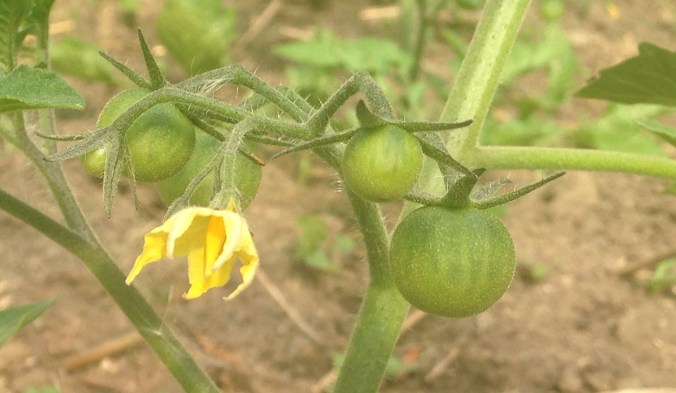
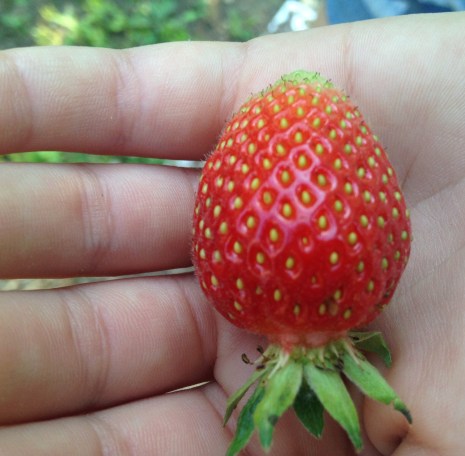
first berries from our garden

The Rapture of Becoming

A friend from a very long time ago, who now lives 3,000 miles away, took the time to write me an email the other day. It’s quite possible I would now walk past this former lover and not recognize him; the years have been that many.

In this email, he wrote about recreating his house during a tough time of his life. The best damn wood floors you’ve ever seen…. Later, he remarried, sold that house and bought a different one, fathered a daughter, and joined into happier days.

That house he poured his body and soul into, and yet he realized it was not loss; it was one long step of a journey as his life moved on. As my teenage daughter becomes her own young woman, I’m wistful at times for those innocent summers when a kiddie pool brought such pleasure. How good it was to cradle the sweet-smelling heft of a sleeping child in my arms. At yet… how could I not revel in this girl and her friends, bright-eyed and eagerly taking the reins of their lives?

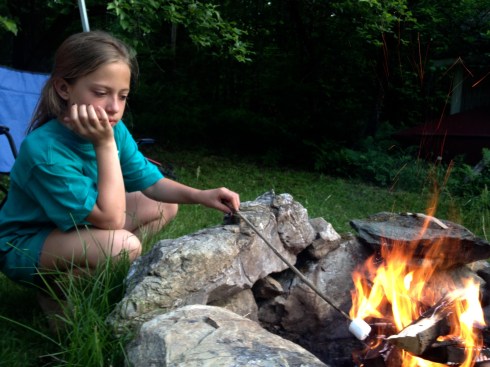
This summer, I’ll heed my friend’s advice well and swim in the cold lakes more with the kids, cook outside over the fire while listening to frogs, worry less about money, and don’t mind so many weeds in the garden.

People say that what we’re all seeking is a meaning for life. I don’t think that’s what we’re really seeking. I think that what we’re seeking is an experience of being alive, so that our life experiences on the purely physical plane will have resonances with our own innermost being and reality, so that we actually feel the rapture of being alive.

– Joseph Campbell, The Power of Myth

FullSizeRender-12

June, Woodbury, Vermont

Child’s Footprint

Stuck in traffic yesterday, overdressed in the afternoon’s high temps as I’d left the house in the dewy cool of morning, I was lost, looking for a meet-up place with my kids. Surrounded by big box stores jam-packed with plastic stuff, that territory is one of my least favorite of Vermont roadsides.

Years ago, I delivered a 5-gallon bucket of our maple syrup every month to a bakery in that area, and afterwards, I let my daughter, who was two, run in the weedy field behind a strip mall, flanked at the far end by condominiums. By chance, I passed that still-undeveloped field and pulled over.

All day, a  white tree fluff had floated around my office windows, a drifting June version of snow. At that field, the white gossamer yet drifted through the air, random bits, here and there. Not that many years ago, this expanse was farm field, with the mountains rising like a blue dream to the east and the Winooski River flowing nearby.

The day was quite hot, and I thought of my own garden’s tomatoes and melons, thirsty on their vine, and I knew I wouldn’t return to water barefoot until twilight.

I had turned back towards the asphalt and the intersections of noisy traffic, when I saw a small footprint in the cracked earth. Crouching, I rubbed my fingers through its chalky dust, wondering what child had run through this field when it was muddy. How I wished that child had found some hidden treasures, secrets just for her.

It is quite possible that an animal has spoken to me and that I didn’t catch the remark because I wasn’t paying attention.

E. B. White, Charlotte’s Web

FullSizeRender.jpg


Last night, I heard the poet Sydney Lea read at the Galaxy Bookshop in Hardwick, and he mentioned being in his seventies is a great time of life. In my forties, myself, I’m in that age justly called rugged – or is it ragged? The age of Dante’s dark woods, I tell myself: a territory to pass through. What’s the best age, anyway? The question begs, perhaps, how rooted we delve into the days we live. Maybe the best answer is Lea’s own, in this love poem.

“My Wife’s Back”

All naked but for a strap, it traps my gaze
As we paddle: the dear familiar nubs
Of spine-bone punctuating that sun-warmed swath…

…Phoebe, osprey, heron, hawk:

Marvels under Black Mountain, but I am fixed
On your back, indifferent to other wonders:
Bright minnows that flared in the shallows,

The gleam off that poor mink’s coat,
Even the fleas in its fur, the various birds
–The lust of creatures just to survive.

But I watch your back. Never have I wished more not to die.

– Sydney Lea

FullSizeRender

Woodbury, Vermont


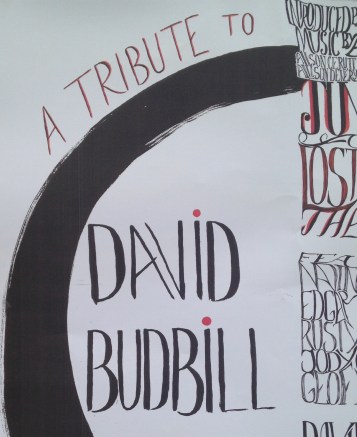
Dear David Budbill

I laughed out loud and cried at David’s tribute, held by a ring of poets and actors on the stage where his work has been performed so many times. In the front row of the balcony, my friend and I talked about our children, and how our lives had shaken down. Later, driving home in the dark, up familiar route 12 I’ve driven so many times – with children, with friends, with family – now alone, not passing another car all those miles, save for an old Volvo station wagon that followed me out of Montpelier before turning off at a house with two lit windows.

Following the narrow sweep of my headlights, I thought of the final speaker’s words: from human suffering rises song. Thinking of David’s own kindnesses to me, and the great wealth of this man’s work and life, I followed those headlights like a unwinding stream of moonlight all the way home.

My children lay in their beds, sleeping. For the longest while, I stood on the balcony in the dark, listening to the frog’s steady chorus, rain falling lightly on my face, and then I, too, went inside and slept.

…These are not the rare and delicate lemon yellow day lilies
or the other kinds people have around their places. This one
is coarse and ordinary, almost harsh in its weathered beauty…

…A plant gone wild and therefore become
rugged, indestructible, indomitable, in short: tough, resilient,
like anyone or thing has to be in order to survive.

From “The Ubiquitous Day Lily of July” by David Budbill

FullSizeRender