Why I Like Kids

I’m at a point in my life where I’m often more surrounded by kids than adults; fortunately, some of my kids’ friends are sweet, some witty, and all far more entertaining than annoying – a feature which goes a very long way with me, regardless of child or grownup.

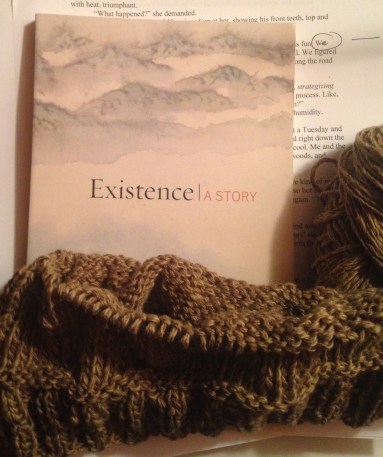
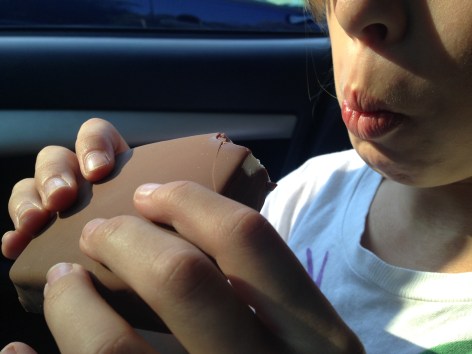
I was thinking of this again when the neighbor boy stopped by on his bike today and cheerfully helped move a load of scrap metal. But what I was really thinking about was David Hinton’s book Existence I was reading extremely early this morning. When I asked the kids to pry open up a door in the sugarhouse that was seriously nailed shut, they said, Oh yeah, and scavenged around for a crowbar and maul. They accomplished the task, but, more precisely, they accomplished the task with gusto, and then each ate a Klondike bar, my younger daughter’s new culinary find. Who knew you could buy a six-pack of Klondike bars at the Hardwick Village Market? My daughter knew.

Maybe one of the reasons I enjoy these kids so much (besides their inherent lovableness) is that kids are often, hands down, better people than adults. Braver, certainly more honest, and generally right there. Reading David Hinton made me realize children are far nearer to Chinese sages, too.

…China’s ancient sages assumed that this immediate experience of empty awareness was the beginning place, that dwelling here in the beginning, free of thought and identity, is where we are most fundamentally ourselves, and also where deep insight in the nature of consciousness and reality logically begins….you can begin at the beginning anytime, anywhere. A simple room, for instance, morning sunlight through windows lighting the floor; a sidewalk cafe, empty wine glass on the table, trees rustling in a slight breeze, sunlit passersby; a routine walk through a park, late-autumn trees bare, rain clattering in fallen leaves.

– David Hinton, Experience
IMG_2273

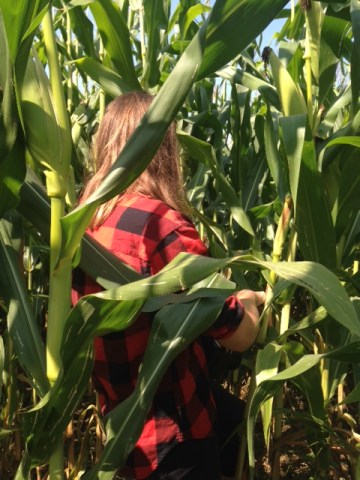
Molly on a photography shoot, Craftsbury Common, Vermont


Flowering Knotweed

Biking in Stowe this afternoon, my daughter and I passed enormously large thickets of Japanese knotweed, blooming with tiny, delicate flowers – an invasive I studiously avoid. No knotweed rooting on my terrain!

I was reminded of a line from Sophocles my father mentioned this summer: Nothing great enters the life of mortals without a curse. Biking fast to keep up with my 11-year-old, darting around tykes on training wheels and a contingency of strollers, I thought of that phrase’s inverse. I’ve always been particularly annoyed by the adage to squeeze lemons into lemonade, as if an impromptu tea party solves anything, but might a curse also have a slender thread of goodness?

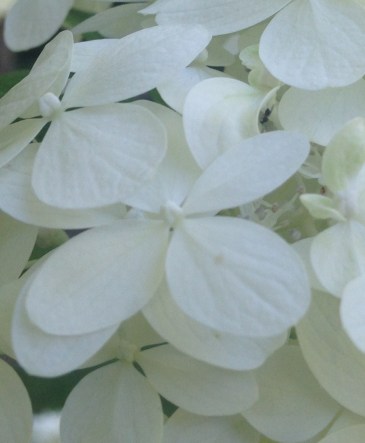
Poor Japanese knotweed: so maligned and despised in my Vermont world. In a profusion of flowers, I bent near and inhaled its sweet fragrance, the petals trembling with pollinators.

Poverty’s child –
he starts to grind the rice,
and gazes at the moon.

– Matsu Bashō

IMG_2255

Stowe, Vermont


Raising Daughters: Heroine V. Princess

Sometimes I think, what a raw deal my daughters have, with a writer for a mother. The writers I know don’t check out and take days off. Writers are likely to be trying to read your to-do list you’re holding while waiting in the grocery check-out line.

But then there’s this: Ann Patchett in This is the Story of a Happy Marriage tells how, when she dragged herself back to her mother’s house after the collapse of her marriage, her mother insisted that, yes, indeed, Ann was yet the heroine in her life’s story. Although I never use the heroine word with my daughters, I’m keenly aware I’m raising them as heroines and not as princesses. The difference is distinct.

While clearly I want to stave off the wolves of hunger and cold at our door, I’ve never intended to garner ermine cloaks or a palace for my girls. I’d prefer for the girls to know themselves neither in need of saving by prince charming, or required to save that somewhat dubious character, either.

As a teenager, I read a great deal of Joseph Campbell, and I’ve returned repeatedly to Campbell’s hero quest. I remind myself at moments of keen doubt – what am I doing as a parent, anyway? who let me lead this drama? – that doubt is a key element of any heroine’s path. Embrace, and move eagerly on to the next phase.

If you can see your path laid out in front of you step by step, you know it’s not your path. Your own path you make with every step you take. That’s why it’s your path.

– Joseph Campbell

FullSizeRender


September 1

Every September, Stowe, Vermont, hosts The British Invasion, when a bunch of folks fly over the Pond and spent some early foliage time motoring around in their nifty little cars. A few years back, a particularly chatty group appeared in our sugarhouse for a hike into our woods.

Afterwards, the leader began some good-natured ribbing about the general dearth of American knowledge of history, and asked when World War II began, apparently expecting Pearl Harbor to be our answer. When I offered September 1, 1939, he was appeased enough to open wide his wallet and buy some syrup.

On this September 1, 2016, our family made dinner together while talking about the girls’ first week at school. Our kitchen filled with garden sun gold tomatoes, arugula, and garlic, the table strewn with school papers and Lake Champlain shells from our last camping trip.

September is summer fading, the emerald hills fading to light gold, the air sweeter with a crispness creeping in. The real autumn isn’t far off now. Before long, I’ll be digging into our carefully stacked wood pile, and Sunday afternoons the house will be suffused with the scent of baking apple pies.

This September 1, my house doors are open to cricket song. The sun has been warm all afternoon, but as evening ambles in, the shadows are beginning to chill. This would be a fine weekend for hiking.

Sparrow singing –
its tiny mouth
open

– Yosa Buson

IMG_2220.JPG

County Road, East Montpelier, VT

Raw Hearts

Like so many other New Yorker readers, I’m glad to check out what my favorite writers have produced, and early this morning I was drinking coffee while reading Adam Gopnik‘s piece on the 1971 Attica uprising. A terrible story, to be sure, suffused with bloodshed and out-and-out misery, a graphic illustration of this country’s inability to confront profound racial history, separation, and hatred – a story so presently alive today it’s painful.

More and more, I understand the human saga as overspilling with a pulsing heartbeat of fear, real as veritable night armies of marauders, drunken and desperate for satiation. Yet, in the morass of this story, a few clear voices rise ringing with the truth, courageous precisely at the time when courage matters most.

Gopnik raises that difficult question I return to over and over again: when to act and when to hold back? When is the time to speak forth, and when is restraint the wiser course? When is patience the most courageous and beneficial course, and when does patience bleed over into the waters of cowardice? There may be few times in our lives when great courage is demanded, like Warhol’s 15 minutes of fame. At what cost, perhaps, that courage may come.

There are sins of omission but there are also virtues of patience. Many of the wisest things we do, in life and in politics, are the things we don’t. Affairs not started, advice not given, distant lands left uninvaded—the null class of non-events is often more blessed than the enumerated class of actions, though less dramatic….

At moments of crisis, the integrity of our institutions turns out to depend, to an alarming degree, on the fragile integrity of individuals.

– Adam Gopnik

FullSizeRender

Montpelier, Vermont

How You Know Yourself

Watching the Olympic swimmers, my daughters wondered what went through the swimmers’ heads while they spent endless hours practicing their watery strokes. Intense concentration, or sometimes a grocery list?

I imagine that must be way they know the world, I answered. My older daughter at 17 uses photography as her own personal lens of knowledge. From a very young age, I knew the world through fiction, with an insatiable desire to read. An essay of mine about writing just appeared in Green Mountains Review, chock-full with the sun and the moon, wood stove ashes on the floor, a toddler and her tricycle. It’s my own particular story, my own grain of sand reflecting this bit of the universe.

And so I think of Michael Phelps and his teammates, male and female, their arms mightily stroking through the water, breathing in their knowledge of the world, sublimely sacred at times, no doubt profound to the bone at others.

When was writing ever your profession? It’s never been anything but your religion.

J.D. Salinger, Raise High the Roof Beam, Carpenters & Seymour: An Introduction

FullSizeRender