Here In Kid World

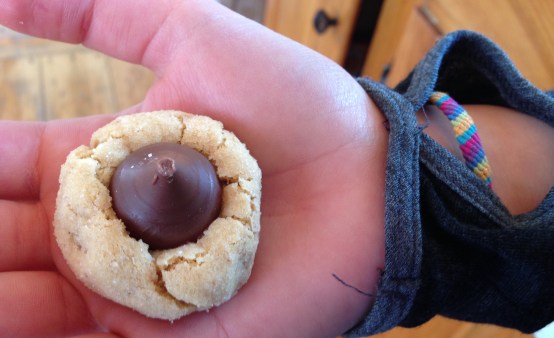
My daughter sends me a photo via email with the subject line “Awesomeness.” How cool is that?

Yesterday, home after work, with dinner not yet made, and the house messy with potential buyers expected the next morning, a litany of chores from unwashed breakfast dishes to a fish tank bubbler needing repair, I first opened the box with my laptop battery. A $15 replacement I’ve put off for months.

The heavy lithium battery lay in my hand, and I guiltily wondered what strangers had made this toxic thing.

My daughter held the plastic bubble wrap. “Can I pop this? Please?”

I put her off, wanting to know if I’d ordered the right-sized battery, not paying any attention to my child at all, still thinking of my afternoon with its entanglements of adult problems.

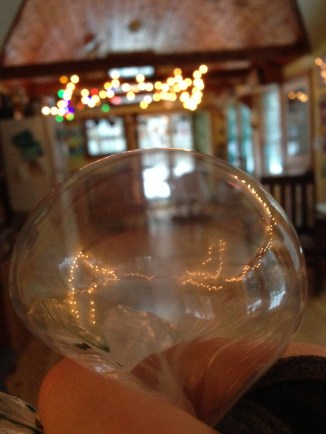
From the plastic, she squeezed a bubble and held it up to the little lights in the house. Look through this, she asked. And then I’m finally smart enough to lay aside my jumbled thoughts and peer through her vision.

Don’t judge each day by the harvest you reap but by the seeds that you plant.

R. L. Stevenson
IMG_0463

Photo by Gabriela

Squishy Season

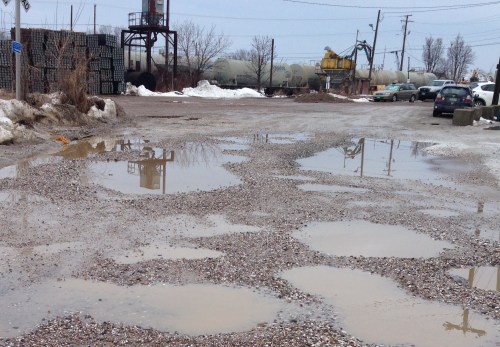
‘Tis the season of mud in Vermont. I once had a neighbor (now relocated back to an enormous city) who hated mud. Her daughter and my daughter were both little then, with rubber boots and pink raincoats decorated with kitties, and the girls adored splashing in March and April puddles, digging with sticks in the ditches along our roadsides, and baking mud cakes in kitchens they built with fallen branches, on carpeted floors of pine needles. Sweet days.

The girls spent many more hours at my house than at hers, shedding their filthy and soaked clothes on our porch and sprawling before the wood stove to warm up, eating popcorn and drinking honeyed tea and giggling. Sweet days.

Let us settle ourselves, and work and wedge our feet downwards through the mud and slush of opinion and tradition, and pride and prejudice, appearance and delusion, through the alluvium which covers the globe, through poetry and philosophy and religion, through church and state, through Paris and London, through New York and Boston and Concord, till we come to a hard bottom that rocks in place which we can call reality and say, “This is and no mistake.”

– Henry David Thoreau, Walden

FullSizeRender

Burlington, Vermont

One More Reason to Like Vermont

Vermont’s Congressional delegation came to our local high school yesterday, Hazen Union in Hardwick – Bernie Sanders with his mighty vehemence and voice, Leahy with his longevity, and Welch with his even-handed thoughtfulness. Welch joked that Vermont’s delegation could meet in an elevator – and does.

But Bernie was the one who got the packed gymnasium cheering loudest. He began with acknowledging that these are tough times, strange days indeed, but, nonetheless, he said, I woke up feeling pretty good this morning. To his loyal crowd of fellow citizens, this boundless optimism shone: the steadfast belief in goodwill, the persistent faith in a moral universe.

All of us share this world for a brief moment in time. The question is whether we spend that time focussed on what pushes us apart, or whether we commit ourselves to an effort – a sustained effort – to find common ground, to focus on the future we seek for our children, and to respect the decency of all human beings.

– Barack Obama

FullSizeRender


Treasures, Literary and Otherwise

While I wouldn’t count a generous wage as one of the perks of working at a little library, the benefits are incomparable: kindergarteners who sit at my desk and ask the sharpest (and funniest) questions, then inquire about the status of my gum supply; a light-filled space; unfettered access to inter-library loan; and a mound of donated books for our sale.

Rummaging through the remainders, I pulled out books for people. T. C Boyle novels for a single father, John Holt for a homeschooling family, Reviving Ophelia for a mother of a teenage daughter, herbal remedies for a college student.

These early mornings, I’ve been reading Elizabeth Marshall Thomas’ The Harmless People about the Bushmen, in an old Vintage paperback from the fifties, not at all glossy, but practically and well-designed, a book that fits easily into, say, a briefcase or diaper bag.

Here’s a paragraph that illustrates how beautifully and lovingly written is this gem.

Before they went to sleep that night, the two men accepted a bucketful of water as a present. The bucket they would return, but the water was for them alone, an enormous present in the desert, for which they were very grateful. They began to drink from it, scooping the water up with their hands and, later, lifting the bucket to drink from its rim. After that they lay down, naked as they were on the bare ground, close to the fire, with their knees bent, letting as much skin as possible be exposed to the heat. The warm smoke and ashes blew over them and they went to sleep on their sides as Bushmen always must, with one ear on the ground but with the other up and listening, to hear what comes along. Because it was cold they woke up often, and every time they woke they drank, so in the morning only the bottom of the pail had water in it, frozen into a circle of ice.

FullSizeRender

Love Poem

Driving to work yesterday, I listened to the radio, about Derek Walcott, this poet who found himself in the sea and in the light of this world.

Where I am now, spring rampages in with a fierce rush of lengthening days, of light white with snow but suffused with burgeoning warmth. Winter rallies with bitter cold, but each passing week, the harshness of that season dwindles. We will see green again. Spring, while she may linger in her arrival, has never yet failed to delight.

“Love After Love” by Derek Walcott

The time will come
when, with elation
you will greet yourself arriving
at your own door, in your own mirror
and each will smile at the other’s welcome,

and say, sit here. Eat.
You will love again the stranger who was your self.
Give wine. Give bread. Give back your heart
to itself, to the stranger who has loved you

all your life, whom you ignored
for another, who knows you by heart.
Take down the love letters from the bookshelf,

the photographs, the desperate notes,
peel your own image from the mirror.
Sit. Feast on your life.

FullSizeRender

Not Quite Janis Joplin

Years ago, when I withdrew my daughter from a private school and home schooled, I had an incredible sense of freedom. That private school had been incredibly rigid, so tightly constrained the parent handbook suggested how to run birthday parties. What on earth was I thinking then?

When I enrolled my kids in the local public school, I discovered a freedom I hadn’t expected from my dismal memories of school. Perhaps it’s simply the diversity of kids, who come from homes with parents running the gamut income-wise, but also in home life, with mothers who range from stay-at-home moms to professors with PhDs. Maybe one of the best aspects of rural Vermont schools is their encompassing, egalitarian qualities: the kids are literally all in it together, and by and large, the kids don’t mind.

Oddly, the end of my marriage was also a pivotal point of incredible freedom. If not this life I planned, then what? I seized that breaking as an unexpected opportunity to rethink how the heck I got to here. What breadcrumbs do I want to follow to get myself unlost from this forest?

Here’s pre-dawn reading before my wood stove….

Much of contemporary feminism uses the language of power. Girls need to be “empowered,” women need to fight for “self-empowerment,” “girl power,” etc. There is little conversation about what that power is to be used for, because that is supposed to be obvious: whatever the girl wants.

But growing up in a system that measures success by money, that values consumerism and competition, that devalues compassion and community, these girls and women have already been indoctrinated into what to want. Without close examination, without conversion into a different way of thinking and acting, what that girl wants is going to be money, power, and, possibly, her continued subjugation, because a feminism that does not  provide an alternative to the system will still have the system’s values.

…. Moving beyond that (patriarchal) structure means forgoing the rewards that structure doles out for participation. But it also gives you back your agency.

Jessa Crispin, Why I Am Not a Feminist: A Feminist Manifesto

FullSizeRender.jpg

Where else but Hardwick, Vermont, in the first days of spring?