Winter’s Wow Factor

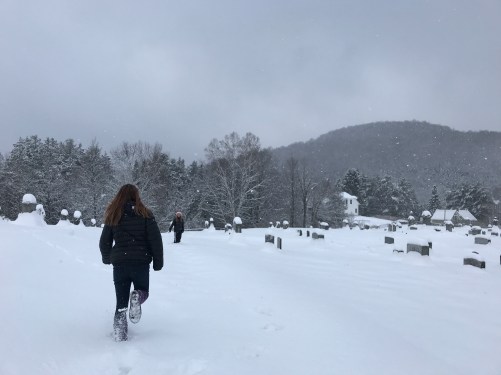
Checking to see a child arrived home last night, I drive around a hillside — the cemetery hillside — and my daughter says, Whoa, under her breath, with not a tinge of 12-year-old sarcasm. Just wonder.

Feral, the ebbing, ravenous wolf moon. A profusion of moonlight in an unending night, and all that cold. 6º and expected to get much, much colder.

We feed our own hunger — for warmth, for color, for stories spoken and read.

All night long, while we’re sleeping, meshed in cats and blankets, that pristine moon sails silently over our rooftops, more luminescently magical even than St. Nick.

Endless bare fields
not even a bush
nowhere to abandon a child

— Buson

IMG_0817


21º Below Zero

January.

I’m naturally a sweater knitter — not a sock creator like my sister. Likewise, I’m inclined to the lengthiness of novels, but more and more I admire the uses of brevity. Such as…

January 2.

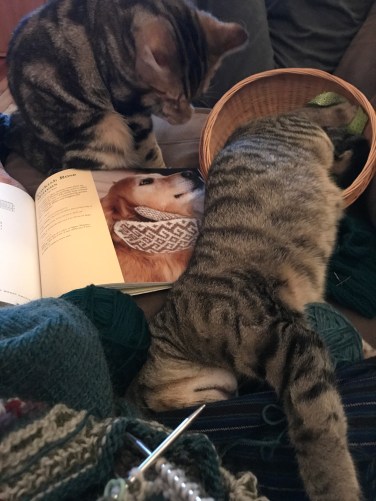
Kittens, yarn. Piles of work. Stacks of library books. Friends on the calendar. Winter, Vermont-wise, has barely commenced.

When the winter chrysanthemums go,
there’s nothing to write about
but radishes.

— Matsuo Bashō

IMG_0799.JPG

Gliding

10º below zero this eve of 2018. Like an oddly magical gift, I woke from a dream of visiting a woman with whom I’d had conflict, conflict, and I lay as the day’s light slowly trickled into the room, rubbing a happy cat and thinking I could release that piece of worrying.

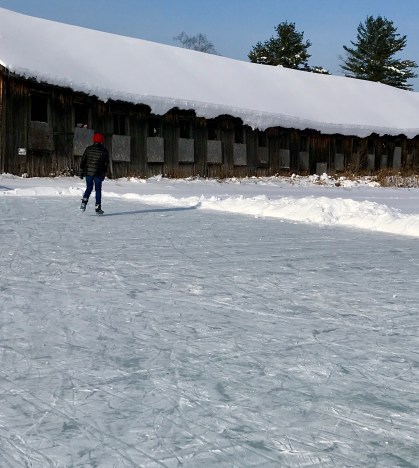
One more year slipped by, my younger daughter officially leaving the terrain of babydolls for the mountainous terrain of adolescence. Here’s a good thing I fostered: ice skating.

If it is written and read with serious attention, a novel, like a myth or any great work of art, can become an initiation that helps us to make a painful rite of passage from one phase of life, one state of mind, to another. A novel, like a myth, teaches us to see the world differently; it shows us how to look into our own hearts and to see the world from a perspective that goes beyond our own self-interest.

— Karen Armstrong, A Short History of Myth

IMG_0750.jpg

Cold Snap!

Our neighbors borrow my teenager’s hair dryer to thaw their pipes. It’s 14º below zero, and they’re confident their situation is minor. Gossip winds around town of whose pipes have frozen. This morning, I woke in the dark with a cat purring beside my shoulder. My daughter, 19, gets up with me in this predawn and says she doesn’t know what she should do with her life.

Aim to do something you’ll be proud of, I suggest.

Deeper than 20º below is when the bitter cold really sets in. The lowest I’ve seen the thermometer is 40º below, in farm fields along the Lamoille River. A ghostly mist ambled around, as if we were in an otherworldly dream.

This is the season of library books, board games, knitting — one year ebbing into the next.

Although there is the road,
The child walks
In the snow.

— Murakami Kijo

IMG_0654.jpg

Main Street, Hardwick, Vermont

Levity

My daughters and I drove north over snowy roads to have dinner with friends who were staying for a few days at a house built by a ship captain in the 1800s. The house is on exquisitely beautiful Lake Willoughby, deep into what I consider “way out there” in Vermont — but that’s all in one’s perspective, isn’t it?

I would have walked around that three-story house for a day and a half, just looking at room upon room, like an enormous treasure or jewel box. Fortunately, my friends know me and were nonplussed when I rubbed my hands over the peacock tails in the downstairs wallpaper. My teenager sprawled before the fireplace and said, We’re not leaving.

An oak table spanned the length of a long room that must have originally been a veranda. At dinner, the kids filled their plates and sat in a row on one side. I walked around the table and sat with my back to the wall of windows. It’s December and darn cold, and the kids, being kids, had likely sized up the draft on that side and chosen the warmer one. Or maybe they just wanted to be closer to the berry pies…

My friend’s elderly father sat beside me, and, after precisely cutting his meat, said very pleasantly, A bit of air conditioning tonight, isn’t there?

Driving home in the dark, around Runaway Pond, through the Bend, past dairy farms hazily illuminated by the moon darting in and out of scudding clouds, I thought of all the stories that house must contain, how all our lives are clumsily packed sieves of so much jumbled living — radiant happiness, crushing misery, sometimes dullness, aching and unmet desire — and then the levity of that sweet sentence rose again into my thinking.

One terrible thing about divorce is losing the person who holds the other half of your shared secrets. That highway north was studded with memories from the very earliest days of my marriage. Driving north, I passed those places and said nothing, knowing the only way to continue is to create.

So when my daughters asked why I was laughing as I drove those final miles home, I told them I aspire to have that gentleman’s light grace when I’m a little old lady, with — God willing — many more miles traveled.

I have one of those very loud, stupid laughs. I mean if I ever sat behind myself in a movie or something, I’d probably lean over and tell myself to please shut up.

— Holden Caulfield

IMG_0727.JPG

Daughter at work, home, Hardwick, Vermont

Postcard #10: Uninvited Guest

This marks an even dozen of Hardwick posts, despite the #10, but all of these have skirted around the jagged edges of where I’m really aiming: that community, like family, is suffused with some of the best and some of the very worst, too, of human nature. The little, one-room library (nearby, but not the Hardwick library) where I reign as Chief Cataloguer and Window Washer is visited by kids who sprawl on the carpet between the shelves and read, who crawl behind the wing chair and create magical worlds with puppets and stuffed animals — toys I leave when I vacuum and then turn off the lights, for children I expect will return.

My library has also been visited through a window and burglarized. My desk, where I keep stickers and budget sheets and book orders has been touched by hands not mine.

There’s a story behind this that’s not a nice story, about this visitor I didn’t invite in, but whom I would have, had he used the door like anyone else. My face, writing this, must reflect my anger and my fear. I’m no tabula rasa, and this entry into a place I’ve considered a kind of personal sanctuary cuts me.

And yet — and this is a very, very big and yet — I’m familiar with that ghastly howl of addiction, and my guess is that this intruder seeks the intrinsic human need of coming in out of the cold.

Yet, he didn’t come through the open door.

Driving home with my daughters over snowy roads in the dark last night, listening to their music, we drove around Lake Willoughby with no one else on the roads, and the waxing moon pushed through a scrim of clouds. Cold, cold: nearly zero. Enchantingly beautiful. A terrain known and yet unknowable.

I don’t have answers to why some children are well-tended and dressed, while others have drawn a short stick of basic things like food and clothing. I’m not naive enough to think the uninvited guest will ever use the library door, nor do I ever intend to welcome him through a window. But in this Christmas season of redemption and giving, I keep returning to that reality that doors and windows open, and the world is wider than I’m often inclined to credit.

I wanted to try to write a book about poverty that didn’t focus exclusively on poor people or poor places. Poverty was a relationship, I thought, involving poor and rich people alike. To understand poverty, I needed to understand that relationship. This sent me searching for a process that bound poor and rich people together in mutual dependence and struggle. Eviction was such a process.

— Matthew Desmond, Evicted: Poverty and Profit in the American City
IMG_0699

Hardwick, Vermont