Small Victories

Like so many places, I’ve limited occupancy in my one room library, and, for the most part, that’s worked. This afternoon, just before the after school program started for the first time in months, the adults stood around in our usual pow-wow and returned to the same theme: we’ll make do.

We did.

One boy leaned in the open door, begging to come in. I told him to wait, wait, that I’d come for him when the space emptied out a little.

When it did, I stepped out on the grass and spied him across the playground. When I gestured for him and called his name, he came running.

Messed-up world notwithstanding, what utter joy to see this sprinting boy.

In honor of RBG, her words:

Earlier, I spoke of great changes I have seen in women’s occupations. Yet one must acknowledge the still bleak part of the picture. Most people in poverty in the United States and the world over are women and children, women’s earnings here and abroad trail the earnings of men with comparable education and experience, our workplaces do not adequately accommodate the demands of childbearing and child rearing, and we have yet to devise effective ways to ward off sexual harassment at work and domestic violence in our homes. I am optimistic, however, that movement toward enlistment of the talent of all who compose “We, the people,” will continue.

— Ruth Bader Ginsberg

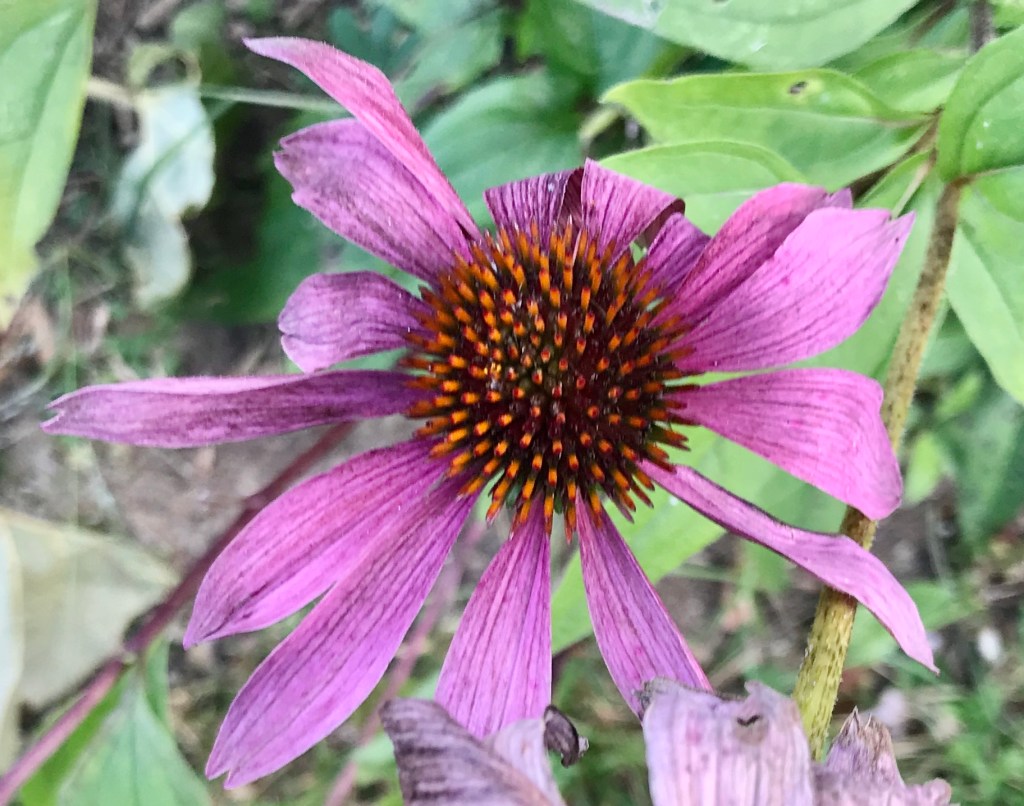
Photo by Molly S.

Season Change

My daughter and her friend were been hired for the afternoon to harvest pumpkins.

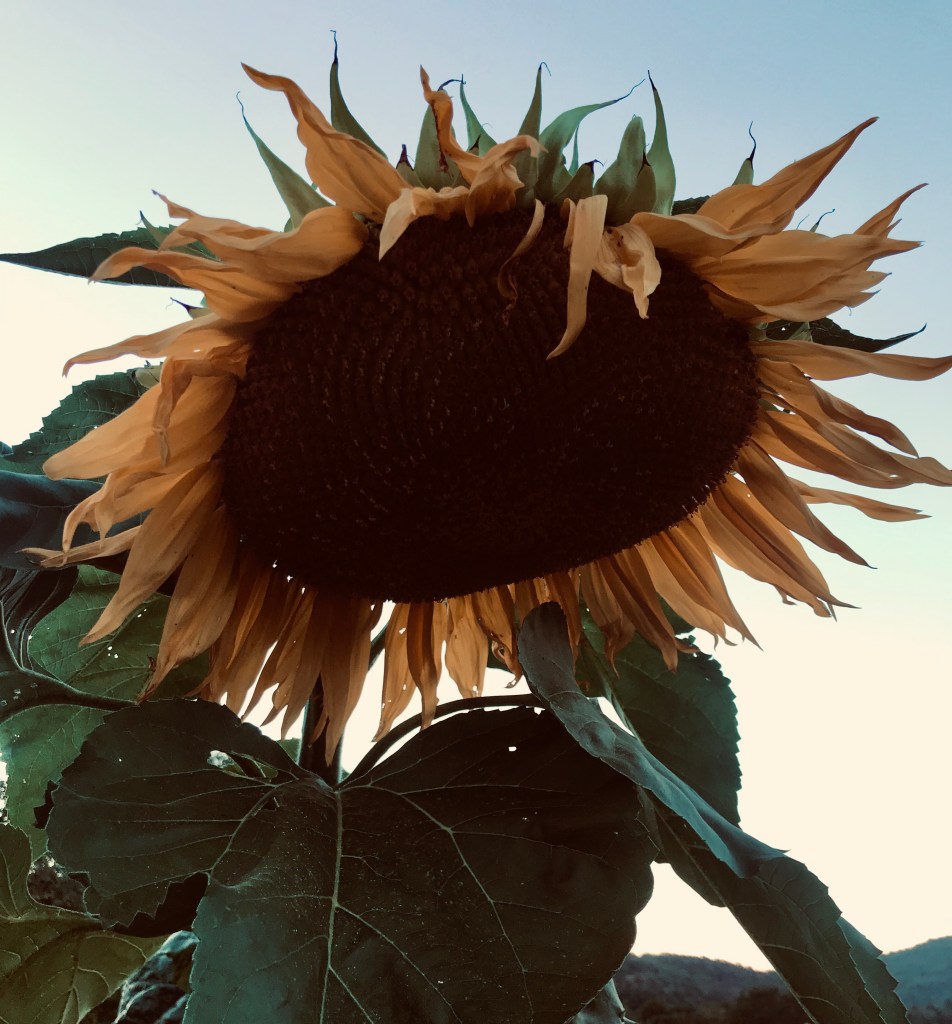
That afternoon, picking up the girls at the farm, I stood talking for awhile with the couple, whom I’ve known since my oldest daughter was a toddler. They showed me the sunflowers they had managed to save from the frost by covering. The flowers, I could see, were not long for living.

Bundled in sweaters and sweatshirts, we stood talking in the late afternoon sunlight. The couple was appreciative of my daughter and her friend — how the girls’ hard work boosted the boys’ output. I laughed, watching the girls walk towards me, out of the field, holding gloves in their hands, talking with each other.

I remembered those long-ago summer and fall days, when I had worn this child on my back while I sold maple syrup and homemade ice cream. Her little fingers reached over my shoulder, looking for snacks.

The couple’s son drove up on a tractor, a father now himself. As I drove back to our warm house, baking lasagne and apple crisp, I kept thinking of how that couple would give my youngest a tiny pumpkin every year at the farmers’ market. She would carry that orange squash in her two hands, like treasure.

Mid-September?

Three years ago, I sold our house on a back road and moved into the village, for a few reasons, for mostly so my daughter could walk to school. By then, I was a single parent, hustling a livelihood, and I needed my youngest to be able to get herself around. Rural Vermont, for those not in our world, depends on the car or pickup to get yourself around.

In the pandemic world, where I often find myself ticking off what I’m grateful for, as an antidote to the long list of what I’m decidedly not grateful for, that 15-minute walk ranks pretty high up my list.

These days, I’m wondering how this pandemic will shape my daughter’s generation.

A year ago, she was a freshman in high school, with a regular slate of classes and fall soccer games. As a sophomore, she’s more like a college student, grabbing in-person classes instead of online classes, insisting I’m not to interfere; she’s worked out her own schedule.

Study hall on Monday afternoon? I’ve given her permission to walk home with her friends.

So, while she’s hoping her year will be filled with chemistry, anatomy and physiology, trigonometry, Spanish, and French, I see a different kind of education this year. When her father and I divorced, her childhood had a hard line — a Before and an After. Now, across her whole generation, I see a Before and an After.

I’m incredibly curious to see how that unfolds.

The Uses of Sorrow | Mary Oliver

(In my sleep I dreamed this poem)

Someone I loved once gave me
a box full of darkness.

It took me years to understand
that this, too, was a gift.

Hardwick, Vermont

Butterscotch Lifesavers

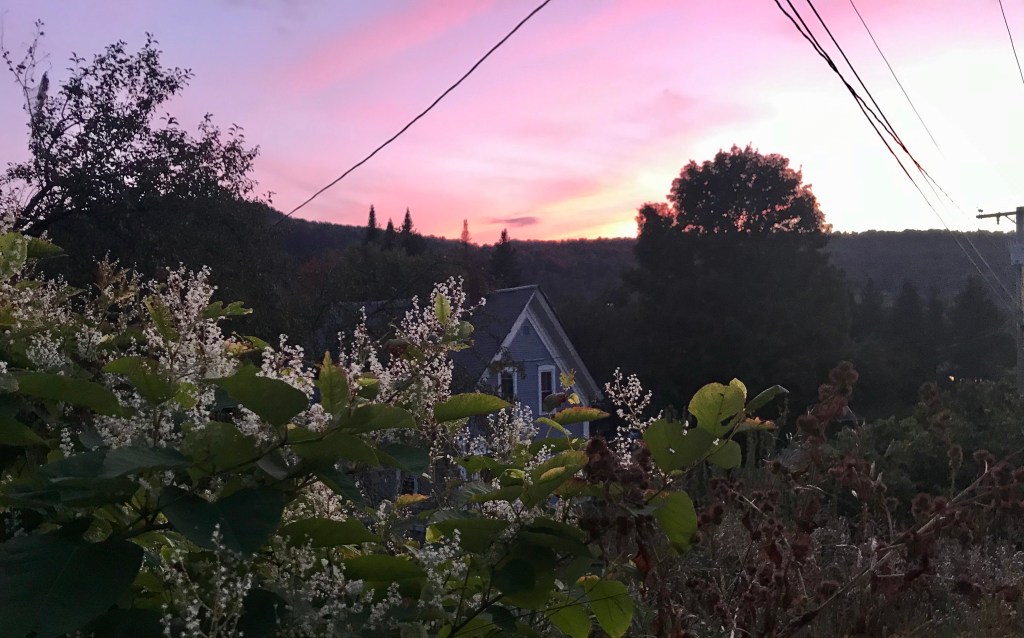
In the evening, as dusk settles in, my daughter and I walk downtown to the corner store.

I’m looking for Lifesavers, a rare treat in our house. She asked if I would mind buying her Lifesavers on my way home from work. I’d forgotten her request in my hurry home.

At the corner store, we realize she’s forgotten her mask, so I go in alone and stand there, pondering the three Lifesaver options that store offers. What the heck, I think, aren’t there like a thousand flavors of Lifesavers?

Outside, I find her leaning against the store’s cement block wall, talking on her phone to her uncle, who’s called to find out how school’s going and what’s up in the realm of pandemic adolescence. She’s talking and smiling, glad to hear from him, spilling her happiness with her math class and driver’s ed, the two bright spots in what otherwise appears to a whole lot of chaos.

These days, my head feels jammed with a snarly chaos, with a stream of work and winter prep, a marathon-length school board meeting, and our first frost. As my daughter talks, I wander along the river, its bank piled with old tires. Oak trees spread over the water, their leaves still summer green. What a story, I think, this will be one day, for these kids who grew up in the pandemic’s shadow.

I slide the packs of Lifesavers into her jacket pocket, my small offering.

Jack Frost? Not Yet

At breakfast, my daughter mentioned a frost warning.

What? I thought. Already?

At the post office later that day, I chatted with an acquaintance who was at the counter buying stamps, his tiny dog tucked under his arm. He said, Why is frost always such a shock every year?

Indeed.

My girl and I picked the remainder of the tomatoes and peppers, covered what seemed like it should be covered. At the end, I tossed an old sheet over a patch of my zinnias. Really? she asked. You’re covering flowers?

But they’ve given me such pleasure, I said, even autumn-ragged as they are now.

The frost passed us over. A few more days of summer here.

The autumn grass

Wilts at once.

Playing with it. 

Empty House

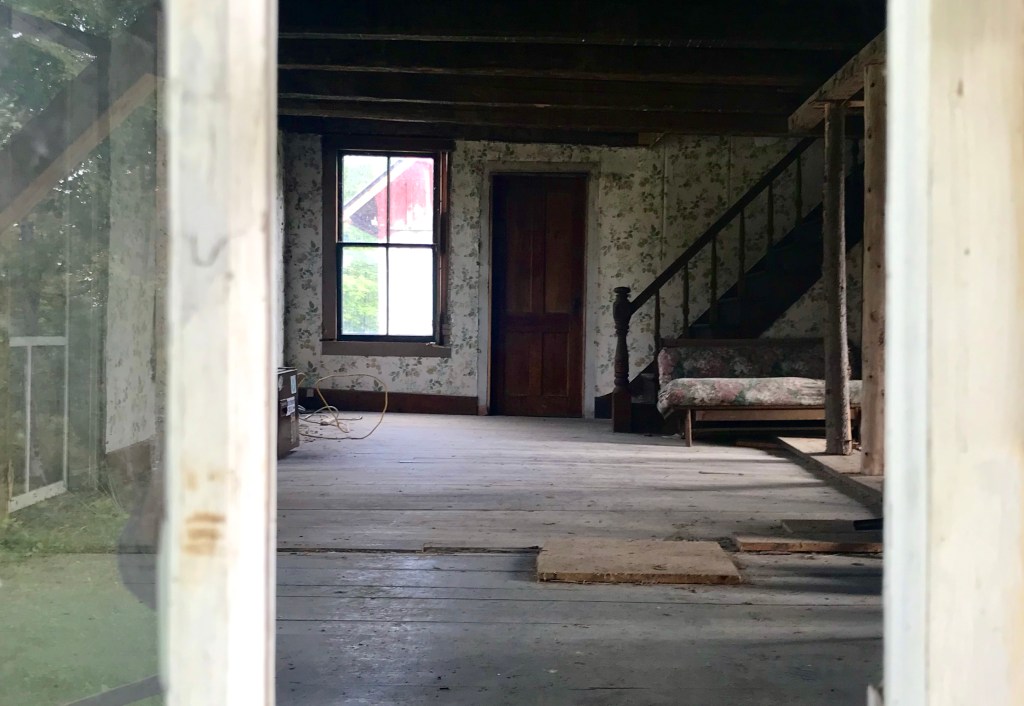
The afternoon’s end finds me on a remote road, looking at an abandoned house. No one’s lived here in a long time, save for intermittent squatters.

It’s the first day of school for my high school sophomore. Although I’m at this property for work, I keep thinking of my daughter.

Behind this house are two immense white pines. I stand there, listening to the breeze rising off Lake Eligo, imagining what it was like a hundred years ago to farm here. What will it be like a hundred years from now? The question looms impossibly.

I bend down and peer through a missing pane of glass in the door.

In Yaa Gyasi’s Transcendent Kingdom, I read a line from Thoreau: “Not till we are lost, in other words not till we have lost the world, do we begin to find ourselves, and realize where we are and the infinite extent of our relations.”

In so many ways, that sums up my experience. But that lostness I know now, is hardly a brief experience. The thing about the pandemic is that it’s exposed all the weaknesses in our society, and in ourselves, too. In my own world, I see acutely how pandemic has highlighted the near impossibility of single parenting, as I find myself these days unmoored, the thinness of my life exposed.

These days, in my work, I’m able to listen to people’s stories about how they’re experiencing the pandemic. These stories are often so much about loss — particularly about families separated — and worry about an uncertain future. Surely, I think, if there’s a time stories connect us, it’s now.

So on this first day of school, with the sweet scent of Vermont’s fall, with so much uncertain, I walk around this abandoned house, thinking of how time flows on. Near the step, I find a tiny plastic pig. Using the hem of my shirt, I rub dirt from the creature, then leave the toy on the broken step, hoping a child will chance upon it.