Stop all the clocks.

Santa Fe, many years ago

In this space, I’ve stepped between the mossy threads of my own life. For many years, my mother who lived far from me kept up with my life through my blog. I’d started writing stonysoilvermont the summer my then-husband and I split up. I was about to publish my first book. Although I’ve considered quitting, I’ve kept on, the disciplined scraps of this writing feeding into my creative life.

So it seems right to acknowledge my mother’s passing over into the next realm. A woman of nearly indomitable strength, she was ill for many years and surmounted multiple surgeries and illnesses. But none of us are mortal. My mother, who was a nurse for decades, knew this more keenly than most people. When I was a girl, she returned every morning at breakfast with stories from the hospital, some funny and some heart-wrenching — a child with leukemia, a cab driver shot point-blank in his head. One July morning, she carried home an orange kitten. We named him Oliver, and he lived a long full cat life.

Same, too, with my mother, a woman whose strength and passion shaped my own. In her later years, disease made her wander back and forth in time, into places where none of us could follow. My mother would have wanted us to grieve the end of her life, but not to fall dramatically on our knees. Raised a Lutheran, she was imminently practical. Nonetheless, I remember when I was 21, and my mother grieved her own mother. She stopped all the clocks.

Sweeping Out Inner Clutter.

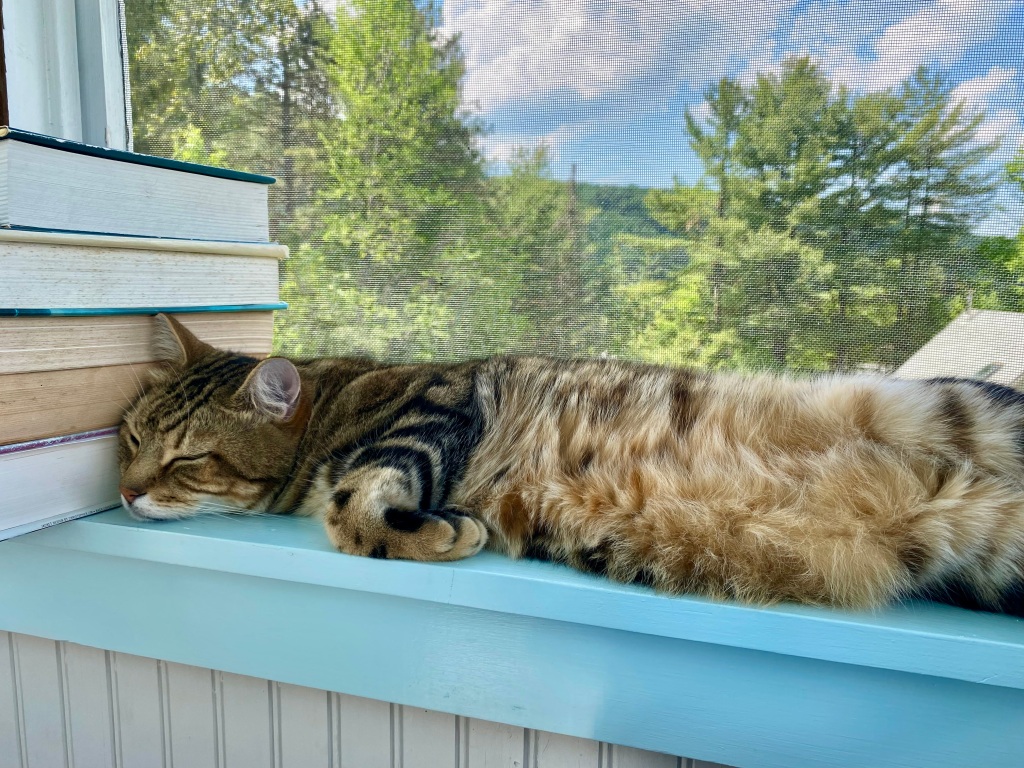
Spring window, upstairs study.

Early evening on Friday, after a long workday, I’m in a nearby town’s general store, talking to an old acquaintance on the porch. The store’s door is propped open. A warm breeze swirls. Rain isn’t far in the offering.

A few years ago, a stranger stopped on the porch steps where I was eating ice cream with my daughters and said my name. She’d read my first book, she said, and loved it. That conversation: a shift for me.

On my way home, I stop at the town beach and lean against the tall cedars, whitecaps chopping on the lake. The breeze is no longer so warm here, and I have the beach to myself. Last fall, weekend afternoons and stuffy evenings, I swam here, when everyone else was too busy or too disinterested to swim at my usual places. With my youngest at college, I lived alone again, and I determined not to drench my empty nest with tears. For those hours, I brought pages of my manuscript. Dusty sand drifted into my printed words and into my bag that held my ever-present things: library books and knitting. I’d swam here before with my daughters, but I began to know this lake in a new way: how the bottom drops quickly and few boats venture to this far end. I kicked far out, leaving the weeds and the strangers on the beach behind. Curious or not, the loons joined me.

And a line from the mesmerizing Annabel Abbs’ Windswept about women, walking, solitude, and creativity: “She purged her inner clutter with outdoor space.”

‘Eat all the plums from all the iceboxes. Apologize to no one.’

Not a spoiler alert — an eclipse is headed our planet’s way — and we live in the path of totality. Over the past few years, it feels like the state has prepared for so many things: snowstorms and windstorms, floods. Now, a river of people streaming in for The Awesome.

Meanwhile, lives churn on. I spend a pleasant and snowy afternoon writing a spreadsheet, followed by a ranting email which I (wisely) delete before I send. I write and write. A short excerpt of my novel is picked up for publication in May. I’m given a green folder and a white folder of old letters and documents and site map for an article I’m writing. The housecats twitch at the juncos in the feeder.

Ryan Champan’s advice on writing a novel:

56. If you’re struggling with revision, print out the draft. Cut each sentence into individual strips and papier mâché them into a sculpture of your head, scaled 2x. Once it’s dried, place the sculpture over your head—create eye holes at your discretion—and just sit like that.

And another:

15. Llosa again, on writing one’s first novel: “Those writers who shun their own demons and set themselves themes because they believe their own aren’t original or appealing enough are making an enormous mistake. In and of itself, no literary theme is good or bad. Any themes can be either, and the verdict depends not on the theme itself but rather on what it becomes when the application of form—narrative style and structure—makes it a novel.”

Read the whole 1oo here. Surely a few gems for anyone…

Your own darkness.

An old friend from years ago sends me a message. She’s persistent, wearing down through my imposed or self-imposed hermitage, whatever this thing is I’m doing, and I drive myself out on muddy roads. She has such a lovely little girl, I’m smitten immediately. I sit down on the floor and chat up the child, and eventually remember my good friend and how much I enjoy her world. She’s funny, with boundless good will and cleverness, in a life that’s had her share of lemons.

End of March, nearly Easter, my perennials spike up further every day. How the earth desires green. I’m far enough along now in my own life that I know the cupboard of my mortal life will always hold certain grooves and scars, its beaten shape, the way the material in my life has shaped me. Aren’t we all that way, though? Maybe this is why spring is the dearest of seasons, that from mud and ice emerge tender shoots, the improbable made manifest every year.

Beginning

The moon drops one or two feathers into the field.   
The dark wheat listens.
Be still.
Now.
There they are, the moon’s young, trying
Their wings.
Between trees, a slender woman lifts up the lovely shadow
Of her face, and now she steps into the air, now she is gone
Wholly, into the air.
I stand alone by an elder tree, I do not dare breathe
Or move.
I listen.
The wheat leans back toward its own darkness,
And I lean toward mine.

— James Wright

Dazzling light.

Here’s the weird thing about this March: cabin fever is not a thing. March has always marked the time of year when snow and cold has piled unrelentingly on us for veritable months. Not so, this warm year. But climate change does squat for the dearth of light, and certainly nothing for the dissatisfaction that’s creeping into our social consciousness. I am a woman who craves the planetary might of blooming crocuses, the radiant headiness of a forest strewn with spring beauties, the serene hover of a bee tucked into a downy apple blossom. Patience, patience.

Walking home from the library, a sudden snowfall drenches my eyelashes.

On this early morning, poetry:

Strewn

It’d been a long winter, rags of snow hanging on; then, at the end

of April, an icy nor’easter, powerful as a hurricane. But now

I’ve landed on the coast of Maine, visiting a friend who lives

two blocks from the ocean, and I can’t believe my luck,

out this mild morning, race-walking along the strand.

Every dog within fifty miles is off-leash, running

for the sheer dopey joy of it. No one’s in the water,

but walkers and shellers leave their tracks on the hardpack.

The flat sand shines as if varnished in a painting. Underfoot,

strewn, are broken bits and pieces, deep indigo mussels, whorls

of whelk, chips of purple and white wampum, hinges of quahog,

fragments of sand dollars. Nothing whole, everything

broken, washed up here, stranded. The light pours down, a rinse

of lemon on a cold plate. All of us, broken, some way

or other. All of us dazzling in the brilliant slanting light.

— Barbara Crocker

Necessary Birdsongs.

Lake Champlain

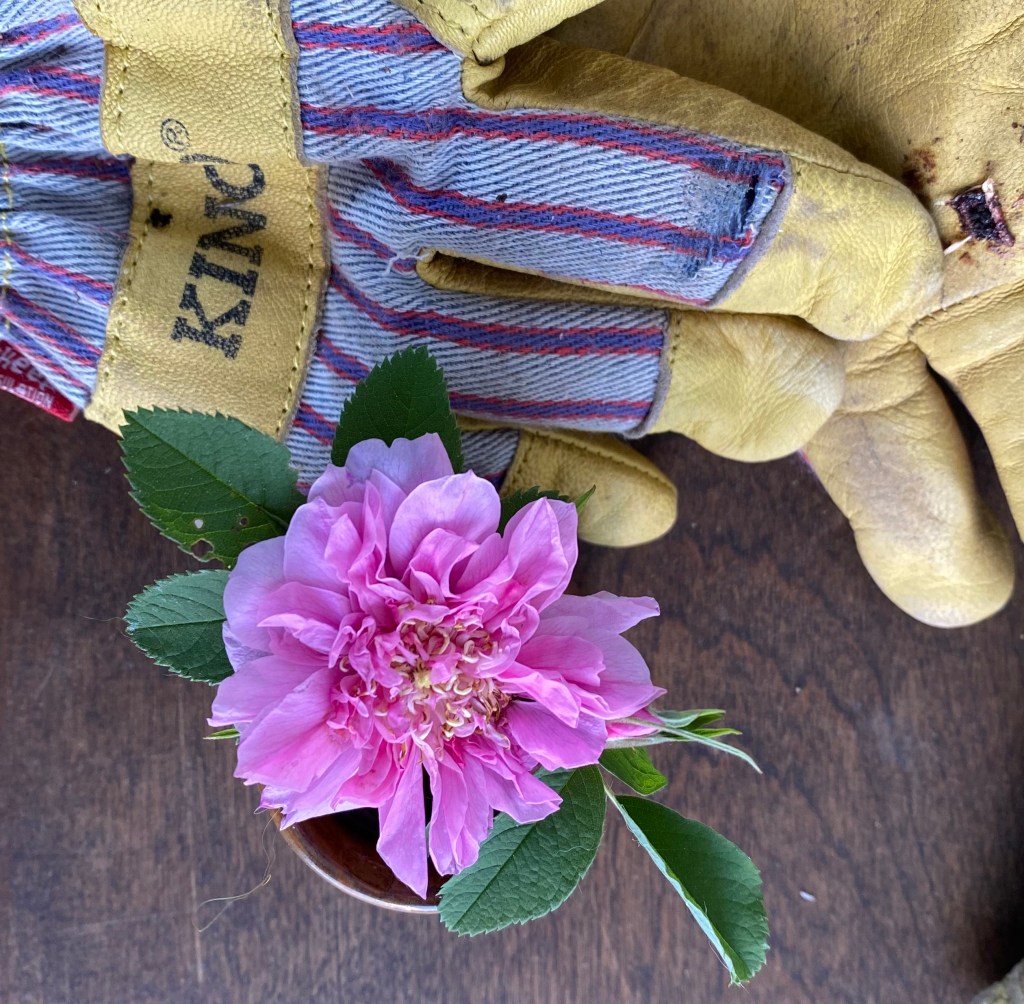
Mid-March, the unlovely muddy Vermont: I bend beneath the snarled rose bushes, seeking green nubs pushing through the wet earth. By June, this world will be verdant, lush, those old roses a tangle of green, tiny blossoms each a delicate bouquet of pale pink. These roses, planted by someone doubtlessly long passed over into the other world, ruggedly fence my house, their flowers such a dear sweet fragrance.

In this brown world, I wander to the places where, in springs past, I’ve heard the early songs of redwing blackbirds. Yesterday, I hear these birds, not the full chorus yet, but the warm-up crew. We are well before the yard clean-up and gardening season. The town roads are rutted, hard to travel, and the summer folks have not yet returned. Hidden in this clump of cedars, the blackbirds steadily, without any fuss, go about their blackbird lives. Not so many weeks away, marsh marigolds will blanket these wetlands — dazzling yellow, killer green — but for now, the dun palette of silvery cedar, umber earth, the birdsong melodies yanking us along to spring.