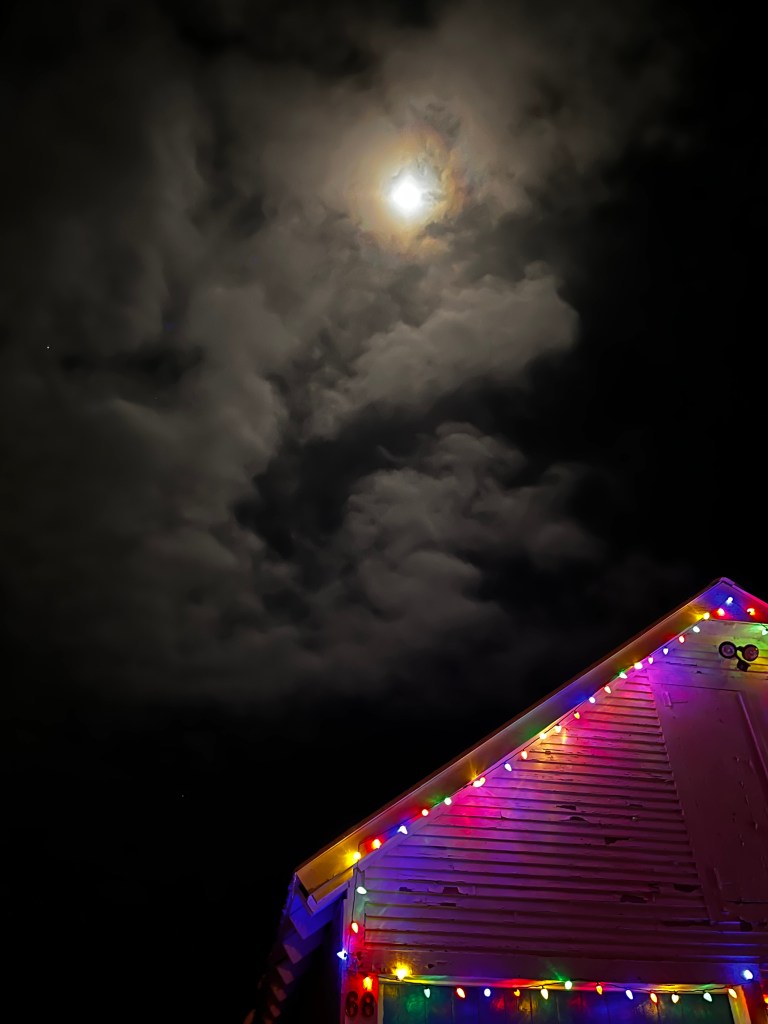
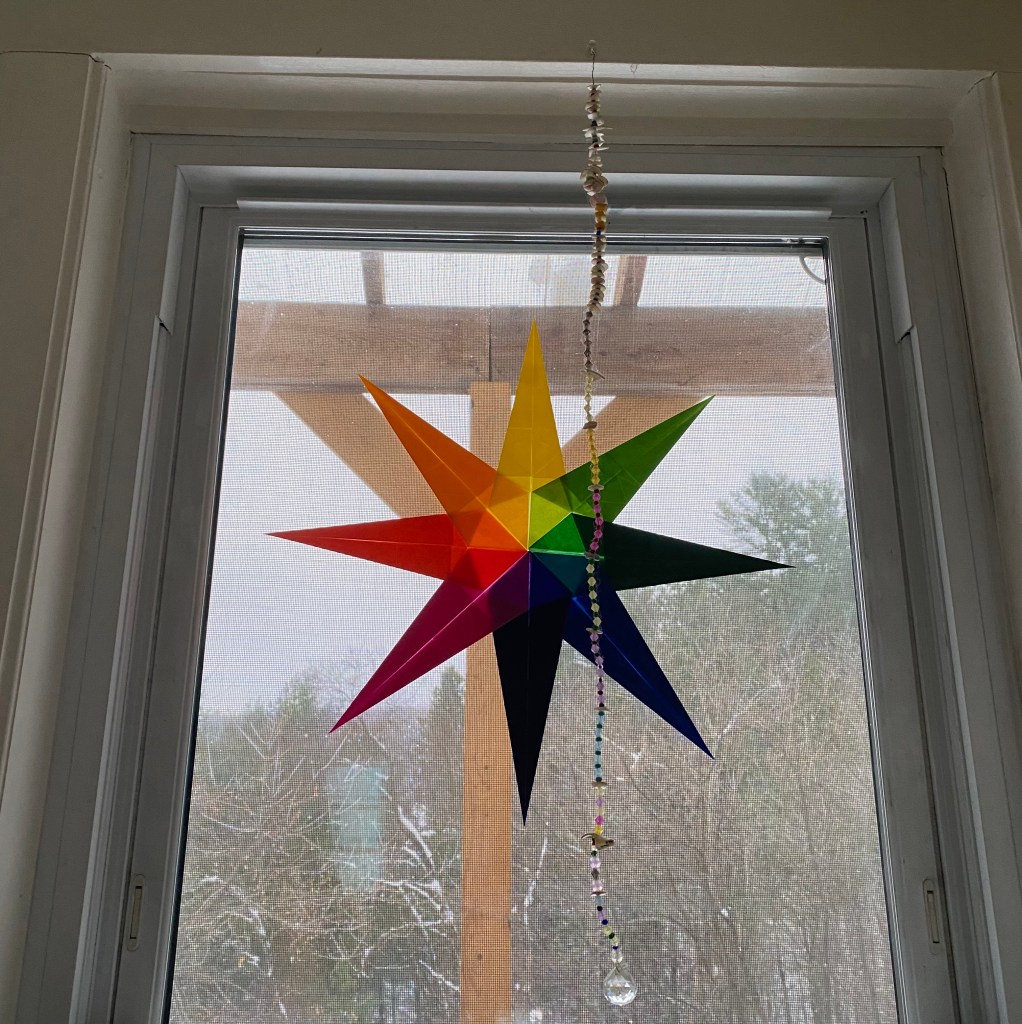
Lantern Light.

My immense thanks for so much kindness and light sent my way this week…. It’s meant the world to me.

When my daughters were in a sweet little Waldorf nursery school, around this time every year the children made lanterns from canning jars covered with colored tissue paper. The whole school gathered for a vegetable stone soup and then set out for a walk with the lanterns. This is rural Vermont, remember; the nursery school was surrounded by forest and the deep night, and parents carried lighters and matches to relight anyone’s lantern that was snuffed out. In the dark, stumbling a bit, we walked, singing.

Martinmas. I was tugged right into the Waldorf world with its heady folklore and mummers plays, the stories within stories, my natural bent of mind.

A week into the cancer world, veritable novice, walking on November 11, I was thinking of all these powerful layers — Martinmas and Armistice Day and Veterans Day (after WWII and the Korean War) — and the hidden interconnectedness of so many things, String Theory, the magical enchantment of books with stories that seem disconnected and then — whoosh! — are magically revealed at the end.

Maybe this is only my own way of thinking of things, but this uninvited and unwanted cancer that has now joined my body and story could hardly be random. Here I am, on the edge of a journey of indeterminate length, still looking to put these hard pieces together.

And for November, with her lovely gloaming light, a few lines from Adrienne Rich:

… You’re what the autumn knew would happen
after the last collapse
of primary color
once the last absolutes were torn to pieces
you could begin

How you broke open, what sheathed you
until this moment…

The world, keep on keeping on….

The young barista in my coffee shop muses with me about the small pleasures of November: the summer slam of tourists quieted, the sudden simplicity of stillness. On a balmy afternoon, I head out in search of places where I’ve loved and been loved, the sunny afternoon so warm the crickets have struck up their chorus again.

A few days later, I’m in the diner, eating breakfast with a friend whose mind works along my hard-bitten lines. Our booth’s window looks down into the river where the patched-up cement walls have fallen flat. We are in absolute agreement that this shifting world of thoughts and opinions, all the junk fed by media and social media, come to naught. It’s action that shifts the world. And the world, despite our fears, will keep on keeping on.

I put poetry as action, too. Here’s a few lines from the incomparable Mary Ruefle’s “Glory.”

... I met a psychic who told me my position in the universe
but could not find the candy she hid from her grandkids.
The ordinary fear of losing one’s mind. You rinse the sink,
walk out into the October sunshine, and look for it
by beginning to think. That’s when I saw the autumn aster,
the sedum blooming in a purple field. The psychic said
I must see the word glory emblazoned on my chest. Secretly
I was hoping for a better word. I would have chosen for myself
an ordinary one like orchid or paw...

Pre-Election, Pause.

In the late afternoon, I walk down to the post office and empty my box of election flyers, adding to the recycling boxes in the lobby. The lobby’s a shabby space, with a metal Christmas tree strung with pink lights for Breast Cancer Awareness month and a box on a counter for respectful flag disposal. A few summers ago, the postmaster planted a garden in the strip of soil outside the squat brick building. In a weird kind of way, this seems like a micro collage of this country. That midmorning, when I arrived at the town clerk’s office, she’d received FBI warnings about election security, so many concerns about the grid going down.

The season’s first snow layers in among the remains of frost-killed summer. The light now is late fall — unfiltered by leaves, without the warmth of summer, but clear, penetrating. One of the autumn’s beauties are lingering twilights, the slow unfolding of the day into night.

Recovering, bit by bit, from a summer mold toxicity, I walk home the longer way, through the neighborhoods where kids have decorated houses with orange lights and ghosts on broomsticks. I pass the Legion and the gun store, and then walk along the river for a bit. I stop to talk with a dog walker about the declination of light. Do people do this in other parts of the world? Surely they must. We muse about the summer and fall — like a rare gift this season has been, suffused with growth and sunlight, as if in defiance of the human world.

And a relevant line from Ben Shattuck’s The History of Sound: “History is personal, even when it isn’t.”

A Handshake and a Promise.

I leave dinner with neighbors and friends and walk home, down through the village. It’s late enough that the few restaurants in town are closing down, a few lingerers at the bars while the waitstaff wipes down the tables, doubtlessly thinking of their own homes and nights ahead.

Knowing I would savor this walk, I brought my hat and a coat, and the night is warm enough. I’d been offered a ride — “it’s dark!” — but me who is afraid of so many things (rushing semis, rats) has no fear of this autumn dark, this small town. I pass no one, not even a dog walker.

End of October, and I labor through the daily chores, now shoveling ashes from the wood stove, putting away the summer’s chairs and garden tools. My daughter phones with a homework question. Over us, the ineffable holiness of the passing of both of my daughters’ grandmothers this year, the old women who had distanced themselves from their granddaughters. What will this mean for my young women? At dinner, whisperings about the election. Which way will this split?

Just beyond the village, a U-Haul idles, lights on. As I walk nearer, I squint in the brightness. U-Haul, those rental trucks that have appeared intermittently in my life. The last time was that sleety winter day when a couple loaded up barrels of syrup from our sugarhouse driveway. I was in a desperate time in my life then, selling what I could to pull up stakes with my daughters and light out for new territory. I took a chance on this couple, watching them head down the slushy road with our liquid gold with nothing more than a handshake and a promise between us.

As I walk by, the U-Haul driver doesn’t look up, reading his phone, maybe a map, maybe a love note. I keep walking. As for that couple, the handshake and promise were gold. A week later, the check arrived in the mail.

Vectoring….

Autumn has stretched out in Vermont into days of balminess, the warm air shot-through with the gold that lingers on the trees. It’s so warm, I keep at my makeshift back porch deck, a table I moved out this summer that’s become a place of succor, resting my bare feet on a wooden crate of those onions I pulled from the garden.

I’m taking a class with the unmatchable Lauren Markham about structure in writing, one of the hardest challenges. Online, there’s attendees from California (what? you get sun and ocean?) and Phoenix and Boston. Signing in, I leave my laptop camera on. I throw a chunk of wood in my stove from sheer laziness so I won’t need to rekindle the fire as the colder night creeps in, but I open the back window so my cats can sit on the sill and enjoy this sweet October breeze. When I join, the group is admiring the view of my clapboard house and frost-killed morning glories vines. I tell them my chore which doubtlessly immediately marks me as…. quaint rural.

Late afternoon, I pull out the dead basil plants and then lie down under an apple tree. Her leaves, blacked with frost spots, spiral down, one by one, to the unmown grass. It wasn’t until I had babies and was forced to slow down (all those nursing hours beneath apple trees, milk-sweet baby in my arms) that I realized every leaf takes its own precise trajectory, from spring bud to the autumn dive earthward. Around me, rotting apples, persistent slow-flying wasps.

I might have slept; when I open my eyes, the sky is already draining of blue. Thinking of Markham’s words, I suddenly see the taunt arc of this fourth, yet unfinished book, the map that holds this story, the treasure at the reader’s end far from a Hallmark card. Vector is the word she used. Indeed, all story, all life, is motion. The chill rising up from the earth, I vector myself indoors….

A great many, who have spent their lives in cities, and have never chanced to come into the country at this season, have never seen this, the flower, or rather the ripe fruit, of the year. I remember riding with one such citizen, who, though a fortnight too late for the most brilliant tints, was taken by surprise, and would not believe that there had been any brighter. He had never heard of this phenomenon before. 

— Thoreau

Rowing in autumn…

In a cold rain, my friend and I set off walking. It’s a joke between us. When we were neighbors, I would call and ask her to meet me for a walk.

It’s sleeting, she’d say.

Only a little.

Invariably, she’d join me, gung-ho.

The rain lets up, though, as we walk up a muddy path, cross streams, pause to admire where a view might be through dense mist. The woods are gold and black, redolent with the humus-y scent of fallen leaves, this summer’s bounty already turning back into the damp soil. I remember her oldest son, now a teacher himself, standing on a chair in my kitchen, rolling out dough for sugar cookies, happy. Rain or snow probably fell then, too.

This is familiar forest to me, as I lived here for so many years. But I grew up surrounded by New Hampshire forest, and the exquisite beauty of New England fall, its sharp bite reminding us of winter, is as familiar to me as the backs of my hands. While the greater political world is utterly unfamiliar — which way will this go? — this path, our conversation, is balm for my soul. Both our lives have gone rocky ways, and yet here we are in rain, pressing on, pocketing especially pretty leaves.

On my way home from our soggy walk, I stop at the coffee shop and spread out my papers and laptop on a table. I’m standing there, thinking (or maybe dreaming), when a long-ago acquaintance appears. We sit and talk for a bit. There was a quarrel in the past between us. As she speaks, I feel the blood quickening in my rain-damp flesh, from my cheeks to my sodden toes. Here it is again, how experience shapes and changes us. Our culture pushes us, pushes us as women, to smooth the edges, say all’s well, be polite, diminish ourselves and pretend we’re still in the land of childhood, when the grownup woman world is a vast sea of star and moonlight, treacherous waves, radiant beauty, and the great unknown. At the end of our conversation, there’s no conclusion, no tidy wrap-up, just the two of us rowing together for a bit, handing the oar back and forth.