Vectoring….

Autumn has stretched out in Vermont into days of balminess, the warm air shot-through with the gold that lingers on the trees. It’s so warm, I keep at my makeshift back porch deck, a table I moved out this summer that’s become a place of succor, resting my bare feet on a wooden crate of those onions I pulled from the garden.

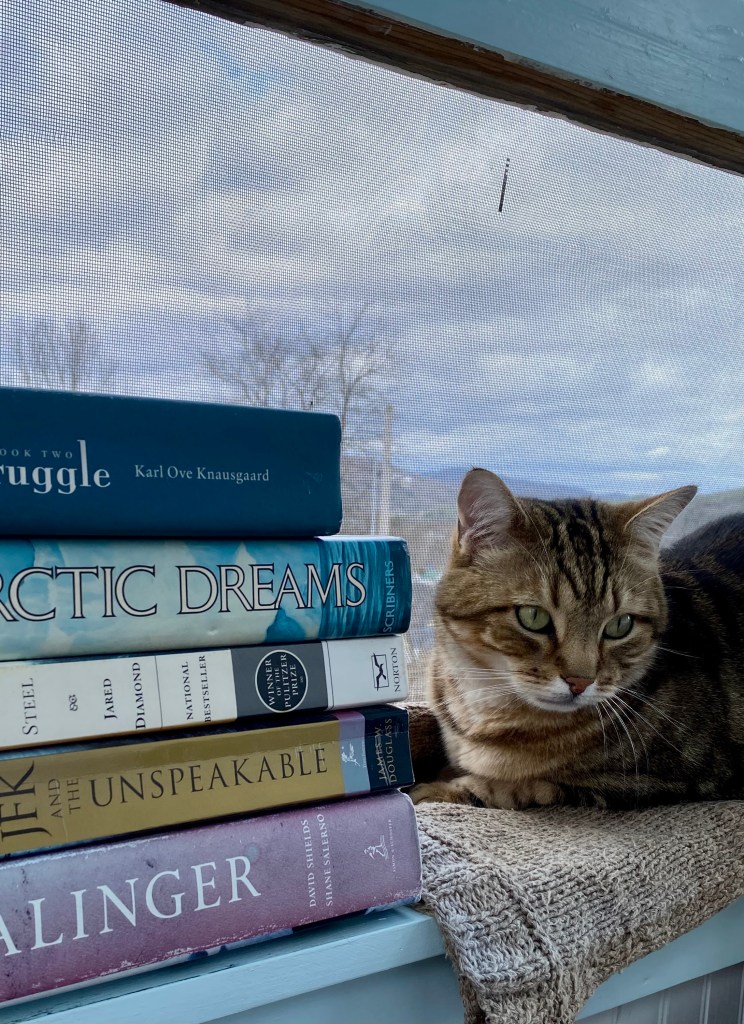
I’m taking a class with the unmatchable Lauren Markham about structure in writing, one of the hardest challenges. Online, there’s attendees from California (what? you get sun and ocean?) and Phoenix and Boston. Signing in, I leave my laptop camera on. I throw a chunk of wood in my stove from sheer laziness so I won’t need to rekindle the fire as the colder night creeps in, but I open the back window so my cats can sit on the sill and enjoy this sweet October breeze. When I join, the group is admiring the view of my clapboard house and frost-killed morning glories vines. I tell them my chore which doubtlessly immediately marks me as…. quaint rural.

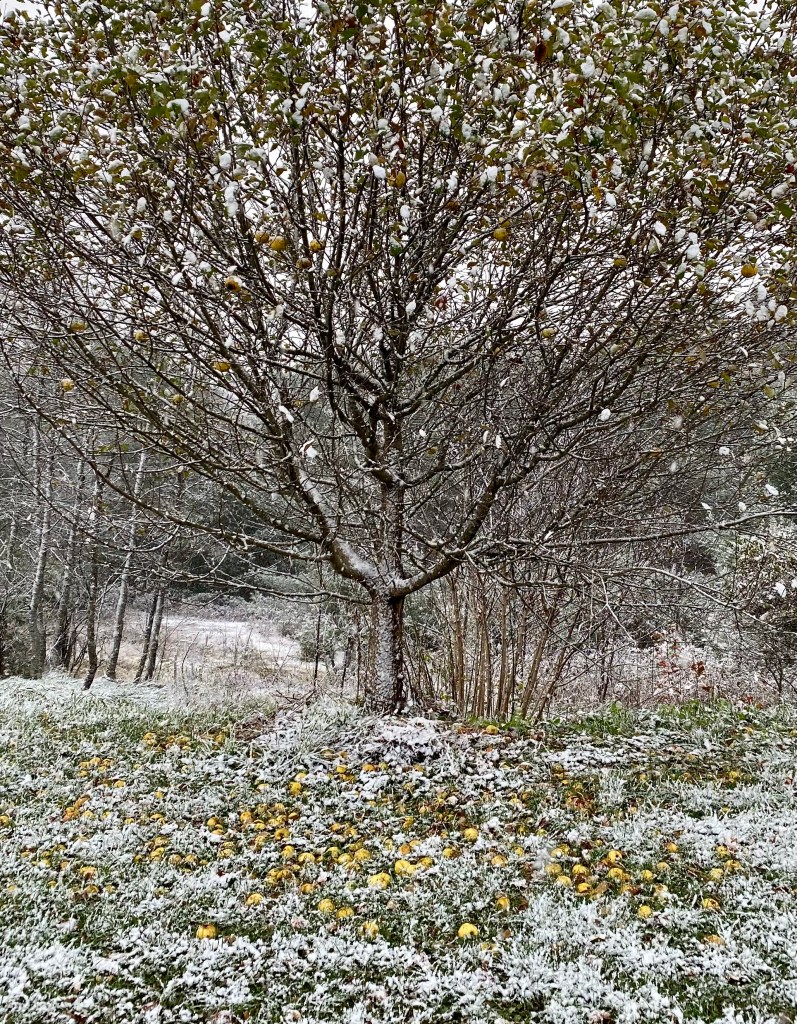
Late afternoon, I pull out the dead basil plants and then lie down under an apple tree. Her leaves, blacked with frost spots, spiral down, one by one, to the unmown grass. It wasn’t until I had babies and was forced to slow down (all those nursing hours beneath apple trees, milk-sweet baby in my arms) that I realized every leaf takes its own precise trajectory, from spring bud to the autumn dive earthward. Around me, rotting apples, persistent slow-flying wasps.

I might have slept; when I open my eyes, the sky is already draining of blue. Thinking of Markham’s words, I suddenly see the taunt arc of this fourth, yet unfinished book, the map that holds this story, the treasure at the reader’s end far from a Hallmark card. Vector is the word she used. Indeed, all story, all life, is motion. The chill rising up from the earth, I vector myself indoors….

A great many, who have spent their lives in cities, and have never chanced to come into the country at this season, have never seen this, the flower, or rather the ripe fruit, of the year. I remember riding with one such citizen, who, though a fortnight too late for the most brilliant tints, was taken by surprise, and would not believe that there had been any brighter. He had never heard of this phenomenon before. 

— Thoreau

Rowing in autumn…

In a cold rain, my friend and I set off walking. It’s a joke between us. When we were neighbors, I would call and ask her to meet me for a walk.

It’s sleeting, she’d say.

Only a little.

Invariably, she’d join me, gung-ho.

The rain lets up, though, as we walk up a muddy path, cross streams, pause to admire where a view might be through dense mist. The woods are gold and black, redolent with the humus-y scent of fallen leaves, this summer’s bounty already turning back into the damp soil. I remember her oldest son, now a teacher himself, standing on a chair in my kitchen, rolling out dough for sugar cookies, happy. Rain or snow probably fell then, too.

This is familiar forest to me, as I lived here for so many years. But I grew up surrounded by New Hampshire forest, and the exquisite beauty of New England fall, its sharp bite reminding us of winter, is as familiar to me as the backs of my hands. While the greater political world is utterly unfamiliar — which way will this go? — this path, our conversation, is balm for my soul. Both our lives have gone rocky ways, and yet here we are in rain, pressing on, pocketing especially pretty leaves.

On my way home from our soggy walk, I stop at the coffee shop and spread out my papers and laptop on a table. I’m standing there, thinking (or maybe dreaming), when a long-ago acquaintance appears. We sit and talk for a bit. There was a quarrel in the past between us. As she speaks, I feel the blood quickening in my rain-damp flesh, from my cheeks to my sodden toes. Here it is again, how experience shapes and changes us. Our culture pushes us, pushes us as women, to smooth the edges, say all’s well, be polite, diminish ourselves and pretend we’re still in the land of childhood, when the grownup woman world is a vast sea of star and moonlight, treacherous waves, radiant beauty, and the great unknown. At the end of our conversation, there’s no conclusion, no tidy wrap-up, just the two of us rowing together for a bit, handing the oar back and forth.

Sweeping Out Inner Clutter.

Spring window, upstairs study.

Early evening on Friday, after a long workday, I’m in a nearby town’s general store, talking to an old acquaintance on the porch. The store’s door is propped open. A warm breeze swirls. Rain isn’t far in the offering.

A few years ago, a stranger stopped on the porch steps where I was eating ice cream with my daughters and said my name. She’d read my first book, she said, and loved it. That conversation: a shift for me.

On my way home, I stop at the town beach and lean against the tall cedars, whitecaps chopping on the lake. The breeze is no longer so warm here, and I have the beach to myself. Last fall, weekend afternoons and stuffy evenings, I swam here, when everyone else was too busy or too disinterested to swim at my usual places. With my youngest at college, I lived alone again, and I determined not to drench my empty nest with tears. For those hours, I brought pages of my manuscript. Dusty sand drifted into my printed words and into my bag that held my ever-present things: library books and knitting. I’d swam here before with my daughters, but I began to know this lake in a new way: how the bottom drops quickly and few boats venture to this far end. I kicked far out, leaving the weeds and the strangers on the beach behind. Curious or not, the loons joined me.

And a line from the mesmerizing Annabel Abbs’ Windswept about women, walking, solitude, and creativity: “She purged her inner clutter with outdoor space.”

The Word Domestic, Depths.

Snowglobe snow falls in the late afternoon. November light: clear and sharp. Not much warmth here, not any season for sleeping rough and roofless, but sparkling as if our world has expanded. In an inexplicable way, the light seems washed full of hope.

The summer folks have fled elsewhere, to Florida condos or back to city jobs. The gardeners and landscapers have put away their rakes and trowels. Around the lake where I walk at midday, only the builders persist in their bulky jackets and gloves. There’s so few of us in town that me wandering by is the chance to stop and remark about stick season. At the lake’s pebbled edge, I dip in my fingers. Before long, ice will rim the bank.

Stick season and the wood stove’s warmth make my cats deliriously joyful. Rumaan Alam (such an amazing novelist!) writes in his intro to Helen Garner’s The Children’s Bach:

Let’s agree to abandon forever the idea that the depiction of family life is the province of women artists, and therefore insubstantial. Let’s refuse to hear a sneer in the term domestic.

Midwinter Lady Moon

Winter moon… in my novel, the Lovely Lady Moon appears from the beginning so frequently I think of her as a character, too. The other night, I lay reading in bed for the longest time, and then my brother started that texting thing again. He has this way of texting like no one else I know: as if he wraps his deepest, pithiest, and often funniest words in a rag, knots it up with twine and rock, and chucks it over the Connecticut River to me. Afterwards, I lay in the cold room under a thick wool blanket, staring through that uncurtained window, thinking of those words of my brother’s, his phrases of what had given him a sweet, rare joy that day.

I learned to follow the moon’s phases all those myriad March nights of sugaring, as I hurried back and forth from the house to the sugarhouse, over treacherous ice and sucking mud, beneath her radiance…. which channeled into all those nights I was awake with nursing or sick children, my eyes watching the moon as she rose and arced and descended through my slender view of the cosmos.

Those nights, in my rural house, I wondered about other women all over the planet who were awake with their babies, feeding and tending these tiny beings, their faces turned up to Lady Moon’s pristine presence – utterly familiar, uncrackably mysterious, infinitely beyond the touch of our hands. Steady as clockwork, infallible, she beams on: a beacon.

Bright Moon

                                                                after Buson  #843

Cold is the bright moon
All those trees
and this vast sky.

David Budbill, from AFTER THE HAIKU OF YOSA BUSON

FullSizeRender

Photo by Molly S./West Woodbury, Vermont

Winter: the Whale’s Belly

Our kitchen was forty-two degrees this morning. I leaned over the range and chipped a ridge in ice along the bottom of the window, and thought this is getting a little ridiculous. And I forgotten cream for the coffee. Often, in these morning – no Biblical scholar, not even a church-goer – I think of Jonah in the belly of his whale.

But then, home again from a basketball game, the wind blowing snow in our faces, my older daughter sang out, You can tell the light’s coming back! 

Indeed. Through translucent clouds, the day was yet bright, the moon a glowing gem tucked above the bare branches of maple trees. After a frozen day, the end was such a lovely place, with traces of snow falling, the white all around pure and white, and the light familiar and beckoning as that long-off spring.

...Winter is for women ----
The woman, still at her knitting,
At the cradle of Spanis walnut,
Her body a bulb in the cold and too dumb to think.

Will the hive survive, will the gladiolas
Succeed in banking their fires
To enter another year?
What will they taste of, the Christmas roses?
The bees are flying. They taste the spring.

– Sylvia Plath, "Wintering"

IMG_9644

Photo by Molly S./North Bennington, Vermont