Phone Conversation

Sunday afternoon finds me talking to the Vermont Department of Health contact tracer about my daughter’s positive Covid test. My results, he determines, haven’t rolled in yet.

I’m at the dining room table, chipping wax off a candlestick, doodling on a piece of paper. He asks where she’s been, and I answer honestly, school, home, and the woods.

Through the window, I see a cold rain falling. He tells me about the potential for what seems to me an incredibly long quarantine period for myself, if I don’t test positive. If I do, well, that’s a different kettle of fish so to speak, he says.

What you’re saying, I clarify, is that there’s no good options here.

He pauses.

I apologize immediately. The good thing has already happened. Covid has washed right over my daughter with the lightest touch. My other daughter is vaccinated.

I answer all his questions. Then I ask, Wait and watch?

It’s maddening, he says, but yes. That’s where you are.

The wind bends the pear tree in our front yard. We’ve endured plenty. Our house is warm, stocked with firewood and food. And so it goes.
Thaw, Finally

Right at the equinox this year, spring cracks winter’s back in Vermont. The pavement buckles into frost heaves. The dirt roads mush and muddy. Sunday, I find the season’s first coltsfoot, the tiny gems of gold.

A Vermont spring is either a heartbeat — bang, done — or weeks of freeze and thaw, thaw and freeze. Although the days have hit 60 degrees, the nights are still cold, and our wood stove keeps our house warm.

Last evening, we walked by a sugarhouse, its cupola open and steam billowing. The air was tinged with the sweetness of maple, the slight rotting of thawing mud. Instinctively, my upper arms ached. Walking behind my daughters, listening to their chatter, my arms remembered those years when we sugared, and how my arms and gloved hands bent into the woodpile.

Spring is all those things: the radiance of the strengthening sun, the beauty of wildflowers, and how, when the earth thaws, our winter debris of ash pile and last year’s kale stalks emerge.

The bush warbler.
The rain wouldn’t let up.
The travel clothes.

— Mizuhara Shuoshi

Former Hospital Grounds, Lunch, March

My daughter signs up to give blood in Waterbury, about an hour away from us. The three of us decide to make a morning of the expedition, with the youngest driving, including the stretch of interstate.

After we drop her off, my youngest and I walk around town, and I buy her a watery hot chocolate in the one place that appears to be open that morning. It’s cold, and we end up back in the car, watching a few skiers on the town’s rec fields.

We talk about dogs and high school and how writers are the most annoying people on the planet, always peering into strangers’ lives, wondering. Even worse, writers write about their families.

True, I admit. It’s a burden.

It’s about 11 degrees. She orders sandwiches on her cell phone from a nearby bakery, and I tell her to add cheesecake to that digital order.

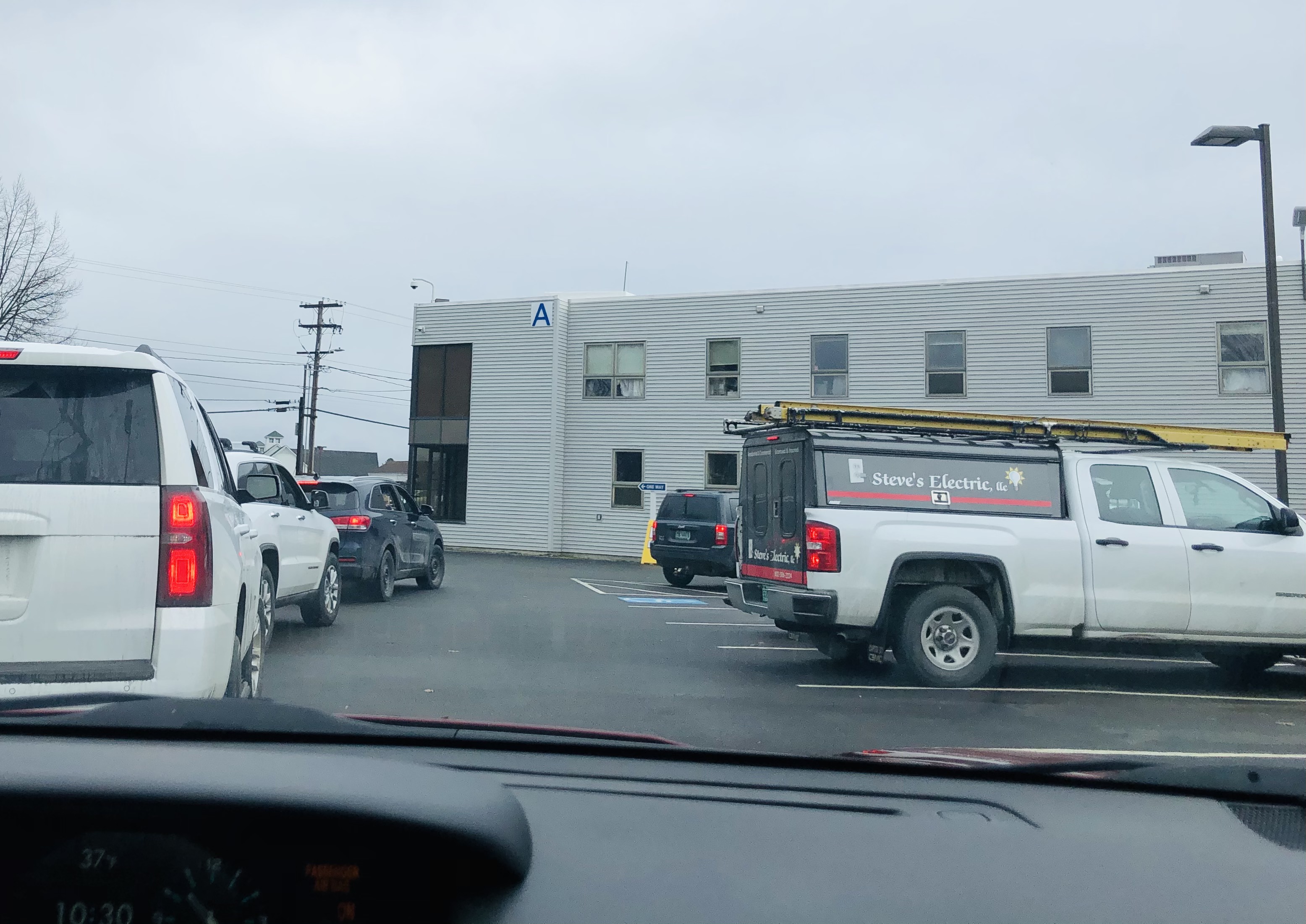
When my older daughter returns, we pick up that order at the bakery window — or, I pick it up. One person only, please. We eat falafel in my car in the enormous and utterly empty parking lot of the former Vermont State Hospital for the Insane. The extensive brick buildings are now state offices. Empty, now, too.

As we eat, we talk about the tall smokestack, crumbling and apparently unused, with VSH bricked near the crest. Two geese fly by, and I realize how near the river we are. So much has happened on these grounds, so many people, so much living, so many years.

It’s cold, cold, and we keep driving. March, my father’s birthday, a promise of spring in the offing.

But I’m beginning to understand this: We never know. Life is a foray into mystery.

— Suleika Jaouad, Between Two Kingdoms: A Memoir of a Life Interrupted

Our Perpetual Holiday

To practice night driving, my daughter and I set off after dinner, delivering a book and knitting needles to a friend. We’re laughing on the way there, and my daughter remarks, Why is it so dark?

I answer that I’m going to let that question lie.

At our friends’ house, we can see through the windows where the family is around the wood stove, talking, the walls painted yellow. I have a sudden flash of envy at the intactness of mother, father, two children, and then that passes quickly, too. At our house, warm and well-lit, with interior walls painted limoncello, we’re as intact as any family, too.

With my friend’s book in my lap, my daughter drives up the back roads, over ice and sand, through all that darkness. We reach the crest of hillside. There, as she drives and talks, I see across the valley to where a barn is lit in a long string of lights on the opposite hillside. Sporadic houses glow in the cold night, and not much more.

She drives down, then along the S curves along the river where I remember a terrible accident years ago. We stop and fill the gas tank. Beneath the bright gas station lights, it’s just us. I walk around the car, washing windows. In the driver’s seat, she watches me, and then I step back and bow. She shakes her head at me, amused.

Middle of February. Cold. A little chit in our collage.

Tuesday

When I step out to start my daughter’s car before she heads to work this morning, a very light snow is falling, flakes drifting in the light from the kitchen window.

Last year, I would have been headed to Burlington through the snow, driving through whatever the weather might have tossed at me. This year, I’m headed a far shorter distance up a back road.

In my twenties, I lived in Washington state for a few years, on the western side, in the Cascade mountains. The mountains were beautiful, the people kind, but I missed the heart of winter, the drama of Vermont’s swinging seasons. On mornings like this, I sometimes wonder what the heck I was thinking. In February, so many Vermonters draw in — even pre-pandemic — hibernating at our hearths against the winter.

For a moment longer I stand shivering. In the village below, only a few lights glow. A milk truck drives along Route 14.

Then I head back in to make more coffee. My daughter yawns and packs her bag for work. She asks me, Remember the smell of rain?

Yes, I say. I do.

Photo by Gabriela

Old Photos

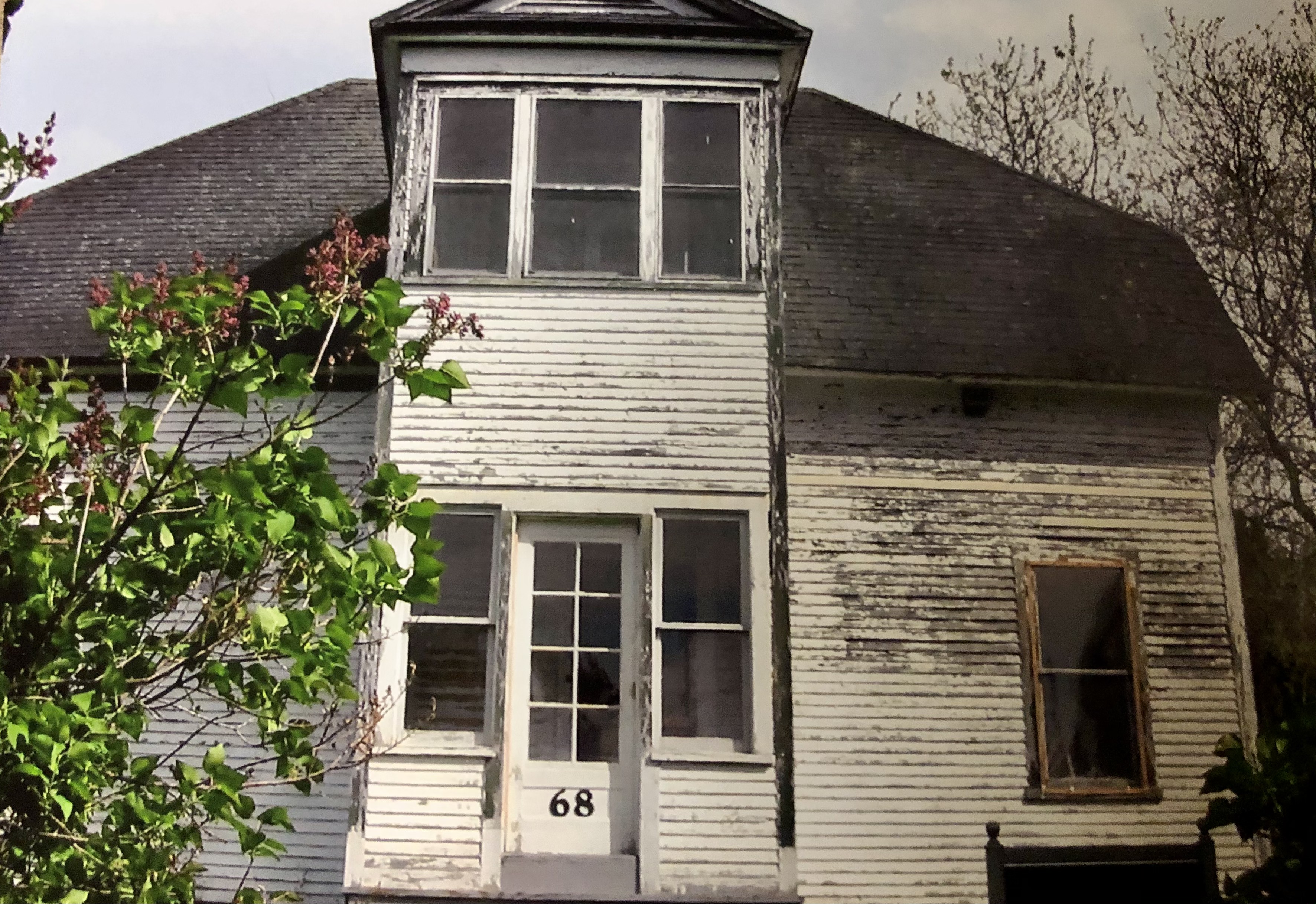
The couple who last owned our home mail us old photos. When they bought the house, the 100-year-old dwelling was in ragged shape. My daughters and I spend some time looking at how the house has changed, and how it hasn’t.

I bought the house in good shape, and now we’re wearing into it, scraping and chipping at its shininess with our use. In the spring, we’ll open all the windows and polish our house again. In the summer, I’ll paint, as paint perpetually falls off in New England.

Once, I had thought to sell and move when my youngest graduated from high school. Now, like everything else in our collective lives, the future is uncertain. Shelter in place — a phrase I once believed would never apply to our Vermont life — directs the shape of our lives.

In the afternoon, I ski through the woods on the nearby trails. Just as I click on my bindings, I remember last night’s dream of a snowy owl… and then I wonder, truth or reality? I stand there alone, in the cold and under the overcast sky, wondering. For just a moment, I’m not sure. Maybe I really did see that elusive owl. Then I push off into the woods, silent but for the sound of skis over snow.