Jam of August…

My youngest and I hike in a nearby state park that, as a family, we’ve visited for years—Elmore Mountain. Mid-August, in frothy opulence, does not disappoint: rocky mountain path surrounded by leafy forest, summit view, lake, the nearby store where I once bought my daughters ice cream cones and we now eat sandwiches. The trueness of hunger, the satisfaction of satiation.

Fellow novelist Catherine Tudish and I make the long trek to Manchester, Vermont, to read at Northshire Bookstore. There and back, hours filled with writing talk, life stories, the fried dumplings we eat at a fancy bar, the lingering hours at the bookstore’s closing, me buying one and then two books, stashing these in my bag. We talk and talk as the twilight slides into darkness. I laugh and say two days from now maybe we’ll still be driving around Vermont, and Catherine gently prods me to turn left, go right…

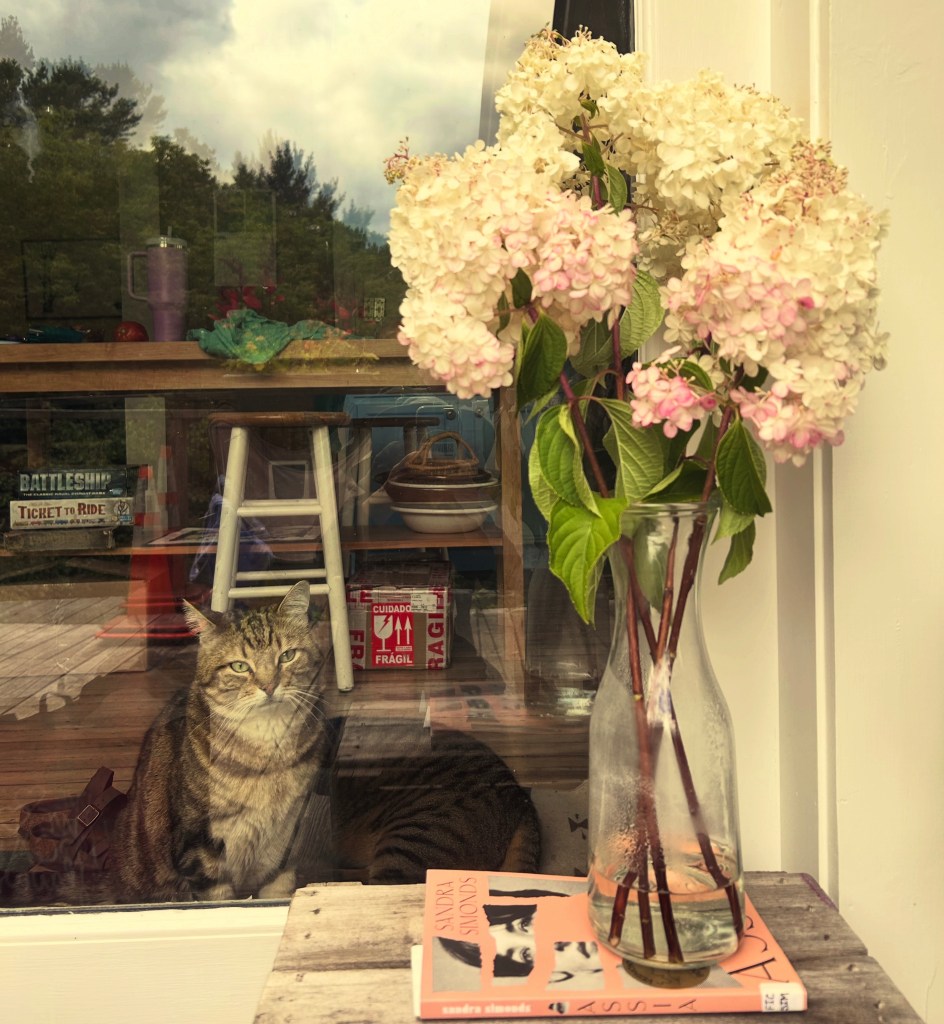
Later, after I leave her at her farmhouse and the massive hydrangea — white shot through with pink — shimmering in my headlights, I listen to the Rolling Stones, and now I am keenly intent on the back road through the darkness, cell-free Vermont, navigating by the few road signs I pass. I’ve driven here, but never in the impenetrable darkness. The night is hourless, and I’m giddy, sunroof open, car heater on, giddy not with any kind of writerly fame but enmeshed in this road and this darkness that I know will of course inevitably end somewhere. Giddy with the joy of my third book that has now reached bookshelves, the story of my troublesome main character Avah Lavoie a rough-edged young woman in search of her own coarse salvation. The novel begins in a sour hangover and ends in hunger: appetite.

Home, gracious I’m tired, but I stand holding my books and wallet and looking up at the constellations in their complex gauze, the Milky Way’s arc, bridged over my house and garden, apple trees and that giant goatsbeard and compass flowers shadowy creatures. The thin thread of crickets. I’m furiously hungry.

“I wonder if ever again Americans can have that experience of returning to a home place so intimately known, profoundly felt, deeply loved, and absolutely submitted to? It is not quite true that you can’t go home again. I have done it, coming back here. But it gets less likely. We have had too many divorces, we have consumed too much transportation, we have lived too shallowly in too many places.”
― Wallace Stegner
Knock down a wall, survive for a bit

The advance copies of my novel that will be published at the end of June, Call It Madness, sprinkle out into the world. I print postcards and mail those, too. Email me your mailing address (brettstanciu@gmail.com), and I’ll drop a postcard. The novel will be published June 30, and summer events slowly add up. I imagine sultry July, steamy August, spaghetti strip sundress, tumblers of ice water.

The novel is divided into sections of place: an apartment, a pantry where the protagonist Avah hides, the roadside Blue Lion Motel where Avah tracks down her mother, and Echo Lake—a great gossamer spill, a fat layer of ice…

Places define us. Unbelievably, I am now nearly a year out from chemo. All that long last winter I huddled on my couch, too sick to feed my own woodstove, I kept thinking, I think the kitchen wall removed. I want the small rooms of this old house opened. Now, a year later, holding what will be forever-fatigue in one hand and my strengthening return to health and merriment in the other, I hire a carpenter to remove a wall of early 20th century two by fours and lathe. I return to my dusty and torn-up house in the late afternoon, step in, and think, This is how the house is meant to be.

With the mind of a novelist, I wonder at the calculus of human decision-making: the mixture of numbers, of cost and house value, a stacked rationality. Take that arithmetic, and add to it my fierce desire to re-imagine my future where my garden bounty of jalapeños and garlic meets kitchen cleaver, where I revise another book at my kitchen table, where illness is swept from my house by the spring wind rushing through the open windows, smudging my rooms with the fecund scent of mud, the castanet jingles of mating frogs.

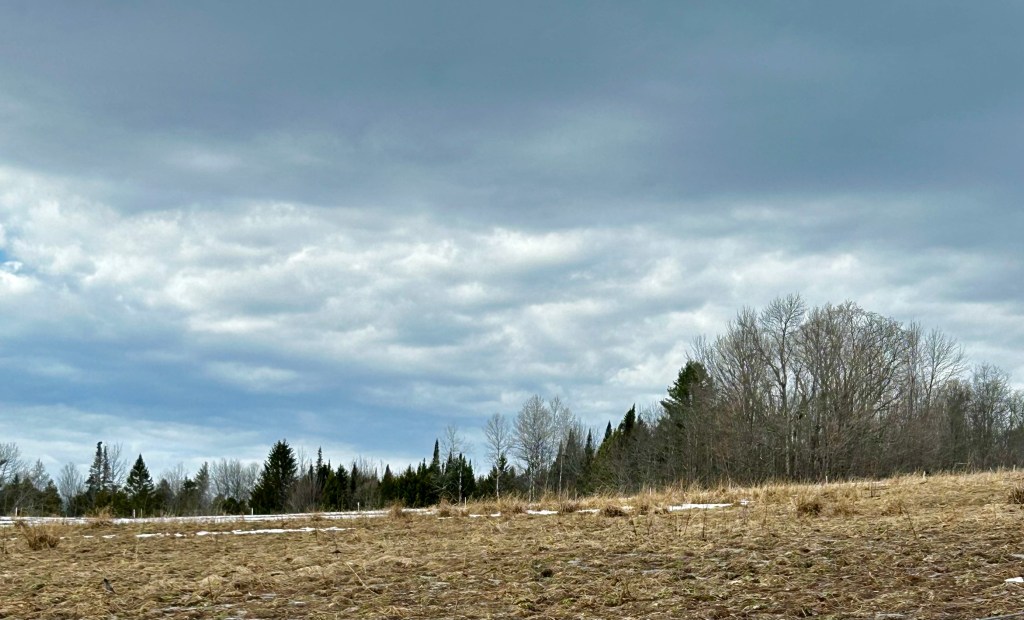
Vermont spring: thaw, fresh snow this morning, stove ashes sprinkled on the icy paths, robins. All the things.

“Survival, it is called. Often it is accidental, sometimes it is engineered by creatures or forces that we have no conception of, always it is temporary.” — Wallace Stegner, Crossing to Safety

Things Left on the Back Porch

A woman I worked with for one summer in Craftsbury, Vermont, lived the rest of the year in New York City. Before she left, I offered to mail her a few books. Don’t, she said, really alarmed. The mailman leaves packages on my doorknob in my apartment building, and people steal them.

Really? She assured me, yes, people did, in fact, steal.

People steal in lovely Vermont, too, but not like that. On my back porch, I leave my friend’s vest and a jar of peaches my daughter and I canned last summer. When my daughter returns from school, she discovers a gift of chocolate cookies and a cat calendar.

While boiling pasta for dinner, I leaf through the Eliot Porter photography book my friend left, too. In it, I discover a chapter written about nearby Glover, Vermont, not far from us.

The passage below reminds me of when I was 18 and moved to Vermont, and knew this state was exactly where I wanted to live — with a kind of certainty I’ve known about a handful of things — being a mother and a writer, tending a garden, the necessity of laughter…. and handing things from friend to friend.

Vermont is a great character mill, and it grinds exceedingly fine. It is too rough a country for pretenders, but it will make room for anyone, however odd, if he doesn’t on airs or show himself incompetent or think himself above the homespun and the calluses and the hard-mouthed virtues that Vermonters have come to the hard way, and don’t intend to lose.

— Wallace Stegner

img_4465