The advance copies of my novel that will be published at the end of June, Call It Madness, sprinkle out into the world. I print postcards and mail those, too. Email me your mailing address (brettstanciu@gmail.com), and I’ll drop a postcard. The novel will be published June 30, and summer events slowly add up. I imagine sultry July, steamy August, spaghetti strip sundress, tumblers of ice water.
The novel is divided into sections of place: an apartment, a pantry where the protagonist Avah hides, the roadside Blue Lion Motel where Avah tracks down her mother, and Echo Lake—a great gossamer spill, a fat layer of ice…
Places define us. Unbelievably, I am now nearly a year out from chemo. All that long last winter I huddled on my couch, too sick to feed my own woodstove, I kept thinking, I think the kitchen wall removed. I want the small rooms of this old house opened. Now, a year later, holding what will be forever-fatigue in one hand and my strengthening return to health and merriment in the other, I hire a carpenter to remove a wall of early 20th century two by fours and lathe. I return to my dusty and torn-up house in the late afternoon, step in, and think, This is how the house is meant to be.
With the mind of a novelist, I wonder at the calculus of human decision-making: the mixture of numbers, of cost and house value, a stacked rationality. Take that arithmetic, and add to it my fierce desire to re-imagine my future where my garden bounty of jalapeños and garlic meets kitchen cleaver, where I revise another book at my kitchen table, where illness is swept from my house by the spring wind rushing through the open windows, smudging my rooms with the fecund scent of mud, the castanet jingles of mating frogs.
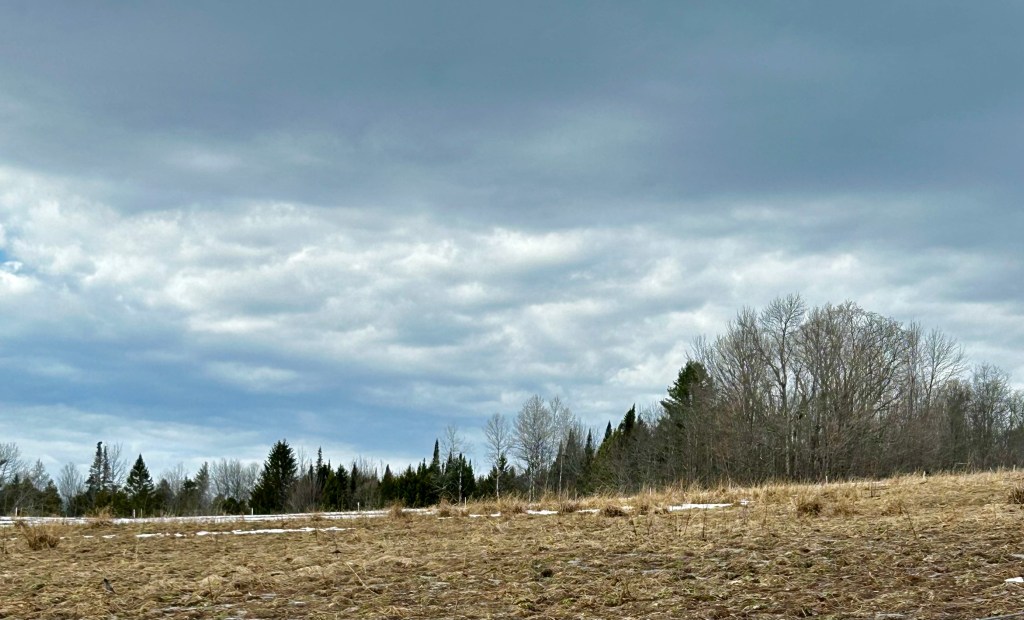
Vermont spring: thaw, fresh snow this morning, stove ashes sprinkled on the icy paths, robins. All the things.
“Survival, it is called. Often it is accidental, sometimes it is engineered by creatures or forces that we have no conception of, always it is temporary.” — Wallace Stegner, Crossing to Safety

 Stony Soil Vermont