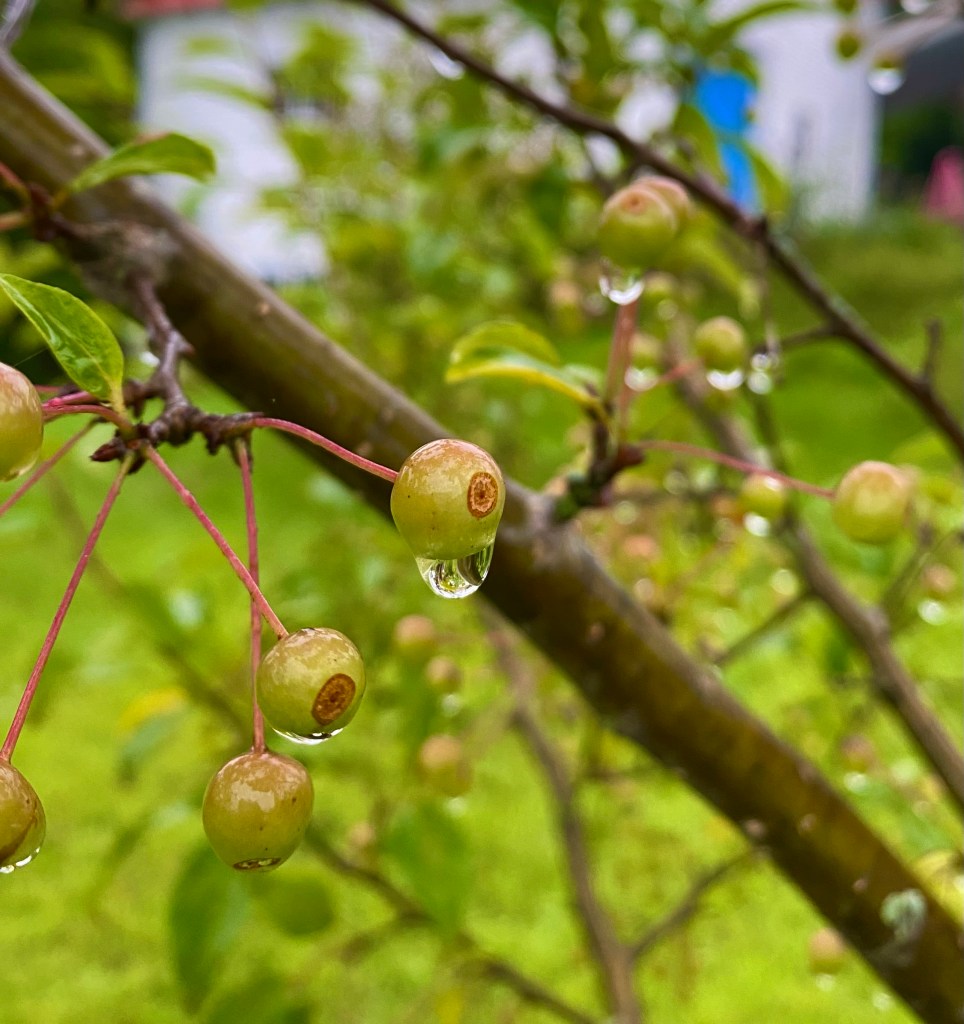
Post-Flood, the Chaos.

I keep writing about this flood, because the flood’s marked our summer: before and after. I’ve written that our house was spared (thank goodness, thank goodness), but the pieces are all around us. Immediately post-flood, such an outpouring of generosity, and then, the predictable, the wearing down, the exhaustion, a growing sense of uncertainty. Rain falls and falls. We can no longer ignore that the summer has been wet and cold. And yet, how selfish it feels to complain, when we are in the Shire of Vermont.

My own saga unfurls publicly in the wake the flood. The property my ex-husband owns is posted for a tax sale; it’s been six years since he paid more than pennies on this bill, sovereign citizen that he is. My name is posted in the tax sale, that the Court removed my name from the deed in our divorce. I’m drawn into his life again, the facts of my life bantered about with people I know and those, I’m sure, I’ve never met.

The property is valuable — 92 acres with a large sugarbush. In the midst of this, someone I know from long ago phones me. The morning is dark, and I haven’t turned on any lights. His words are so kind it’s like sunlight in this gloomy summer. There’s no resolution here, no possible decent outcome. I will likely never speak to my former spouse again. I’ll never own this property. And yet, my life will hopefully go on and on, for decades yet. For these timeless moments, I drink in that unbidden kindness, let it fill me. I feel it within me, the possibility of how my life might turn.

And, because it’s August, one of my favorite Hayden Carruth poems, August First.

Late night on the porch, thinking
of old poems… The sky
is hot dark summer, neither
moon nor stars, air unstirring,
darkness complete; and the brook
sounds low, a discourse fumbling
among obstinate stones….
I wonder what became of
purity. The world is a
complex fatigue. 

“Distrust everything, if you have to…”

As a firm believer in clotheslines and keeping my bills low, we don’t have a clothes dryer.

In past rainy summers, with children in cloth diapers, I spent time in laundromats on Sunday mornings before selling maple syrup at a farmers market.

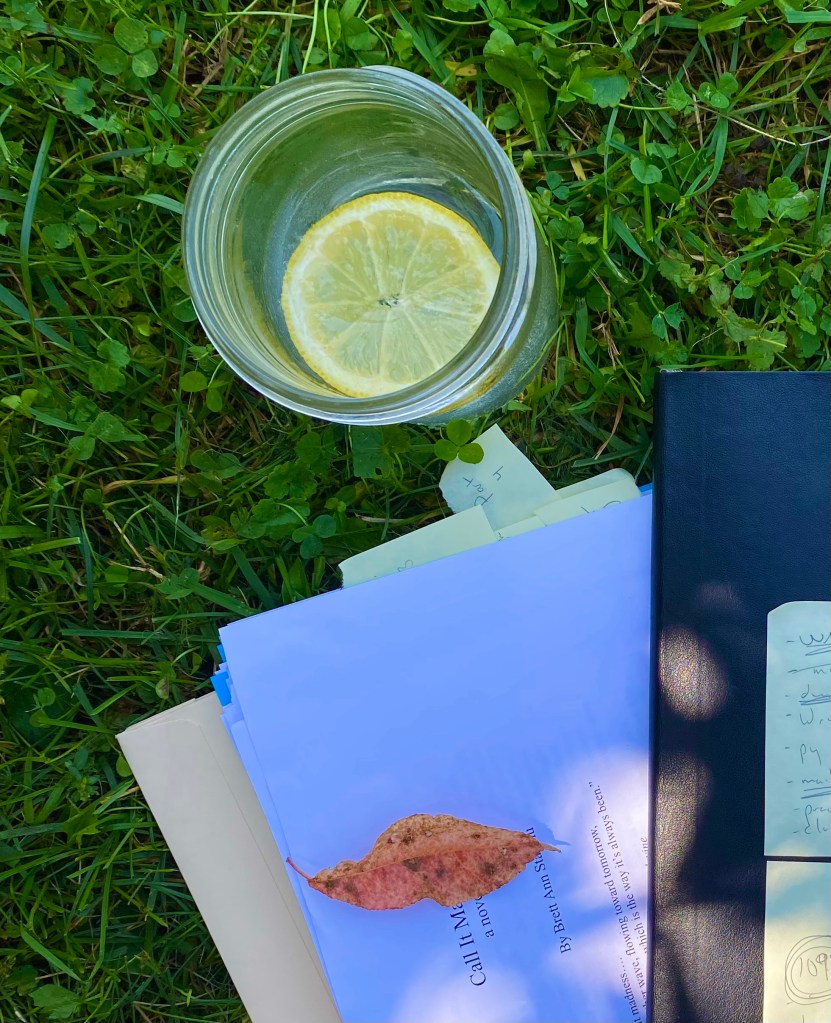
After a span of rainy days, I eventually break down (again, this no-dryer commitment might be simply stubbornness or gratuitous ego, pushed far beyond rationality) and load two dryers in the Hardwick laundromat. I bring a book and read on the porch of the Inn across the street. Behind the Inn, the Lamoille curves through town. On the river’s other side, a house burned earlier this summer. Now, what remains slides down the bank, piers of a narrow porch first, the back clapboard wall soon to follow.

Unintentionally, I’ve chosen busy Friday afternoon, and the intersection is jammed with traffic and pedestrians. I’m reading about schizophrenia and crime, about madness and civilization, and I keep looking over my shoulder at that empty house and its unanswered question of what’s happening here?

Eventually, I close the book, walk across the street, and fold our clothes warm with the dryer’s heat. Beside me, a little girl and her father study the line of dryers. She’s wearing a dress with bunnies. Seeing me, she pulls out her skirt. “Pink,” she offers.

I nod and answer, “Great-looking rabbit,” and then I head home.

Wait, for now.
Distrust everything, if you have to.
But trust the hours. Haven’t they
carried you everywhere, up to now?

— Galway Kinnell

Promising Sign.

Mist lies on the valley these mornings, indicative more of mid-August than this tail-end of July. 2023, the Vermont year with scant summer, thus far.

Nonetheless, on a ravishingly beautiful Sunday morning, we walk along the rail trail beside the Lamoille River. The trail is closed due to the flood’s multiple wash-outs, and there’s no bikers, but by foot and dog paw the walking is easy enough. The debris along the river is appalling. Two by fours with outlets lodge in treetops. We follow the silt and gravel, studying the way the river lifted, changed its course.

This morning, thrush chortle, and the cicadas hum their midsummer serenade. Distantly, across the river and hayfields, traffic grinds along Route 15. Where we stand, my daughter and I would have drowned, three weeks ago, as the river howled and smashed its way west, and then north to the sea.

Now, easy-going end of July.

I glean a washed-sparkling piece of white quartz, half the length of my thumb, in the shape of Vermont, and slip it into my pocket. I’d written exactly this rock and shape and size into the beginning and end of my novel. An auspicious sign — imagination incarnate — or hopeful dreaming at least.

…. Last, I’ve been generously invited to read at Meadow Meeting House, Corinth, Vermont, with the esteemed Alexander Chee, this Wednesday, August 2, 4:30 p.m. Please come if you can.

Four Feet of Mud.

Friday afternoon, when the Fed Ex man drops off a package, I ask what he’s seen on his route, his perception of flood damage and how folks are faring. In places, he says, nearly nothing. In others, houses perch over streams.

This stranger keeps going — and I keep asking questions — about his experience in the national guard, a tour in Iraq, and then a month in New Orleans after Katrina.

We’re back in blistering July, and I’m sweaty and dirty from weeding in the garden. On our sandy hillside, this summer the grass flourishes, a benefit of months of rain. I’ve finally mowed the grass (hardly a top priority these days in our house), and that ineffable and sweetly delicious summer scent of cut grass washes around us.

Our conversation bends back to Vermont and our washed-out valleys, how Hardwick’s Walgreens had four feet of mud. He looks at me and ask how tall I am. It’s true; I’m not that much taller than four feet. For a moment, we stand there, two strangers, contemplating four feet of mud. Then he heads to his truck.

Which pieces of our world will go back together, and which won’t? It’s a metaphor for many of us, perhaps.

All the way I have come

all the way I am going

here in the summer field

— Buson

Wreckage, Human & Otherwise.

There’s no one around the edges of town on Friday evening, save for a stranger in a brand-new leather jacket. He walks ahead of me.

Two weeks past the July flood, there’s stand-out heroes, and a lot of folks who stepped up in ways that are amazing, admirable, kind of jaw-dropping, honestly. But the flood unearthed all that pandemic misery, and so much more that we’d stuffed down, too. Similar — and yet, different, too. Piece by piece, my state is cleaning, hammering lives back together.

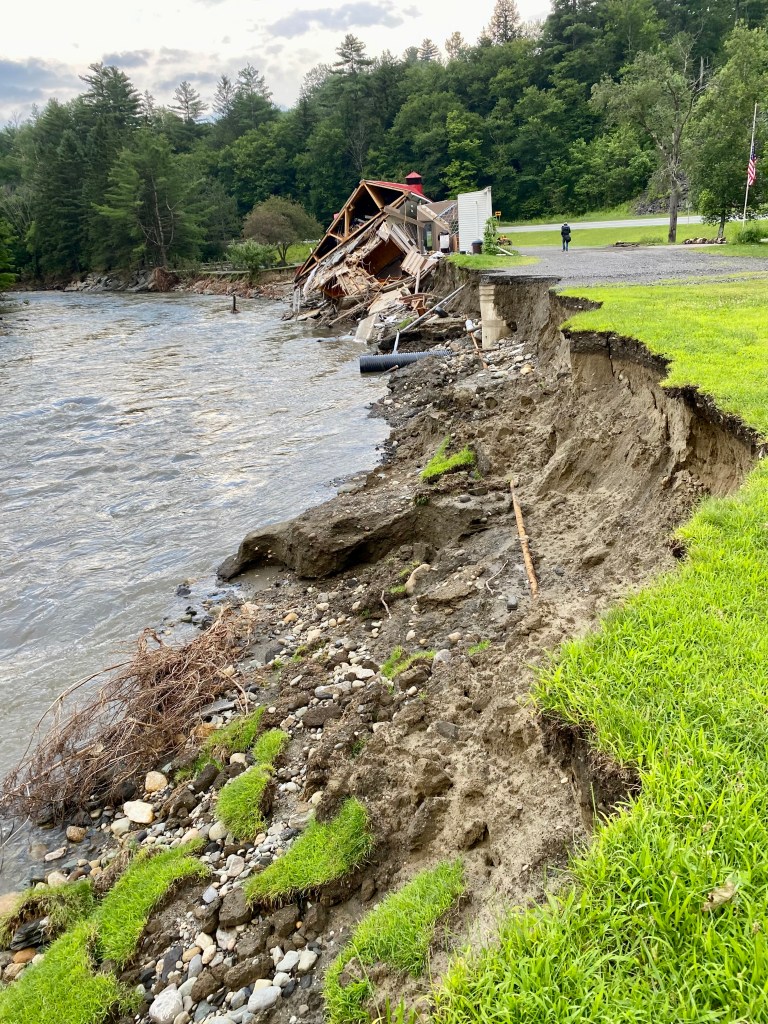
A young fox hurries along the jagged riverbank where lawn now meets abyss. The creature pauses, listens. I’m no threat, me with my hands sunk in my pockets, leaning back on my heels. The fox trots along.

The evening threatens more thunderstorms. I keep thinking of childbirth labor, how those waves of contractions bore me along mightily. Childbirth was the first time I’d understood so inherently that I’m as much a part of the universe as famed Helen of Troy, as that stranger walking ahead of me and disappearing around a broken-down scrapheap of a motel, as you reader, and my dear cats pawing a dropped ball of red yarn. Rain and more rain. Rising rivers. Even as the rain began pelting, I stood there, awestruck.

After the Floods, the Human Conundrum.

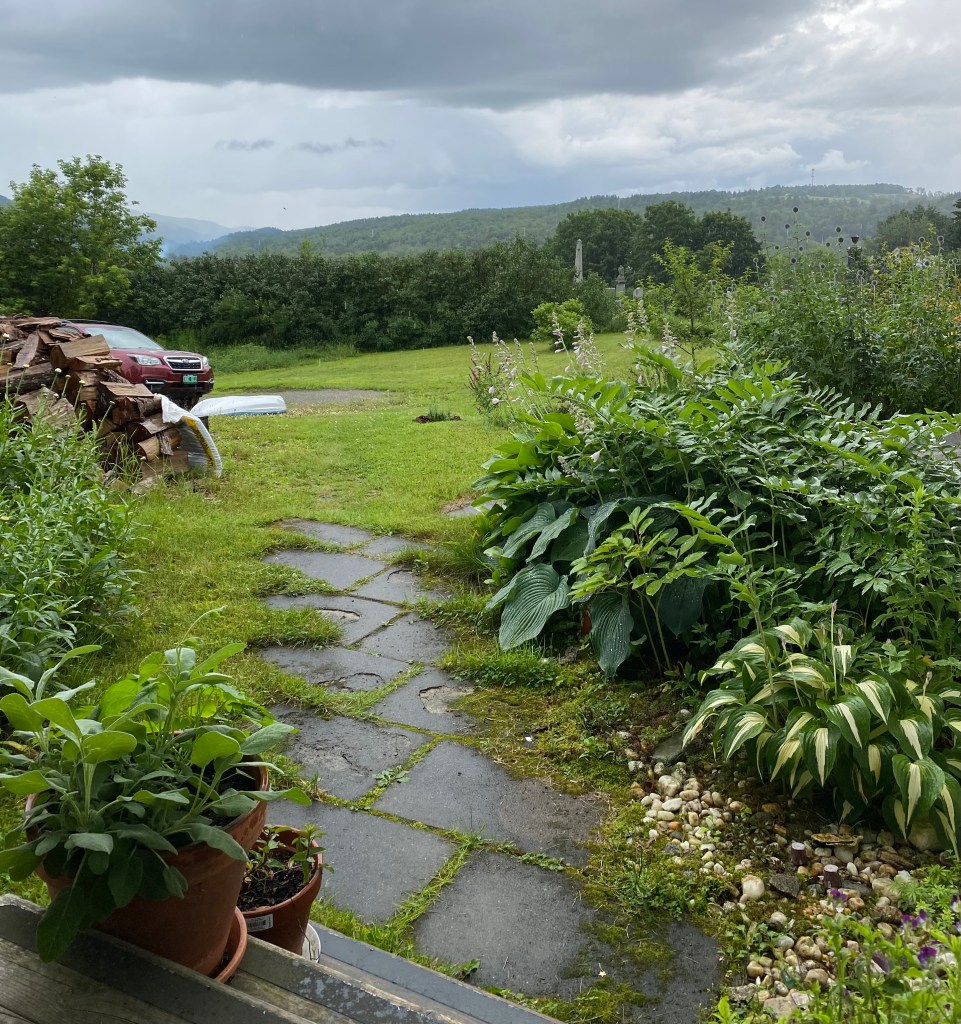
View from the back steps…

This week, I’m driving around a back road, far over the left-hand side, eyeing how a third of the road no longer exists. I’m far off the beaten path, so I don’t hesitate to stop, turn off the Subaru engine, and get out. The road, indeed, has washed elsewhere. The air is thick, sultry in a July way, but suffused with the wildfire smoke we’ve been breathing all summer.

I drive a little further and then drift into a driveway. I know the road drops steeply, and I’ve no intention of heading there. The homeowner is outside, and we talk for a bit, kicking around his view and his calm acceptance of the road’s condition. He asks where all the gravel to repair these roads comes from.

I’m stuck on his thought after this: it’s the human endeavor, the human conundrum. We’re always moving stuff from here to there: in my realm, moving plants from garden to pot, laundry from clothesline to drawers, and then the far larger realm — trees to boards to houses, gravel from pits in the earth to roads. And then the roads wash out.

At home, later that night, I’m still moving things, wool from sheep, to my knitting needles.