White Stuff

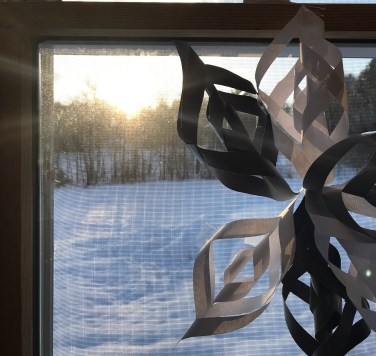
Snow.

Driving back from Burlington, the interstate is snow-and-slush-covered, and the green Montpelier exit sign is nearly concealed. The conditions are nearly white-out, and I know where I am mostly by the long bridge over the Winooski River. I know the train station at Montpelier Junction is below, and that my family has walked on the railroad trestle over a summer-slow river.

In Montpelier, passersby walk with their faces turned down from the wind and blowing snow.

Then it’s all backroads home for me, driving on unplowed roads over ice-rutted dirt. Where fields loom up, the edges of the road disappear, and I’m driving more by memory than anything else. It’s March, and my snow tires have been hard-used for three or four years now, and I’m fed up with hearing about people’s trips to places with palm trees or, heck, even open water. March is the eternal Vermont month.

In Woodbury, the village that doesn’t even have a store now, I pull into the library to work a little longer before I head back to my daughters. As I walk by the elementary school, I see the children have built an enormous snowman, so tall I imagine adults must have helped with this.

After all that driving, bent over the steering wheel, just me and VPR and that eternal list running through my head — and who will take care of my daughters if I spin off the road and disappear? — the snow falls silently. The flakes twirl slowly, sheltered here from the wind, graceful as the season’s first snowfall. It’s so lovely I can imagine making a day of it, if I would just keep walking.

Nirvana is not something that we should search for, because we are nirvana, just as the wave is already water. The wave does not have to search for water, because water is the very substance of the wave. Living deeply makes it possible to touch nirvana, our ultimate reality….

— Thich Nhat Hanh

IMG_1339.jpg

Woodbury, Vermont

Imagine

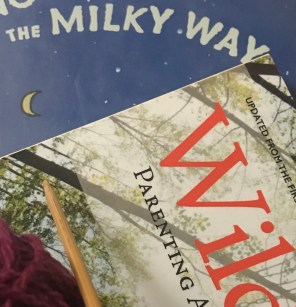
The other day, I woke up on the wrong planet. That’s the opening line of the picture book I read to the kids in my one-room library yesterday.

I was standing outside talking to one of my trustees when the kids walked over after lunch, kindergarteners through sixth graders. What a crew, he said, the kids cheerful, some of them in unzipped winter coats, others in t-shirts.

The kids spread out on my well-worn carpet. What if you did? I asked. Imagine if one day, you opened your eyes…..

The littlest kids’ faces glowed, and I wondered at the mysterious thoughts meandering through their minds, as they considered imaginary realms. Afterwards, the oldest kids lingered, checking out books, with their own system of swapping library books, sharing their imaginary worlds.

Afterwards, alone in the library for a few moments, I began pulling together a program in commemoration of the 50th anniversary of Martin Luther King’s assassination. What if, I kept thinking… And isn’t this one of the drives of literature? To sway our story through imagination and action?

We must rapidly begin the shift from a “thing-oriented” society to a “person-oriented” society. When machines and computers, profit motives and property rights are considered more important than people, the giant triplets of racism, materialism, and militarism are incapable of being conquered.

— Martin Luther King, Jr.

IMG_1338.jpg

Cabin Fever, #1

Somehow, we’ve reached the middle of February: this is the period of deep winter, and its many juxtapositions. The sun shines blissfully all morning on the sleeping cats sprawled around my feet on the kitchen floor. The neighbors’ septic backs up; we meet in our nearby driveways, shoveling snow yet again, and he laughs, Not my best day.

The older daughter takes a highlighter to her textbook, determined to pass an EMT course, while the younger plans an elaborate visit to Burlington. Through my perpetual email, I wonder if she’s imagining Burlington as the spring paradise of blooming fruit trees rather than the gray pavement I see once a week.

My taxes are unfinished in messy pile beside stacks of overdue books from three libraries. I mean to invite over parents of my daughter’s new friend. I miss drinking coffee with my friend in Montpelier. In the basement of either the town hall or the town clerk might be boxes of legos for my young library patrons: a kid gold mine I need to spelunk. Somewhere out there is my next husband. When will he arrive?

This is February.

March will bring my library’s pie breakfast, when hundreds of people in town bake pies and carry them in both hands to the elementary school’s second floor cafeteria. Two live bands, endless conversation and gossip, coffee and more coffee, sweet and savory pies, and hundreds of Vermonters in snow boots. Pie breakfast is March’s small town brilliance.

The moon has nothing to be sad about….

— Sylvia Path, from “Edge”

IMG_1118.jpg


Disparate Pieces

The December my younger daughter was two, snow fell every day. To see out the kitchen windows, my 8-year-old and I stood on the chairs to peer over the mounds of snow that had slid off the roof.

This year, we’ve had a long dry span with little snow. My brother, a brewery owner in New Hampshire, calls and complains, Bad for business. For all those years we depended on maple sugaring for our livelihood, I worried about  temperature and precipitation, fretting over one forecast versus another, keen-eyed on a degree or two of temperature change.

In the dark, I lie awake, imagining snow accumulating on our roof, over our lilies and lupines, their dark roots buried silently. The cats nudge me, and in our quiet house, the daughters sleeping, I pour these purring creatures a bowl of milk. At the window, I see across the cemetery a single patch of glowing white light, as if someone left an enormous floodlight on all night. Otherwise, the town is mostly dark, with a few small porch lights here and there, the glowing amber lights of the high school on the hill muted through the falling snow.

That patch is different from the usual spread of lights I see. What’s up, I wonder? What is someone looking for in that falling snow?

(The Province Land Dunes in Provincetown, RI, resembles….) New Mexico, where recently a man who had once been and will probably be again the governor of Nambé Pueblo told me that he had found seashells in the dirt where he is irrigating, a thousand miles from the ocean.

Cynthia Zarin, An Enlarged Heart, 2013

IMG_1084.jpg


Early Hours

In the night, rain thickens to snow. Wind has washed away yesterday’s balmy temperatures.

The cats and I are awake hours before the girls, myself with that eternally running list and dialogue, the cats warm-pawed and hungry. Satiated with their breakfast, one lies on my legs, the other on my feet, while I read The Perfect Nanny, a book brutal and beautiful.

I parse Slimani’s sentences: How has she written this? How has she put this together? and wonder, Who of my library patrons would read this? 

Ice pelts the windows. Our house is blessedly warm, the kitchen filled with light.

She feels alone with the children. Children don’t care about the contours of our world. They can guess at its harshness, its darkness, but they don’t want to know anything more.

— Leila Slimani, The Perfect Nanny

IMG_0906.jpg

Mist and Clouds

Hill Farms

A drawback to easy-access tech is a proliferation of images, everywhere.

And then, this. From the library, I picked up Richard W. Brown’s The Last of the Hill Farms: Echoes of Vermont’s Past, a stunning book published by Godine, with the most amazing black and white photographs of rural farming Vermont.

Check out page 95, with the moon sailing over a barn’s cupola, righteously high with a cow weathervane, intimating great height over farm fields. Broken-paned, paint peeling,

There it is: that elegant, perpetual juxtaposition of human endeavor and the lasting beauty of our landscape.

A neglected landscape silently gathered the patina of the passing years. Weather stained the unpainted barns and farmhouses the color of tarnished silver and gently bowed their rooflines with the weight of one hundred winters’ snow. Seemingly forgotten by the rush of progress, they aged with a poignant grace: spare, worn, yet, to my eye, hauntingly beautiful.

— Richard W. Brown, The Last of the Hill Farms

IMG_0902