The air has turned this morning when I step outside in the dark with my bucket of hot stove ashes. Even without my coat, I’m not immediately shivering, and the cold doesn’t come at me with daggers on my face.
Beneath the starry sky, I gazed up at Ursa Major, a single gauzy cloud suspended overhead, as if in water. I’m reminded of frog’s eggs, those cushiony pillows I sought with my daughters when they were little. Every spring, we found clusters in ponds and in the ditches along our dirt road. We’d visit these clusters every day on our wanders. Sometimes the eggs hatched. Sometimes the clustered disappeared.
On this early February morning, beneath the stars, I stood for a few more quiet moments, thinking about stars and frogs’ eggs. Snow’s expected to move in soon, too.
As water given sugar sweetens, given salt grows salty,
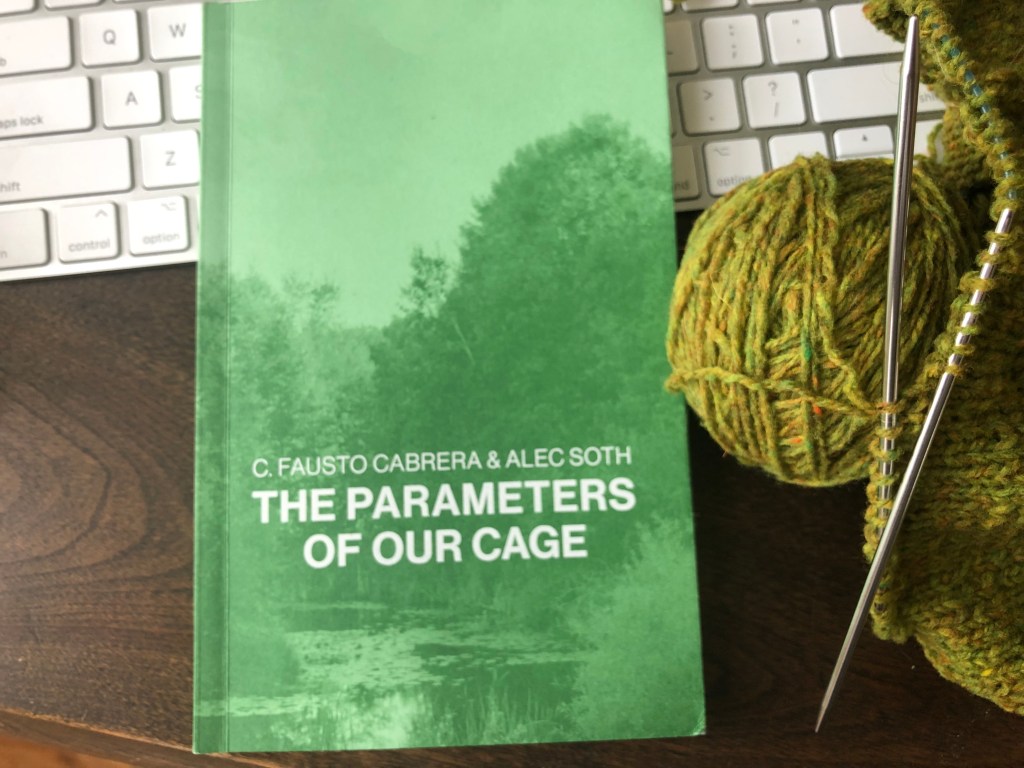
By chance, I start reading a book of letters exchanged between a photographer and a prisoner, an exchange in 2020 that opens a view into these two men, into our country, and into art. I devour the book. The book’s title is The Parameters of Our Cage, and I keep thinking about the cages culture constructs and we construct in our own lives. It’s a question I’ve returned to, over and over in my life. So much of my life’s hours have been devoted, in one way or another, to writing. As the pandemic has created higher walls and sturdier cages, writing, art, human imagination, are increasingly powerful. Utterly necessary.
I wake to a perfect zero degrees this morning. Our house is thankfully warm and pleasant, but the cold is ever present. There’s immense snow south of here, but again the storm has sheered off to sea.
The most profound art is generated out of the depths of a personal place, then becomes an entity in its own right thus developing a different layer of function that requires a social aspect or nature.
At the end of the afternoon, I’m out with my skis, insufficiently dressed against the zero degree temps, hoping the movement will warm me even as I caution my youngest every day — bring enough clothes.
I warm.
I ski on the former railroad bed, behind a daycare. Earlier this winter, a new playground was built for the kids, of wood and ramps, and I wonder if some of the federal coronavirus money made its way here. The daycare itself is in the basement of an old building, and so the playground has a kind of bittersweetness, too, a bandaid of a much larger problem.
On the bridge over the river, I pause. Snowmobiles and a groomer have driven through here, and so the skiing is easy. Animal tracks mark the snow down the center of the frozen river. On the bank I ate wild grapes in the late fall. For now, it’s just me and the fresh snow and the sunlight while it lasts, the woodland creatures, the river flowing deep beneath that ice.
Birds migrate and caribou circle the cold top of the world. Perhaps we migrate between love and suffering, making our wounded-joyous cries: alone, then together, alone, then together. Oh praise the soul’s migration.
January — the time of year when ash from the wood stove has settled into the crannies of our house — beneath the couches and along the woodwork. I listen to The Daily about FBI files released about the insurrection a year ago and take a soapy rag to my house.
I tell my daughters I’ll paint the walls of the upstairs hall spring grass green and stencil dandelions around the doors. What are you doing? they ask.
Some people are drawn to chaos. I crave order, a schedule, neatly pencilled lists to guide me through my days. To write, I travel to hard places, and I want to return to order. All around us now, chaos streams in, as the pandemic turns our world inside out. In the midst of this, I rearrange my woodpile. In the evening, while my daughter writes a school paper, I take the compost out to the bin. A light snow falls, sparkling in the light through our house windows. There’s no one out, and I keep walking. I head down the road and stand on the sidewalk. These neighbors have fully decked out their crab apple trees with twinkling colored lights. In my younger years, I would have scoffed at the use of electricity, much as I once hated paper plates.
Now, in the dazzling bits of snowflakes, I stand there for the longest time, thinking of nothing at all, just taking it in.
On a different note, Dr. Mark Levine, Vermont State Health Commissioner, read and blurbed Unstitched. I am among the many, many Vermonters who look to Dr. Levine as a beacon of calm, rationality, hope, and decency, as he’s guided our state through two years of a pandemic. In the mist of this, he took the time to read my book and called it a “tour de force.” Endless thanks, Dr. Levine.
Unstitched “…is both a page-turner and a primer in understanding the many complex dimensions of the opioid crisis in a rural state, where the reader accompanies the author in her own recovery and process of discovery. Ultimately, it is impossible for any of us to be totally disconnected from the impact opioid use disorder has on our communities, and it is through reading Stanciu’s skillful, compassionate and thoughtful rendering of personal stories that we can all gain valuable insight, diminish harmful stigma, and foster true healing.” — Dr. Mark Levine, Vermont State Health Commissioner
My daughter gets her car inspected, but the mechanic has no inspection stickers. The stickers aren’t here yet, he explains. She texts me this, asking, What am I supposed to do?
Nothing, I answer. The stickers will come in when they come.
That sums up a strand of 2021 — there’s plenty more to this year, oh, boy, is there plenty more — but doing nada is definitely a 2021 strand. I’m not much for new year’s resolutions. I’m a compulsive list writer, and I tend to get a chunk of the stuff right before my eyes done. But there’s rain forecast for New Year’s Day when a deep freeze generally sets in. The world around us is unraveling.
This afternoon, I drove to the high school to pick up a rapid test for my daughter. The health department had taken over the parking lot with orange cones and bright vests. The tests were gone, of course. I talked with the health department employee for a few moments. He raised his hands, palms up, to the twilight settling in.
We commiserated about the strangeness of March weather in late December. Then I drove around him and headed home.
When my first daughter was four, my mother gave her a babydoll that I had when I was little girl — Baby Tenderlove — which my daughter promptly shortened to Tendy.
Tendy, by the time my daughter carried her around, was ratty-haired, bald in places, forever dirty, and generally well-worn. My daughter was a single child then, and Tendy morphed into the desired baby sister. Tendy inhabited a unique imaginative place in her life. One afternoon, I was driving through Montpelier when my daughter insisted I pull over now, Mama! as I had driven by Tendy who was allegedly walking on the sidewalk. Without thinking, I pulled over, open the passenger door, instructed Tendy to get in please, and buckle up.
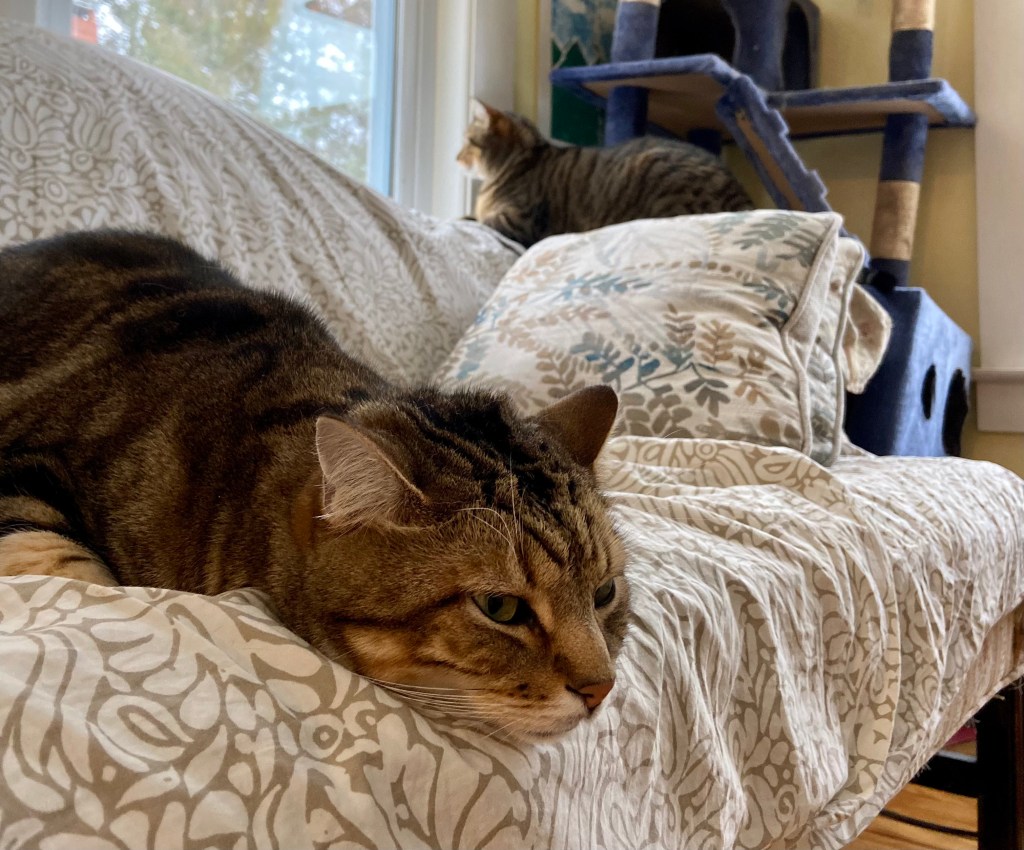
Our household is no longer in the realm of little kids, and yet this imaginative world has spread to our cats now. One is in a PhD program, writing a dissertation on epistemology, while the other is a lifer in preschool. Both enjoy a fresh toy mouse.
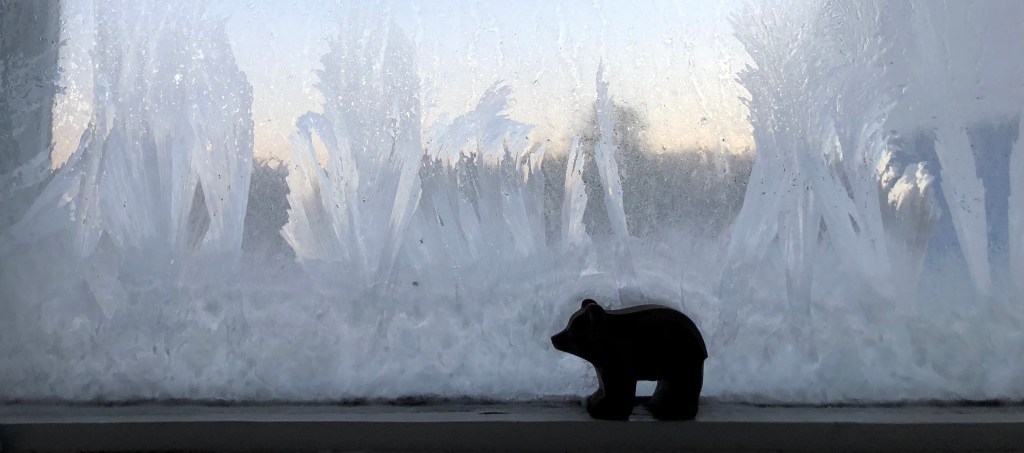
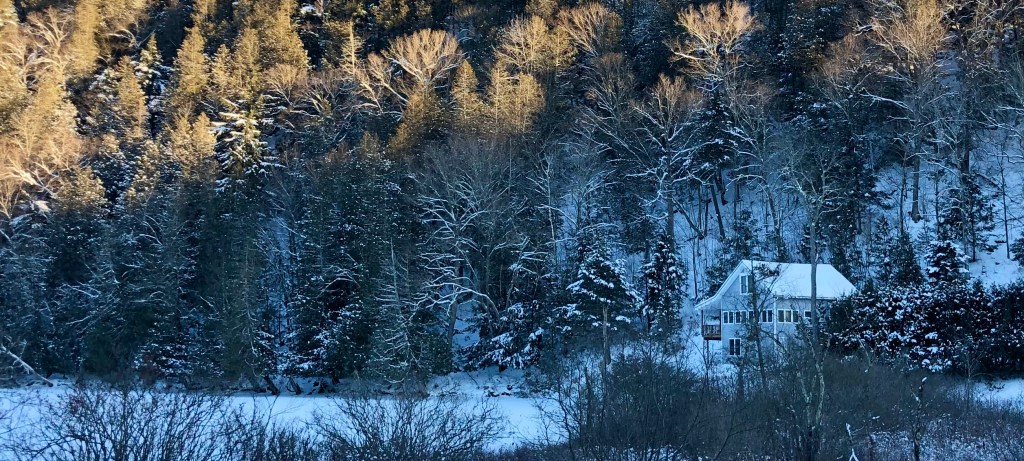
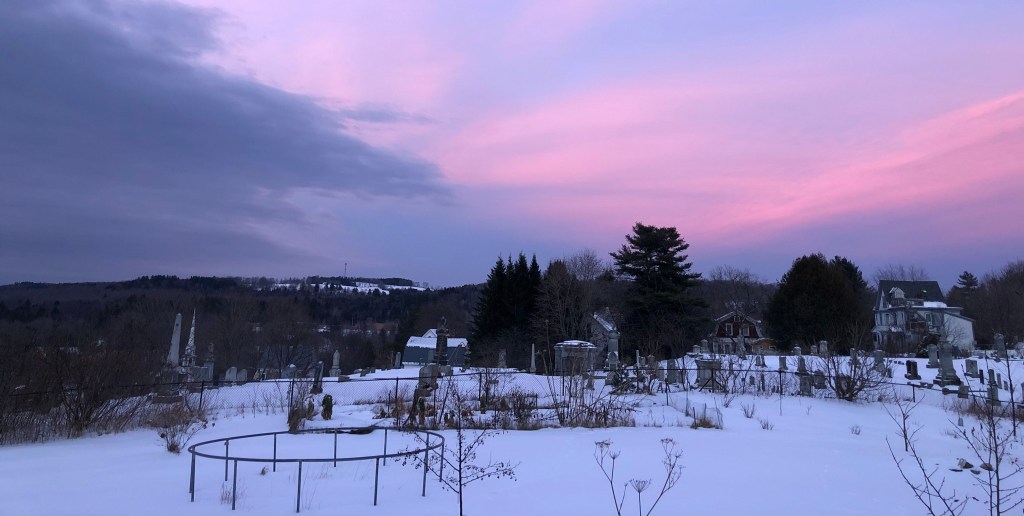
….. The cold hammers in around us. I hope you’re all warm, wherever you may be.

 Stony Soil Vermont