Gloves. Rain. A Few Sentences.

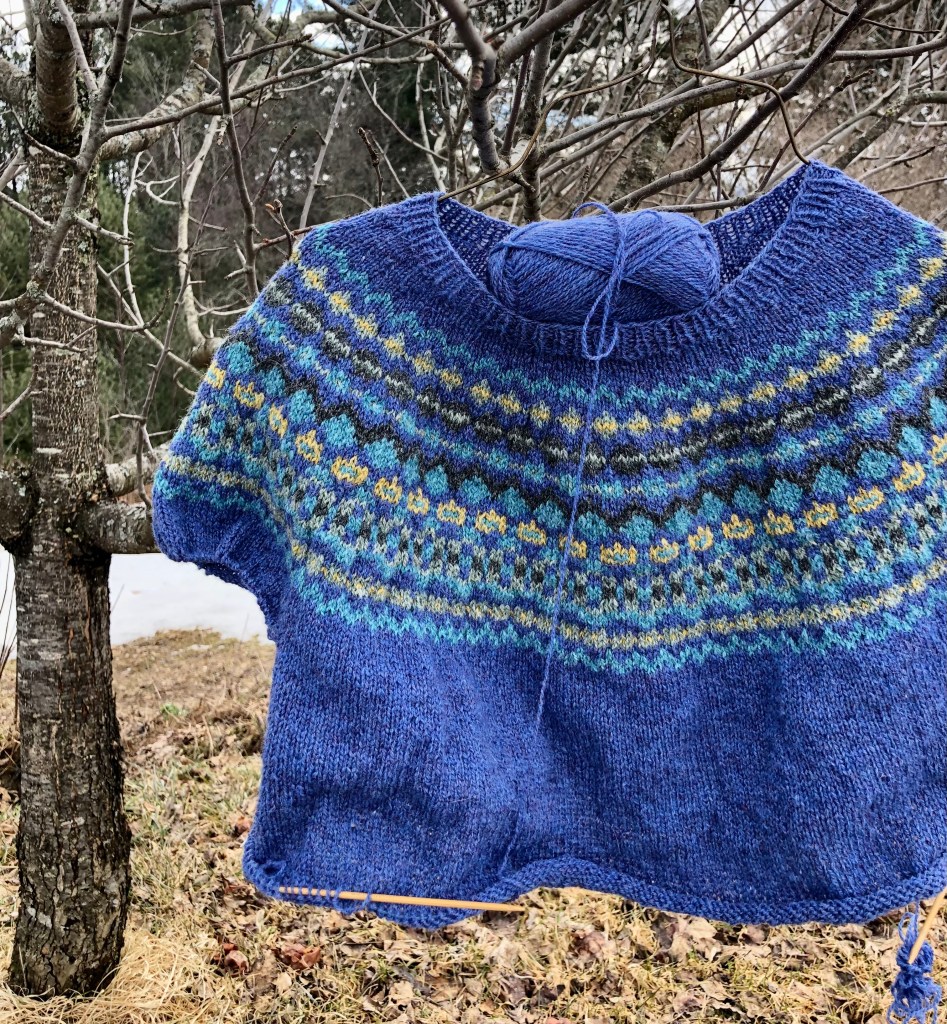
I spend some phone time with a woman who works for Delta Airlines, straightening out a cancelled ticket I need refunded. While she does whatever she needs to do on her end, I lean my head against the glass kitchen door. A light rain falls. I’ve just come in from moving firewood from our stacks to the porch, and my sweatshirt is sprinkled with damp bark shavings. I’ve forgotten my gloves on the back step.

I guess this woman is working at home as the phone line is quiet around her voice. She takes her time, sorting through my request and answering the questions I keep asking about airports and taxes and if she has any suggestions for better flight prices. (Nope.)

We exchange a mutual thanking each other for our patience, and inevitably our conversation tips over into the world’s instability. She tells me about her son, a college student majoring in history, and reminds me that human history is infinitely complicated. Finished, she’s on her way to some other phone call, with someone who might be impatient and angry, or perhaps someone funnier or more eloquent than me.

Through the glass, rain falls steadily on my gloves.

March in Vermont is wet and cold. This morning, stepping out for kindling, I stood in the dark listening to robins singing in the day. I remembered to bring in my sodden gloves.
Dirty Mud Puddle.

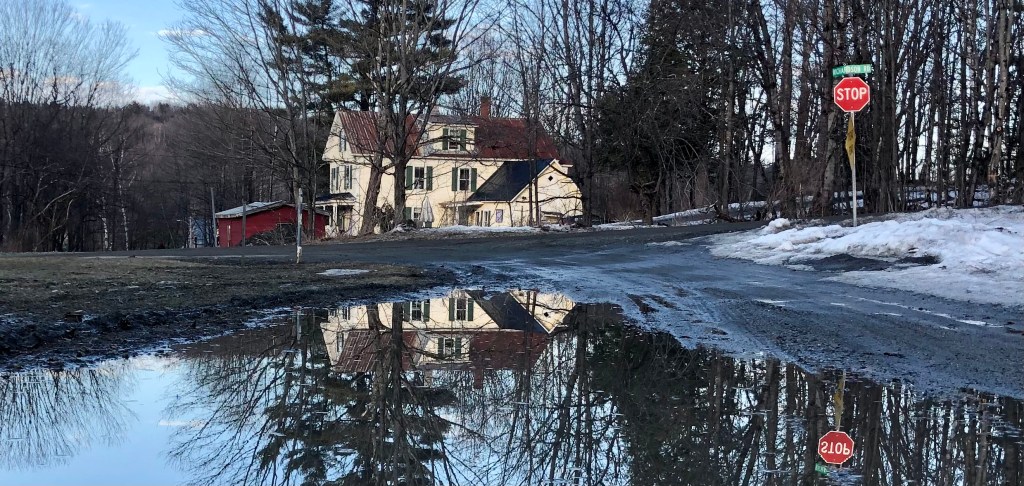
The old yellow house where my daughter attended preschool and, one afternoon, gave me a purple pansy she had potted herself. In the scheme of our lives, such a tiny sweet thing.

In the face of such hard news overseas, this splash of sky reflected in a dirty mud puddle is all I can offer. Be well, friends. Savor sweetness, where you stumble upon it.

Next Steps.

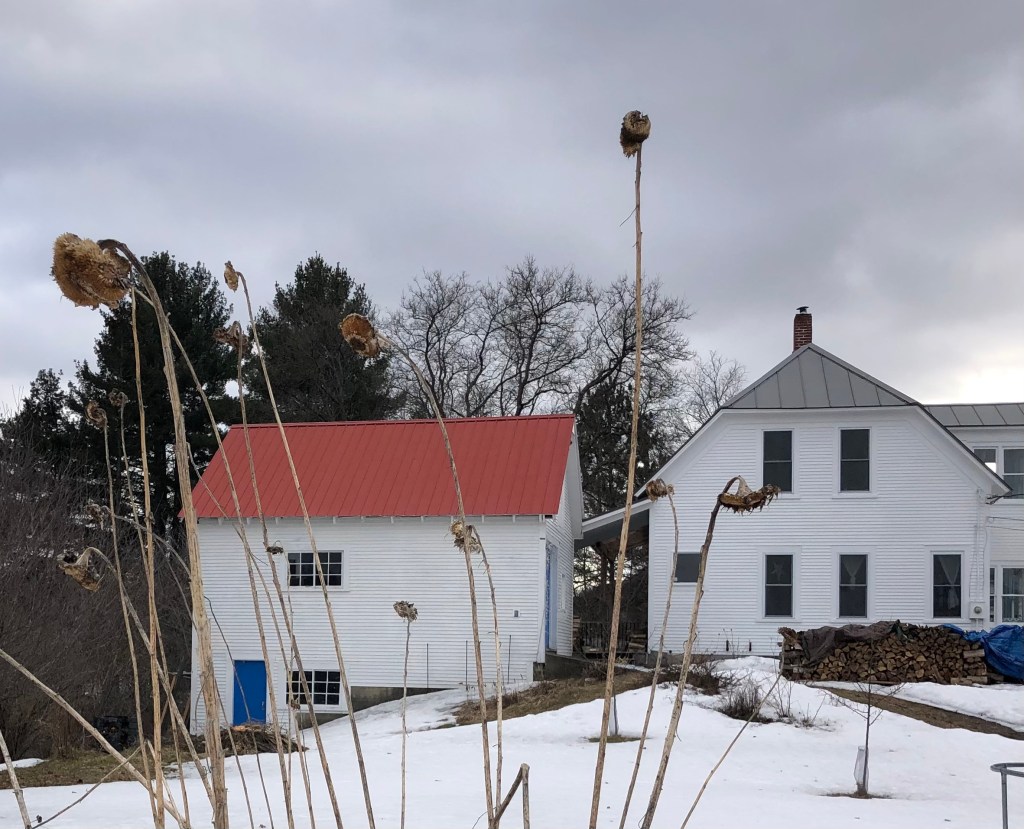
A fierce year for mud in Vermont — the schools send home notices that the busses cannot run. My friends in southern Vermont live in a town where the schools have closed up for a few days. Heck, why not? A basketball game has spread Covid around through the community again, anyway.

Back from my visit to my parents in New Mexico, I work long days, catching up. On the phone with a stranger, I share a little of my trip, and he tells me about his mother. Listening, I stare through the window at the snowflakes fluttering down, little spits of flakes swirling in a gray sky. Then he clears his throat and advises me on my next steps.


Pain Management
by James Silas Rogers

One day, in your forties or fifties,
you will start to think that life is turning
into a long string of small extinctions.
You will feel the word gone rise inside you
and might even say it aloud, quietly, the way
you would say it if the house had been robbed
and, months later, you reached for an item
you never knew was missing, thought had been
in a drawer the whole time: Gone. Add these
to the workaday wrong turns you half-knew
were coming from the start-you know: the shy
girl with trusting eyes with whom
you did not sleep, the dad who let you down—
and you will begin to think that if you started
crying now, you might never be able to stop.
But that doesn’t happen.
What happens instead is you make a cup of tea.

You sit on the front porch, and there you look
at spindly asters on a September afternoon:
flowers with ragged edges that are barely petals,
a color from somewhere down the spectrum
after blue-the same blue of cold skies
in early winter. And behind them,
the deep green of bloomless morning glories.

Small Things.

With a teenage daughter and another grown daughter, I’ve long ago sunk ruggedly into a mantra of and life goes on that has ferried me through plenty of turbulent waters into smoother waters, always determined to seek calmness to keep my head together and keep working. Life and work have so long been synonymous for me, with brief forays into the pleasantness of family, of friends, of just life itself.

But I woke this morning thinking how impossible that mantra really is. Life is “going on” for so many people in such harder ways, so far away from me.

This week, I’ve been with my own family, sorting out the challenges of aging. Meanwhile, ordinariness reigns around me, with people coming and going to work, maybe buying bread and sausages for dinner, a bouquet of sunflowers for the table. How dear family life is, mine, yours, the families in bombed apartments in Ukraine.

In the end, of course, how much do our small thoughts and complicated opinions matter, anyway? Here I am, a small woman in a small Vermont village. In the face of bleak nihilism and despair, I return to the things that have made the truest sense to me — the sky that exquisitely changes from sunup to sundown, the liturgy of human language, laughter. There’s no answers here, only a reminder to myself that the wind brushes over my cheeks, and the wisdom that turns the globe is wider than my own imagination.

Demian. Hermann Hesse.

This afternoon, I tore through my bookshelves searching for a paperback copy of Hermann Hesse’s Demian, a book I first read in high school. The book above — brand-new, Harley Rustad’s Lost in the Valley of Death — reminds me of Demian. Like so many other people, in some ways reading Hesse as a young woman shaped my life, every one of my years off the well-trod path. Demian has reappeared at certain keys points in my life, always rising with a strangely mysterious power. At the end of a very long winter, that book returns to me like a breath of spring air.

Fittingly, perhaps, I’m unable to find my copy. Maybe that hardly matters. For the first time in months, I take a long hatless walk, listening to the singing birds, remembering the unstoppable power of spring, and that the world wraps around us in ways we understand, and in ways we’ll never comprehend.

On this sunny Sunday in Vermont, here’s a few lines from the incomparable W. H. Auden on the nature of war. For more about this poem, the New York Times has an essay today.

About suffering they were never wrong,

The Old Masters: how well they understood

Its human position; how it takes place

While someone else is eating or opening a window or just

walking dully along…