The Right Thing

On a walk my daughters and I often take in the evening, we pass a house where a little black cat trots out to meet us. The cat’s tail is bony, its nose white as if dipped into a saucer of cream.

We always turn down that particular street, saying, Let’s go see the cat, and stop and pet this friendly creature.

In the dark last night, a car followed us, then stopped, as the cat sat in the street. When the cat didn’t move, my daughters and I turned and walked back, to encourage the cat to head along now. The driver pulled up and rolled down the window.

I didn’t recognize this curly-haired woman. She asked me if the cat was mine. When I said no, she wondered aloud why she had kept sitting in the car. I didn’t know what to do, she told me. The cat didn’t move.

I laughed and told her, You did the right thing.

She raised her hands from the steering wheel and began laughing. I did the right thing! she exclaimed.

Walking home in the dark, I kept thinking of what looks to be a long winter ahead. But for a radiant moment, Saturday showed us our VP-elect proudly acknowledging the history and labor of so many nameless others. It’s a historic moment my daughters relish.

“So often in life, things that you regard as an impediment turn out to be great, good fortune.”

— Ruth Bader Ginsburg
The Long Haul

After work, it’s too dark to go running, and I’m home in a foul mood while my daughters cook dinner. While cleaning out a closet that afternoon, they discovered a box of photographs and claimed the photos were evidence there was little adult supervision in their early childhood.

I insist there was plenty, but I had always seen wildness as more of a virtue than a vice.

The three of us are wise enough to let that lie, and dinner conversation winds into the details of the day. After, the girls wash the dishes and I carry in firewood. Then my oldest and I walk through town. There’s no one out these days. It’s dark; the cold is beginning to staple down around us.

Coming home, we stand on the knoll outside our house, watching the creamy, waning moon rise. As we stand there talking about hard deep things — how we carry the past around with us — I remember myself as a brand-new mother, believing that the wildness of imagination shapes our lives. I no longer believe that; I know that, but I also know what a long hard haul this life can be.

I call into the house for my youngest to come out and see the moon. She walks barefoot through the snow. We stand there, the moonlight on our faces, soaking up that ethereal light, before we head back in.

Once in a Blue Moon

Saturday, we were at a jack o’ lantern walk at the elementary school where my youngest graduated a few years ago.

Because it’s rural Vermont, it was dark, and everyone was spread out. I slipped away from the few kids and walked further along the woods path. I know this path well, and it veers down to the wetlands. There, I leaned against a white pine. The moon was nearly full, and the silvery light skipped over the rippled water.

For the longest time, I stood there, knowing my daughter was happily wandering around in the dark with her friends. In the darkness, I remembered the countless times I had admired this lovely lady moon — over fresh snow and icy backroads, in the muggy heat of summer.

At the beginning of this election week, I woke thinking of our beautiful moon, silently orbiting the globe.

The old man of the temple,
Splitting wood
In the winter moonlight.

— Buson

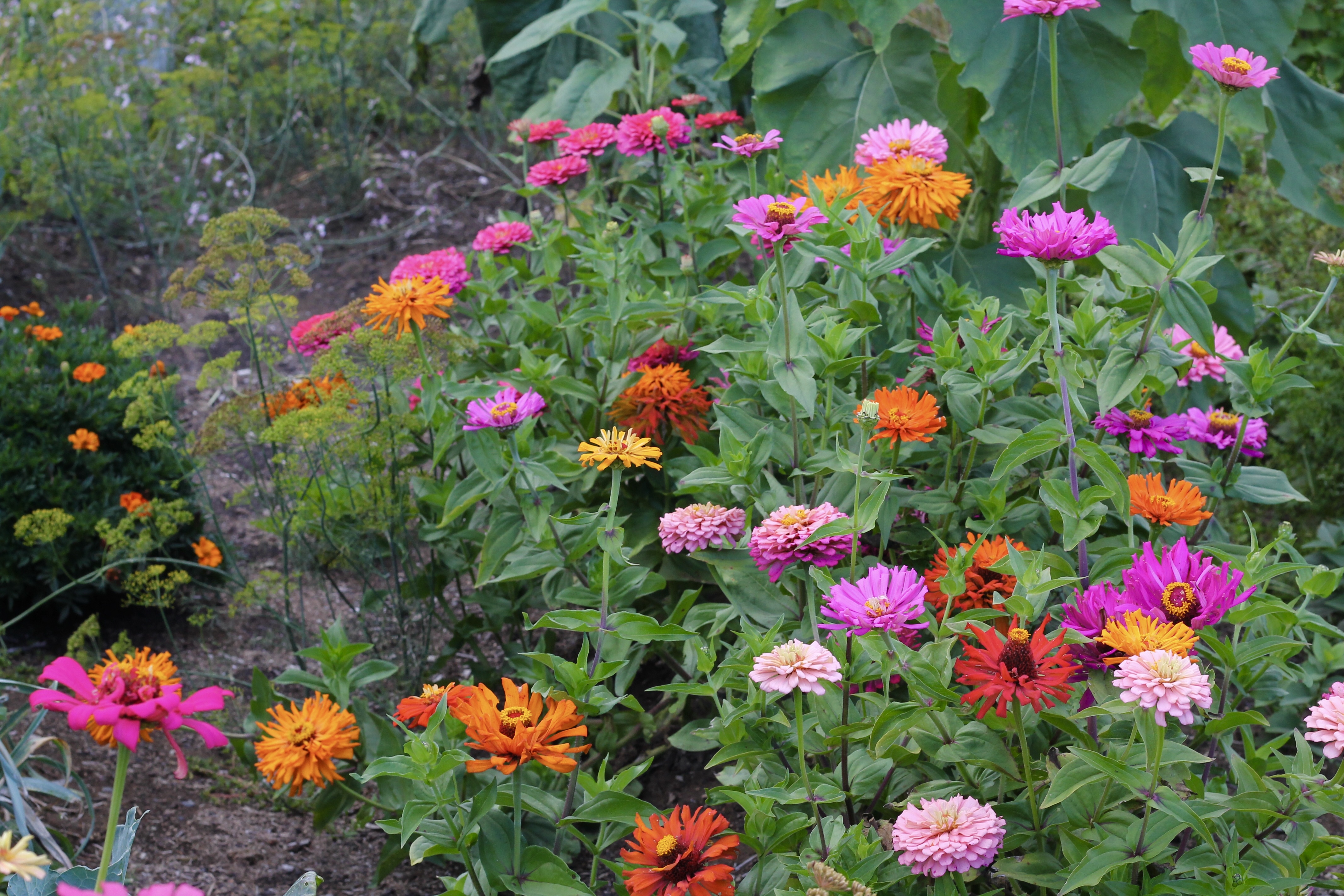
August flowers

High School in the Time of Covid

My daughter’s high school varsity soccer team, the Lady Cats, advanced into the playoffs — local joy against rising Covid rates and the election hurtling along.

I didn’t play sports as a student, the lone wolf who ran long solitary runs — pretty much what I’m doing now, except these are short solitary runs. But to be a kid on a local team who wasn’t expected to do well at all — that’s a big deal.

Friday, I’m home briefly in the middle of the day. My daughter and her friend have finished school for the day. In the living room, they’ve set up this year’s version of high school, each with their notebooks and a school-issued Chromebook, surrounded by piles of my library books, their cleats drying beside the wood stove. The room is sunny and warm, and the girls are intently working at whatever assignment — chemistry or algebra.

I fill my thermos with espresso and ask my daughter’s friend if she’d like a cup. I’m joking, but she happily accepts. I’d love an espresso.

So, in a little china cup painted with blueberries that my daughter once used for milk, I serve this girl an espresso, who thanks me.

Before I head out the door again, I look back at these two. I’m happy to be employed, heading to interesting work, on this sunny autumn day, in my Shire of Vermont. But goodness, I’m grateful for girls and warmth. The whole world matters — disease and political collapse — but this afternoon matters, too.

I open the kitchen door, call I love you, step out into the chilly afternoon, and close the door carefully behind me.

Asking for Good News

Every few days or so, a friend and I email back and forth, asking for good news. Occasionally, it’s utterly knock-it-out-of-the-park news — I finished this revision of my book — but more often the meaningful mundaneness of everyday life. A sunny afternoon, plans for a walk, a funny exchange at work.

After one long day, I recently dug down and wrote: we’re all still employed.

But I also forwarded my father’s email about Arkhipov Day.

Although Henry Ford might have once proclaimed that history is bunk, we live in the narrative of history, and continue to create history every day. And that might be a variation of good news, too.

Hello Everyone—

Today, October 27, is Arkhipov Day. We should raise a glass, salute Vasili Arkhipov, and celebrate his obedience to humankind, not to the Nation-State. On this day, 1962, during the Cuban Missile Crisis, World War III was averted by his refusal to accede to his two fellow Soviet submarine officers’ decision to fire a nuclear-tipped torpedo at the USS Randolph. 

Peace and love,

George

P.S.: If anyone wishes to read or reread about Vasili Arkhipov, see The New Barbarians.

Vermont, late October 2020

Half Moon

I step around the barn in the twilight and see the half moon shimmering above the barn’s back corner, like a surprise.

I empty the ash bucket and set it on the cement step, waiting for my daughters and our twilight walk, as the dusk shakes down.

A year ago, my oldest was in New Mexico, visiting my parents and hanging out with my brother and his girlfriend. After a wild wind and rain storm, the power went out, and my youngest and I ate take-out by candlelight. Always, at this time of year, as the days perceptibly shorter, I realize how profoundly cold and dark has wound into my life, spread physically and metaphorically into the life I’ve shaped as a woman and a mother.

What’s different this year is the collective darkness of disease as the rates of Covid increase around our little world, of the unraveling political world relentlessly marching along.

And yet — there’s that ancient silent moon.

My daughters are laughing as they walk towards me.

What? I ask.

They look at each other again, and my oldest says, Nothing, Mom, and then they laugh again.

“I am more convinced than ever that we are shards of others.”

— Jenn Shapland, My Autobiography of Carson McCullers

Photo by Molly S.