The Physical Good

My 13-year-old’s wild to travel. I see in her eyes, in her schemes, as she wonders where her life will go, which way she can push her boundaries. I understand this sentiment. At 22, I gave little thought to a 9,000 mile cross country trek, save swapping a gas-fueled Toyota for a diesel Rabbit. This was during the first Gulf War, when the price of gas soared.

But now? Maybe it’s the early onset of snow that’s choked so much of Vermont’s roads or — more likely — simply that I’m at the place in life where I think, heck, remain rooted. Figure out this one particular place.

Walking after dark — darkness falls so early, early these days, before I pull out my cutting board to begin preparing supper — I think of Chris Hedges’ line: faith is the belief that the good draws to it the good. I read this good as a verb and not a noun. What a notion — that goodness is a physical force in the universe. I know violence begets violence, that using drugs leads to more drug use, that civility in a house tempers anger, knocks down the edges, and bends dialogue towards decency — and that the inverse of this is true, too.

On our back porch, the wind chimes call in a scatting of cold breeze this morning. Later, in the rising light, cardinals will appear, flashy red against all this white.
IMG_4065

13-year-olds

Returning home just after five yesterday, darkness enveloped our house — deep, whole, profound. Through the windows, I saw my girls had turned on the strings of tiny white twinkling lights.

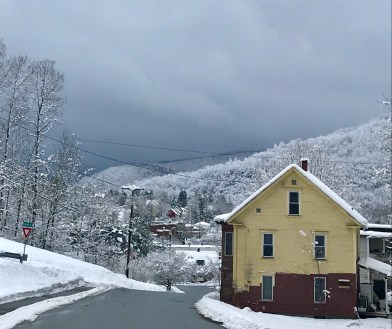
The winter solstice is weeks away, and three times I’ve driven through snowstorms. Wet snow, crashing from our roof to the back porch, frightens our quivering cats.

Meanwhile, in our house, life swirls on. Each of us goes our own way — to school and to work — separating and returning. At night, brushing our teeth together, we look in the mirror — three different heights, three different females. At 13, the younger daughter looks to her older sister as she always done — mimicking clothes, language, habit — yet different, too. Year 13 marks the chrysalis age, between childhood and womanhood.

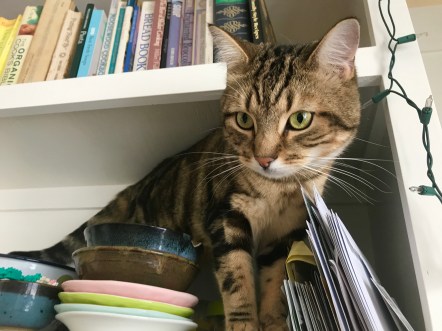
This daughter tends her two beloved cats with silliness and seriousness — making them wait patiently for their meals and also carrying them like furry purring babies around the house. Watching her, I take note.

What good is the warmth of summer, without the cold of winter to give it sweetness.

John Steinbeck, Travels with Charley: In Search of America

IMG_4056

Our kitchen life….

Red Flicker

A single cardinal sits in the bird feeder on the wooden pole listing in the old woman’s yard. I pass this way often, where she sits on the glassed-in porch with her friends, a colored paper turkey pressed decoratively against one window.

Her boots have trampled down the snow around the feeder. My eyes search for a fallen crimson feather, but there’s nothing — just a flap of the bird’s wings, and then the bird’s gone.

Let the fox go back to its sandy den.
Let the wind die down. Let the shed
go black inside. Let evening come.


From Jane Kenyon’s Let Evening Come

IMG_4031.jpg

Where We Are Now

Winter socked us in early this year, the old sheet I used for covering the remaining mesclun greens still draped over the garden fence, nailed down to the earth by snow.

Preparing to read Mary Azarian’s Snowflake Bentley book to the elementary kids, I request Bentley’s own book from interlibrary loan. As I open the cover of an old copy, I remember when my father first showed my siblings and I this book, so many years ago — the glossy pages and pages of winter’s crystalline beauty.

My older teen — in her high heel boots — complains of cold. Then, invited to sled at night, she packs her bulky winter clothes. Returning in the deep dark, her eyes glisten.

 … though the beauty of the snow is evanescent, like the beauties of the autumn, as of the evening sky, it fades but to come again.
Wilson A. Bentley

Unknown

Breakfast with a Stranger

On this Thanksgiving morning, a dream of our house burning wakes me. In the haze of my dream, I’m first insistent my daughters leave, their two cats found and taken to the neighbors. My laptop. Then there’s an odd pause, where I’m alone in the house, as if what next? what else?

A former sugarmaker who burned countless cords of wood on a 14′ long arch — wood stove user — and firewoman to seven enormous burn piles when I left our old house — I’m intimately familiar with the curl and lick of fire, of its wicked smartness.

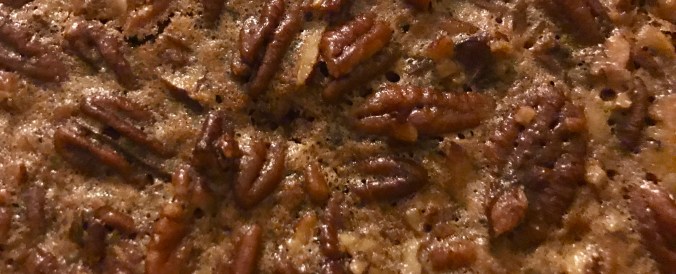
I wake, happy to be in our warm house, one cat hungrily biting my bare toes, the other nuzzling my cheek, my daughters sleeping. Downstairs, a pecan pie waits, uncut, on the kitchen table.

Yesterday, I met an incredibly accomplished writer in the Hardwick diner, and here’s a snippet from our conversation over coffee and tea and the diner’s savory shredded hashbrowns.

Despite all the irritating experiences around Thanksgiving that happens when families get together, there’s also moments when we’re all sitting together and eating together and someone is telling a story, and you think how great it is that we’re all together hearing these stories together, and then living stories together….

IMG_4018.jpg

Cracking Open the Door on Deafness

In my twenties, I was a typist for a novelist who not only had the misfortune to suffer from severe carpel tunnel, but was also profoundly deaf. The deafness had contributed to her divorce, and she holed in up in her parents’ summer house in rural Vermont. Once a professional musician, she cleaned houses before landing a teaching job and turning to writing children’s literature to make a living.

Sitting side by side with me, she dictated her novel.

One morning, an unfamiliar alarm rang out in her study, so piercingly loud I instinctively bent over. I heard nothing but that sound. Fearing it was a fire alarm, I stood up, panicked. Then I saw the novelist, sitting in her chair, was mystified by my actions. She was entirely oblivious to the noise. To her, that alarm didn’t exist.

A red flashing light on her computer power surge system warned that the power had gone out. I shut down her computer. I explained what had happened. Then I stood there, rattled — both from the physical shock and from my glimpse into her immense silence.

Here’s a line from Susan Orlean’s The Library Book:

… oh my God… do you think there are any conservative librarians?

IMG_3980.jpg

Lyndon, Vermont