Stranger, Passing Through

I’m weeding in my garden when an unfamiliar voice calls out. In the evening dusk, I’m thinking of my younger daughter eating dinner with her soccer team and, simultaneously, of walking to high school in the New Hampshire town where I was a teen. For no reason at all, I’m remembering walking on Union Street, which followed the railroad tracks above the Piscataquog River.

A neighbor I know only by sight is passing through. He stops and smokes a cigarette while we talk. His mother lived in my house, years ago. We talk about raising kids — his two sons, my two daughters.

The daylight recedes quickly. He asks for work, shoveling my roof in winter. We look at my house and its simple roof lines. We’ll do it, I say, and then he admits how much he hates shoveling roofs.

Mist has crept in, blurring the palette of zinnias and coreopsis in my garden. He’s gone, quickly, before I can ask more about his mother and this house.

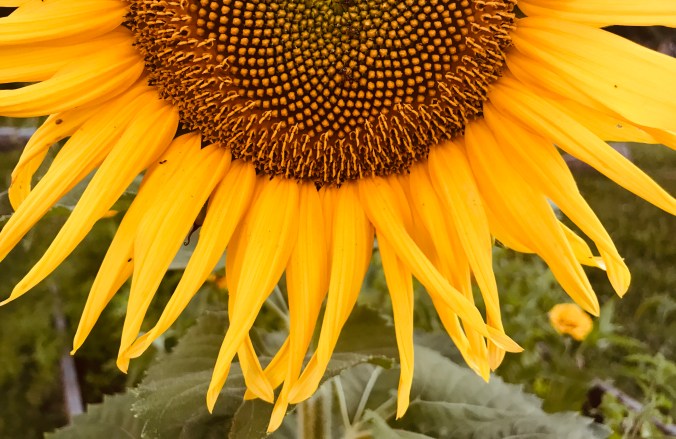
On this final morning in August, ten feet tall, the sunflowers in my garden bloom. I planted late, but the mighty faces have peeled back the leaves over their gold faces, opening up to the sun. Their roots, thick as fierce fingers, dig into the sandy soil.

Who we are cannot be separated from where we’re from.

— Malcolm Gladwell, Outliers: The Story of Success

IMG_6423.jpg

More School

Today, my youngest daughter starts high school. Time flies, sure, but it seems so long ago she first started school, a tiny girl. She was homeschooled until third grade, on our 100 acres, where I worked at home in our maple sugaring business, and at certain times in the year worked incredibly hard. It was a kind of life that, in retrospect I suppose, made some kind of sense to the adults.

When she was seven, she wanted to go to school. So, I sent her. Since then, she’s pretty much always loved school. Last night, I noticed she had packed so many bags, she appeared to be making a semi-move to the high school, approximately an 11-minute walk from our door.

Like anyone else, I’ve made a zillion — no, a zillion and a half — mistakes as a parent, some just downright terrible. But one thing I did realize at a certain point with my older daughter was that this is her life, and if I wanted her to live her own life with authority and imbued with her own female empowerment, I had to realize her life is different than mine. My own adult ideas, 90% or so of them, might as well go by the wayside.  Although I’m not in any way about to vacate the parenting scene, isn’t work out your own philosophy inevitably where the raising children scenario leads?

IMG_6393

Derby, Vermont

Soccer Mom-ing

My daughter is now six years into soccer — a number that surprises me — as if, for me, each fall is a surprise. You’re playing soccer? How cool is that….

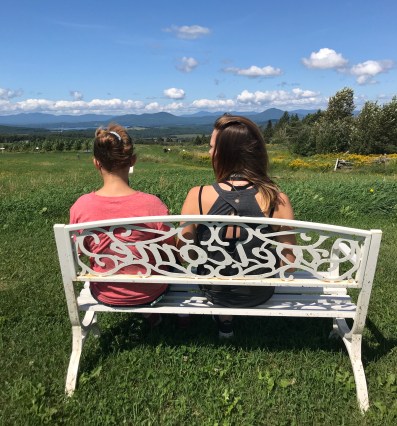
On a hot afternoon, I walk to the high school, in a rush from work, dust from the street blowing into my eyes. On these warm afternoons, there’s always pleasure at the chance to sit on the grass and simply spend an hour, talking with another parent about work and relationships, and the sometimes painful, often laughworthy moments in our parenting lives.

What’s odd is this: standing on the field, I study each player, figuring out which girl is mine. My own daughter. I blame this strange phenomenon on bad eyesight, until another mother confesses the same. The ponytail girls are growing up. I’m unable to recognize this metamorphosis — in my own daughter — but the girls are heading toward young womanhood, body and soul.

The way of the world, my soccer-mom friend says, and offers me some of her seltzer.

I am doing something I learned early to do, I am
paying attention to small beauties,
whatever I have-as if it were our duty
to find things to love, to bind ourselves to this world.

— Sharon Olds

IMG_6317.jpg

Hardwick, Vermont, August 2019

Nearly 9th Grade

While the girls swim and jump off the bridge, I read a chapter in a history of Vermont — same old, same old.

We’re in the long, slow, cricket-singing days, just before school starts. The garden is jammed full, the leeks a failure, the nasturtiums a mighty army colonizing beyond their territory.

The days are jammed, too, with all the pieces of work, crammed in with When will we paint the barn? Fix the car’s exhaust. Mark when property taxes are due on the calendar. — All things I consider so important but will have forgotten in weeks, perhaps months.

The girls lean over the bridge in the sunlight, talking quietly, glancing at me and wondering if I’m listening. I am. I’m watching and listening, until I dive in and swim away, with only the lapping water against my ears.

On a branch
floating downriver
a cricket, singing.
— Issa

IMG_6306.jpg

Irritable and Not So

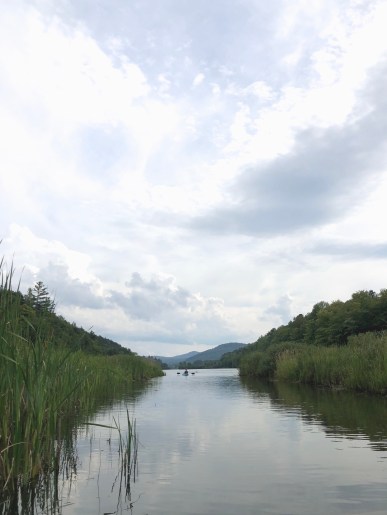
At the northern end of the reservoir, we kayak north, where the water flows into the Black River, crossing the Canadian border on its meandering way to the Atlantic.

Surrounded by cattails, we stop at a beaver dam, listening to the spilling water. The late afternoon is sticky, the water’s too mucky and weedy for swimming, the girls who have been up early either for soccer practice or work are out-of-sorts, irritable.

What’s on the other side of that beaver dam? I edge near, curious, but there’s no way I’m getting around.

Back on the wide reservoir, we spread out. At the far end, a loon calls, which fails to impress either daughter. The teenager says, I’ve heard that before.

And yet, hungry and tired as both daughters are, neither seems in any rush to leave. Clouds jostle against Buffalo Mountain in the distance, promising rain, but not too quickly. The girls’ paddles lie across their kayaks as we drift.

Later that evening, as I lie on the couch, reading, rain begins to patter down. The older daughter goes out for a run. The younger daughter and I pull on raincoats and cut through the thorny blackberries, silently, our faces wet.

IMG_5656

Photo by Molly S.


Buried Treasure

I look out the upstairs window where I’m working and see my teen and her friend busily digging a hole where young lilacs are growing along the cemetery fence.

They’re planting a half-gallon mason jar — their time capsule — carefully filled with things like a map of our camping trips and lists of their favorite things to eat. I watch them talking, and then they tie a pink scrap of fabric on the chain link fence, as if that marker will weather through the years.

Right there, I think, is childhood in a nutshell: a world that intersects with my grownup days, and yet lives busily — in fun and in seriousness — in their own. I haven’t seen what they stashed in that capsule, but I expect to see what emerges, whenever that may be….

A person isn’t who they are during the last conversation you had with them — they’re who they’ve been throughout your whole relationship.

— Rilke

img_1844.jpg