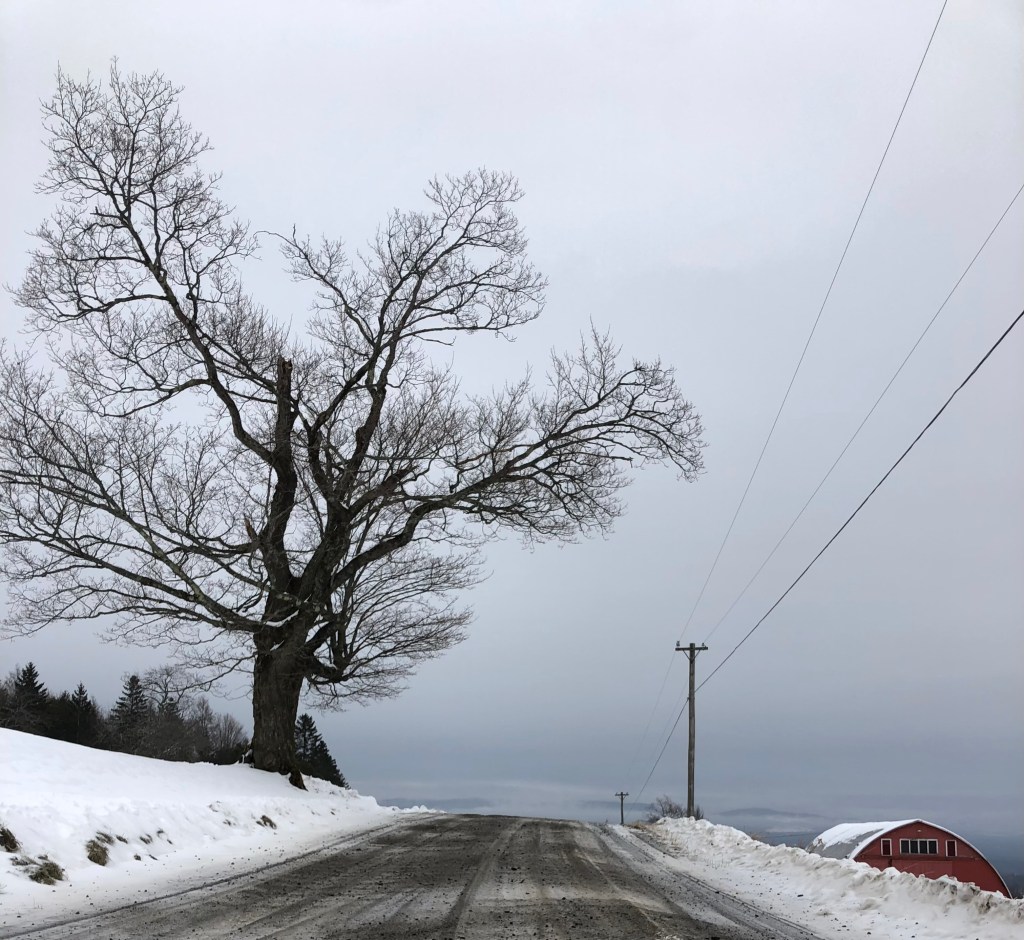
I met a friend yesterday, and we took a walk we’ve journeyed in various seasons — in bright green spring, in the summer when we admired flower gardens along houses. Yesterday, we walked through frozen mud ruts and sprinkles of rain, the jumbled up season and time of where we are.
On this New Year’s Day, I’m passing along a VTDiggerstory written by Kevin O’Connor about a Vermont couple’s 4,000 World War II letters. A history lesson and a love story — isn’t that what we need right now?
Christmas Day, in a light, almost-a-cold-mist rain over a few inches of old snow, we took one of our favorite walks in Greensboro, on Nature Conservancy Land at Barr Hill. Flanked by old sugar maples, the path goes through former farm fields and among 19th century stone walls. So this walk feeds my desire for history and also for the cold rawness of today in our faces. We meet not a single soul, not even a crow.
At the top, the view is obscured by clouds, the lake with its summer pleasures of kayaking and swimming occluded by winter.
We may be at the edge of the world, but what does that mean anymore? In our family, we’ve had both wonderful and terrible Christmases. As we drive, we say, remember the time…?
On Christmas evening, we drive, my teenager at the wheel, in search of colored lights. I keep my own entirely adult cynicism to myself, my snarky thoughts about the crumbling American Empire and how long will the boondoggle of electricity keep flowing for us. Instead, I tease my oldest daughter about her headlights. Are the headlights even on? I ask.
In my book interviews, this fall and winter, I’ve repeated over and over, that, by happenstance, each of us arrive in a time and place. The few us walk a downtown street, beneath glowing lights. We pass a gleaming white BMW, its engine running, no sign of a driver. A little further, I stop and read a sign at a creche, acknowledging the small figurines are on unceded Abenaki land.
The rain keeps falling in little bits. The youngest navigates us home, through mist and darkness, despite the poor headlights.
(And thank you, Barre Montpelier Times Argus, for the great interview.)
Driving into Greensboro this morning, I pull over at the lake. The mist is suffused with crimson from the rising sun. I have the odd sensation I’m walking in an Impressionist painting, shot-through with sunlight and wet, rising dew. A pink bird dips into the water, and I hurry along the frozen shore, wondering at this odd creature.
The bird is a common, ordinary seagull, floating along in this morning, just like me. Thursday morning.
In the midday heat, my youngest drives us north, following vague directions, and we hike along two small ponds. The merest wind blows, ruffling sunlight over the water like sparkling scales.
Through the woods, we follow a trail up and then sit on a rocky ledge, admiring the view, drinking water and eating crackers and talking. The humidity reminds me of summers in southern New Hampshire, and how a summer seemed so long as a kid.
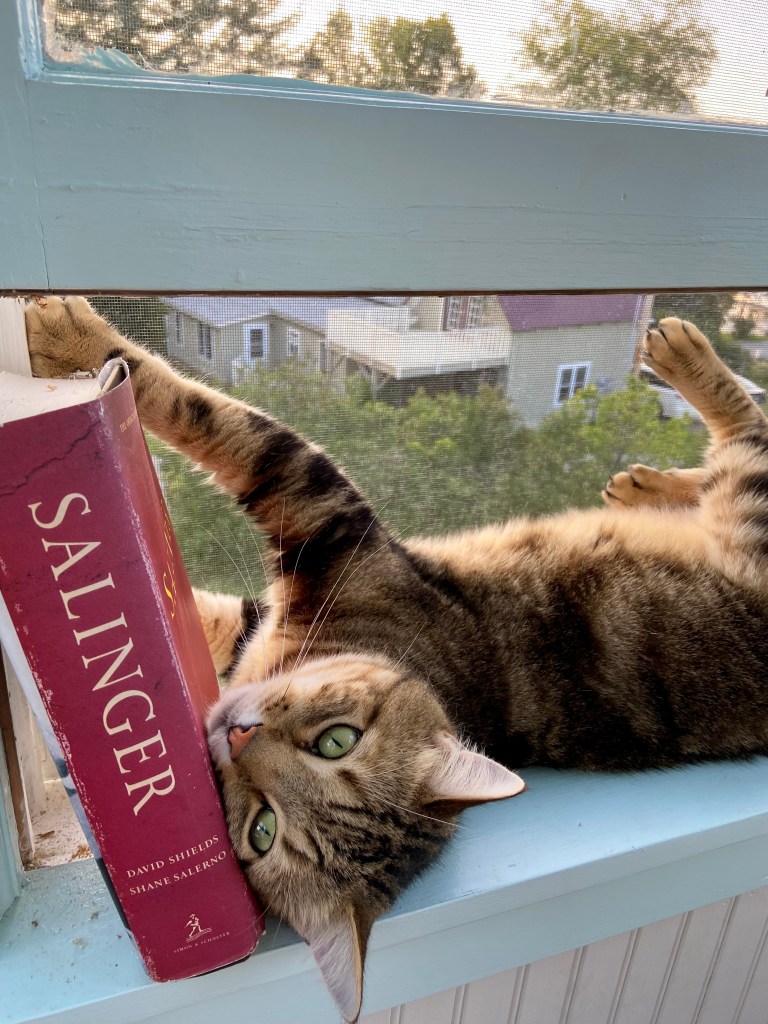
The sticky heat spreads out this day, elongates it. There’s plenty more ahead — my daughter heads into work and then goes swimming with a friend; I write on the back porch; my oldest returns from work and attends class on the upstairs porch; our cat catches his claw on the window screen. Rain falls.
But before all that, my youngest and I stop by a farmstead, and eat drippy and creamy-delicious vanilla ice cream cones. As we get into her car to leave, my daughter bites into a fresh peach. A friend pulls up beside us, and we talk for a bit. Our conversation winds quickly to work and misogyny. My friend apologies to my daughter for our conversation flying around.
My daughter asks politely, What? and pauses with that half-eaten peach in her hand.
My friend says, Oh, she’s in that lovely peach world.
Vermont’s summer mugginess settles in, and I lie awake at night, remembering the much stickier summers of my childhood in southern New Hampshire, a thousand days of no school and bike riding and eating salted cucumber and playing Acquire with my brother and the neighbor — the ultimate game of capitalism.
But those were likely much less than a thousand days.
My youngest texts me at work. She and her friend explore different swimming holes and go hiking. Together, as new drivers, they match route numbers with roads, beginning to master maps. I worry about her — my youngest navigating the world on her own — this place of such ineffable beauty and real badness. This is the summer she’s learning the price of a tank of gas — a transaction between labor and coin. But it’s also the summer she’s beginning to realize the phrase girls travel in packs has much more meaning than looking for the women’s room.
This is the summer of phenomenal sunsets and sunsets, of studying the sky, wondering if rain might move in.
Quit counting, I counsel myself. The hot days unwind into hotter nights, but the dawn is cool, the dew lush over my toes.
In one Tolstoy novel (where, I can’t remember), the characters sat down for a moment in their house before they undertook a journey. It’s a Russian tradition that seems incredibly wise.
Yesterday, before my daughters set off on a journey — short but intense — we paused in the kitchen while my oldest zipped up her high heel boots. My youngest and I checked the oil in her car. I repeated the directions and route numbers of their journey.
Later that afternoon, I paused my work and listen to the sentencing for Derek Chauvin for the murder of George Floyd. How much more evident could it be that our world must change, and maybe is changing? How hard, how utterly painful, this is.
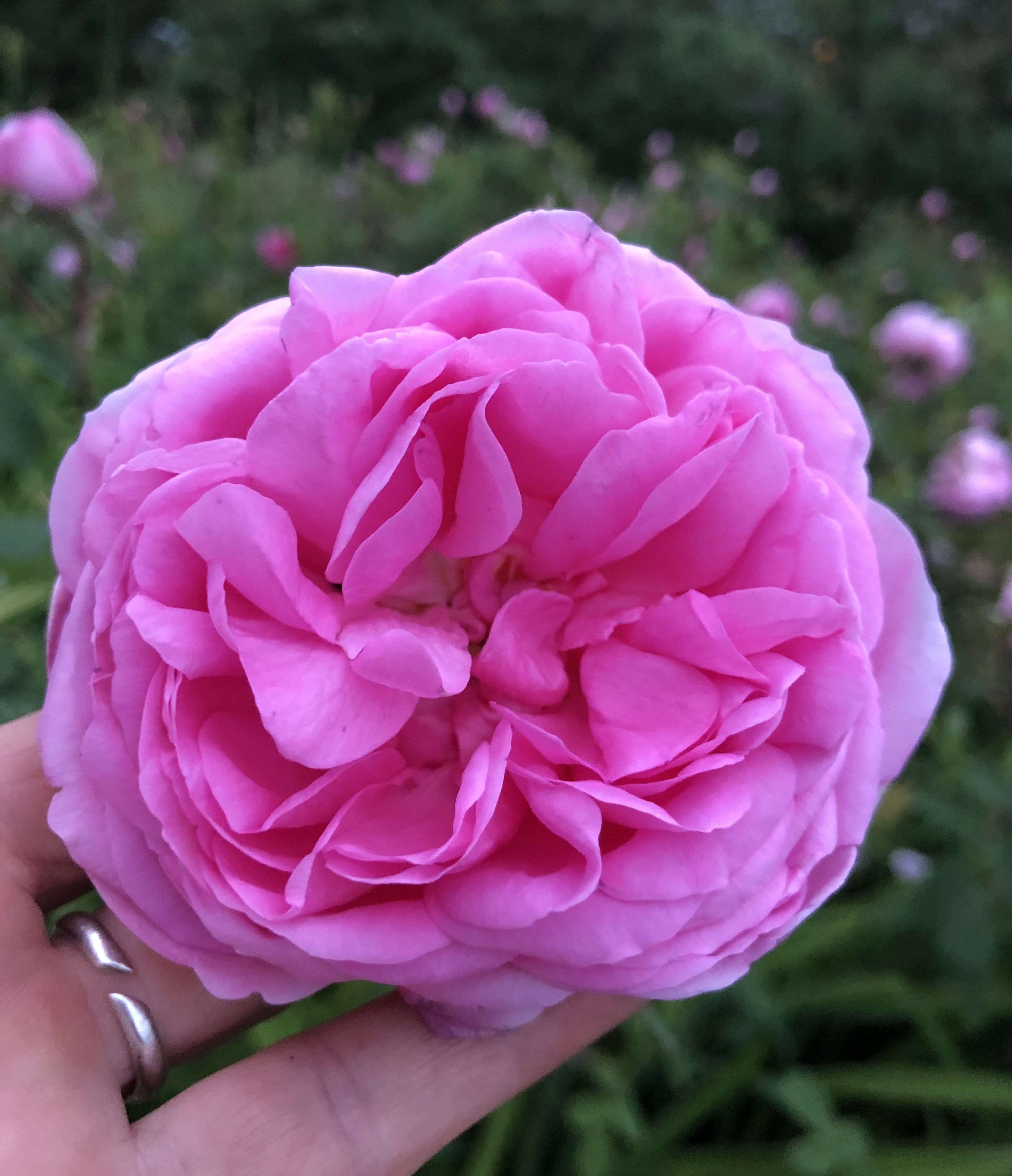
My daughters call in the early evening when I’m clipping dead ends from the roses in our front yard. No one has tended these beauties for years. While our society’s drama unfolds, our own family craziness unfolds — as does the complicated story of everyone else’s family.
I drop a thorny twig in my bucket and imagine my daughters driving along the interstate with their sunglasses and summer shirts, the sunroof open, eating French fries. Sisters on the open road.
“Real power doesn’t come from having a million followers, good hair, a Louis Vuitton purse, a new car, a new home, a title, a partner, or anything that can be weighed, measured, or acquired. Real power is the thing you’ve always had inside you… Real power can never be taken away from you and never lost once it’s found.”



 Stony Soil Vermont