When I was 17, I was infatuated with James Joyce. I remember watching a documentary with a woman who knew Joyce and described the undercurrent of his life as filled with tristesse. I was learning French at the time and found that notion so romantic. What would that mean, to have tristesse in one’s life? Oh, naiveté.
As a young mother, I endeavored (oh, how hard I tried) to never let unhappiness or want cross my daughter’s life. I failed, of course, miserably and utterly predictably. Now, I’m at that place in my life where I know human life is filled with tristesse and also fear, longing, happiness, and laughter: an ever-changing sky boundless with wind and cloud, studded with arcs of rainbows, their roots eternally concealed.
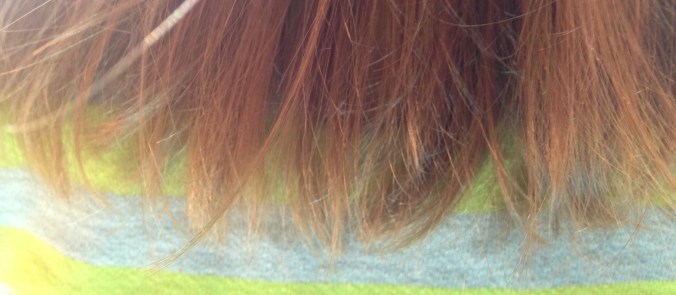
Over and over, I have wondered what I could give my daughters instead, what arms might they raise against the inevitable slings and arrows of their earthly lives? At the very least, this: my own pleasure in this tangible world, in a handful of strawberries, a kite cartwheeling across the spring sky, a daughter’s haircut. In this moment, in this time together.
One of the things I know about writing is this: spend it all, shoot it, play it, lose it, all, right away, every time. Do not hoard what seems good for a later place in the book or for another book; give it, give it all, give it now. The impulse to save something good for a better place later is the signal to spend it now. Something more will arise for later, something better. These things fill from behind, from beneath, like well water. Similarly, the impulse to keep to yourself what you have learned is not only shameful, it is destructive. Anything you do not give freely and abundantly becomes lost to you. You open your safe and find ashes.
– Annie Dillard

 Stony Soil Vermont