A Sweeter Version of Macbeth’s Day to Day

On our back deck yesterday, my 19-year-old and I talk about the crickets, how their songs are lengthening and yet quieting at the same time, their strength slowly leaking away with summer.

The sunflowers are high in our garden.

This summer has been one of the daughters coming and going, and myself mostly staying put. The younger daughter’s suitcase is packed again, as she happily heads to Maine with friends. The older daughter has been working mixed-up nursing home shifts — most recently the graveyard hours. Her bags are packed, too, as she anticipates returning to college.

We’re busy, sure, but not that busy. In the midst of all this, we cook dinner together when we’re all home, and in these long dusky evenings, we go for walks.

Last night, we were in the town’s community gardens, taking photographs in the pink-leaved echinacea. I remembered that very first year I was a mother, and I kept trying to grab some stability — Oh, this is what being a mother is like. This is how our life will go. But my baby kept changing. She slept, or she didn’t sleep. She crawled, and then she ran. She babbled. Sometimes, she cried fiercely. She was radiant and fierce and deeply loving — a babyhood version of who she is as a young woman.

But she grew and changed all the time, which is — and I really don’t know why this came as such a shock to me — the essence of this earthly life. But the deep down elements of our lives haven’t altered: her eyes are the same curious, merry upside-down crescent moons I first saw on the night she was born.

All this, I suppose, means that I intend to swim in the nearby pond as long as possible. The water is warm yet, and the banks are brilliant with goldenrod.

I had to learn that I was a better mother and wife when I was working than when I was not.

— Madeline L’Engle, Walking On Water

IMG_6927.jpg

Photo by Molly S.

Stormy Spring Fever

Not only the children have spring fever; I’m afflicted, too. In this rainy afternoon, the children are outside, equipped with boots and splashed bright cheeks.

In the woods, the rain lessens. Green trout lily leaves sprinkle the forest floor profusely now, although the coltsfoots’ golden blossoms are folded up, napping away the deluge. In the cold, damp earth, my freezing fingers tugged free a few of my garlic sprouts, their pale white roots clinging deeply in the soil, winding around rouge pebbles. I chopped their savory greens and tender shoots for a salad, a taste of liquid chlorophyll, I imagine.

This is the season of secrets unearthing – last fall’s decaying fungus belly-white, frog eggs fattening near the pond’s stippled surface, the children too big for last year’s summer clothes.

We need the tonic of wildness…. At the same time that we are earnest to explore and learn all things, we require that all things be mysterious and unexplorable, that land and sea be indefinitely wild, unsurveyed and unfathomed by us because unfathomable. We can never have enough of nature.

– Henry David Thoreau, Walden

FullSizeRender.jpg

Woodbury, Vermont

Travel Into Places Familiar and Unfamiliar

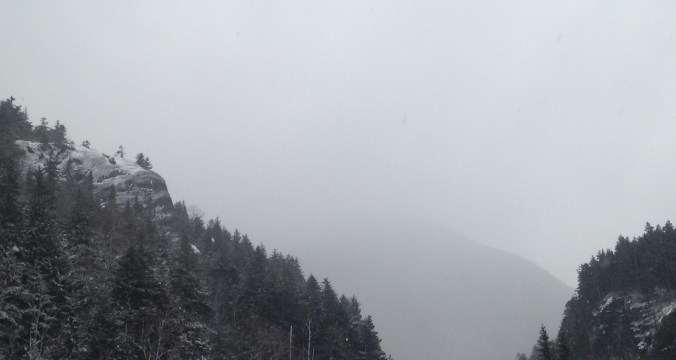
Yesterday, the girls and I left Vermont – currently a giant slew of ice and running water –and drove over the Connecticut River into New Hampshire’s White Mountains, an ancient granite range. At the crest of the Notch, I stepped out in the blowing snow and snapped a photo, the temperature not much above zero. In the backseat, the little girl pressed against her teddy bear. I drove down the steep switchbacks, listening to music, the girls quiet, while the temperature soared and the snow that shrouded the pass lifting and disappearing.

For years, I’ve impressed on my daughters to make a mental map of their world as they go. Memorize road signs; note the position of the sun, rivers, cairns; remember your turns. And yet, more than our perceptions of places falter. A few years ago, with our daughters, my husband and I returned to the mountainside  where we had married. We hiked up this once-familiar area and could not find the field of our wedding. The mountainside, a former ski area, had not been mowed for years, and the field had been reclaimed by scrubby thickets. In the end, we found what we were seeking, completely altered but for the shape of the earth: a flat knoll and a once-upon-a-time drop off now concealed by emerging birch.

These ancient mountains are all of this: familiar to me through swimming and river rock collecting and backpacking into the peaks, and so infinitely mysterious, ever-changing, miraculously beautiful. And, this morning, sunny.

….to see beyond boundaries to the subtle heart of things, dispense with names, with concepts, with expectations and ambitions and differences. Tao and its many manifestations arise from the same source: subtle wonder within mysterious darkness. This is the beginning of all understanding.

Lao Tzu (c.604 – 531 B.C.)

FullSizeRender

Franconia Notch, New Hampshire


Flux

My daughter, picking peas in the garden, reached down and plucked a pod chewed ragged by tiny snails, the little creatures with their whorled homes still climbing on the green. Next bed over, a black swallowtail caterpillar munched the parsley. Early this morning, not long after dawn, as my daughters and I drove across Vermont, we saw a fawn sprawled over the pavement, two porcupines, a raccoon. Weeds, breeze, pollinators: the ten thousand things wildly grasp these long July days. Nothing still, nothing static. Even the children, asleep at last, lie breathing softly with dreams murmuring through their minds.

… the ten thousand things (are) in constant transformation, appearing and disappearing perennially through one another as cycles of birth and death unfurl their generations: inside becoming outside, outside inside. This is the deepest form of belonging, and it extends to consciousness, that mirrored opening in which a heron’s flight can become everything I am for a moment…

– David Hinton

DSC01028

The 10,000 Things Bloom

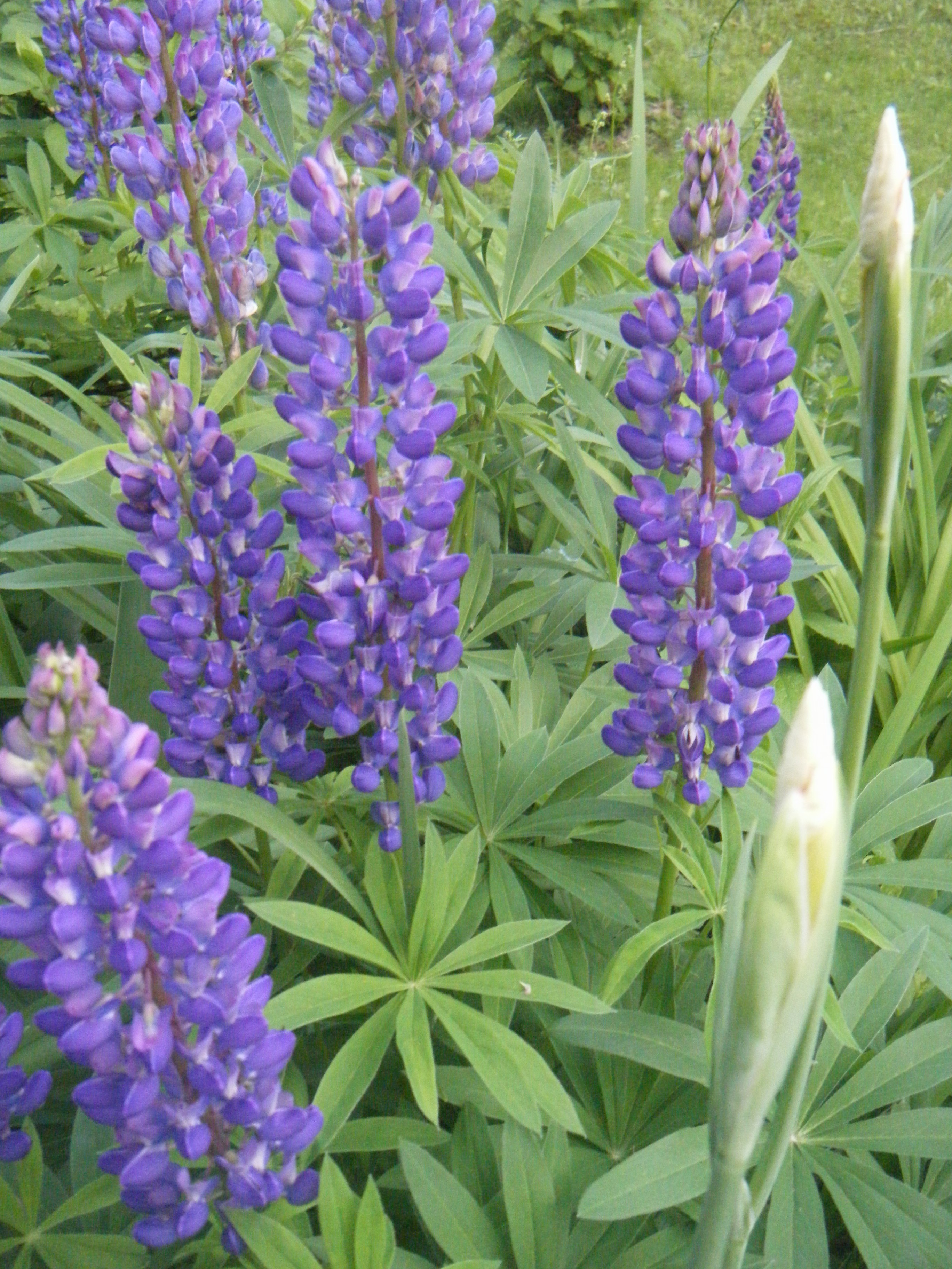
Vermont’s June surges in a melody of the ten thousand things madly growing .  In this fine evening, walking along my dirt road, the landscape hums with life.  On this road, I’ve also been sleeted and hailed upon.  Rain in every imaginable form — from the merest brush of mist to buckshot — has fallen on me.  Snow, of course, snow, snow, snow, in all its myriad Vermont shapes, has graced my shoulders.  But today, this very evening, right now, the air is redolent with wild roses blooming.  This is the season of lupines and iris, of daisies and forget-me-nots, and I intend to savor June in its moist and delectable sweetness.

With another Vermont novelist today, Sheila Post, we discussed landscape in Vermont writing, and this evening I am suffused with landscape, the sheer loveliness of this summer evening, this place and this time, already fleeting.

QUESTION AND ANSWER
after Li Po

You ask me
why I live on
this green mountain.

I smile: no answer.

Come.
Live here
forty years.

You’ll see.

– David Budbill


DSCF9994