Homework

How could I have forgotten that the light in October is exquisite?

Unlike hazy summer, Vermont autumn is clear. The woods are emptying of leaves. The wind sweeps through the towns and over the hills.

From my garden, I cut a cabbage, boil the leaves slightly, and roll up meat and rice, filling the pan with sauerkraut — a Romanian recipe from my grandmother, who died before I began cooking.

Bit by bit, our hours migrate from the garden and back porch in the house. We no longer eat dinners in the sunlight. When I return from work, I see crumbs on the kitchen table, remnants of my teen and her friends.

I imagine these girls figuring out their online chemistry class and plotting their future. When I ask what’s happening in those hours, I hear, We’re fine.

In the evening, the teen spreads out her graph paper and notebook. I knit on the floor with the cat beside the wood stove while her sister reads the day’s news aloud.

The teen shoves her graph paper to me and asks if her approach to problem-solving is correct.

I look at the paper and suggest, Call your uncle. That’s out of my skill set.

The cat flips over and purrs.

The teen bites the end of her pencil and goes back to work.

“The world begins at a kitchen table. No matter what, we must eat to live.”

Joy Harjo

Cheery Sign

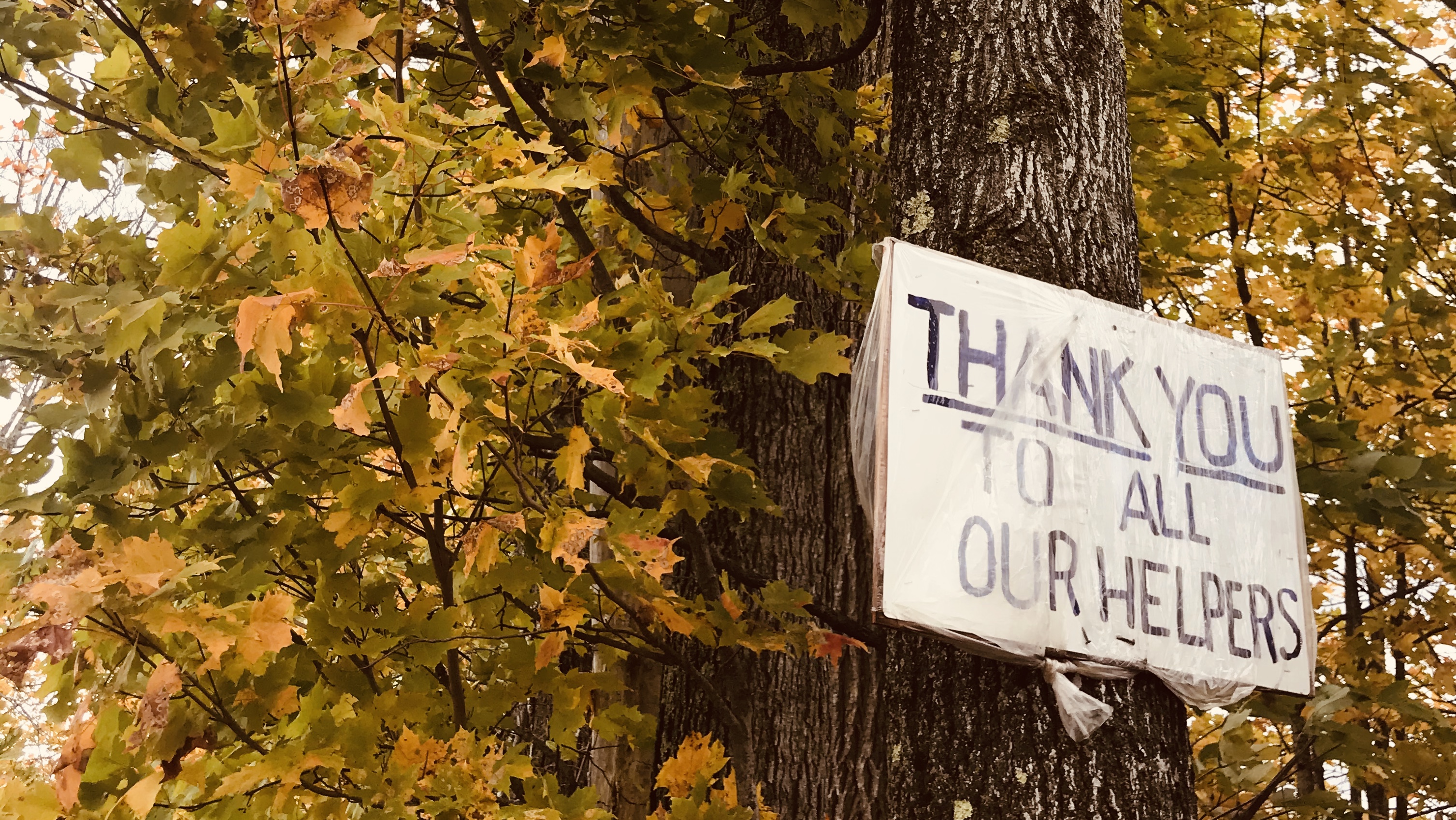
On my way to a bone-chilling soccer game, I stopped by the side of the road to snap this photo. Harvest helpers? Essential workers? I hardly cared — a nice sign on a backroad in the midst of so much nasty rhetoric. Maybe simply a thank you to the universe.

While I huddled in my coat at the game — who can cheer with a mask? who can cheer when the crowd is spread out and the wind is blowing? — I thought back to this sign and the strange topsy-turviness of the world.

Whoever the helpers are — whoever the signmaker is — thank you for a bright spot on an October afternoon.

“Human beings have an inalienable right to invent themselves.” 
― Germaine Greer

Greensboro, Vermont

Pastimes

I wake before dawn thinking of shuffleboard and listen to the rain pattering.

It’s Wednesday, and my high school daughter is home today. With high school in session two days a week, she’s patched together a strange schedule. Yesterday, she walked to school around ten (skipping the idiocy of study hall in the gym), had algebra and driver’s ed, and spent the afternoon playing soccer.

I lie in the dark, grateful beyond grateful for soccer.

When her father and I divorced, I kept thinking, my god, we need to do better for this girl. So it goes with school this year. Really? I keep thinking. Is this the best I can do?

I remind myself, again, that I’m part of the problem. At 15, she’s stepped into a kind of college schedule, coming and going, utterly responsible for her own work, burrowed on the couch with her school-issued Chrome book, determined.

The truth is, the best has long since slipped out of vision. Hence, perhaps, the appeal of a shipboard game, hours of leisurely chat, surrounded by the glittering sea.

I’m not about to get that shuffleboard option. I rise and feed the hungry cats, brew coffee and open my laptop.

Rain falls steadily — a welcome sound. The chaos of the world is clamoring loudly. Meanwhile, my daughter leans into her work. I brew more coffee. Day by day — the only way to parent.

Empty House

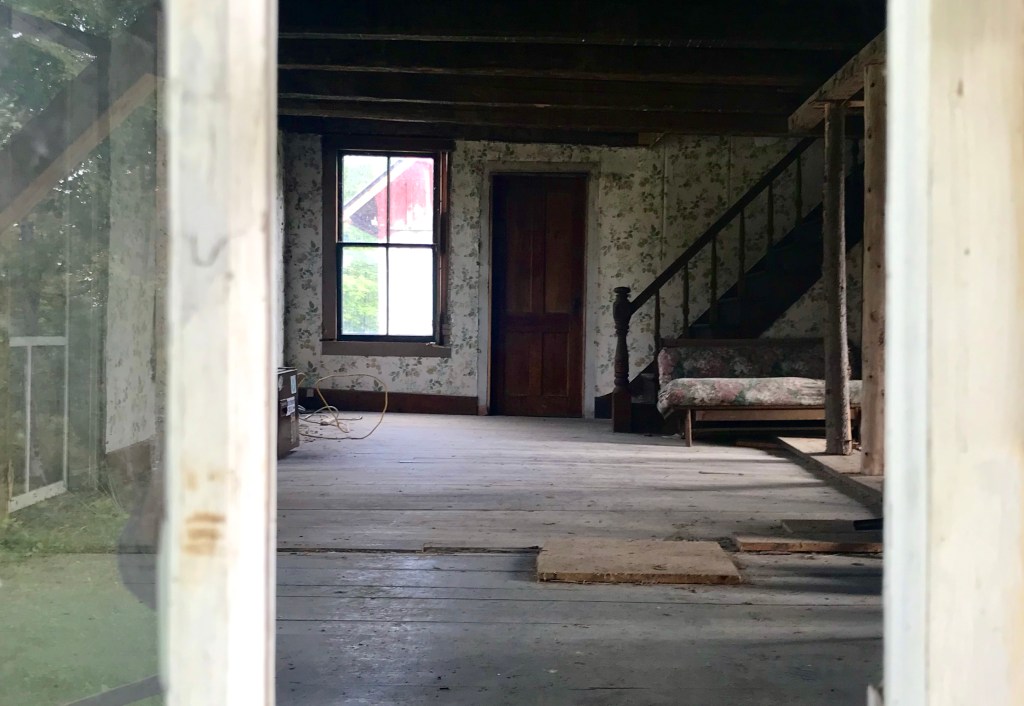
The afternoon’s end finds me on a remote road, looking at an abandoned house. No one’s lived here in a long time, save for intermittent squatters.

It’s the first day of school for my high school sophomore. Although I’m at this property for work, I keep thinking of my daughter.

Behind this house are two immense white pines. I stand there, listening to the breeze rising off Lake Eligo, imagining what it was like a hundred years ago to farm here. What will it be like a hundred years from now? The question looms impossibly.

I bend down and peer through a missing pane of glass in the door.

In Yaa Gyasi’s Transcendent Kingdom, I read a line from Thoreau: “Not till we are lost, in other words not till we have lost the world, do we begin to find ourselves, and realize where we are and the infinite extent of our relations.”

In so many ways, that sums up my experience. But that lostness I know now, is hardly a brief experience. The thing about the pandemic is that it’s exposed all the weaknesses in our society, and in ourselves, too. In my own world, I see acutely how pandemic has highlighted the near impossibility of single parenting, as I find myself these days unmoored, the thinness of my life exposed.

These days, in my work, I’m able to listen to people’s stories about how they’re experiencing the pandemic. These stories are often so much about loss — particularly about families separated — and worry about an uncertain future. Surely, I think, if there’s a time stories connect us, it’s now.

So on this first day of school, with the sweet scent of Vermont’s fall, with so much uncertain, I walk around this abandoned house, thinking of how time flows on. Near the step, I find a tiny plastic pig. Using the hem of my shirt, I rub dirt from the creature, then leave the toy on the broken step, hoping a child will chance upon it.

In the Journey

In these warm September days, the little boys who live across the street dig in their dirt driveway, holding up their tractors for me to admire, their faces covered with dirt. The older boy, who’s heading into whatever might be kindergarten this year, wears his Spiderman suit everyday.

Our two houses are at the end of the one-way road. The two brothers, this summer, have begun dismantling the road’s pavement, picking up the broken asphalt pieces and building a tower in their driveway. I look at the tower with immense pleasure. Sure, the world may be falling down around us, but here’s two little boys, recreating the world.

I can’t help but wonder if someday these boys will remember the Covid time as the summer of digging, like I remember the summer of my brother’s fourth year as the time he dug a bear trap — and then fell into it.

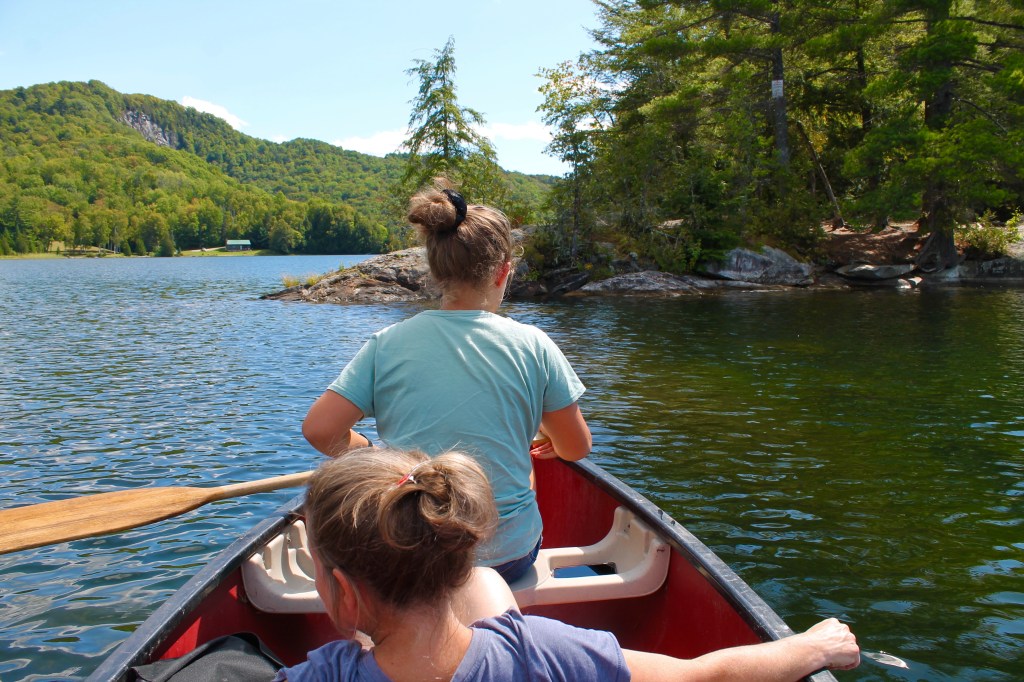
On our end, with my daughters, we canoed out to an island of hemlock trees, a beautiful place, silent but for the water lapping the shores and a loon calling across the pond. The girls packed sandwiches and apples and a bag of potato chips. We ate everything and then rowed across the pond. Why not? This is where we are. What’s the rush to go anywhere?

On the eve of school (possibly) reopening, I keep thinking of Maria Montessori’s wisdom….

Preventing war is the work of politicians, establishing peace is the work of educationists.
― Maria Montessori

Nichols Pond, Woodbury, Vermont
Photo by Molly S.

True Compass

Yesterday, my 15-year-old drove on the interstate for the first time. Fittingly, this route was one of our favorites — a hardly used stretch across northern Vermont and New Hampshire.

Coming home, we took the long way around St. Johnsbury, where one interstate joins in with another.

At a particular but unremarkable place, just as we crested a hill, I remember driving this same highway in our old blue Volvo, my then-husband in the passenger seat, our girls in the back, talking and doing some kid craft project. My then-husband and I were listening to an NPR report about Teddy Kennedy and the late senator’s true compass.

So many years have passed since then. Our youngest is now driving, utterly confident, her sister and I offering advice — be wary of semis, know that blind spot. As I’m chauffeured by her, I think how my daughters will be tested in their lives in ways neither of their parents have, their own forming compasses pushed and challenged. So often, I feel I endlessly run my mouth with advice — don’t trust any other driver, suspect impairment and incompetence — but I know my girls always make their choices, create their own lives, enact their own unique dramas.

Mostly, I’m just so damn glad to be here, still part of their lives, ragged and worn out, the worrying mama….

True compass, I ponder as we drive home. This piece I keep to myself.