In the Gloaming

Even the kids remark on the darkness.

In our kitchen, the girls baking cookies after school turn on the overhead light. At my library, the little children play outside in the afternoon dark, rolling down the snowy hillside in their bulky clothes.

I turn on the outside light beside the door for the parents. It’s not yet 5 o’clock.

Around our house, a bitter wind swirls snowflakes with tiny teeth. On our red rug, the cats stretch, indolent. Through the vast space, on our heavenly blue-and-emerald body, we spin.

Already light is returning pairs of wings
lift softly off your eyelids one by one
each feathered edge clearer between you
and the pearl veil of day

You have nothing to do but live.

— From “Winter Solstice” by Anonymous

IMG_4210.jpg

Parenting

On a Philip Larkin jag, I think of his lines as I’ve driving with my 19-year-old up the switchbacks climbing the mountainside from the Connecticut River to Danville.

They fuck you up, your mum and dad.
    They may not mean to, but they do.
 
We’ve been to see an old man — a doctor and a Zen Buddhist — whom I’ve convinced has answers, actual answers damn it, to the riddle of her and me and her father. My daughter hates the old man. Actually hates him.
 
It’s December and cold as hell. The sun sparks from ice at the edges of the river where the wide current is just beginning to freeze. The sun is nothing but cold comfort, so low in the sky warmth is merely a memory.
 
Driving, talking, we pass a particular bend in Route 2 where, decades ago and years before she was born, the Volkswagen bus my daughter’s father was driving broke down on the edge of the road. He had downshifted, stalled, and in that moment, the engine froze and refused to start. For years, the bus was parked behind his sister’s village house.
 
I stop in Danville for gas and wash the salt and road dust from the windshield, remembering the ugly tan color of that Volkswagen. From here, the road home is familiar all the way. I’m always writing about roads, always writing about journeys, sometimes just down to the post office to open the mailbox to see what’s there — or not. 
 
Staring at the keys in my mitten, I remind myself my daughter’s journey is her own. Or, back off. Then I hold out my hand to her and ask, You want to drive home?
 
IMG_4172.jpg

Sparkles

The phone rings early this morning with news of the third snow day in November. Complex math and prediction skills aren’t needed to guesstimate that school for my 8th grader will drag far into June — sweet, rose-scented June. In late June, we’ll be camping on the shores of Lake Champlain in our annual, always filled with laughter camping trip.

I close the Chris Hedges book I’m reading — the book jammed with history and intimate detail — tug on my boots and go out to shovel. It’s so warm, I don’t need a hat or mittens, don’t even really need a coat. As I shovel, I think of Hedges. How right he is the political ramrods my own private family life, too, that the tangle of economics and autonomy and gender weren’t created within my four walls.

Snow falls very lightly, nearly imperceptibly in the light from my house. A whole day stretches ahead, but it’s beginning here, in this pristine beauty.

America was founded on an imagined moral superiority and purity. The fact that dominance of others came, and still comes, from unrestrained acts of violence is washed out of the national narrative. The steadfast failure to face the truth, Baldwin warned, perpetuates a kind of collective psychosis. Unable to face the truth, white Americans stunt and destroy their capacity for self-reflection and self-criticism. They construct a world of self-serving fantasy.

Chris Hedges, America: The Farewell Tour

IMG_4028

Small Thing

While my 13-year-old chatted with a woman in an office today, I leaned back, yawning, thinking about another cup of coffee.

The woman’s low leather boots were worn at the heels. She was well-dressed with a silk blouse and gray slacks, in a professional position, and I assume lack of money was not the reason for her worn shoes. Love, likely. The boots probably fit her well, and she loved them.

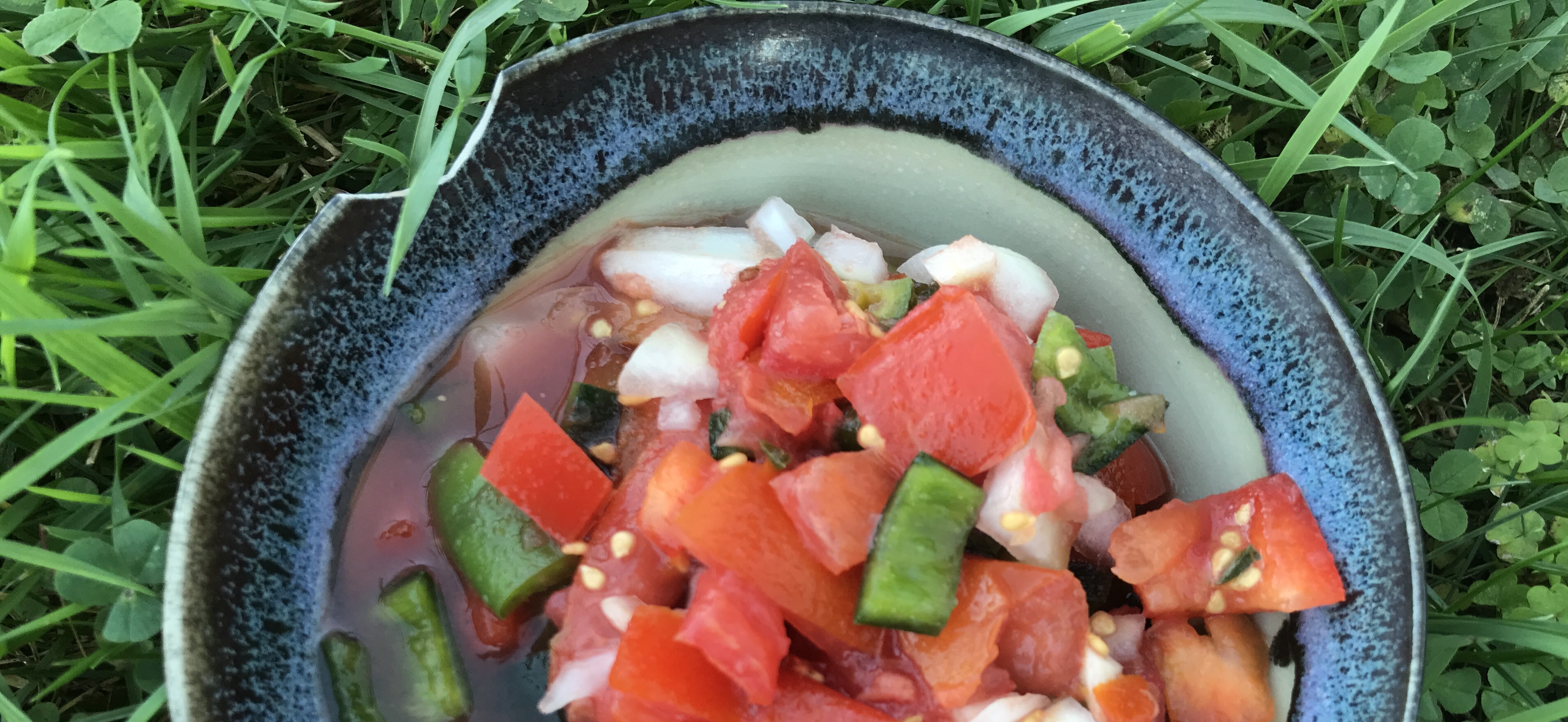
How hard we can wear the things — and the people — we love most. Like this bowl, broken at the edge, that I keep filling. Fresh salsa — peppers, tomatoes, onions, salt.

There are three rules for writing. Unfortunately, no one can agree what they are.

~Somerset Maugham

IMG_3349.jpg

Age 13

My 13-year-old returns from her travels slightly shifted, changed in a perceptible way. She’s tasted a bit of the world cracked open. The younger sister, she’s now taking steps — err, leaps — into her own life. Who am I, and what do I want to do?

These early summer mornings remind me of my own wanderlust at that age, how as a child our family was happiest on the road. A number of summers, my parents packed up the Jeep, and we drove west from New Hampshire with a vague itinerary and nothing more. Maybe Wyoming, maybe Mexico. Always Colorado.

13 — such an age, such a year. While adult years all blend together — that was my wild twenties, the childbearing thirties, the hard forties — there’s age 13, the year my daughter is a child and began stretching toward not-a-child.

Chicken tending chores, her best friend, ice cream for lunch.

How we spend our days is, of course, how we spend our lives.

— Annie Dillard

IMG_2245

Hardwick, Vermont

Local Wanders

When I lived on 100 acres in fairly rural Vermont, I didn’t imagine we’d change that story. 100 acres is a large chunk of land, and those 100 acres didn’t end at any boundary save a single dirt road along one side. The corners were rebar pins, surrounded by thousands of acres alive with fisher and bear and moose, jack-in-the-pulpit and hobblebush.

Living in Hardwick village now, the wild still surrounds us. Along our former road, tumbled-in stone foundations are reminders of farming families, who at some point packed up and moved along.

Yesterday, we walked along the railroad tracks, walled in at times by forest, and crossed the Lamoille River over a questionable bridge, hidden in this oh-so-June green beauty behind the town. I could imagine a hundred years ago, terrain cleared around the tracks, the rail bed studded with cinders. Save for the four of us, we saw no one but a crow.

The first step … shall be to lose the way.

— Galway Kinnell
l

IMG_5392

Photo by Molly S.