What we can’t know.

The cold hammers down around us in the way we’ve known Januarys before — nothing fierce, but sharp. January is a season that draws us up against our own mortality. Stumble and you’ll break a bone. Sleep outside, ill-prepared, seriously down on your luck, and you could perish.

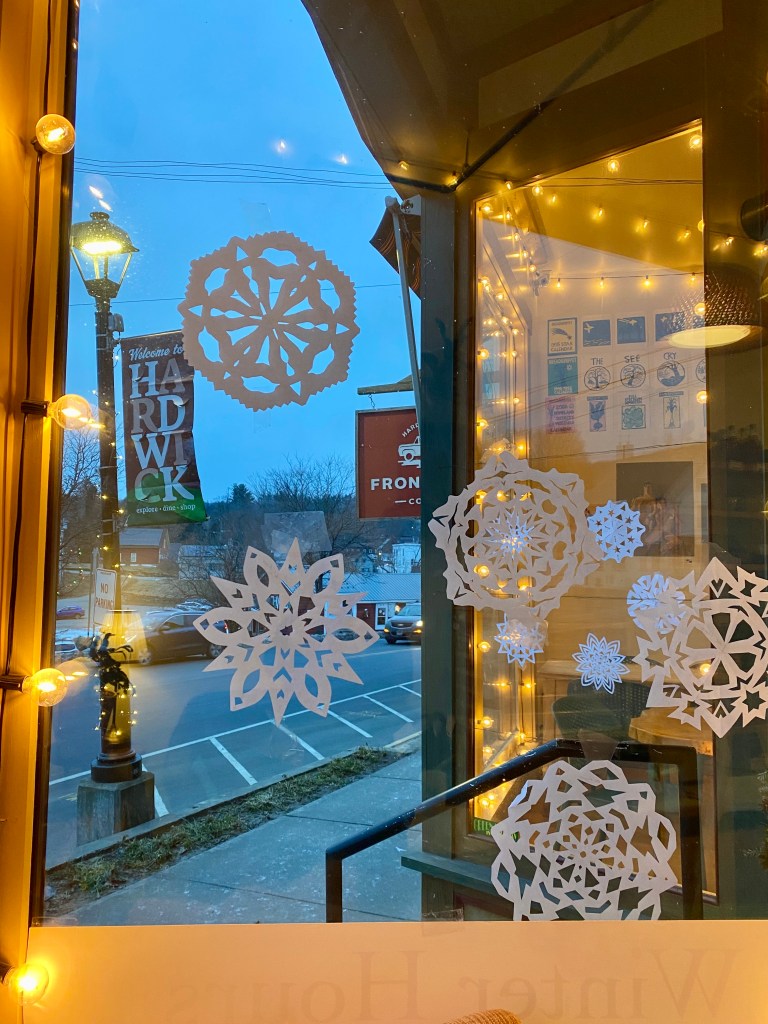
Wednesday morning on the early side, I’m drinking coffee and staring at the snowflakes that have appeared in the downtown again, a memory for an absent person. News has wound my way of the death of a person distant from me by numerous steps, the fate we’ll all meet, one way or another, the great leveler. In the afternoon, when I return from work, the window washers are carefully removing the lacy paper, setting the delicate flakes to one side, and then re-taping them on the windows. A gentle, wordless act of care. A piece of our human puzzle.

These winter days, I’m devouring Paul Lynch, about as good as anything can be.

“I believe it is worth writing to remind ourselves of what we can’t know. To remind ourselves that certainty is dangerous. That factual knowledge of the world casts only a small light. Fiction is necessary because it seems to me that only fiction can accommodate the total strangeness that is life. To remind us that truth is actually impossible.”
Peony Roots.

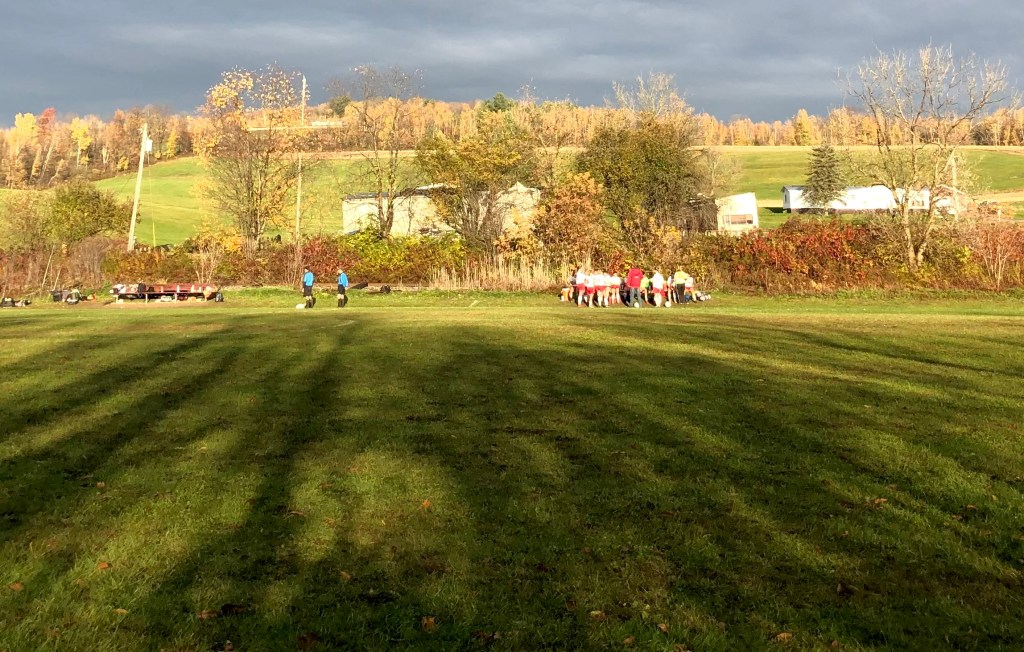
Nearing the end of soccer season, my daughter’s high school community suffers a second tragic death in just a few years. In this little rural school, the news seems almost unbelievable, except it’s not.

The loss is not my own personal grief, and so I keep on, of course. On a Tuesday, I leave work early and drive to a game in a northern town where I’ve never been. All morning, a cold rain had fallen. The school is in a town where a Blue Seal Feed plant dominates the shabby downtown. I appear with my knitting needles and a ball of yarn. I’ve forgotten a chair, and another mother takes pity on me and walks back through the mud to her car to retrieve an extra. I end up at the end of the row of spectators. A black cat with white paws wanders by and jumps into my lap. Beside me is a high school boy whose name I never asked who christens the cat Mittens and tells me about his cat named Turkey who was born on Thanksgiving. He speaks slowly and calmly about ordinary things like the railroad workers driving along the tracks in their trucks at the end of the workday. Cigarette smoke streams through their opened windows.

I drive home alone, missing my friend who is no longer my friend because of some certainly unforgivable thing that passed between us. Nonetheless, I miss her as I drive through the long autumn twilight. In this unfamiliar territory, I pass through farm fields where tractors are silhouetted against the sunset, through fields harrowed up black or still emerald green from the year’s final hay cutting. Mist floats over still ponds. The forests are a mixture of gold and russet, gray where branches emerge. Shot through with the day’s final sunlight, the landscape might be an 18th century oil painting.

The darkness catches up with me. At home, the cats will be hungry, the fire in the wood stove gone down to embers. I pass through a village where I haven’t been in twenty years. I had visited with a young woman both baked cakes for a living and built bridges.

As I drive through the forests and over mountains a few other vehicles pass my way — a milk truck, scattered cars. This American Life tells me stories as I live through my own American Life. Both times when Covid entered my house I felt the thinness of my life. Beneath a red-neon GAS sign, I stop for gas. My jeans are mud-splattered. Despite the drive and my car’s heat, I’m shivering although the air here, away from the sodden field and the river, feels almost balmy against my face.

I screw on the gas cap and step away from the pumps where it’s only my car, anyway, with the cardboard box of peony roots someone salvaged from their garden and passed along to me. The evening star gleams over Elmore Mountain. For some inexplicable reason, I remember stepping out into the New Mexico night the last time I visited with my brother, relishing the night’s splendor. We talked about those numberless nights camping as children, sometimes humid, sometimes frosty, in good times and bad. The night is an ancient, ubiquitous realm. Red and white lights of traffic glide along the road. I get back in my car and place my hands over the heater’s blowing vents.

Wander with Laughing Teens

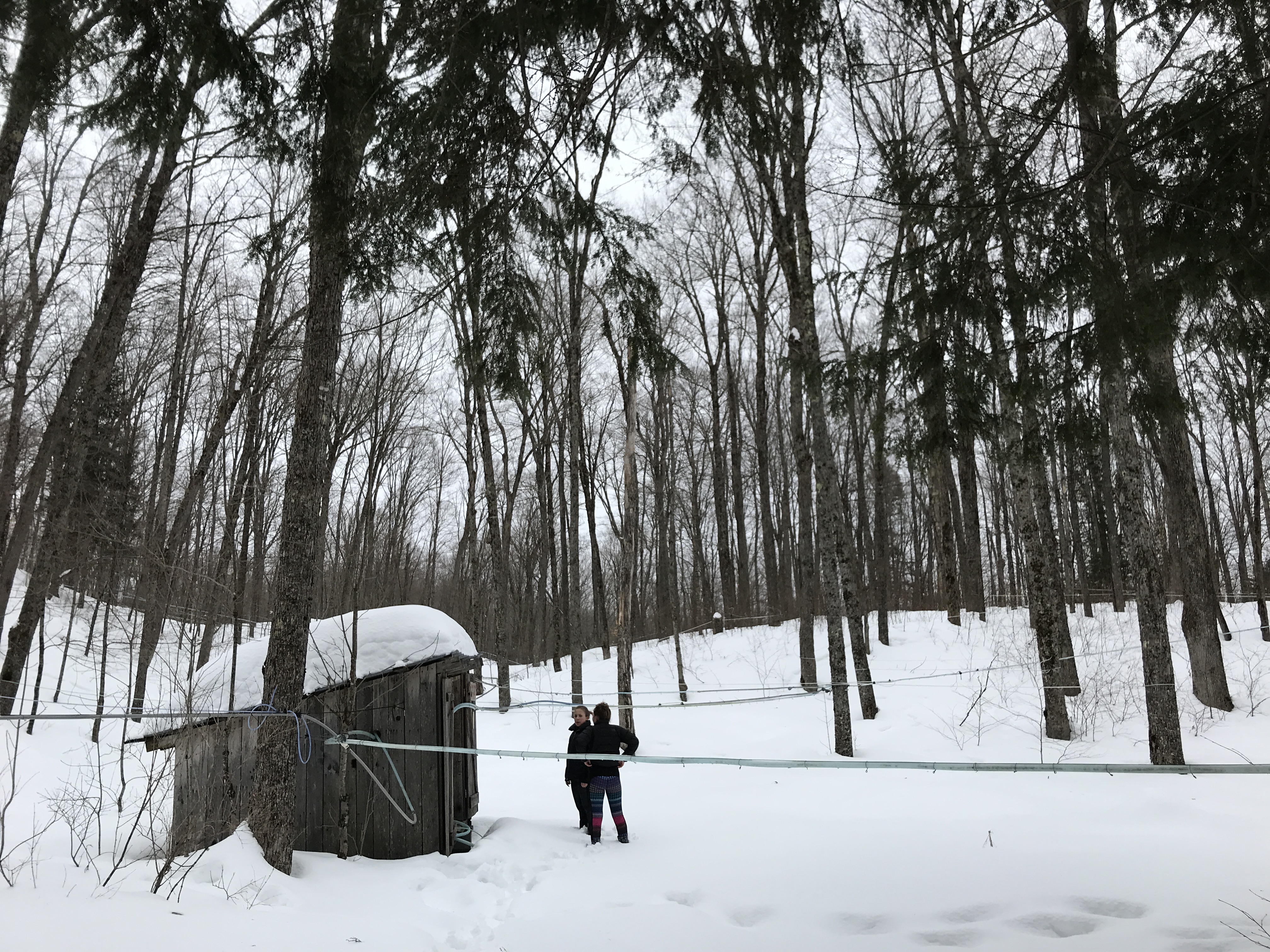
The girls put effort into dressing for a walk through the sugar woods — hair up and all in black, save for a borrowed pair of colorful leggings. In capitulation to winter (which remains), I exchange my holey and holy jeans for a better pair and pull on a raggedy sweater.

We’ve stretched into Sunday and into winter school break, with waffles in the shape of maple leaves and needlepoint projects the girls have pulled out of drawers. I’ve finished my taxes and offered what was apparently an incredibly dull overview of federal monies — who profits, who doesn’t. It’s no loss — the girls shake off the warmth of our kitchen and greet the wet woods and sprinkling rain with joy.

The woods are misty and ghostly, crisscrossed with animal tracks. The maples bend overhead, whispering their secret language. The 13-year-olds jump on each other’s backs like puppies, giggling, and empty snow from their boots.

After reading Donald Antrim’s harrowing essay in the recent New Yorker, I picked his memoir, too.

People are fond of saying that the truth will make you free. But what happens if the truth is not one simple, brutal thing?

— Donald Antrim, The Afterlife: a memoir

IMG_4779

Hardwick Town Forest, tapped in for sugaring


Here.

Here’s where I am, on this day buried deep in gray-and-white January: I’m in a tiny Vermont village — general store with a beer cooler and sandwiches made-to-order, post office open for its afternoon hours, volunteer fire department. It’s early afternoon, and I’m walking back to my library with an armful of mail, and no one’s around, the store empty of customers, no passing cars or granite trucks on Route 14 — no one but me and my library mail and a man on the steps of an unused church. He’s pressing his phone, and he doesn’t look at me.

I stand there, on the pavement, looking at him. I know who he is, as I’m sure he knows who I am, although we’ve never exchanged a single word between us. I know he’s been at my desk, illicitly after hours in the library, sitting with his hands on the worn wood, surrounded by stacks of books, my untidy bins of yarn and crochet hooks, the hastily piled colored scraps of paper. All around are small offerings from children — tiny notes to Miss Brett, a sketch of a piglet, an orange origami box holding a clay snowman. Miniature paper airplanes folded by 7-year-old hands.

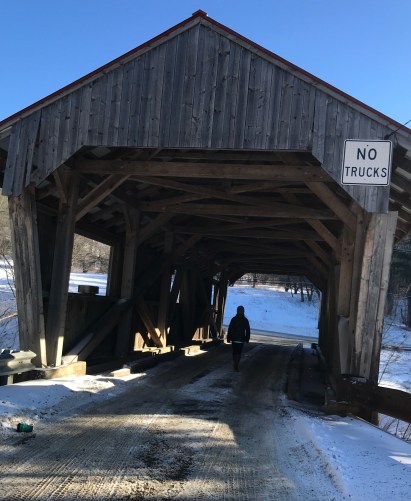
On this January day, I keep thinking back to that sunny October afternoon, the leaves turning gold and russet. Had I known that man would be dead within months, I might have stood there a little longer and then walked over to him, said, Come in through the door and not the window.

As a writer, I’ve spent years training myself to look for junctures, to know actions matter far more than thoughts — and yet, that afternoon, I kept walking. Maybe I guessed I had all the time in the world, maybe I judged some things can slide without action and the world will work its own wonders. Maybe it was simply that the day was a fine autumn one, and I believed I had things to do.

I turned left, up the dirt road, and carried on with whatever I was thinking, and that particular day passed in the great finality of the past.

I believe that there is one story in the world, and only one. . . . Humans are caught—in their lives, in their thoughts, in their hungers and ambitions, in their avarice and cruelty, and in their kindness and generosity too—in a net of good and evil… There is no other story. A man, after he has brushed off the dust and chips of his life, will have left only the hard, clean questions: Was it good or was it evil? Have I done well—or ill?

— John Steinbeck, East of Eden

IMG_0917.jpg

Johnson, Vermont


Continuum

This afternoon, driving home with my friend, our 12-year-olds in the backseat with their skis, sharing crackers, my friend remarked that the days were longer already. A few very cold days into 2018, and already the light — like a long-ago companion — returns. If I have time to reflect on a deathbed, I’m sure the evening’s crepuscular light is something I’ll miss when I pass out of this life.

This weekend had a suicide in town, a grief-soaked death, a death I can’t yet write about.

This weekend also had my library filled with new babies and mamas — one infant so little she was yet womb-sleepy. These mothers braved subzero temperatures, with their determination to meet, their pleasure in their new motherhood, the shared exchange of company and steaming tea.

These two pendulum swings of the human condition. How much grief, and how much milk-laced joy.

We’re one week into this new year. My daughters and I sat in our kitchen this morning, eating sausage, drinking coffee, talking and talking and talking… Savoring Sunday.

Perhaps there is after all nothing mysterious in Zen. Everything is open to your full view. If you eat your food and keep yourself cleanly dressed and work on the farm to raise your rice or vegetables, you are doing all that is required of you on this earth, and the infinite is realized in you.

— D. T. Suzuki

IMG_0854.jpg