Pique.

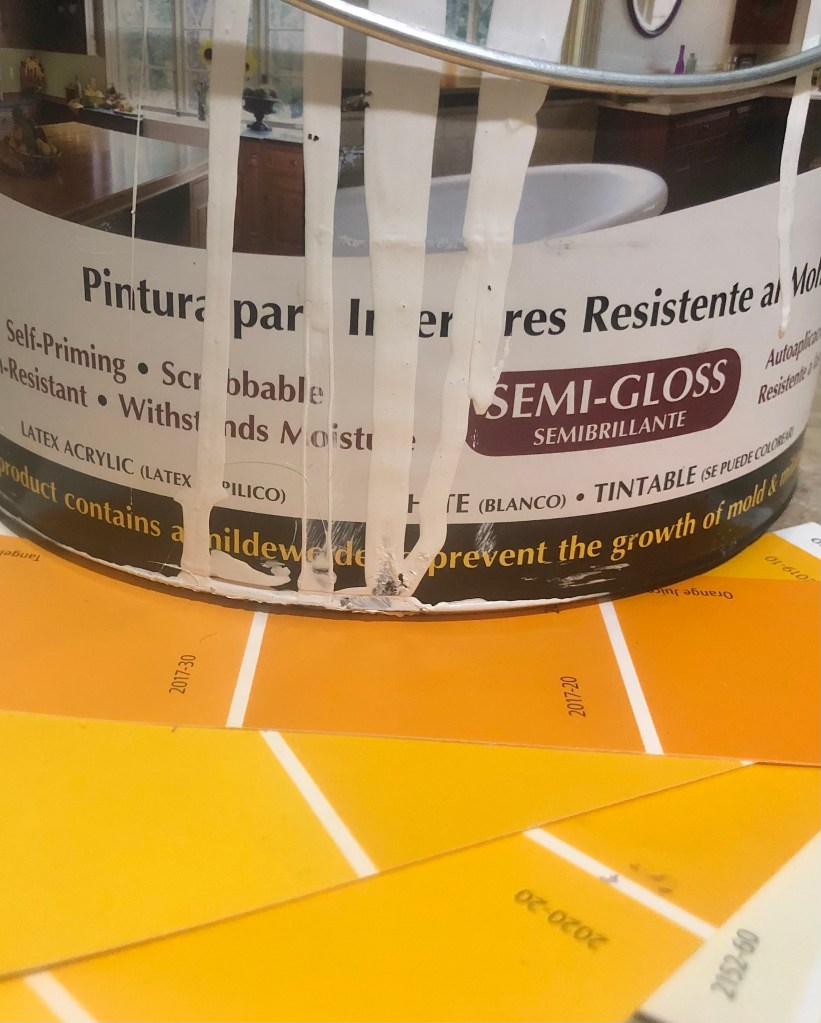
Anyone who knows me knows that winter pulls out my mania for painting. In a fit of what I can only describe as sheer irritation, I bleach mold from the bathroom ceiling and then ask for primer advice at the hardware store.

The store is darn near empty, save for two clerks and a black cat who rolls on its back on the counter and flicks a pearl-tipped tail at me. A clerk walks back with me to the paint section. She and I have been on a first name basis for years. While my gallon of primer is on the shaker, she shares her bathroom ceiling painting experience, and I offer this small problem and ask her to solve it. We walk back slowly to the front counter. She’s been my height for years, but as we walk and talk, I realize she’s slipped down below my height, and my height is definitely (as my brother might claim) substandard.

A man in logger’s chaps pays for discounted Christmas tree lights and a Twix bar and grouses about the rain and the mud, and how can there be a January thaw when we’ve had no winter?

The clerk spreads my paint samples over the counter and asks if I’ve narrowed down any color choices. She lays one finger on the color named Sunshine. “This one,” she suggests.

I gather my primer, stir stick, the lightbulb for over the kitchen stove, and head out. Ahead of me lies an afternoon of careful work, of NPR and stories from around the world, so many places hemorrhaging in ways that far outstrip my tiny mold project. As I’ve always done, I join my head and hands in a creative project. My own imagination won’t heal the world, but surely it won’t harm.
Family Stories.

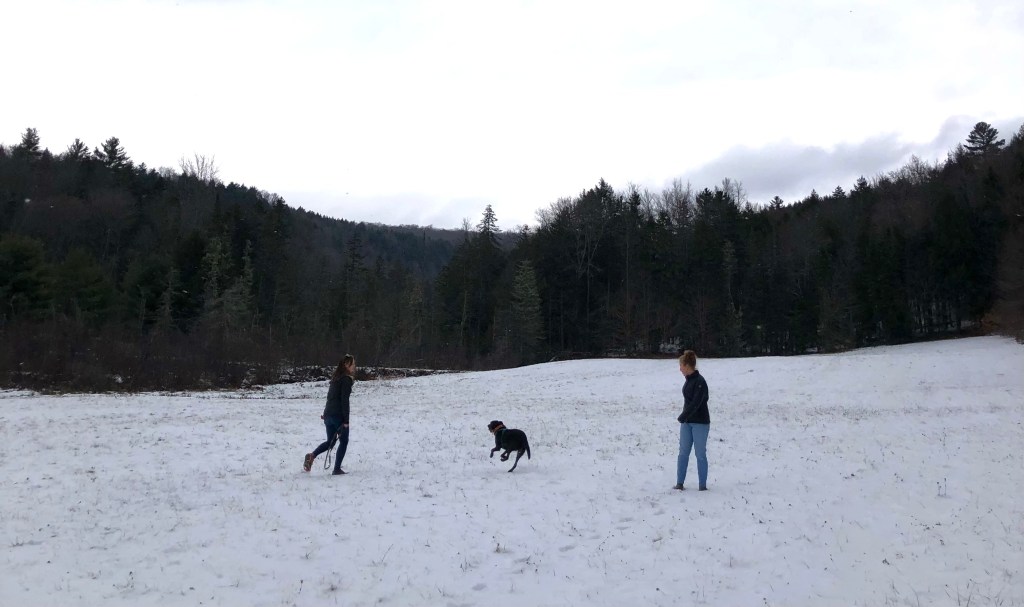
The cats eye the dog with disdain. The dog considers the cats a potential meal or simple annoyance; we don’t know. The dog sneaks into the kitchen and steals the bowl of chocolate covered stars which horrifies my daughters. In that tussle, the braver cat slinks behind the wood stove and regains his favored position.

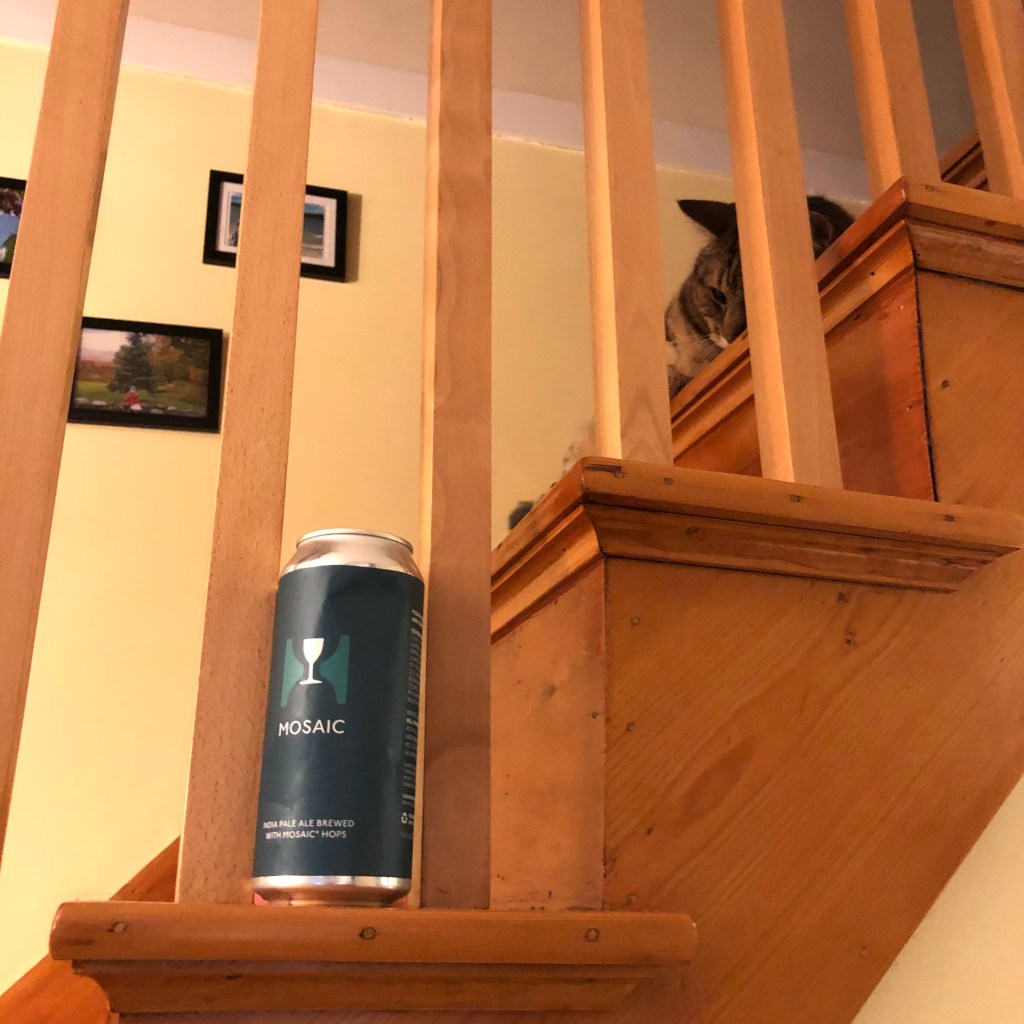
My oldest has no heat in her apartment, worries about her houseplants, has heat and then again has no heat. She texts me before five in the morning, and then my brother and I lie awake and text each other through the bedroom wall. I write, looks rough in Buffalo. I make endless pots of coffee. My brother, the brewery owner, drinks beer. We play Concentration, Chinese Checkers, Wordle.

The bathroom needs painting, and we discuss paint options, how Steam might pair with Orange Juice like our father’s study. The remains could be used in our tiny dining room.

After he’s home, he sends me three photos. In one, my youngest as a tiny girl stands in a borrowed homemade dress with mud smeared to her elbows and daubed on her face. My oldest leans down from an apple tree, sunlight in the leaves over her head. My brother pedals a tricycle. I remember the summer day I took that photo of my youngest. We had stopped by a site where her father was building a house. So much mud, so much pleasure for this child. Years later, I saw that homeowner ice skating with his young daughter. How much I wanted to know if he still lived in that house. How well had it held up for him? Instead, we exchanged chit-chat about the ice, and I never learned his story.

In the dog’s absence, the cats retake their rug and wood stove territory, protagonists in their own cat-language drama.

The Present, the Forgotten.

Midday or so, I jam on my boots and head out for a walk down to the lake, leaving behind my desk with piles of hard questions. I’ve forgotten my mittens, so I walk with my hands in my pockets while the wind tears over the lake. The summer people are all long gone, houses boarded up against the elements and thieves. Ahead of me on the road, a stranger walks with a little dog who leaps in snowbanks.

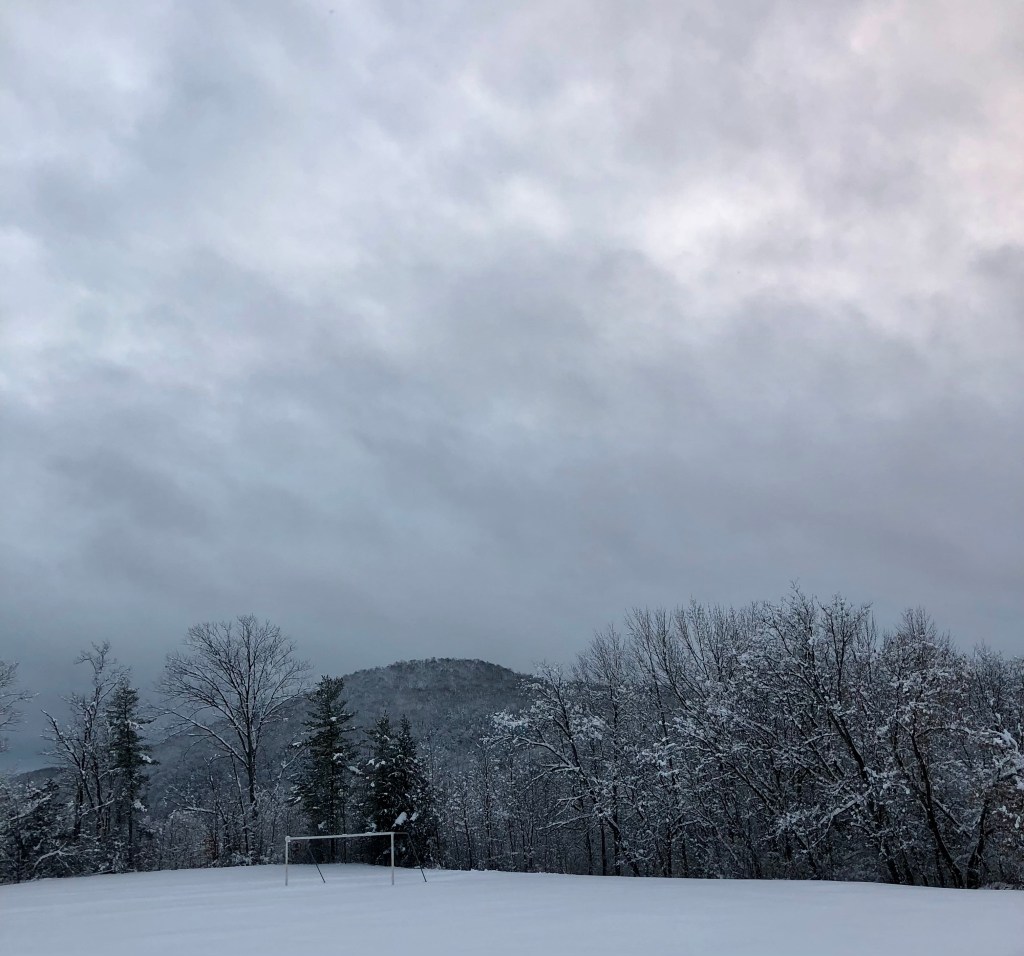
The sunlight is clear, sparkling on the snow, the lake white-capped and simultaneously blue and gray and the green that copper turns after rain.

Last winter, the town began plowing the sidewalk that cuts through the old school’s green. A woman had snowshoed a labyrinth in the snowy lawn for years. The sidewalk divides that space. She protested. The plowing continued. I see she’s marked that labyrinth behind the church. Ahead of me, the little brown dog stops in the road that no one else but us is traveling, its head cocked to one side, staring at me. A gust of wind blinds me with snow for a moment, and then drops just as quickly.

As I walk up to the little dog, I bend down and say hello. The man explains that the dog has rules about people walking behind them — not allowed — and then the three of us walk together, the dog now happily flipping itself into snowbanks. “It’s a bit of an inconvenience,” the stranger tells me, “especially when I have work to do.” At the main paved road, traffic is sparse. A lone Subaru passes with salt-streaked windows.

We part ways. I walk along the short stretch of pavement and turn at the old maple tree that I begged the Selectboard not to cut last year, arguing that the breaking branches were falling only on the grass. “Give it one more year,” I asked, secretly hoping the tree-cutting plans would drift into forgotten things.

At the door, I stamp snow off my boots: a walk with a handful of immutable things.

Memory Game.

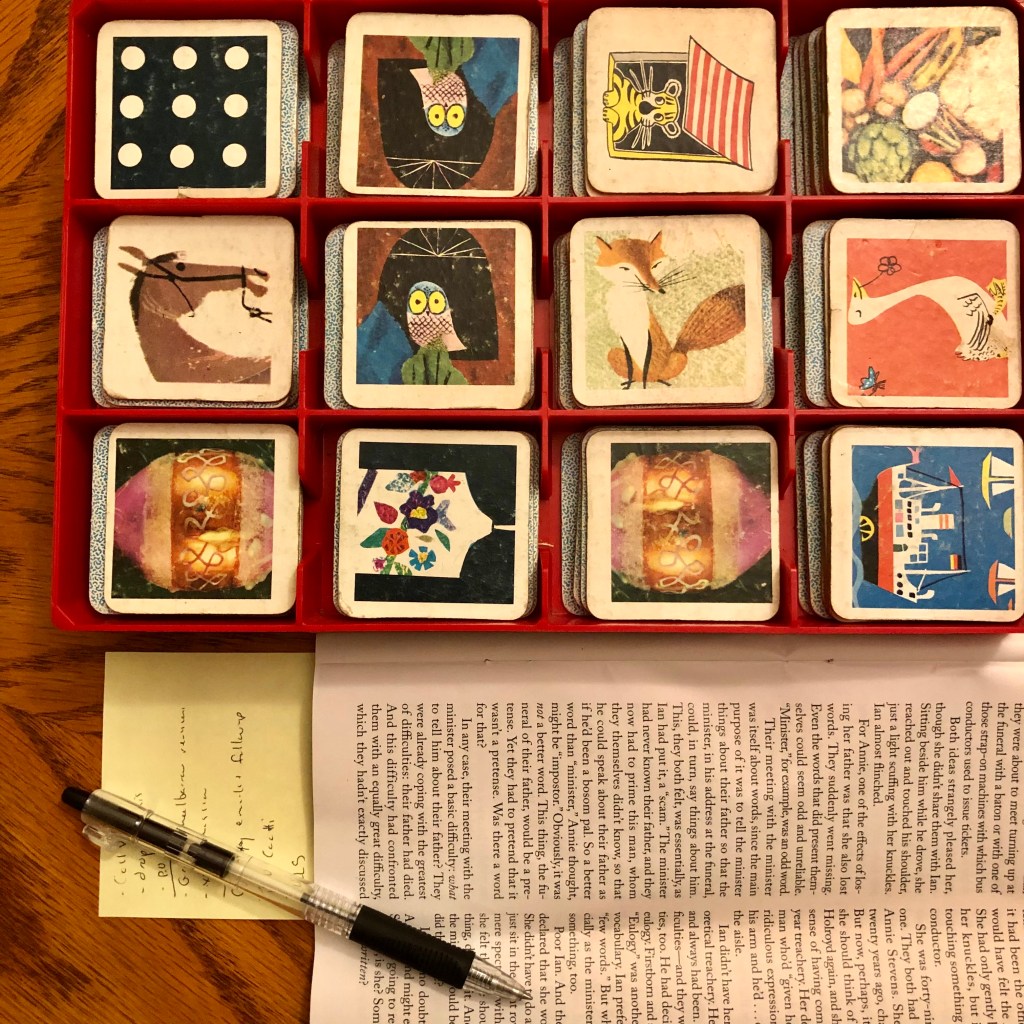
Thanksgiving weekend, we pulled out the memory game. Not so long ago, my youngest and I played the game almost daily. The game was from my own childhood, and somewhere along the way came to us.

The cardboard squares are now old and well-used from hundreds of games. We turn them around and around in our hands, talking and playing, remembering and mis-remembering.

On this December 1 day of sunlight, I cut kale from the garden. The soil beneath my boots is soft, the ice melting into mud. At last night’s virtual Almanac launch, the editors spoke about the importance of print, of books you can hold in your hands, press your face into the opened pages and breathe in the scent of paper and ink.

The memory pieces all have names we’ve made up: pointy tree and leafy tree, yellow girl, blue girl, ugly quilt, the ball, the sun. Strangely, there is no moon. I brew tea. We eat leftover pumpkin pie. Here again is the question: what’s real? Answer: bird in the hand.

The Whole World.

In the beaver dam realm, we spy the quicksilver flash of wet fur, bright eyes. The ice there is thin, barely beginning its winter’s work. We cross the snow-shallow field, then head into the woods and cut down again where the swamp lies in the fold between two hillsides, ghostly in its black-water, dead tree beauty. Then up, up, up we trudge, the dogs eager. We find bootprints in the snow, a few drops of blood from a wounded prey, and then we’re back again to the dirt road. All day, the light seems like twilight, and then we pass through twilight and into the night, and still we’re awake, talking, circling back to the same old subjects. In the morning’s dark, I scrape ashes from the stove and carry out the hot bucket. My brother stands on the porch, watching his dog nose at my herb garden. The damp rushes at my face.

“Like Maine,” I say.

“Yeah,” my brother answers. “But it’s Vermont.”

Happy Thanksgiving, wherever you might be.

“Assurance”

You will never be alone, you hear so deep a sound when autumn comes. Yellow pulls across the hills and thrums, or in the silence after lightning before it says its names — and then the clouds’ wide-mouthed apologies. You were aimed from birth: you will never be alone. Rain will come, a gutter filled, an Amazon, long aisles — you never heard so deep a sound, moss on rock, and years. You turn your head — that’s what the silence meant: you’re not alone. The whole wide world pours down.

— William Stafford

Chasing Dreams.

With our household size decreased, so is our garbage. On a sunny Friday afternoon, I swing by the transfer station with two bins of recycling and a bag of trash. The roving raccoon who appears regularly outside my kitchen door, pre-dawn, apparently found a way into my barn and enjoyed the trash far more than I did.

At the transfer station, I interrupt a woman who’s eating her lunch salad. I apologize, and then I stand at the open window as we kick around a weather conversation for bit — flowers blooming in my garden and all. She tells me she’s headed to Florida next week — not for the winter, but to drive down her convertible and store it at her father’s house. Where he lives, he’s eight hours from New Orleans, eight hours from Nashville, eight hours from just about anywhere worth going. The trash business slows in the winter (something I’d never considered), and she’s looking forward to doing some traveling this winter.

I’m no fan (who is?) of consumption and trash, but the transfer station has a particular allure to me: so many stories here. When I moved from our last house, I negotiated with the transfer station owner about swapping used tires for metal, and what could he offer for two old pickups in the woods? We each held up our end of the bargain we struck.

A flock of juncos settled around my house this afternoon. While I folded up the laundry I had hung on the back porch, I imagined my acquaintance driving south, roof cranked down and the breeze in her hair, speeding towards her dreams.

On some nights, I still believe that a car with the gas needle on empty can run about fifty more miles if you have the right music very loud on the radio.

— Hunter S. Thompson