Sugar. Salt. Stars.

The air has turned this morning when I step outside in the dark with my bucket of hot stove ashes. Even without my coat, I’m not immediately shivering, and the cold doesn’t come at me with daggers on my face.

Beneath the starry sky, I gazed up at Ursa Major, a single gauzy cloud suspended overhead, as if in water. I’m reminded of frog’s eggs, those cushiony pillows I sought with my daughters when they were little. Every spring, we found clusters in ponds and in the ditches along our dirt road. We’d visit these clusters every day on our wanders. Sometimes the eggs hatched. Sometimes the clustered disappeared.

On this early February morning, beneath the stars, I stood for a few more quiet moments, thinking about stars and frogs’ eggs. Snow’s expected to move in soon, too.

As water given sugar sweetens, given salt grows salty, 

we become our choices.

~ Jane Hirshfield

Starlight

At 5:30, my daughter picks me up from work in complete darkness. I turn off the lights and gather the bag of giant pillows someone donated to the town’s free closet. I intend to wash these nearly brand-new things and use them as winter reading places before the wood stove.

All day, I seem to have moved through this strange miasma of timelessness — in a realm where time or month (everything save the year, 2020) is merged into the Time of the Pandemic. A woman stops in and, after town business, remarks about the conjunction of Jupiter and Saturn, how on planet earth we’re spinning through much larger cosmological forces that we might imagine.

In dark, my daughter drives faster than I would have, speeding along that back road through the forest, and then the road crests a hill and fields open up on either side. Farmhouses are outlined with colored Christmas lights, and overhead, all that sky.

My daughter points to where the even darker line of mountains marks the horizon. There, Jupiter and Saturn are immediately obvious, making their slow and steady celestial way across the heavens.

Our conversation winds back and forth between us, mundane snippets of this or that. I imagine our headlights swooshing through the dark, as the two of us rush home in all that darkness, to the youngest sister at home, cooking sausage and potatoes, the kitchen warm and redolent with baking squash and maple syrup.

Afterwards, we go out for a walk in the deepening cold, under the brilliantly beautiful starlight, until eventually the cold drives us back under our warm roof again.

Oh, God, make small
The old star-eaten blanket of the sky,
That I may fold it round me and in comfort lie.

— T. E. Hulme

Constellations

11 at night, I’m at the high school, waiting for my daughter to return from a band/amusement park trip. The sun set hours ago, and I grab an extra sweater on the way out. It’s cold, cold enough I’m surprised I don’t see a ghostly cloud of my breath.

I get out of my car and hurry down the steep hill to the soccer field. Away from the lights in the school’s parking lot, the constellations appear, this silent beauty. I walk all the way around the field, to the far end where the woods begin. These fields, one of the most well-used places in Hardwick, are empty. On the rise of land above, I see moving car lights as parents pull in.

If the grass weren’t drenched with cold dew, I’d lie down. I remember being 19-years-old, the first year I lived in Vermont, and hiking in the middle of the night with a friend to a field. Rural Vermont, there were no human lights surrounding us at all. It was November and quite cold, but we were well-dressed and very young, and we lay down in the field and talked and talked.

I could feel the universe’s energy come up through the not-yet-frozen black earth, through the glacial pebble and tangled root, through my vertebrae and flesh, all the way up to the countless stars overhead.

IMG_8426.jpg

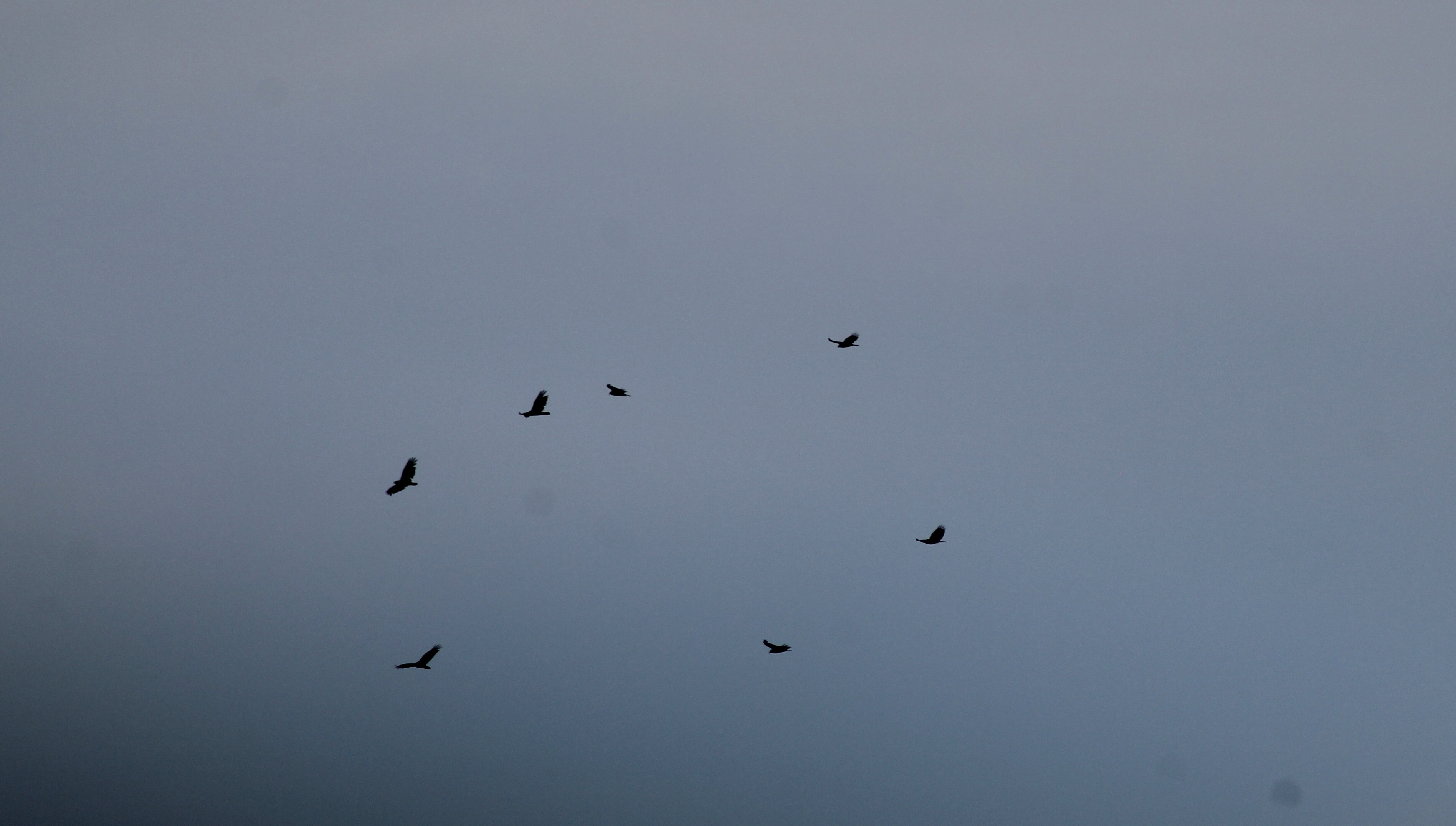
Vultures/by Molly S.

Reflections

Long after sunset last night, my daughters and I went walking, in that thick rural dark broken only by the lights of the single house across the road, the lights of our kitchen behind us, and overhead all those stars. The little girl, fearful of the dark, walked between her sister and me. Those glimmering, oh-so-bright stars twinkled in the treetops, still bare and leafless at this time of year.

Earlier that day, the younger girl had dug quartz pebbles from the roadside mud, washed them clean in a puddle, and gave them to me to put in my pockets for safekeeping. My diamonds, she called them.

Shiny bits of stars, bright bits of stone.

As we walked back to our house, guided by the compass of our kitchen light, the older daughter told us she parted her curtains every night and slept every night with a windowful of stars over her bed.

I asked my daughters to imagine our world without stars, with only darkness, none of the constellations cartwheeling across the sky, no dipper pouring luck over our roof, no Orion standing sentry through those bitter winter nights, no Milky Way – that mesmerizing arc of the eternally and ever-beautiful mysteriously ineffable. What kind of world would this be without the lights of the great heavens that have endured, before and after, any human stirrings on this green and blue planet?

My daughter, age 17, pondered this as we stood with our faces tipped upward. Then she said, That would suck.

Indeed, daughter.

I experience a period of frightening clarity in those moments when nature is so beautiful. I am no longer sure of myself, and the paintings appear as in a dream.

– Vincent Van Gogh

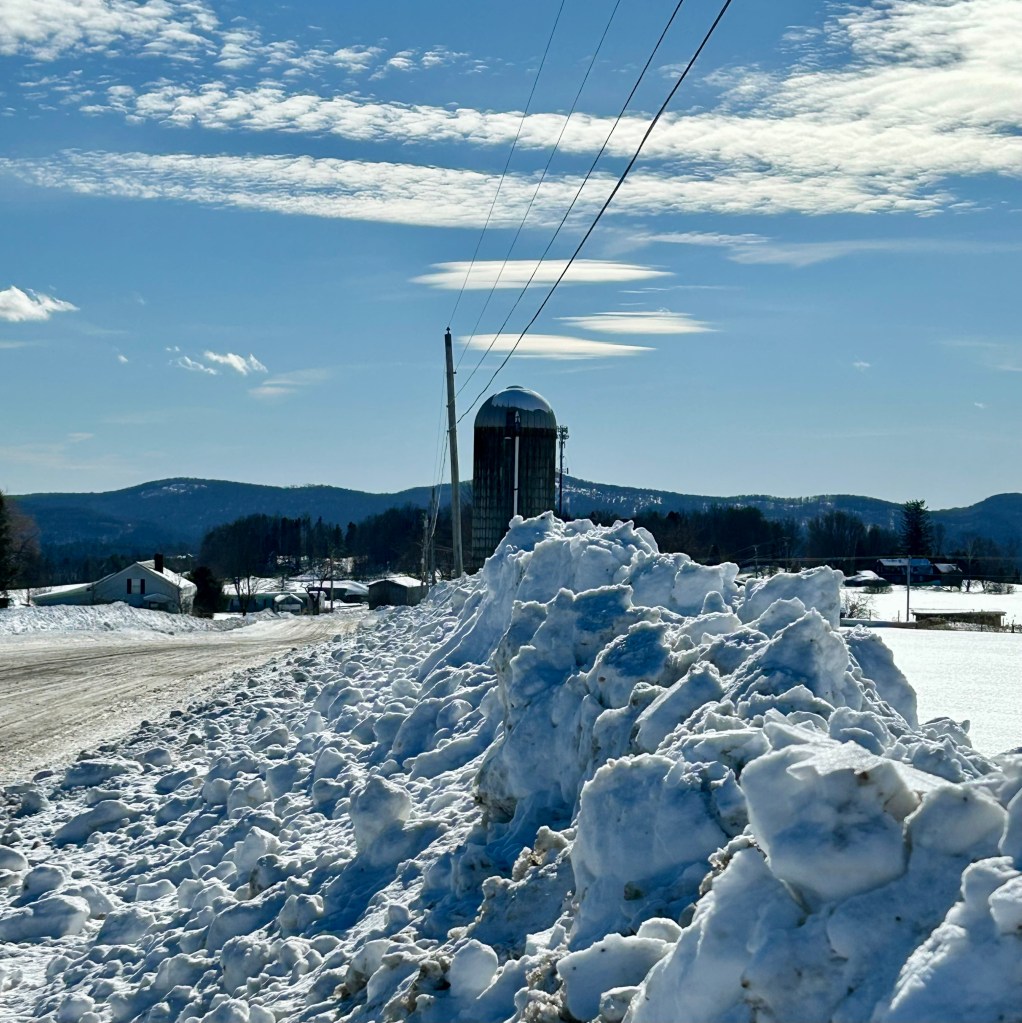
IMG_0485

Montpelier, Vermont/Photo by Molly S.