Necessary Birdsongs.

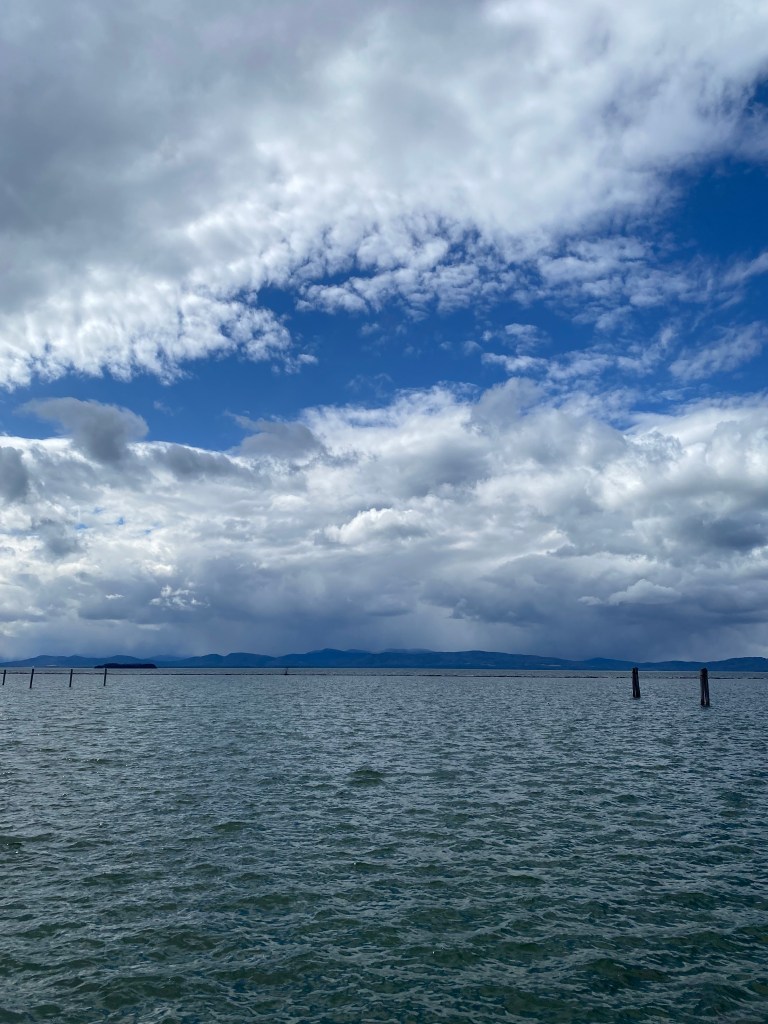
Lake Champlain

Mid-March, the unlovely muddy Vermont: I bend beneath the snarled rose bushes, seeking green nubs pushing through the wet earth. By June, this world will be verdant, lush, those old roses a tangle of green, tiny blossoms each a delicate bouquet of pale pink. These roses, planted by someone doubtlessly long passed over into the other world, ruggedly fence my house, their flowers such a dear sweet fragrance.

In this brown world, I wander to the places where, in springs past, I’ve heard the early songs of redwing blackbirds. Yesterday, I hear these birds, not the full chorus yet, but the warm-up crew. We are well before the yard clean-up and gardening season. The town roads are rutted, hard to travel, and the summer folks have not yet returned. Hidden in this clump of cedars, the blackbirds steadily, without any fuss, go about their blackbird lives. Not so many weeks away, marsh marigolds will blanket these wetlands — dazzling yellow, killer green — but for now, the dun palette of silvery cedar, umber earth, the birdsong melodies yanking us along to spring.

“Dear March—Come in—”

I stand outside eating a cheese sandwich stuffed with a handful of the lettuce I bought for my cat Acer. The trees across the road shake furiously in a wind as if outraged. What’s your complaint, I wonder.

Such a strange winter: a handful of skiing days, no ice skating, the hard cold a distant memory. The yuck of this winter has been the lack of sunlight, the sodden clouds that have lingered from last year’s rainy summer through January’s gloom. We kvetch. My own antidote is the early morning, my insistence that writing, that order and beauty, are a transformative might. There’s nothing new in that approach; it’s the ancient path of seeking luminosity, of Rumi’s words that the wound is where the light comes in.

In March, of course, sudden sunlight in your living room is apt to reveal the dirty cat hair clusters balled beneath your couch, the cobwebs trailing from the ceiling corner, drenched in dust. Make of it what you will.

Oh March, my long-time friend, giver of fine weather, betrayer with your miserable cold snowstorms. In the lengthening days, the sun returns like a long-ago lover. My friend the sun and I take long walks, my sunny friend whispering in my ear that brighter lovelier days are already here.

A few lines from Emily Dickinson:

Dear March—Come in—
How glad I am—
I hoped for you before—
Put down your Hat—
You must have walked—
How out of Breath you are—
Dear March, how are you, and the Rest—
Did you leave Nature well—
Oh March, Come right upstairs with me—
I have so much to tell—

Vermont’s fifth season: mud.

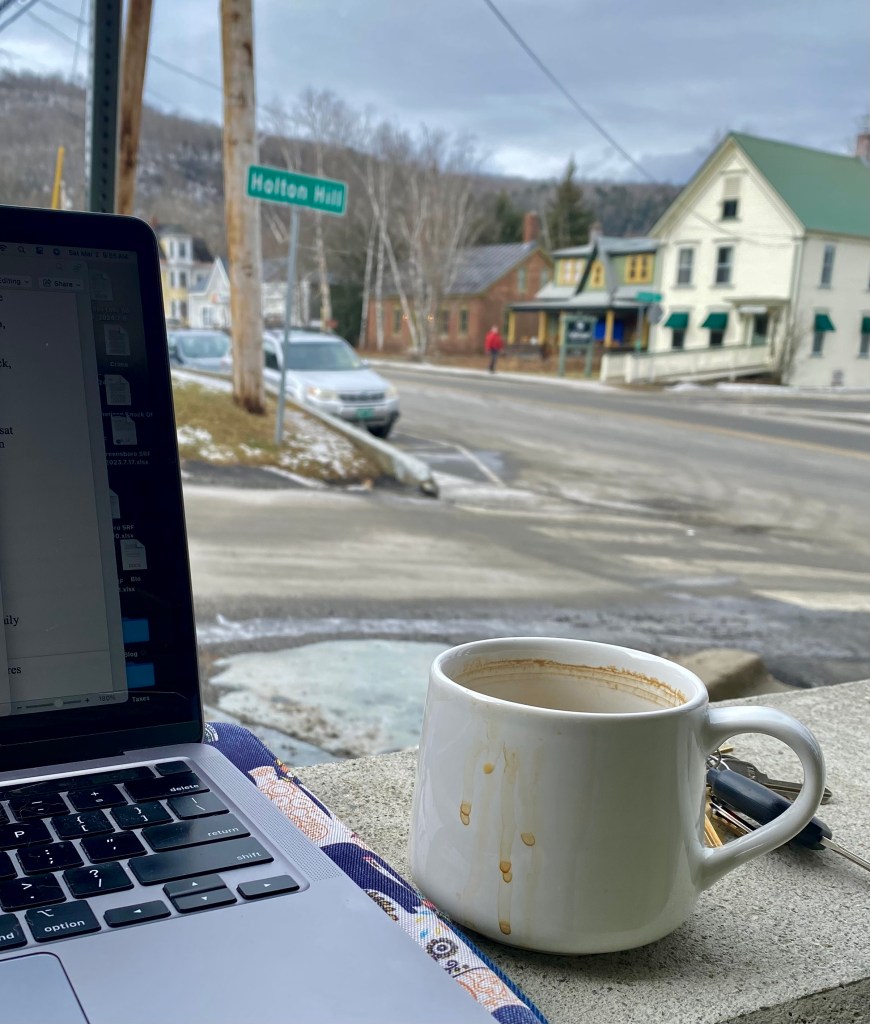
I carry my laptop out the backdoor of Hardwick’s coffee shop. A couple I know pulls up on their fat tire bikes and rave about the biking. There’s an adage in Vermont that the state’s fifth season is mud season. The first week of March is way early for the back roads to break up. Most towns post their roads around March 15, prohibiting heavy trucks, like log or delivery trucks, from destroying already soft roads. Now, towns have already posted these warnings, ribboned with orange survey tape, a sure sign that winter is on the wane.

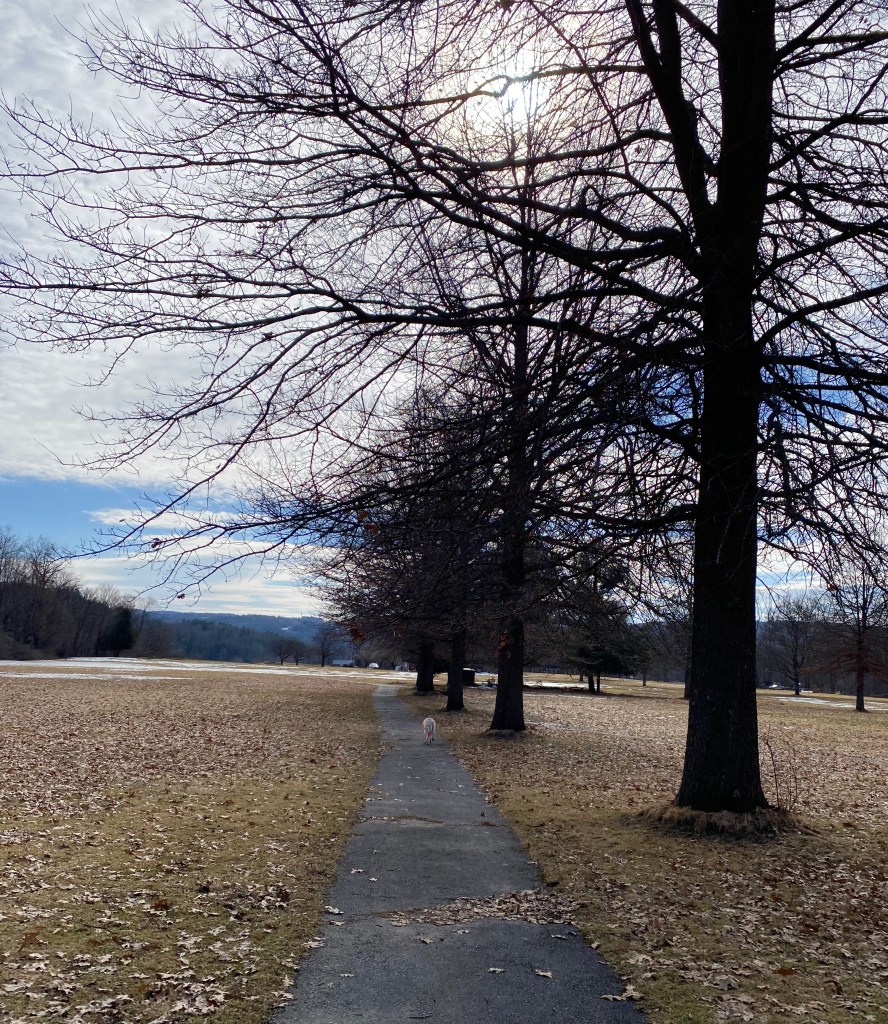
I meet a friend at a former golf course now owned by the city of Montpelier where people let their dogs run. The course is last year’s brown grass, but when I squint I can see emerging green beginning shimmer, pushing back the dull amber. How much the world leans into living.

My oldest daughter calls from New Mexico, on her journey to visit the grandparents. Through our phones, her face glows with desert light. I think of her driving around Santa Fe, this old adobe city and the stunning landscape an infinitely complex story that stretches so far back. Within that human history, my own family story lodges in with its numerous plot points. Ah, family… never a straight line.

T. S. Eliot wrote of that April is the cruellest month, breeding/Lilacs out of the dead land, mixing/Memory and desire, stirring/Dull roots with spring rain. Winter kept us warm… Mud season may be the least loved. But in my mind, it’s the sweetest. Sap runs. The softening ground sucks our boots into its stickiness. Tender green unfurls, strengthens. We move, onward.

March 1: Cabin Fever, the Impossibility of Spring.

March: a day of singing chickadees, mushy ice, all the little paths running with thaw, twinkling in the sunlight with the promise of what I cheerily call early spring! The next morning, the temperature pegs itself solidly at 15 degrees and refuses to budge. I walk down to the post office, the wind scraping my cheeks. What grit of sandpaper is this? 80? 60?

Vermont late winter/spring is the season of vehement vacillating, of freeze and melt, sun, snow, rain. It’s the season of cold hands, flushed cheeks.

Late into the night I lie on the floor reading Leslie Jamison: “It’s what fairy tales have been trying to tell us for centuries. Don’t be afraid of never getting what you want. Be afraid of what you’ll do with it.”

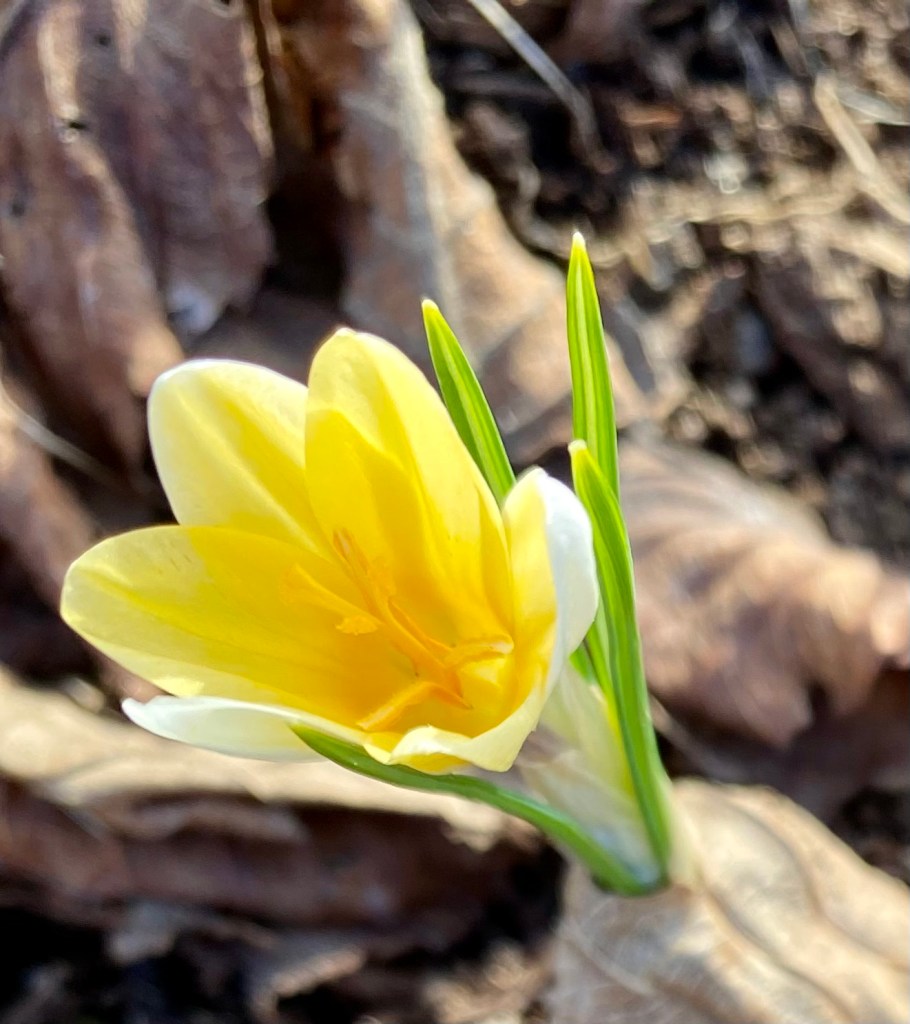
March: the lurching season of cabin fever, of Where are those crocuses, anyway? Will flowers ever bloom again? I bake a cheesecake, fill bird feeders, have one, two, three essays picked up by little mags. The waning moon shines up the rutted mud, the dregs of snow. Early morning, the birds are at it, singing for dear life, tugging in spring.

Random Spring Scrawlings.

Back about a hundred years ago when I started to read, my elementary school had these large books with colored pages. I read only on the right-hand pages, then flipped the book upside down, and read on the other side. The net effect was a perpetual mystery: I was reading forward, but there was always this tantalizing upside down text on the left-hand side. Could I dart my eyes there and jump ahead in the storyline?

The storyline had castles and princesses. I think of these books every spring, because Vermont spring colors are so darn brilliant — just like those colored pictures.

I’ve never seen those books again, although I searched for them for my own daughters.

May. Let’s never sugarcoat anything, never cheapen our world into an Instagram I’ve got more than you post. Snowflakes fell yesterday, even midday, swirling flakes. My daffodil petals were gnawed around the edges this morning. But it’s May. Spring alone: reason to live.

Language of Loons.

Midwinter, I was working in the coffeeshop a few minutes’ walk from our house when a woman I once knew fairly well came in. We had started a preschool together, been in and out of each other’s houses, seen each of the other through a pregnancy.

While waiting for her coffee, she sat beside me and said my name, Brett, and that she wanted to mend the falling out between us.

I folded my notebook closed. I had a few more minutes before I needed to leave, and I could see I wasn’t going to put my pen to paper again that morning. We compared notes about a house fire. Our memories lined up with surprising accuracy, all the way down to slight and little things. And then our memories diverged, abruptly. We’ve both divorced, both moved, and yet the ashes of that fire lay deeply in each of our lives.

Midday today, I hurried along one of my favorite walks around the lake. Me and the bright daffodils, the cheery trout lilies, the striking bloodroot. As I walked through the woods, the loons called around the lake. Once upon a time, I would have heard their language as decorative sound, sweet ambiance. Today, I stopped, alone in these woods where the leaves haven’t yet spread out for the season and the sunlight dropped on my face. I understood the loons as much as I understood my old acquaintance, maybe as much as I understand myself, as they sang across the water, their voices echoing against the mountains.

I hear

outside, over the actual waves, the small,

perfect voice of the loon.

— Mary Oliver