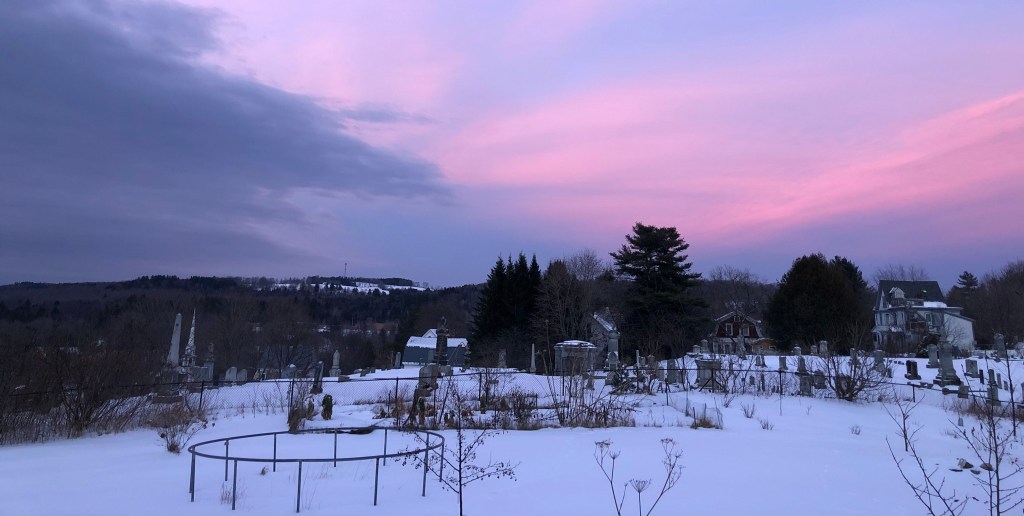
In Vermont, winter has begun in earnest. My daughters ski in snow-and-freezing rain, then return home to sprawl around the wood stove with hot chocolate and homework. The red tulip bulbs I planted last autumn seem like a dream.
I carry the compost out, and a cold wind rushes over my potato patch.
My daughter makes toast this morning before heading to work in the bitter dark. I remember the winter she was four, and I baked a red velvet cake with her, to brighten our world. Little things, I remind her, are the stuff of our bigger lives. Day by day, towards spring ephemerals.
…. you who want to grasp the heart
Of things, hungry to know where meaning
Lies. Taste what you hold in your hands: onion-juice….
January — the time of year when ash from the wood stove has settled into the crannies of our house — beneath the couches and along the woodwork. I listen to The Daily about FBI files released about the insurrection a year ago and take a soapy rag to my house.
I tell my daughters I’ll paint the walls of the upstairs hall spring grass green and stencil dandelions around the doors. What are you doing? they ask.
Some people are drawn to chaos. I crave order, a schedule, neatly pencilled lists to guide me through my days. To write, I travel to hard places, and I want to return to order. All around us now, chaos streams in, as the pandemic turns our world inside out. In the midst of this, I rearrange my woodpile. In the evening, while my daughter writes a school paper, I take the compost out to the bin. A light snow falls, sparkling in the light through our house windows. There’s no one out, and I keep walking. I head down the road and stand on the sidewalk. These neighbors have fully decked out their crab apple trees with twinkling colored lights. In my younger years, I would have scoffed at the use of electricity, much as I once hated paper plates.
Now, in the dazzling bits of snowflakes, I stand there for the longest time, thinking of nothing at all, just taking it in.
On a different note, Dr. Mark Levine, Vermont State Health Commissioner, read and blurbed Unstitched. I am among the many, many Vermonters who look to Dr. Levine as a beacon of calm, rationality, hope, and decency, as he’s guided our state through two years of a pandemic. In the mist of this, he took the time to read my book and called it a “tour de force.” Endless thanks, Dr. Levine.
Unstitched “…is both a page-turner and a primer in understanding the many complex dimensions of the opioid crisis in a rural state, where the reader accompanies the author in her own recovery and process of discovery. Ultimately, it is impossible for any of us to be totally disconnected from the impact opioid use disorder has on our communities, and it is through reading Stanciu’s skillful, compassionate and thoughtful rendering of personal stories that we can all gain valuable insight, diminish harmful stigma, and foster true healing.” — Dr. Mark Levine, Vermont State Health Commissioner
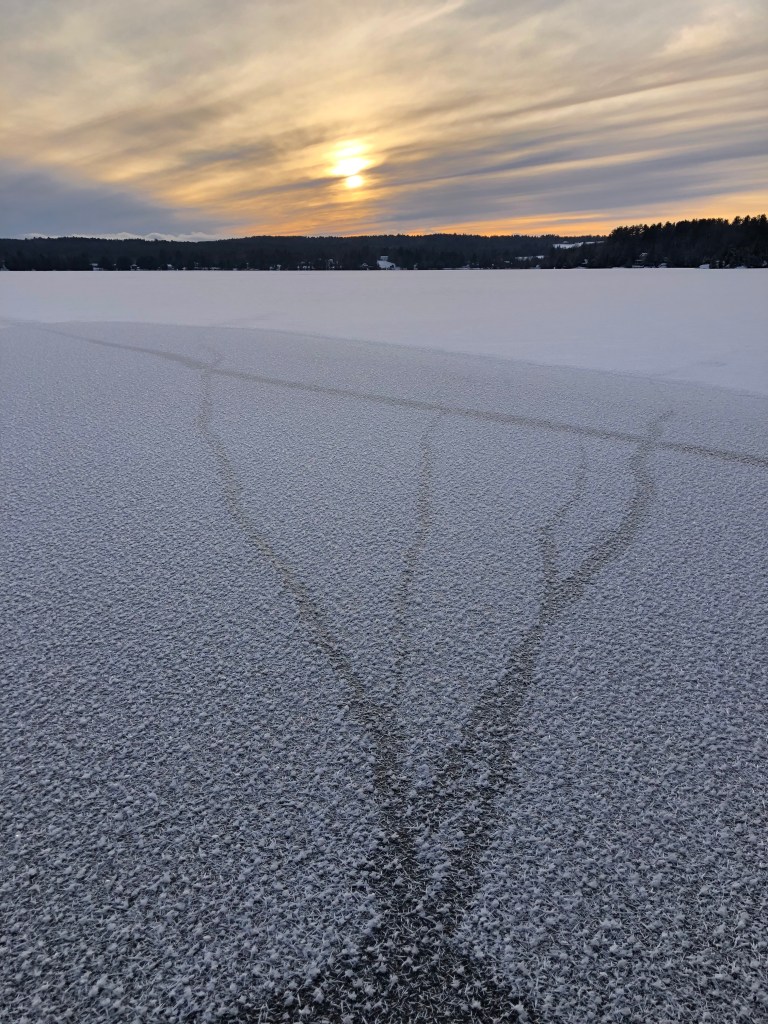
In the late afternoon, on a day just a little above zero, I walk through the woods down to edge of the lake. I come out of the woods where Porter Brook feeds into the lake, and the ice there, despite the cold, looks thinnish. There’s no one around at all. In the summer, that stretch of beach is noisy with vacationers. But now, even not a crow appears.
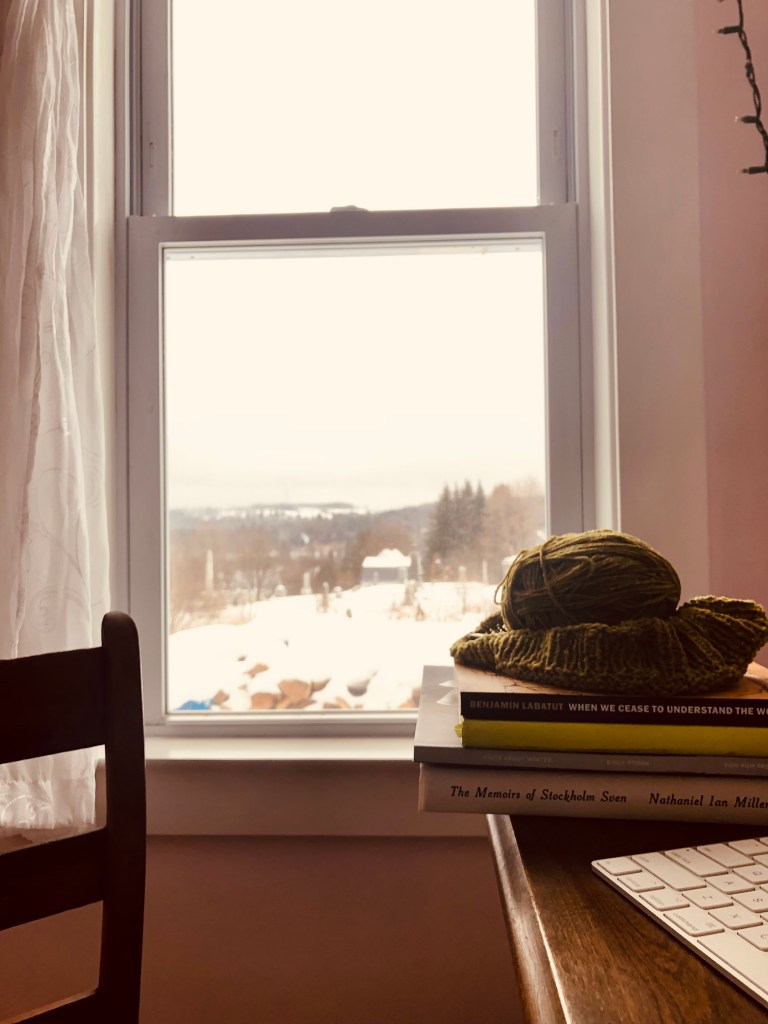
The post-holiday surge of Covid rages around us. These are not the cheeriest of days. My father, sister, nephew, and I — triangulated around the United States — decide to read and virtually converse about Benjamin Labatut’s When We Cease To Understand the World — in essence, the perfect title for our times.
Live in New England long enough, and you crave the return of ice, the experience of cold and clean winter, the turning around of seasons. The ice will pass, too. Cold, I crouch at the ice’s edge. A squirrel skitters out of the hemlocks and chitters at me before scampering off. Then it’s just me for a moment, and all that sky and the mysteries of the frozen lake. In January, the days give cold and a few extra minutes of sunlight….
Here’s the opening lines of Labatut’s book:
In a medical examination on the eve of the Nuremburg Trials, the doctors found the nails of Hermann Göring’s fingers and toes stained a furious red, the consequence of his addiction to dihydrocodeine, an analgesic of which he took more than one hundred pills a day. William Burroughs described it as similar to heroin, twice as strong as codeine, but with a wired coke-like edge, so the North American doctors felt obliged to cure Göring of his dependency before allowing him to stand before the court. This was not easy. When the Allied forces caught him, the Nazi leader was dragging a suitcase with more than twenty thousand doses, practically all that remained of Germany’s production of the drug at the end of the Second World War. His addiction was far from exceptional, for virtually everyone in the Wehrmacht received Pervitin as part of their rations, methamphetamine tablets that the troopers used to stay awake for weeks on end, fighting in a deranged state, alternating between manic furore and nightmarish stupor, with overexertion leading many to suffer attacks of irrepressible euphoria.
 Stony Soil Vermont