Promise.

Hurray! A whole day (Covid card and mask required) devoted to a workshop at Jenna’s Promise. I haven’t been to a full gathering in, well, about two years. The workshop was about the future of recovery in the Green Mountain State.

One of the key speakers lifted a blue vase. Her daughter, now passed away from an overdose, had brought home the vase from India. The vase had broken in her luggage on the return flight, and it had sat on a shelf in pieces. The speaker raised the vase and explained how her grandson had suggested they repair the vase with super glue. Together, they mended the beautiful vessel.

The thing about this audience — the recovery crowd — is that the rose-colored glasses have long since shattered for everyone in the room. Any wet eyes are likely to be from tears — from sorrow or laughter — either is likely. Hardly any rational human would disagree that the pandemic broke our world where it was already ailing. While I’ve long since relinquished any belief in magic, I do know the power of super glue. And I do know what’s broken can sometimes be repaired.

(And, I heard the inimitable Johann Hari read….)

April. Spring. Robins mudding those fat-walled nests.

“It isn’t the drug that causes the harmful behavior—it’s the environment. An isolated rat will almost always become a junkie. A rat with a good life almost never will, no matter how many drugs you make available to him…. Addiction is an adaptation. It’s not you—it’s the cage you live in.” 

— Johann Hari, Chasing the Scream

Rivers’ Roar.

Caspian Lake, Greensboro, Vermont

The rivers are running again. I pause on a Sunday morning run, on a large bridge state money funded for the rail trail project. The river roars in spring lust. People can — and do — drown in April. This season is as fierce as winter.

The countdown has begun, the green steadily eroding the brown.

A year ago, my family was quarantined with my daughter’s positive Covid test. Yet unvaccinated, I lay awake at night, wondering why I hadn’t yet written a will, why I hadn’t added my oldest to my skimpy bank account. During the day, I painted the inside of our porch windows a brilliant blue and listened to Derek Chauvin’s trial for the murder of George Floyd.

When the jury verdict was read, our quarantine had ended. My youngest and I were sitting my car, listening to the radio, waiting for her soccer practice to begin on a cold evening. A V of geese flew over the wet field.

Years fly by. Sure. But that year doesn’t seem like yesterday. It was one full year. While my daughter played soccer, I walked among the cedars along the river, watching the remaining pieces of ice dislodge and wash into water.

…. In other news, grateful for two lovely review of Unstitched in Montpelier’s The Bridge by Tom McKone and for Tyler Orion Glauz-Todrank’s review in Lucky Cloud Books.

House of Glass and Copper.

Albuquerque

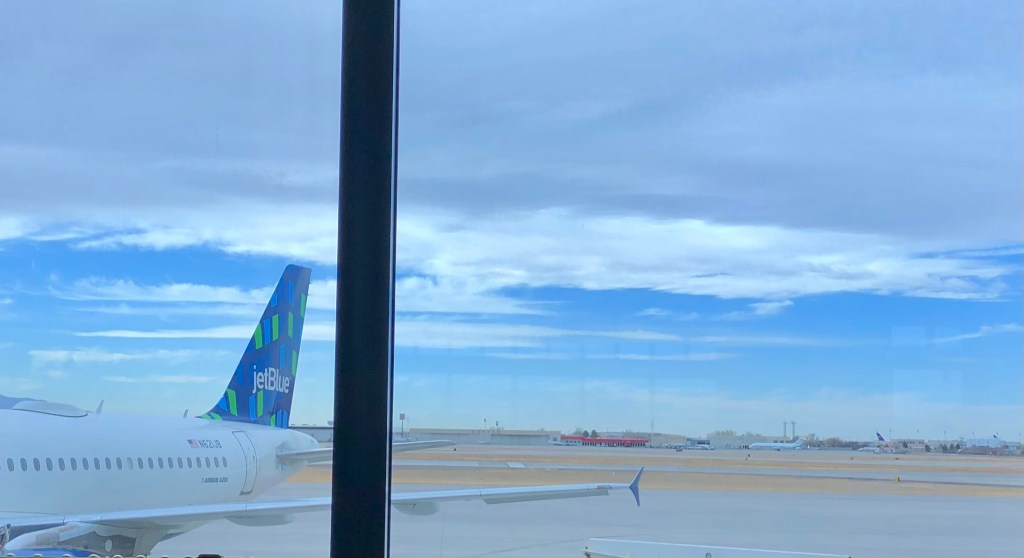
I sit between two strangers in the stratosphere between Newark and Denver. In the plane’s window seat, a young man reads The Habits of Seven Highly Effective People and encourages me to read it, too. He tells me he’s twenty-one and has begun reading books. Then he offers to adjust the window shade in whatever way I prefer. He asks how I can knit and read. I demonstrate how to do a knit stitch.

On my other side, a man is headed to visit his son. The three of us share pieces of why we’re flying, little scraps of our complicated stories. As we begin the long descent into Denver, the man to my left shares that this date is the third anniversary of his wife’s passing. He shows my seat companion and me photos of the slate and copper memorial he made for his wife. As his camera roll unfurls, glass conservatories appear. He builds these custom houses of copper and glass across the country.

The plane lands, and we exchange good wishes for our different journeys. The Colorado sunlight streams in through the window. Tired, I lean on the setback in front of me. We’re in a vessel of metal and glass, too, not so pretty as the stranger’s creations, but just as miraculous.

The Denver airport is suffused with sunlight from overhead skylights, too. I stand beside a potted tree, talking with my daughter about her plans for giving blood for the first time the following morning. Crowds part around me, looking up at the timetable on a screen, parents herding their little children. The line for my next flight forms. All of us are coming and going, joining and separating. I say goodbye to my daughter, walk to my gate, and head back up into the sky in that metal craft.

Small Things.

With a teenage daughter and another grown daughter, I’ve long ago sunk ruggedly into a mantra of and life goes on that has ferried me through plenty of turbulent waters into smoother waters, always determined to seek calmness to keep my head together and keep working. Life and work have so long been synonymous for me, with brief forays into the pleasantness of family, of friends, of just life itself.

But I woke this morning thinking how impossible that mantra really is. Life is “going on” for so many people in such harder ways, so far away from me.

This week, I’ve been with my own family, sorting out the challenges of aging. Meanwhile, ordinariness reigns around me, with people coming and going to work, maybe buying bread and sausages for dinner, a bouquet of sunflowers for the table. How dear family life is, mine, yours, the families in bombed apartments in Ukraine.

In the end, of course, how much do our small thoughts and complicated opinions matter, anyway? Here I am, a small woman in a small Vermont village. In the face of bleak nihilism and despair, I return to the things that have made the truest sense to me — the sky that exquisitely changes from sunup to sundown, the liturgy of human language, laughter. There’s no answers here, only a reminder to myself that the wind brushes over my cheeks, and the wisdom that turns the globe is wider than my own imagination.

Ordinariness.

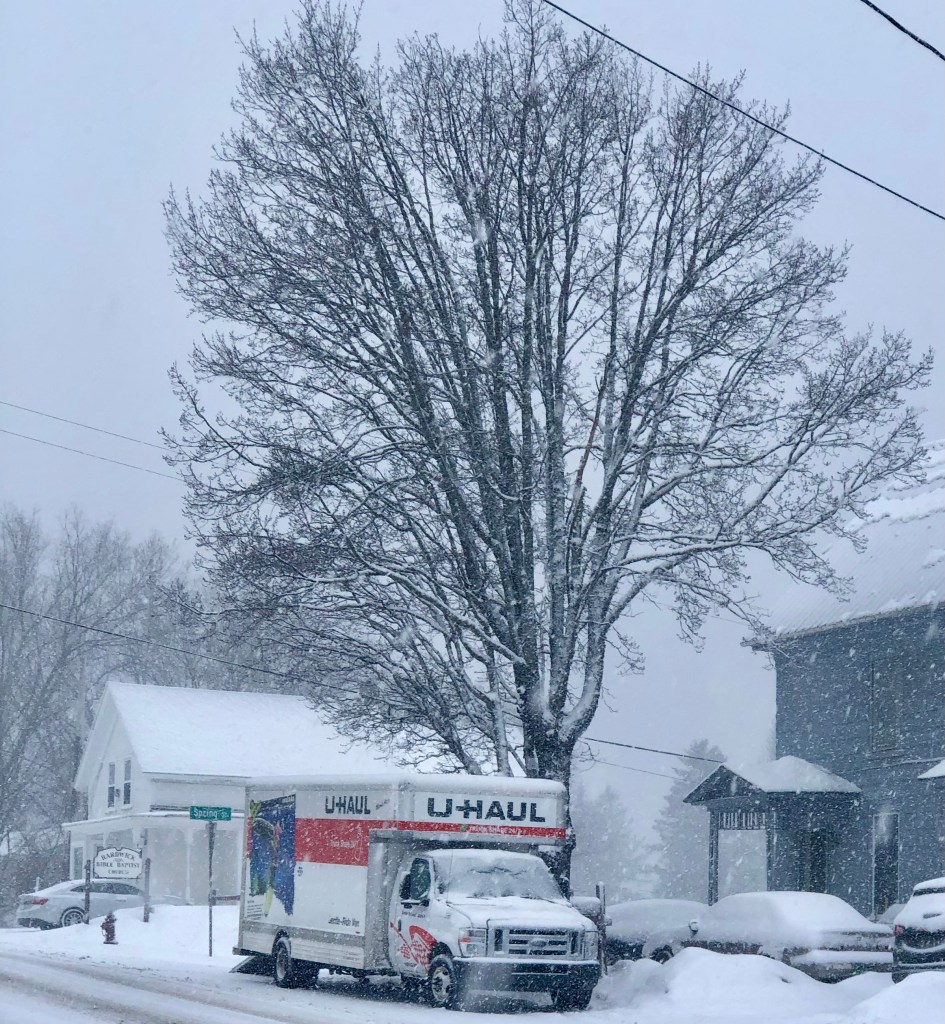
On a day of yet more snow, of wind and cold, I’m reminded that people still keep on with their lives. Living doesn’t wait for convenience.

At the post office, I mail off a copy of my book. The woman who weighs my small package insists this is “sugar snow,” an early spring snowfall that will lengthen the maple syrup season. We sugared for years, and this kind of snow always meant a break in boiling and a chance to wash filthy snowsuits. The upcoming forecast is for as near-perfect sugaring weather as possible. Sugaring is the epitome of day-to-dayness — be smart, keep your eyes open, do the best you can — with no guarantees of a good or even decent season.

We talk for a few more minutes about shoveling snow, and then I head back out into the town’s Saturday morning. On my walk home, I stop in at the coffee shop and stand in the window drinking an espresso and staring out at the traffic struggling on snowy Main Street. There’s the usual confusion of the three-way intersection so many don’t understand — two stop signs and a blinking yellow light — as if the calculus of two stops and one yield doesn’t make sense. Standing there, I wonder if it makes sense mostly to those who use these streets day after day.

A year ago, the coffee shop’s tables and chairs were closed for seating, and I wondered if I would ever bring my laptop back here, to my favorite table where I once wrote a book. A year later, here I am, drinking coffee, surrounded by maskless people laughing and talking, writing notecards, going on about their lives. On this inclement Saturday morning, that seems nothing shy of a miracle.

“The answer must be, I think, that beauty and grace are performed whether or not we will or sense them. The least we can do is try to be there.” 

~ Annie Dillard

Blackbird.

I’m late to a meeting at the library I’ll participate in when I stop in the parking lot. In the wetlands behind the library, a red-wing blackbird sings. I can’t see the bird. This isn’t a flock; a bird calls and chirrups, that old familiar, unmistakable sound of spring. I’ve driven, in years past, on the hunt, just to hear this bird.

A few years ago, by chance I met a friend outside the Woodbury, VT, post office. We stood talking about something we found mutually so enjoyable, while in a winter-bare maple tree, a flock of these beauties sang. Spring! we marveled.

This year, I remember how long and hard mud season is, most rightfully a season worthy of its own true name. Hence, love of little things like tiny birds.

The river is moving.   

The blackbird must be flying.   

~ Wallace Stevens, “Thirteen Ways of Looking at a Blackbird”