Vermont Respite

While the daughters tie their kayaks on roof racks, I sit in the grass, keeping company with hungry bumblebees in the rhododendrons.

This hardy plant is doing its thing now, a visual symphony of color.

Spring crickets, garden soil under my toenails, pond water in my hair. And still, early June.

Everything in nature invites us constantly to be what we are. We are often like rivers: careless and forceful, timid and dangerous, lucid and muddied, eddying, gleaming, still.

Gretel Ehrlich

This.

A few years ago, when I desperate to sell my house and move away from my former husband, a woman in the state tax department shifted a line on a map. The property was enrolled in a tax-relief program for agricultural land, and I couldn’t sell the house without a paying a substantial fine for withdrawing the land.

She made a minor change on a map — something that might have seemed very small — but made all the difference in the world to me and my daughters. I never met her, but I called and thanked her.

On this terrible anniversary of George Floyd’s murder, if little else, after such a terrible year and more, in myriad ways we’ve seen that our actions affect others. We’re wound together. This can have terrible consequences, but it also holds a mighty power, too. The map can be changed.

There is no better than adversity. Every defeat, every heartbreak, every loss, contains its own seed, its own lesson on how to improve your performance next time.

— Malcolm X

Small Growth

Seed by seedling, I plant the garden, using my shovel and trowel, my two well-loved tools. The songbirds and the flickering pollinators keep me company in the garden.

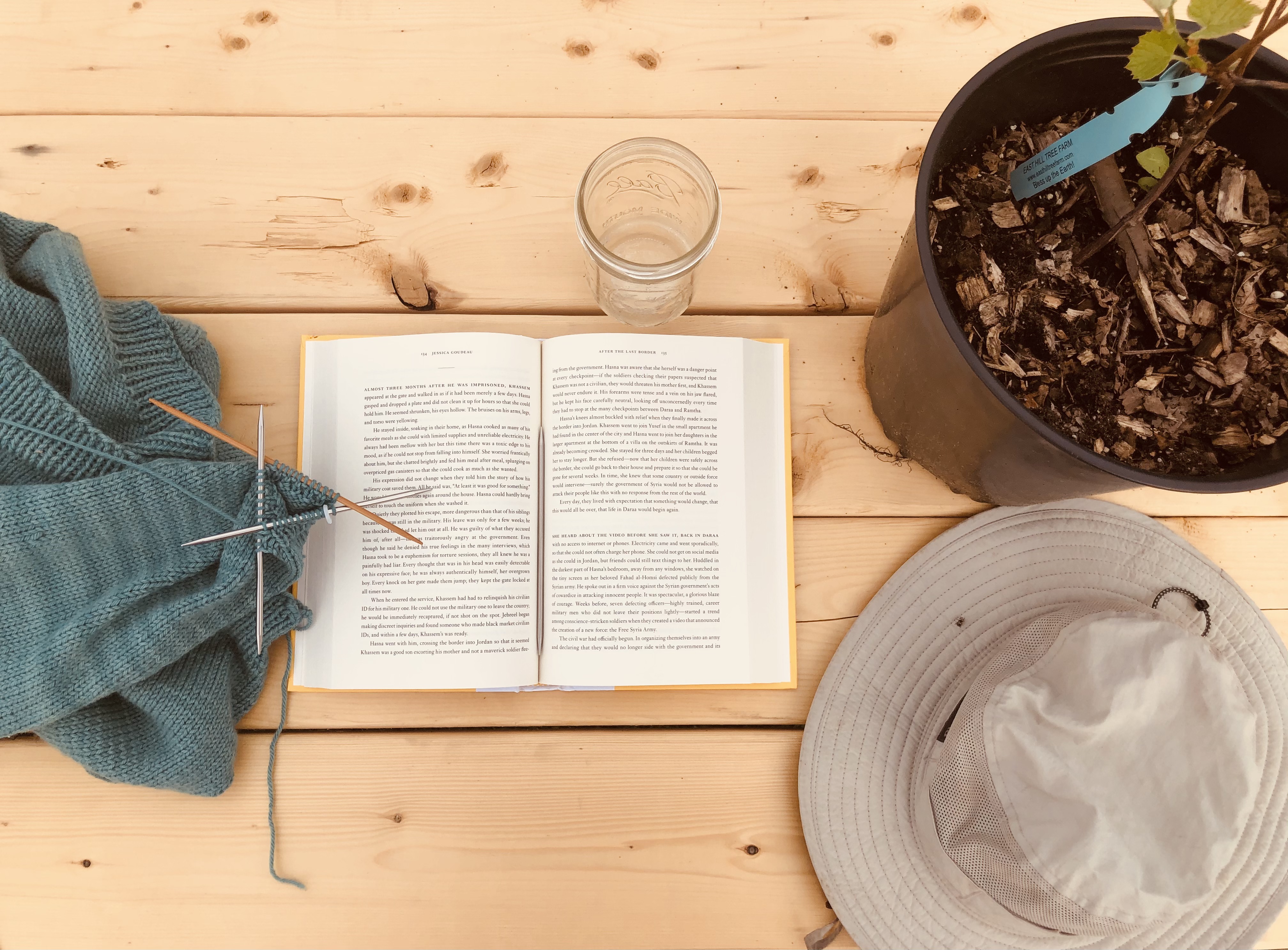
In breaks, I read Jessica Goudeau’s After the Last Border: Two Families and the Story of Refuge in America. This well-written book tells the story of two women, and their families, in places faraway from Vermont.

Meanwhile, in Vermont’s sweet spring, the state rushes along to vaccinate its population, taking vaccination buses on the road, meeting people at beaches and schools, offering free ice cream cones.

In the hardware store, I buy sunflower seeds. Standing outside, I chat with an acquaintance who removes her mask and tells me, You know, if you’re vaxxed, you really don’t need these anymore.

She looks at her mask and then puts it back on again. I feel naked, she says.

It’s 80 degrees. I take mine off and head home to plant those flowers.

But the greatest danger Obama identified was a ‘test of our common humanity — whether we give in to suspicion and fear and build walls, or whether we see ourselves in one another.’

— Jessica Goudeau

A Few Words

My daughter drives through a thunderstorm while, in the passenger seat, I try to conjure all the terrible things she might drive through — sleet and squalls — as if my imagination can create a charm against bad luck for her.

It’s idiotic, I know, but I keep talking until she tells me I’m wasting my words. You keep using up words, she tells me, and you only have so many words to use.

I start laughing. Since when, I ask, is there a limit on words? Hello? As a writer, I believe words are limitless.

No, she says. You only have so many.

And then what? I ask.

Then, you die.

As she drives northward, the rain lessens, and eventually the pavement is dry. We wind through the loveliest landscape of apple trees bent under white blossoms, as if we’ve entered into a watercolorist’s landscape.

I had no idea, I say.

Well, she says, her eyes merry. Now you do.

Roaming

Hard up for reading material, I get my 15-year-old to drive to Craftsbury, where I raid the free book pile on the porch.

In this village, we see no one, not a single human soul, only two geese flying overhead. It’s late Saturday afternoon, and she keeps driving on the dirt roads, heading by the Outdoor Center where I worked many years ago, and then by the summer camp where she spent happy summer weeks.

The road crests by the old farmhouse where our friends lived for years, and where we spent so many happy hours. She slows, and we look carefully. The house has been freshly painted and glows a pale yellow on that green hillside.

In one of those strange twists of fate, my former husband and I had also considered buying this house before our friends — who were not yet our friends — did. At that time, the farmhouse hadn’t been inhabited for a few years. A couple with two children had lived there, divorced, and the house had been snarled in the divorce.

In one bedroom, in place of a headboard, pillows had been stapled to the wall. I remember thinking, Who would ever think that’s a good idea?

I ask her to pull over on the side of the road. I get out for a moment and walk into the field where I stand looking at the ridge of mountains in the distance, the house on the hillside, and all that sky overhead.

A pickup pulls up beside my daughter, speaks to her, and drives off. I walk back to the car and asked what happened.

She says, He asked if I needed help. I told him it was just my mother.

She puts the car in gear, and we roll forward, picking up speed along the road. She glances at me sideways and says, I didn’t tell him you wanted to see how far along the tree buds are. That would just be weird.

 Destiny has no beeper; destiny always leans trenchcoated out of an alley with some sort of ‘psst’ that you usually can’t even hear because you’re in such a rush to or from something important you’ve tried to engineer.

David Foster Wallace

Signpost

Earth Day gives us snow in Vermont, that poor man’s fertilizer.

In a lightly falling snow, I lean against a school building, talking on the phone to my brother while my daughter plays soccer. Snow drifts in flakes about the size of a nickel, some melting on the pavement, others accumulating on tree branches and the toe of my boot.

The phone connection is stunningly clear — a surprise in rural Vermont.

As the snow falls, we wonder at the happenstance of circumstances — how the fall of a family member might have gone disastrously awry. Our conversation wanders beyond that, to the Chauvin trial, and the bystanders on that terrible day who, by happenstance, were present, and the teenage girl who pulled out her phone and shared her witness’s eyes with the world.

We’re in no hurry to hang up, and my brother suggests that, if Washington D. C. achieves statehood, the flag’s tidy stars will be kicked out of kilter. Vermont should succeed, he says.

After I hang up, I lean against that wooden wall. A fat robin lands in the snow, seeking a worm. My daughter and two friends walk across the parking lot, laughing, their braided hair damp with melted snow, their cheeks and bare knees bright red. It’s spring.