Here.

In the internet world, hardly anyone ever writes where they live. Who claims to be from Maple Falls, Washington? Or Ivy, Virginia? On my hillside, in West Woodbury, Vermont, the trilliums have pushed up but are folded over, awaiting warmth to spread their velvety petals. This afternoon, the sun shines undiluted, while the maples host those raucous robins.

In this April’s Poetry Month, I’ve heard Vermont poets read about desire and loss and joy, and about drinking cold sap, cedar waxwings huddled in a snowstorm, hand-churned ice cream, lost rings….

All this violence: wars and cruelties…
now as always
back to the beginning of time….

Yet and still every day the sun rises,
white clouds roll across the sky,
vegetables get planted and grow,
and late in the afternoon someone
sits quietly with a cup of tea.

– David Budbill, “Little Poem Written at Five O’Clock in the Morning”

FullSizeRender.jpg

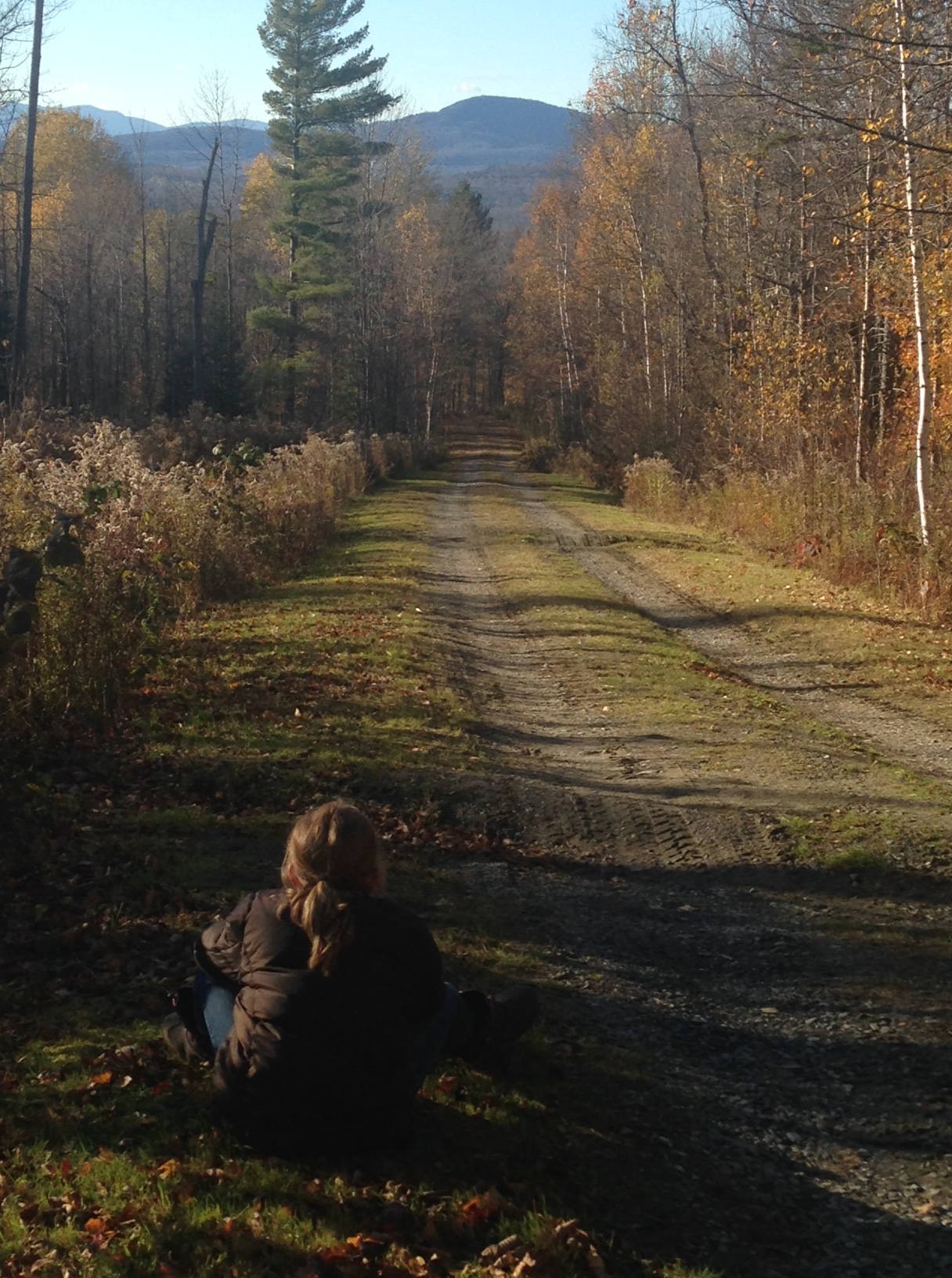
Woodbury, Vermont, April afternoon

The Gloaming

At this point in my life, some things I can easily do – create a meal from a handful of ingredients and a hopeful smile. Here, I think, the making of this is enough. I can passably braid a child’s hair, weed a vegetable bed, paint a wall, read a novel, stack wood. All these, at varying points of my life, I put real thought and energy into accomplishing.

I’m sometimes tagged as a writer who has a “sense of place” – a phrase I’ve more or less taken for granted. Sure, I have a feel for Vermont, a love for my state, and I’ve shed my share of sweat and blood in agriculture. But the longer I remain in one place, the greater my love of this place deepens in complexity. My garden this year was infested with cabbage root maggots; the brassica seedlings I planted withered within a week of planting. A year ago, I had 80 kale plants; this year, none.

The dynamic, however, is one of the key beauties of this place. Working outside in the dusk, my daughter and I stacked wood this afternoon. The twilight inched in, shade by shade, taking its own sweet timeSo much of American life exhorts homogeny: the same food chains, grocery and hardware stores, clothes and electronics, even the same education for our children. To love a place deeply demands knowing that place in all its vicissitudes, even the raw dark of rainy November or the frost that might have stomped in early and quashed your cucumbers. As my child and I lingered in the gloaming, I reminded myself that these in-between places are fertile, too, imbued with mystery.

“In the Gloaming” by Meta Orred

In the gloaming, oh, my darling,
When the lights are dim and low,
And the quiet shadows falling,
Softly come, and softly go…

IMG_9531

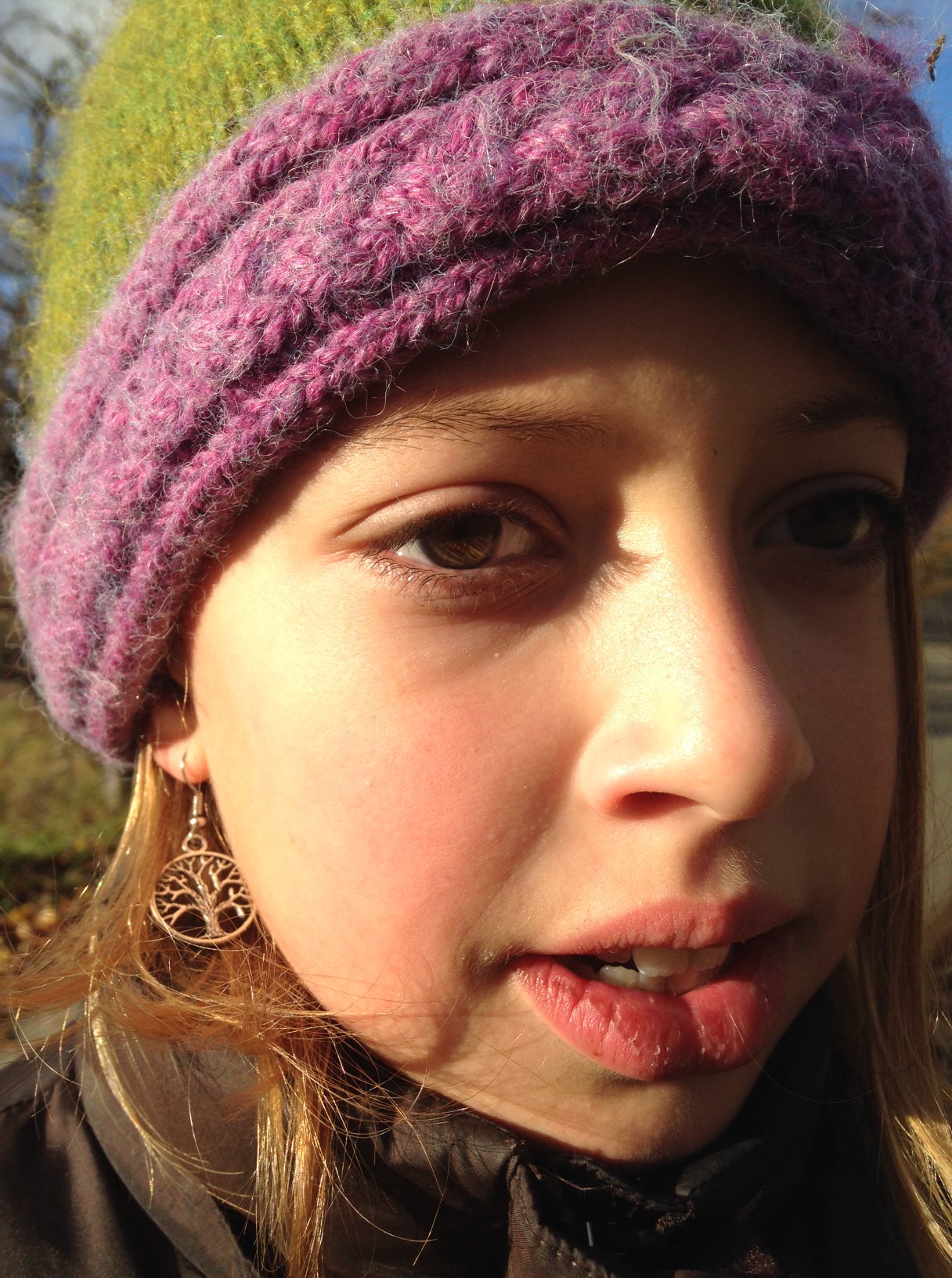
Morristown, Vermont/photo by Molly S.

Potato Digging at the Schoolhouse

At a meeting tonight about the future of my daughter’s little elementary school, a parent spoke about the importance of the schoolhouse, built a hundred years ago, by the town of Woodbury, Vermont. Until I went to a tiny college (also in Vermont), I never attended school in a building that had not only beauty in spades but also soul. The Woodbury schoolhouse has both.

This afternoon, a little thirdgrader showed me the dirt on her clothes from working in the garden. The children had been digging potatoes, and she showed me with her hands the size of the largest potatoes. Sometimes, she told me, my fingers got stuck around the potatoes and they were hard to pull out. She laughed, and I could see a sprinkling of dirt over her cheeks.

Too much of our world now is placeless – grab your i-phone and laptop and head out for new territory, but where we live and work matters; it matters who builds our homes and schools; it matters who opens the door to your child’s schoolhouse each morning. And on a sunny and windy October afternoon, it matters that someone shows a child to bury her hands to the wrists in black soil and extract an apple of the earth.

For the meaning of life differs from man to man, from day to day and from hour to hour. What matters, therefore, is not the meaning of life in general but rather the specific meaning of a person’s life at a given moment.

–– Viktor Frankl

IMG_0160

Singing and Writing: a Small Blue Book

The other morning, between errands, I stopped in at Bear Pond Books in Montpelier, and found a small novel by Tomas Gonzalez, a Columbian, In the Beginning was the Sea. The book is beautifully crafted and fit just about in the palm of my hand, yet with a real heft and weight. And – it was my favorite color: blue.

These past few days I’ve swum down into the sea of this book. I’m not at all likely to head south to Columbia, and the book itself is not gleaming feel-good read. But it’s writing with a depth that goes down and down, and is as true and real to me as drinking a glass of my own well water.

As a Vermont writer, I’m often asked about sense of place and its importance in my writing. Yes, of course, place-centered geography centers in my writing. But equally, I know, the beauty of  a tropical paradise can also drive an inhabitant over the edge, and to write with a sentiment that place is only holy seems false to me. Surely, the yingyang flip of holy is unholiness. While this short novel holds the beauty of human life and the moonlit sea, the writing also contains the deeper elements of all the vagaries of human existence.

“So WHY does our writing matter again?” (my students) ask.

Because of the spirit, I say. Because of the heart. Writing and reading decrease our sense of isolation. They deepen and widen and expand our sense of life: they feed the soul… We are given a shot at dancing with, or at least clapping along with, the absurdity of life, instead of being squashed by it over and over again. It’s like singing on a boat during a terrible storm at sea. You can’t stop the raging storm, but singing can change the hearts and spirits of the people who are together on that ship.

— Anne Lamott, Bird By Bird

IMG_0124