Dividing line: rivers running north and south.

Lost, I spend a crazy amount of time on back roads, driving from here to there, searching for a house where I’ve never been. A porcupine ambles along a dirt road. I slow, the car windows rolled down, the sunroof open and dust drifting in. The quilled creature disappears into the roadside weeds. I follow the paved state highway north, a two-line twisting road that cuts through farm fields jeweled with blooming dandelions.

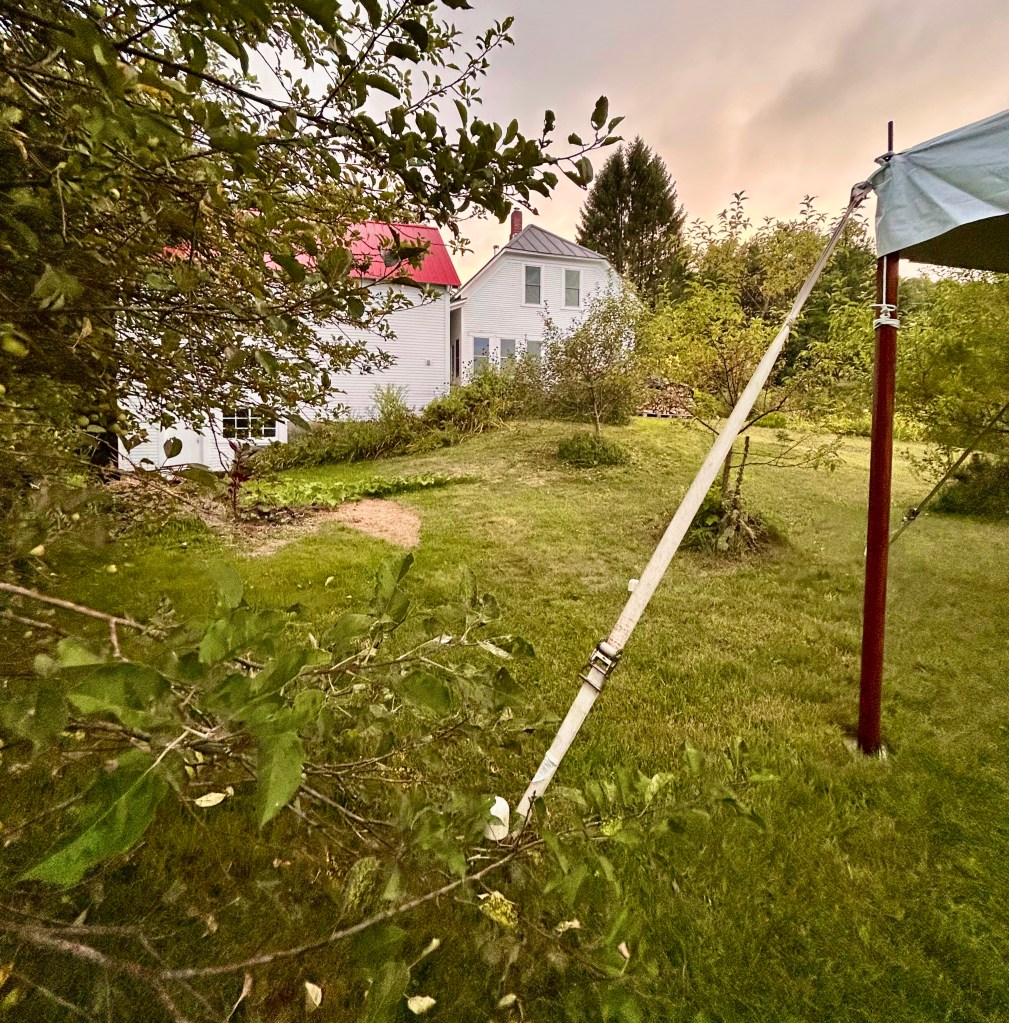
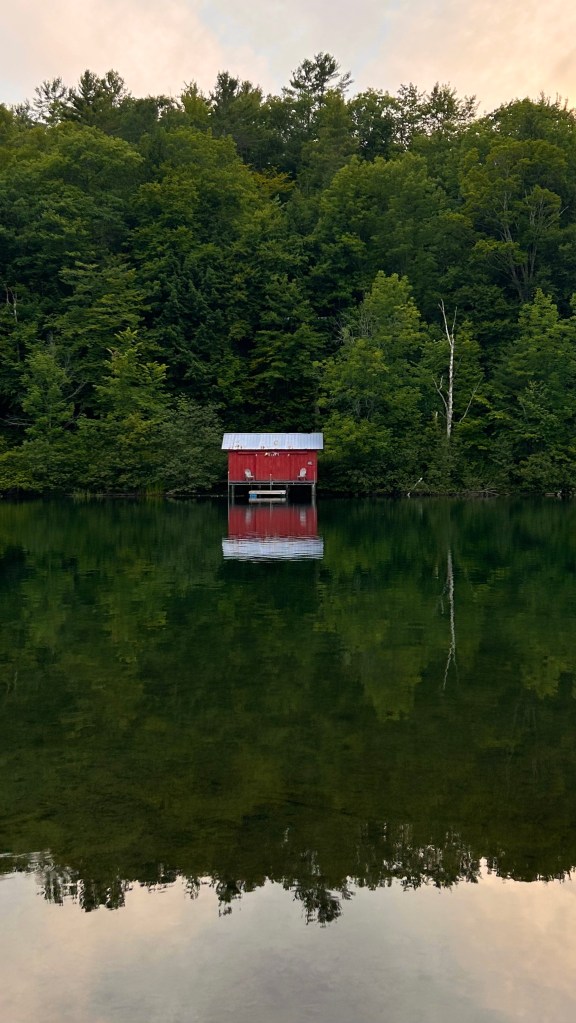
I find them, finally, this kind couple, and apologize for my lateness. Turns out, they’ve worried about me. We stand outside in the sunlight, with their little dog and their grown daughter who stops by, this witty and laughing family who has endured tragedy. We’re on a rise of land that overlooks a pond. We are at the dividing place, I learn, where water flows both south and north. As we talk on this old homestead, I sense the world’s expanse, how brooks and streams and thin rivers join immense lakes, powerful rivers, the mighty beast of the Atlantic Ocean. Around us rises the history of this homestead, how the house and family has grown and contracted and changed over the decades. Spread overhead, the gleaming night sky, the pinprick constellations.

Black flies chew my hairline. Post-chemo, my lost straight hair returned as ringlets. On my way again, I retrace my way through swamps dense with marsh marigold. On this sunny day, the trees push out new leaves, further, further, in these few hours. I return to a former school house, where the town is voting again that day on a failed school budget. People come and go, cheery with the spring weather. I stay late for a hearing and drive home under a blood-red sunset, the breeze through my car windows sweet with plowed earth and manure.

How furiously I labor to remain in this world. To savor the inevitability of lostness, the chance crossing of a porcupine on its solitary animal journey, the stunning May blossoms. Many months ago, I asked my brilliant oncologist what I did to invite lymphoma into my body. Vehemently, he replied that I’d done nothing, absolutely nothing, to cause this brutal disease.

This physician saved my ragged life, but do our philosophical planes align? Two years ago, as the cancer sunk its silent teeth into my flesh, those intertwined demons of fatigue and despair shook me, too. Always now, skimming beneath my days and nights, flickers that fear: relapse. I’d spent so much time, that winter of illness, in the Dartmouth ED that the nurses and MDs became familiar. They knew my daughters and I by name. The general surgery team appeared repeatedly in that huddle around my bed, and I began to understand the hues of that word restraint as they considered their surgeon thoughts. There was that dreadful evening when I informed the oncologist that I could endure no more, and he gently replied that I could. He would get me through. So I endured. Many years ago, when I was so young, 21 and naive and freshly falling in love, I whined to a professor that I could not finish my thesis; I’d done enough. He kindly informed me that someday I would write a book and I would fear I would never reach the end. All this, in fact, transpired.

Restraint and effusive joy. Sooty despair, the pleasure of a purring cat. As the night settled down through twilight, I drank tea on my back step, leaning against my house. A fox trotted across the violet-strewn grass, quickly, on its way. So much for monotone winter. Wild spring.

Dandelion 

The first of a year’s abundance of dandelions 

is this single kernel of bright yellow 

dropped on our path by the sun, sensing 

that we might need some marker to help us 

find our way through life, to find a path 

over the snow-flattened grass that was 

blade by blade unbending into green, 

on a morning early in April, this happening 

just at the moment I thought we were lost 

and I’d stopped to look around, hoping 

to see something I recognized. And there 

it was, a commonplace dandelion, right 

at my feet, the first to bloom, especially 

yellow, as if pleased to have been the one, 

chosen from all the others, to show us the way.

~ Ted Kooser

Cold.

The cold lingers. A friend texts about walking, proposed temperature 5 degrees. It’s a balmy 3, the sun dazzling on fresh snow. A year ago, I sat miserably in her car, hardly able to walk around the high school — did I manage that loop twice? This end-of-January, we walk and talk. Later, sprawled before my woodstove, revising a manuscript that my cat uses as a nest, twilight and then darkness press against the windows. I have not forgotten how easily a body breaks, how rapidly the world shifts from wellness to suffering.

The world propels through flux, and while I’m (at least momentarily) emerging towards fuller health, so much human darkness deepens. My college student daughter phones from Burlington — Vermont’s big city on our own Great Lake — the streets jammed with protestors. The mayor issues a statement as officials prepare for an ICE invasion. “Stay steady,” she urges.

Under the moon hanging in the sky, we head downtown to the coffee shop to admire photographs of the northern lights. The photographer plays a short film of footage shot in locations the audience knows well, roads and lakes and a ridgeline above the village. Turns out, he wrote the music, too, weaving in calling coyotes and chirping crickets, loon songs. It’s no antidote, no balm, but a radiant reminder of the vast universe, of how the horizon shifts from black to pink to green, that we are driven by love of beauty, too. A steadiness.

On Frozen Fields

1 
We walk across the snow,
The stars can be faint,
The moon can be eating itself out,
There can be meteors flaring to death on earth,
The Northern Lights can be blooming and seething
And tearing themselves apart all night,
We walk arm in arm, and we are happy.

2
You in whose ultimate madness we live,
You flinging yourself out into the emptiness,
You - like us - great an instant,

O only universe we know, forgive us. ~ Galway Kinnell

We are every experience we’ve ever had…

A sunny morning, I’m at a place I’ve never been before, a sizable post-and-beam gallery at the end of a road. A fenced vegetable and flower garden shines orange and gold. A marble bust smiles mysteriously.

I love this about Vermont: these unexpected pockets of mighty talent. The woman’s house is built around the gallery — a beauty of wood and stone and glass. We talk for a while, and we discover that her artist parents were from the same midwest area as my father — Detroit — and then she opens the gallery and takes me in. Let me say here: I’ve been around the block a few times, seen my share of museums and art; I’m also feeling this sunny morning like the dirt road my Subaru tires pounded into, driving uphill.

The gallery ceiling soars in a peak. The wooden space holds the owner’s and her deceased parents’ work. She allows me walk through the metal sculptures wordlessly. Then I stand beside an oil portrait of a woman wearing a black and red dress that reminds me of a velvet blouse I bought for a friend, many years ago, when she graduated from college. The woman in the painting rests her chin on her fist.

The owner looks at me. “It’s always the females who are drawn to her.”

“She’s me.” Woman of a thousand and one sleepless nights, bread baker, hearth tender, the woman who swam under the luscious full harvest moon. Woman hard as these back roads, fragile as coreopsis.

We walk upstairs and finish the tour. Before I leave, though, I stand again before this portrait, a long soulful moment. “Gracious,” I say, “gracious.”

“…we are everything, every experience we’ve ever had, and in some of us, a lot of it translates and makes patterns, poems. But, my God, we don’t even began to touch upon it. There’s an enormous amount, but we can touch such a little.” – Ruth Stone

Saving…. Who?

One recent morning, on the lawn of the former schoolhouse where I work, signs appeared on the triangle green: Save Town Hall. Shortly afterward, with black spray paint, someone altered the signs to: Save Town.

This building has been around since before Archduke Ferdinand was assassinated in 1914. The entire top floor is a gymnasium, the middle floor four classrooms, the basement originally must have housed a coal furnace. After a $14k heading bill one winter for a building largely empty, I urged the Selectboard to consider other options. Oh, the furor that suggestion has now caused.

All summer, walking into the basement, I kept saying, I smell mold, I can’t work in a basement, I can’t think straight, can’t breathe, in a repetition that was doubtlessly whiny and certainly dull. But like the people arguing around this building, the building isn’t stagnant, either. I take my laptop upstairs to the empty rooms, where it’s me and the dusty windows, the paint shedding from the pressed tin walls and ceilings, the beadboard molding higher than my head.

In this wet, wet summer, mold blooms, and I rally the tiny office staff. Let’s move! I grab my jade plant. In a few hours, we’ve moved upstairs into the empty rooms, opening the windows and letting in the sunlight and breeze. I prop open the doors and sweep up cobwebs. Behind us, we leave so much. In our rouge occupation, we women set up housekeeping. I take off my shoes and walk barefoot over the maple floors .

We hire a crew to move the heavy things, and the men walk around remembering when they went to school in these rooms. Art classroom here, lunch there. All day long, with the doors open, the public wanders in and offers suggestions and stories.

A woman asks what we need. I’d like a pair of kittens here, frankly, or maybe a small old dog who wouldn’t mind sleeping on the rug in the sunlight.

Save Town? A question that opens up into a Jacob’s Ladder of questions….. in the meantime, we’re at least moving up into the light….

Studded Snows

What’s the one thing that makes Vermont winters survivable? Friends? Laughter? Knitting? A chicken roasting in the oven? Nope: snow tires.

Driving to Burlington on a snowy Sunday morning to interview a young poet, I kept thinking, At least I bought new snow tires. When my daughter disappears in the darkness to work, I think, I’m so glad I shelled out for those tires.

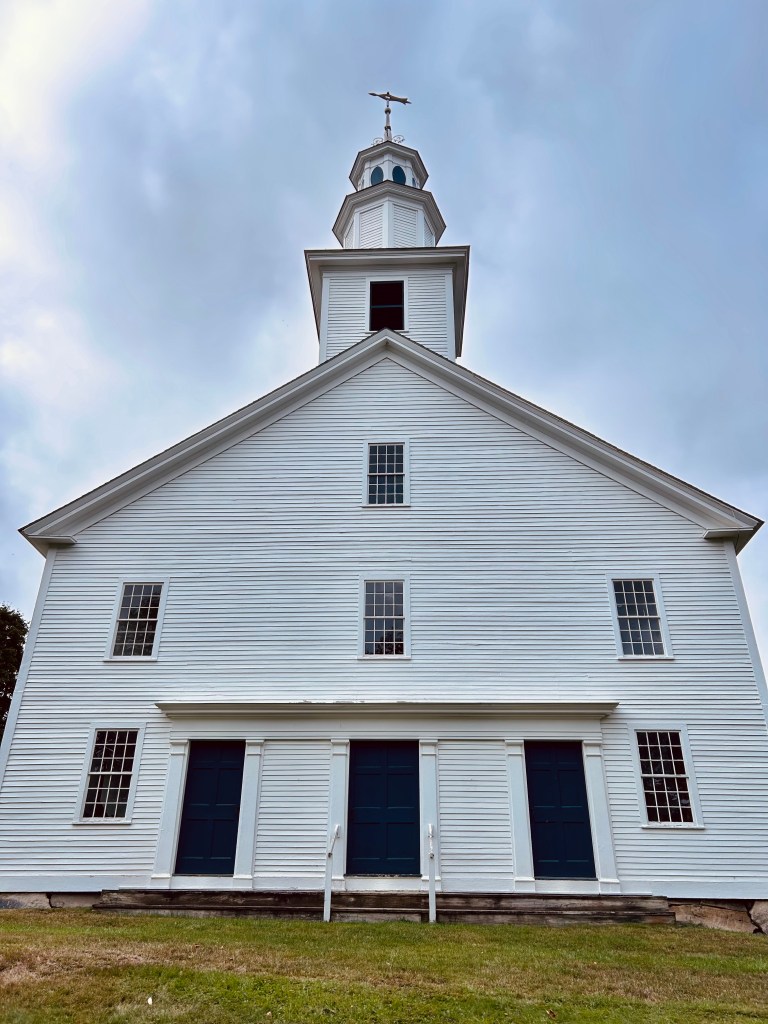
On my way home through the Calais back roads, I pull over at the town hall, a beautiful and somewhat mysterious building to me — why is it here? what’s the history that’s now disappeared around this building? I’ve been listening to NPR’s Wait, Wait, Don’t Tell Me and laughing so hard I’m actually crying.

Outside my little Toyota, I’m immediately reminded of winter’s enchanting beauty, the bit of wind on my cheeks and the snowflakes in my eyelashes. Sunday afternoon, and no one’s out and about, save for one  grownup far down the road, walking a dog. Leaving my car at the roadside, I walk down to the meeting house and stand there, staring up at the steeple in the gauzy snow, listening. Then I put those snow tires to use again.

Winter seclusion —
Listening, that evening,
To the rain in the mountain.

— Issa

IMG_4381.jpg


Better Perspective

A milk truck rolling slowly up Bridgeman Hill catches the sunset on its long, silvery side. The mud-splattered Booth Bros.’s truck reflects that sky behind and above me — ruby clouds — and that movable art mural is so wonderfully awesome I’m taken out of time, snapped back into the world only as the truck has nearly passed and I realize the driver has lifted one hand, waving a greeting.

I watch the truck continue its gradual roll up the hill, where pavement gives way to dirt road. As I descend down the hill, the village glows beneath that magnificent sunset — the granite town building, the long strings of electric lines, the houses well-tended or ramshackle — players in a landscape of cosmic beauty.

When the winter chrysanthemums go,
There’s nothing to write about
But radishes.

—Basho

IMG_4370.jpg