The 10,000 Things.

The last night I am in New Mexico, I can’t sleep, so I slip on my sandals and walk. The moon hangs over my parents’ house, luminescent as a giant drop from a sun-shot waterfall. It’s dark yet, a cool-nearly-cold breeze stirring the desert. No human wanders at this early hour. It’s just me and the singing crickets and birds, the sun pushing a golden curve over the black mountains, the desert stirring in a language I have no words for: the rush of lizards and hustle of rabbits, the sharp-eyed coyote and fox, the wild sunflowers silently bending towards the rising light.

So many pieces to this journey — from the shuttle driver who happily counsels a passenger not to rush as “we’re in the Land of Mañana,” to the flight to Chicago where the Brandeis student beside me whispers about her fear of flying, to the stunningly beautiful flight over the Great Lakes through voluminous white clouds. I keep thinking how unworldly, but that word is ill-chosen. Better said would be of this world. Then the brilliance ends as we fly into the soot of the Canadian wildfires. All through this day, I read Lily Brooks-Dalton’s The Light Pirate (the novel Ben Hewitt told me read), this novel about a family and the collapse of our world, and the brutal irony doesn’t escape me for one moment that as I’m mourning and fearing those sooty clouds I’m entirely part of this 21st century….

In Vermont, my daughters greet me with their 10,000 stories and cheerfully announce I’ve missed the two good kayak days through the lily pads. The humid night air stinks of diesel exhaust. In the parking garage, I strip off my leggings. My youngest drives out of Burlington, along the river through the Winooski Valley, and through the state capital. The girls tell me sunflowers are blooming around the statehouse, and my daughter’s dog fell off a dock into a lake (what clumsy dog does that?) and the swimming has been stunning in Caspian, the water perfectly clear.

My youngest tells me about exploring Burlington with her sister. She says she can’t believe how lucky she is to move there this fall.

In this dew-soaked morning, I realize I haven’t missed the hollyhocks’ bloom. Lucky.

…. Seriously, can’t recommend The Light Pirate enough.

Because everything is changing…. We should all be curious about it, because the way we live has to change, too.

— Lily Brooks-Dalton
No Going Back.

July 1: I’m driving on a back road to a nearby town where there’ll be the traditional New England small town Independence Day festivities, when I suddenly realize I can no longer see the road before me. The road dips down and then rises up. I know this, because I’ve driven this road so many times. I know precisely where to swerve around the persistent pothole where the stream runs under the lowest point of the road. But the rise is hidden in smoke.

The day marks a line for me, a place I won’t forget. I’ve been here before; this is familiar territory. I remember the precise afternoon I knew I would severe my marriage. Likewise, today, it’s clear to me that this smoke, in what will likely be one unimaginable variation after another, will remain.

Nonetheless, I go on into the day, watch the parade with an old acquaintance and we catch up about kids, ruminate about our old college days. I talk to a woman who’s built a house of cans and bottles and tires. She asks me to stop by sometime. Heck, who could pass that up? Of course I will.

Then I’m back home again, working, working, on this third book, taking it apart, sewing it back together, phrase by phrase. I wind in how it feels to walk along the edge of a lake that may not be frozen and thread through the Himalayan blue poppy, a child’s nightgown, pebbles under a clear running stream. I’m after those same old things: how to salvage order and beauty from chaos and destruction and despair. A river of sadness is not the torrents of despair.

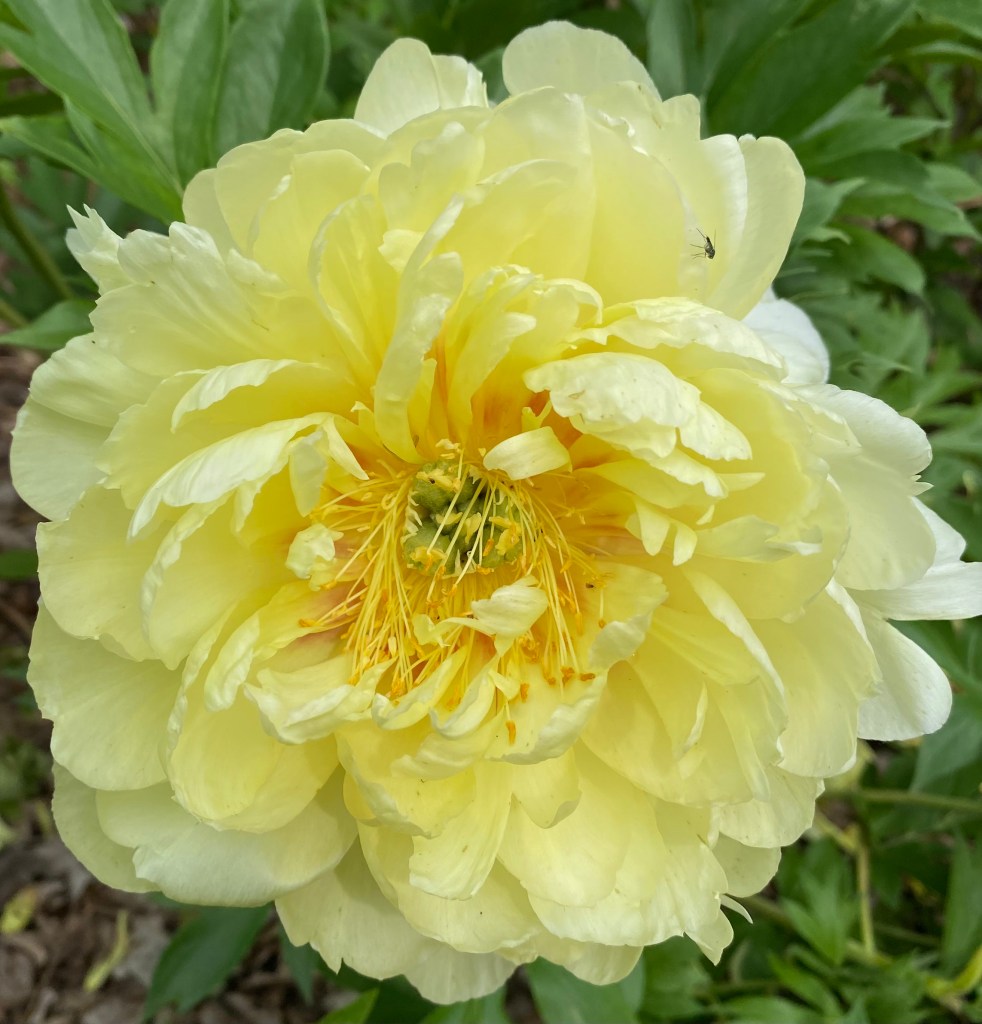
Swim. Bartzella peonies. My neighbor leaning out her door, green curlers in her hair, saying hello.

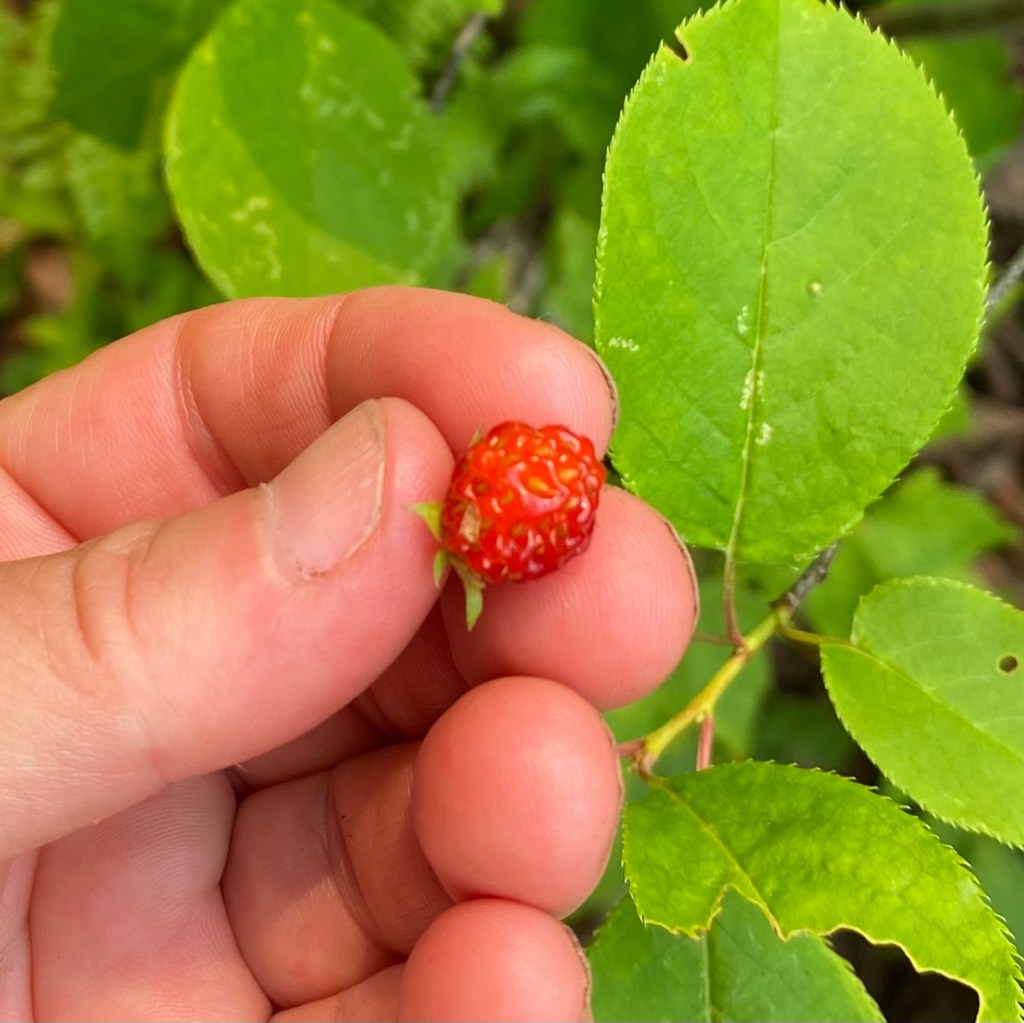
Wild Strawberries under Wildfire Smoke.

In Willey’s — the rambling general store where you can buy electrical supplies, French wine, local produce, bananas and darn near everything else except cigarettes — I turn a corner and find an old friend. She has a sunburn and I think: where have you been? We are both in some kind of rush that we talk, separate, and then knock up against each other again and again. The store is jammed to the ceiling with stuff, but it’s not that large. At the register and then out into the street, we keep talking. She’ll filled with such good energy I want to pocket some of her joy.

Every day, rain falls. Clotheslines droop. My feet are spongy in sandals. The Blundstones my daughter bought me a few years back split at the soles. It makes sense to wear these beloved shoes right down to wet scraps. I open and close the windows — is it hot? is it cold? The garden soaks up the water. The woods are lush and lovely, redolent with wet bark, the tanginess of split leaves.

The wild blackberries blossom profusely, the green berries now knotting. It’s nearly July, the season that means swimming and long lingering evenings watching the twilight drift down. Not so, this year. The pandemic made abundantly clear that we are connected to each other — both neighbors across the street and strangers around the globe — in ways that matter not one whit whether we like it, or not.

This summer breeds contemplation, more November than cusp of July. In that vein, here’s a few lines from the immortal T. S. Eliot in Four Quartets:

... The wild thyme unseen and the wild strawberry,
The laughter in the garden, echoed ecstasy
Not lost, but requiring, pointing to the agony
Of death and birth.

 You say I am repeating
Something I have said before.
 I shall say it again.

Shall I say it again? In order to arrive there,
To arrive where you are, to get from where you are not,
 You must go by a way wherein there is no ecstasy.

In order to arrive at what you do not know
 You must go by a way which is the way of ignorance.

In order to possess what you do not possess
 You must go by the way of dispossession.

In order to arrive at what you are not
 You must go through the way in which you are not.

And what you do not know is the only thing you know
And what you own is what you do not own
And where you are is where you are not...

Ordinary Contentment.

Standing on the street in Greensboro Village, a pickup truck with a trailer full of hay slowly passes by, creaking through the tight curve. In the sultry sunlight, I wait, a shower of chaff drifting over my face, blinding me for just a moment. As I close my eyes, I see one sunburned arm waving through the open pickup window at me.

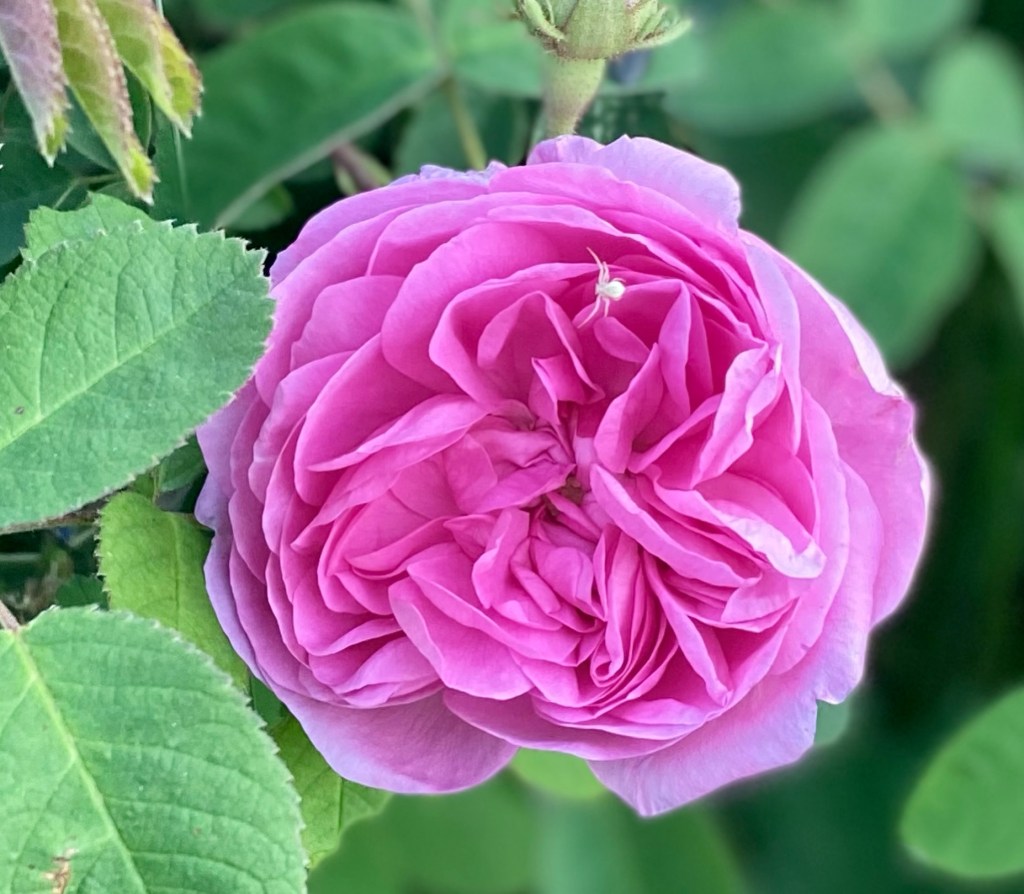
June. There’s plenty adversity that happens in this month, I’m sure, but the roses are blooming, the fields freshly shorn and growing again, the fledgling robins already swooping from the nest.

Some lines from the incomparable Jane Kenyon this Friday afternoon:

High on Nardil and June light 
I wake at four, 
waiting greedily for the first
note of the wood thrush. Easeful air 
presses through the screen 
with the wild, complex song 
of the bird, and I am overcome

by ordinary contentment. 
What hurt me so terribly 
all my life until this moment? 
How I love the small, swiftly 
beating heart of the bird 
singing in the great maples; 
its bright, unequivocal eye.

Robin Survival?

This is now the sixth year we’ve lived in this house. I count these years by June 15th, the date I signed for the house, two days before my oldest graduated from high school, the date the sellers took us out to lunch and I stared through the diner window, wondering if buying this house was a good idea.

On this sixth year, a robin family has joined us, building what appears to be a well-made nest, strands of straw hanging from roof rafter. The nest is beneath the porch roof, covered from the weather. The nest is so close to our house that the mother robin flies away whenever we open the back door. My daughters and I wonder, Why not choose a rafter in the barn? A good old-fashioned tree limb?

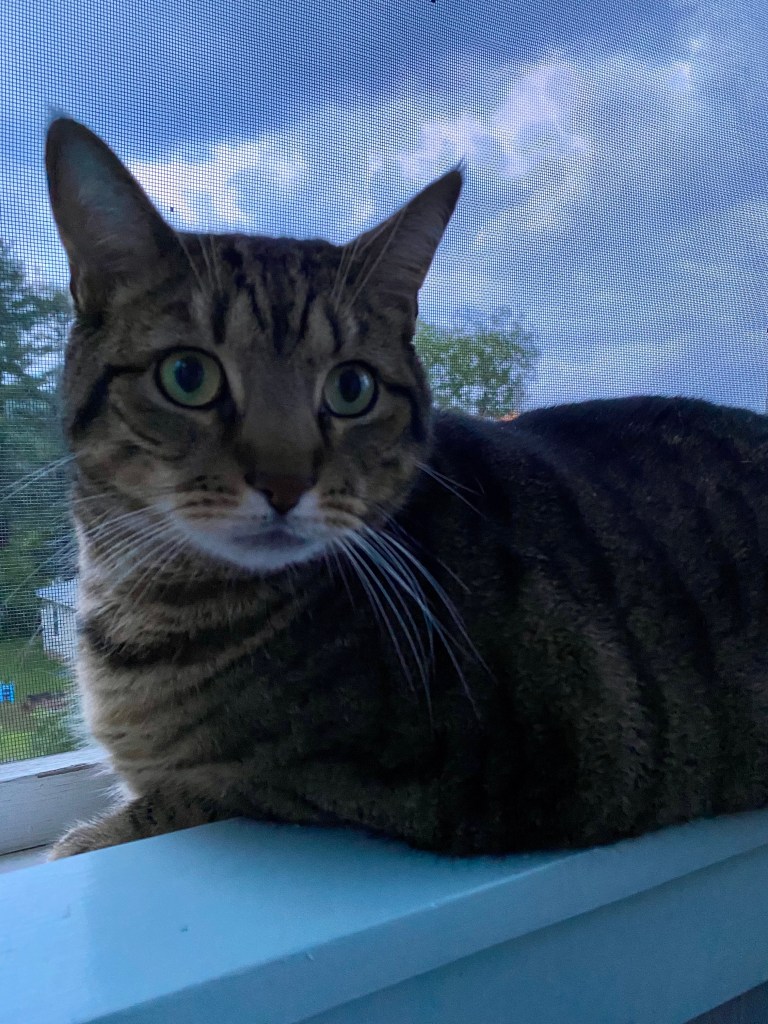
The robins’ destiny is, of course, neither here nor there. We didn’t make the nest, and whether this family survives is largely beyond my purview. Certainly, my curious housecats will not harm these young ones. Yet I’m curious as my cats, wondering what drove this family to our porch.

June. We are surrounded by a hungry world that eats wee robins. I’m rooting for these young ones, hoping they’ll pull through. Come what may.

The Pleasurable Stink of Wet Wool.

Rain begins spitting midday. I’m on a clearing-my-head walk through the forest, and the songbirds are crazily lovely, singing mightily away, simultaneously solo and in concert, and the flowers — my goodness — the flowers. The forget-me-nots trail me like loving, silent cats.

There’s a thousand things going on — that thickening rain, the myriad leaves in ovals and spikes, the blooms and the seed heads. I take the long walk back to civilization, emptying my mind as I go. When I return to the human threshold, there’s a little reluctance to head on back in… I stink of wet wool, the better for these minutes.