Mark a Line in a Forest.

The farmhouse is built on a cliff above a glacial lake. It’s been years since anyone lived there, although the roof and windows are intact yet. I walk around the house and then stand for a moment at the steep hillside that tumbles down to the lake. Someone lives down below, and I spy a flash of silver roof in the sunlight. Beyond it, the lake.

The road is exceptionally narrow, winding uphill more steeply than most Vermont roads. Whoever built here, I’m guessing, chose this place for the sheer beauty of the view. A foolhardy choice, perhaps, as the house and farm have long since turned over and over in ownership.

I’m here to look at survey marks, line up orange and blue blazes with paper, and read deeper down into the stories of people, of friends and enemies, of what land means to various people. Surveys, roads, grudges, loyalties, all the barriers we erect between ourselves.

Inadvertently, I take the slow road home, stuck in construction on the highway that winds along the lake. A duck flies overhead. At home, I meet my daughter who has just returned from soccer practice. We sit in her car, talking, talking, about olive bread and cheese, sautéing mushrooms with garlic. Around our house and my garden the foliage is simultaneously luminescent and gone by, the leaves dropped dead to the ground, the trees uncloaked. For these moments, the sky is suffused pink. My daughter says, “Not bad.” Around us, an infinity of stories held just for a moment in my hand.

“Nevertheless, something will come of all this.”

– John Gardner
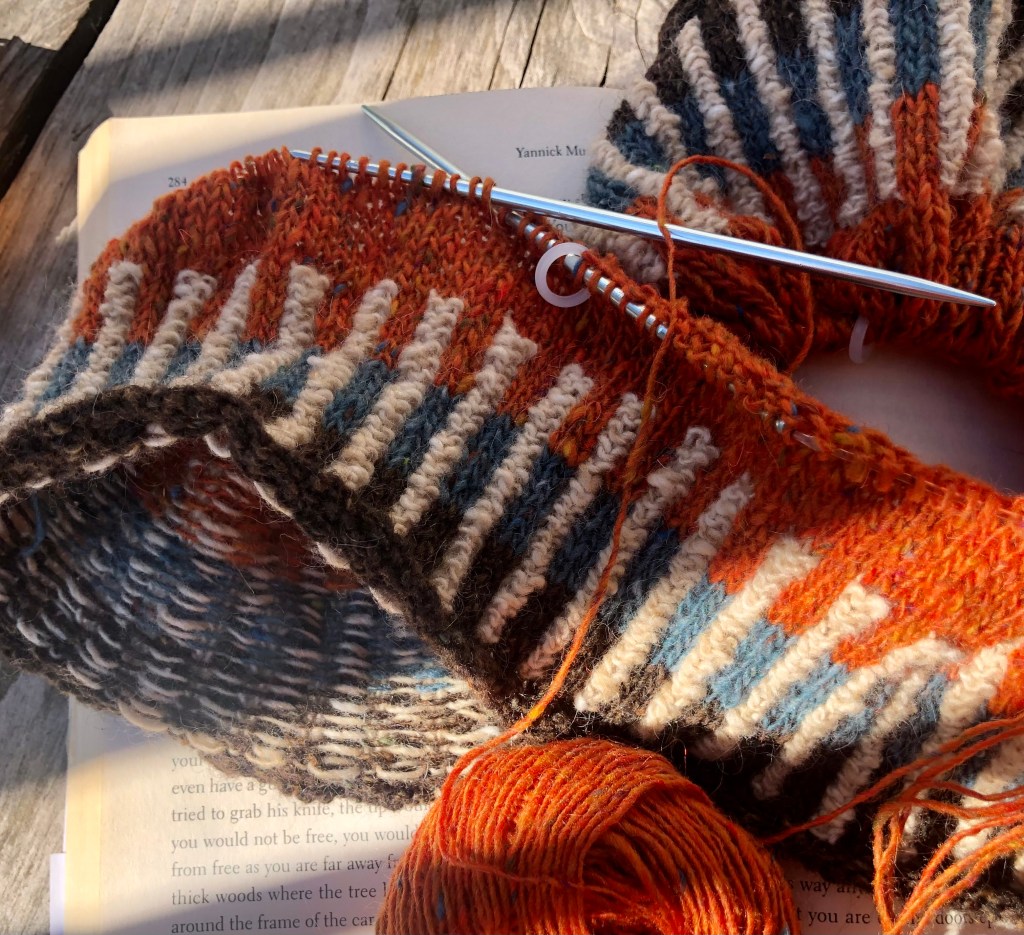
Stitch, Stitch.

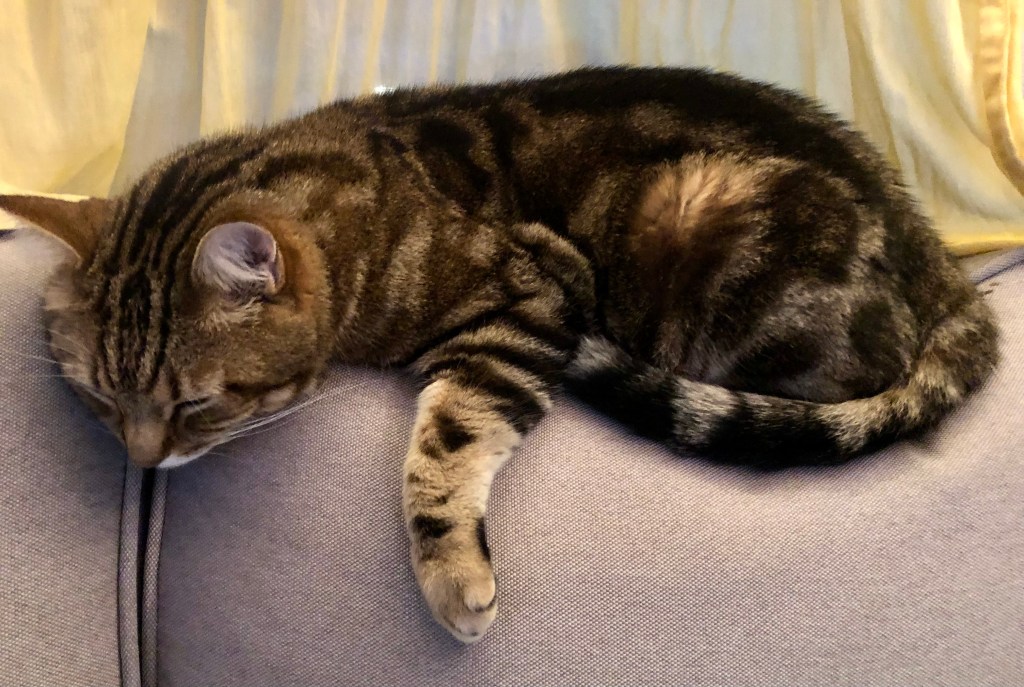
As the days shorten, I appraise my woodpile. Borrow knitting needles. Read outside in my coat, the sun on my face. Our cats sprawl before the wood stove, savoring radiant feline bliss.

My brother comes to visit for my daughter’s final soccer game. Nine years of games and uniform washing, and I still don’t understand fully the rules of the game. Vs of geese cross the sky. As we idle afterwards, talking, a flock of starlings sweeps low over our heads and disappears around the school.

Back at our house, I gather my things from the car — my jacket, her gifts of balloons and chocolates, the signs her sister made. Photographs. Near sunset, the sky is a luminescent pink that will endure for a few minutes, no more. Their coach, son of glassblowers, made each of the senior girls a glass. In our kitchen, we admire my daughter’s beautiful gift. I wonder how she will fill it.

“Great things are not done by impulse, but by a series of small things brought together.” 

― Vincent Van Gogh

Green Apples.

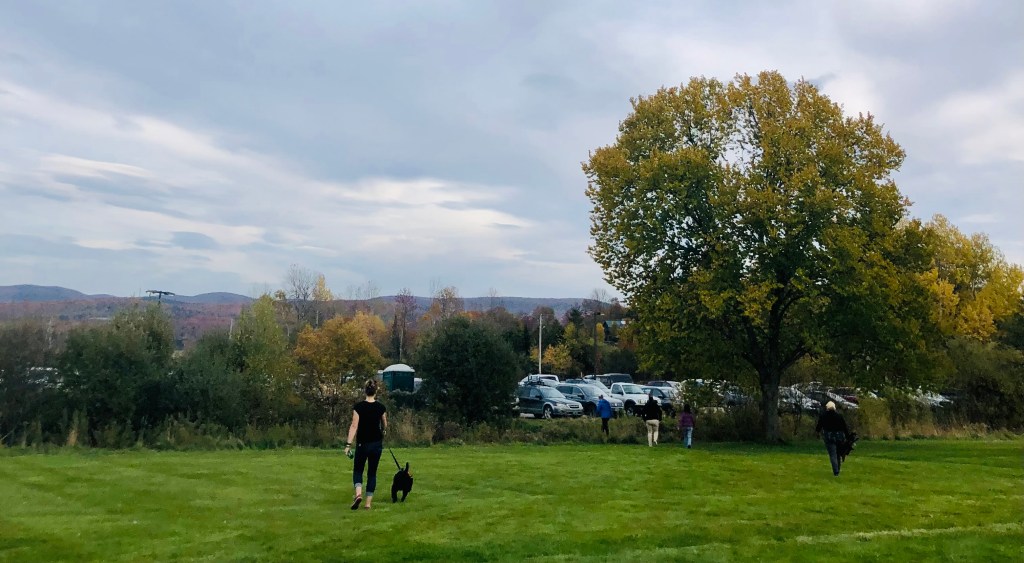
I flee work early with my daughter and her dog, to watch my younger daughter play soccer. Mid-October, and in my world everyone clamors to be outside as much as possible.

In the parking lot, a rusty white Toyota pickup sports a peeling bumpersticker with Joseph Campbell’s advice: Follow your bliss.

In my young woman days, I wholeheartedly championed this, easy-peasy, of course, I thought. Then I entered what seemed like a labyrinthian period of my life where the notion of bliss seemed facile and sometimes outright stupid. On this sunny afternoon, I chat with parents and strangers on the grass about little things — who’s started their furnace already and the merits of sprinkling cinnamon on hot oatmeal and is that the new superintendent with the coach?

As the sun heads down, the spectators pull on jackets. The wiser among us brought blankets. I find my hat in my car and loan my daughter my jacket. My youngest is a senior. Next year I won’t be here, clustered among the parents and grandparents, and so each game seems a bead on a counting game. On the way home, we stop at the general store for curried dumplings.

All afternoon I kept thinking of Ruth Stone’s achingly lovely poem “Green Apples.”

In August we carried the old horsehair mattress
To the back porch
And slept with our children in a row.
The wind came up the mountain into the orchard
Telling me something:
Saying something urgent.
I was happy.
The green apples fell on the sloping roof
And rattled down.
The wind was shaking me all night long;
Shaking me in my sleep
Like a definition of love,
Saying, this is the moment,
Here, now.

Voyages, Tiny & Massive.

As has been noted repeatedly in our house — the cats live in their own sleeping and dreaming schedule, small world within our world. My daughter, heading out early to work, remarks about this again.

October, and the days shorten daily. I’m awake in the dark with the full moon and a radiance of clouds passing over our house. The cats appreciate their full bowls, and I stir the wood stove’s ashes, grateful for the bone-dry wood I lay on the embers.

As I make coffee, I remember strands of a conversation I had yesterday with someone I’ve known peripherally for years. His parents met in Eastern Europe at the end of World War II. We swap stories for a bit, and I tell him about my grandparents who immigrated from Romania. He spoke Hungarian as a child and later returned to the country and relearned, to an extent, his original language.

My cats oversee what I’m doing with the wood stove (proprietary as always about their heat source). The acquaintance and I mused for a bit about the loss of language in the Great American Empire, the great push for conformity. But that’s facile, too. Our ancestors lived in harder times and sought reasonable things — a steadier life, a solid home, maybe even peace.

All afternoon, I pull up frost-killed flower stalks and bury hard knots of bulbs — narcissus and crocus. My hands stain with soil. The sunlight is radiant but thin now, scant. The fatness of spring looms so distantly that these bulbs I plant don’t even seem a promise. Walking around, appraising, I note the barn needs painting. Next spring, I think. Get on it then.

…. And a quote from Laurence Bergreen’s phenomenal book Columbus: The Four Voyages.

To his Sovereigns and their ministers, it was intended as a landgrab and a way to plunder gold. Instead, it became, through forces Columbus inadvertently set in motion and only dimly understood, the most important voyage of its kind ever made.

Gifts.

Before I leave for the North Danville Library on Tuesday, I sit for a moment with my daughter at our kitchen table. She eats a quesadilla, and we talk about things that matter — who’s behaving in what way and why that might be. The rain has knocked off for a bit, and I drive the way I often knit, more by feel and memory than anything else.

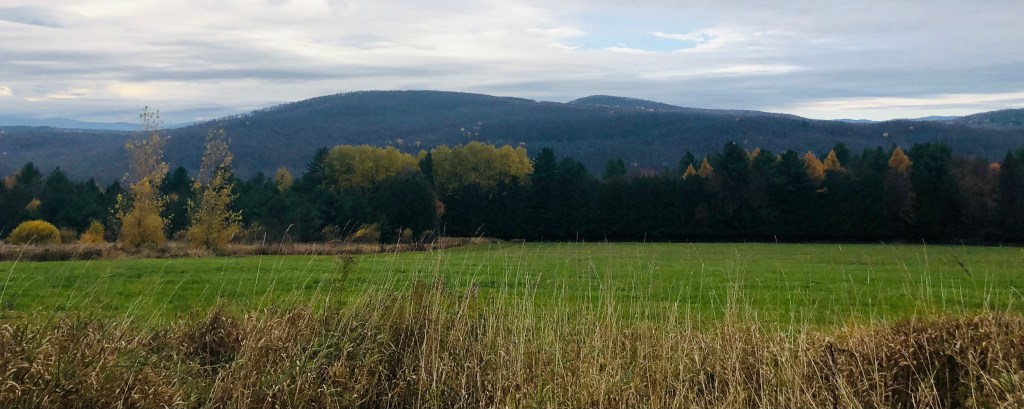
At this time of year, the farm fields are their deepest green. Sunflowers appear in gardens and along houses, their yellow leaves weathered by cold nights. I passed the house where my former sister-in-law lived when her four children were little. In the backyard, we built a playhouse. Her oldest daughter slept in the upstairs bedroom, and milk trucks rumbled down the road in the very early mornings.

The Brainerd library is housed in a former schoolhouse. I parked and stood for a moment in the lot shared by the library and a church. Cows ambled in the field behind the parking lot. Across the street, children pushed each other in a swing hung in an enormous tree. I imagined these were a few after-dinner moments gleaned in the falling twilight before bedtime.

I had been generously invited to talk and read a little about my book Unstitched. Driving over, I remembered the two years I spent writing this book, much of these hours at my kitchen table. Writing a book can be such a long and lonely process. So these moments of connection and resonance, of meeting readers and other writers, are manna to my soul. The library was well-cared for and had a real sense of so much living that had happened in those walls.

Unstitched is about hard things — addiction and guilt, poverty and illness. But I left that night and drove back home along the roads that had no traffic with my heart full of happiness kindled by an evening of literature and discussion and homemade cookies in a beautiful library with kind people. At home, the stars sprinkled over the sky, and the night was still warm enough that I could pretend winter was not in the near offing. Inside, my daughter and I picked up our conversation where we had left off.

Lost, Not Lost.

Tuesday afternoon finds me somewhat lost on the way to a soccer game. In a rush, I glance briefly at the map, take a mental note, and head off. My cell phone has given up its ghost, and I know I have a paper atlas in the back of my Subaru, jammed beneath a box of oil, if need be. I drive the way I knit — by feel — and generally that gets me there. In this case, driving by feel gets me to Hazen’s Notch, a twisty dirt road climb. The road has been recently graded; it’s slick with falling rain.

I’m headed to a town where I haven’t been in nearly 25 years. The last I was here, my then-husband and I were following a lead on a vacuum pump for maple sap. We pulled into a two-story house that was recently built. A pregnant woman dialed her husband at the town garage, and he drove up in a moment. That afternoon, I wanted to be pregnant. While our husbands talked about the pump, I asked her about the pregnancy. She wanted to buy a crib with the money from the sap pump.

We paid in cash. The pump remained one of the most reliable pieces of equipment in our sugarhouse. It became my nemesis, too, with the absence of housing around the belt. I feared for my hair and scalp, my fingers. It drank oil like crazy. It worked hard.

This Tuesday, I’m not really lost. I know, enough, where I’m headed, how to read the sky and rivers, the mountains, to get me in the right direction. I pull over near a swamp where maples are in full red already. What do you know, I think to myself, that sight is worth the drive.