Pique.

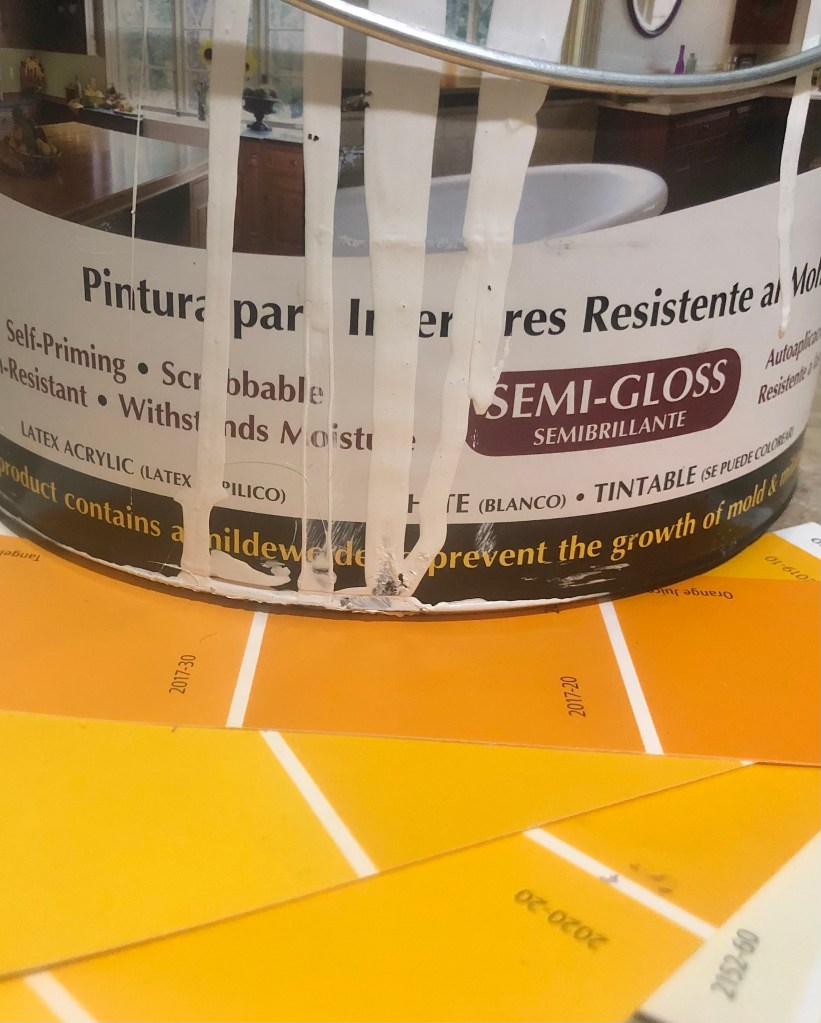
Anyone who knows me knows that winter pulls out my mania for painting. In a fit of what I can only describe as sheer irritation, I bleach mold from the bathroom ceiling and then ask for primer advice at the hardware store.

The store is darn near empty, save for two clerks and a black cat who rolls on its back on the counter and flicks a pearl-tipped tail at me. A clerk walks back with me to the paint section. She and I have been on a first name basis for years. While my gallon of primer is on the shaker, she shares her bathroom ceiling painting experience, and I offer this small problem and ask her to solve it. We walk back slowly to the front counter. She’s been my height for years, but as we walk and talk, I realize she’s slipped down below my height, and my height is definitely (as my brother might claim) substandard.

A man in logger’s chaps pays for discounted Christmas tree lights and a Twix bar and grouses about the rain and the mud, and how can there be a January thaw when we’ve had no winter?

The clerk spreads my paint samples over the counter and asks if I’ve narrowed down any color choices. She lays one finger on the color named Sunshine. “This one,” she suggests.

I gather my primer, stir stick, the lightbulb for over the kitchen stove, and head out. Ahead of me lies an afternoon of careful work, of NPR and stories from around the world, so many places hemorrhaging in ways that far outstrip my tiny mold project. As I’ve always done, I join my head and hands in a creative project. My own imagination won’t heal the world, but surely it won’t harm.

Mapping, Metaphor, Motherhood.

I forget my map on my desk beside my eternal list (write thankyous, double check FAFSA submission, confirm E and J meeting….) and drive over the Canadian border shortly after sunrise. Luminous crimson stripes the clouds. Almost immediately, the land flattens from Vermont’s hard ridges to industrial ag fields, distantly studded with metal silos. Late December, and the terrain is more gray than white. I stop at a gas station and ask a woman who is emptying her car of fast food wrappers for directions. I don’t understand her accent, the slipperiness of French that eluded me all those high school French classes. She wants me to understand, repeating her directions, one hand waving a crumpled bag. I nod thank you, thank you, and turn back to my salt-crusted Subaru, miserable with my lack of agility with language. Aren’t I a writer?

At a crossroads, I have no idea which road to take, and the world opens up abruptly in dizzyingly wideness.

My intention is to drive to Montreal to meet my daughters. I hate driving the dullness of interstate and fear driving into cities, and I’ve made this infinitely worse by losing my map. For years with young children in carseats, I delivered maple syrup around Vermont, navigating by atlas and rivers, the sun and roadsigns, using my tools of snacks and a box of board books. I once pulled over and lifted a handful of pebbles from a roadside so my toddler could dump pebbles from one paper cup to another, satisfying her tired self.

Now: no map, no cell service, in a town whose name (ridiculously) I never learn, I pull a Streetcar Named Desire card ask strangers to point my way out. A teenager shrugs. An old man can’t hear me. Finally, an electrician in a truck gives me directions. We repeat his directions to each other three times, and then I roll out, my heart not full of faith, precisely, but enough warmth of optimism. May this new year bring out the generosity of strangers and of ourselves. Thank you all for your kindness and curiosity for reading.

You should keep on painting no matter how difficult it is, because this is all part of experience, and the more experience you have, the better it is… unless it kills you, and then you know you have gone too far.

— Alice Neel

Composite.

After the death of Ray McNeill, I scavenged a phone number for a woman who roomed in my freshman college dorm and phoned her. We hadn’t seen each other in years. She called me, years ago, after a mutual friend died unexpectedly from heart failure. Our conversation has no real point, no precise question I want answered. We agree we didn’t like each other, years ago, but can’t remember why. What was the contention and why did it matter so much?

Four degrees this morning. I’ve experienced forty below zero, but, good lord, four degrees is not compatible with prolonged human exposure. I carry the stove ashes out and stand for a moment, a few snowflakes drifting down from the darkness, illuminated in my kitchen window’s electric light. Below me in the valley, the scattered lights of the village glow: power still on here. All night, wind threw handfuls of icy snow at our windows. I lay awake listening and reading, my cat curled on my bed, wary of my visiting brother’s dog.

My youngest and I, as the initial rain set in, discovered a rainbow over the village. A fortuitous sign? All depends on how you read that, which way luck will run.

Soundtrack.

My oldest plays Noah Kahan as the soundtrack to her life, the young man who sings of loving Vermont in all its bareness and glory: I love Vermont, but it’s the season of the sticks

I pull over on the roadside. There’s no one around, not even a crow keeping me company. Solstice season, the precipice of one thing tipping into another, the darkest of the season tipping over into the real winter yet to begin. I am decades into my own love personal affair with Vermont.

Winter is the perfect season for a writer with its shocking beauty, the looming threat of frostbite, the profound metaphor of darkness and light, heat and cold, stillness and the edging-in resurrection of spring. On the deepest level, perhaps, winter reinforces the need for patience.

Noah Kahan sings: So I thought that if I piled something good on all my bad
That I could cancel out the darkness I inherited from dad…

How’s that for a variation of an Eugene O’Neill play?

Curious about this Kahan character? Check out Vermont Public Radio’s story.

Twelfth Month.

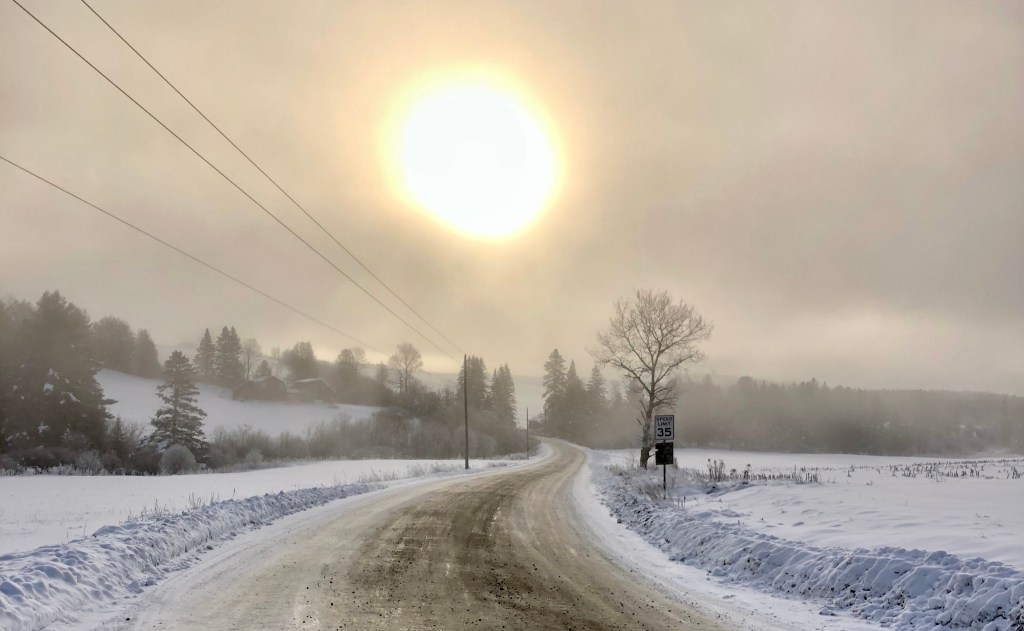
A woman steps out of Positive Pie on Main Street with a stack of pizza boxes and nearly bumps into me. Late afternoon, and a rainy twilight has gradually thickened all day. I’m walking home from a reading at the town Memorial building by an author who’s published a historical novel about Hardwick. Decades ago, when this town shifted from broke-back subsistence farming to the granite boom, the town fiercely debated the railroad construction (why let in the outside world?) and the economics of electricity and streetlights. Now, not so many years later, the tracks are torn up, the roads paved, the granite empire crumbled.

This afternoon, the streetlights are on early, the colored lights glowing at this junction of routes 14 and 15.

The woman with the pizzas asks me to open to her car door. I step off the sidewalk curb, breathing in the scent of garlic and bacon. Before she gets in the driver’s seat, she stands for a moment overlooking the colored lights and river. “December,” she remarks — that’s all — and then gets in and drives away.

In the brick courtyard, the kitchen staff is getting high, wearing t-shirts in the strangely balmy air. December: this descent into the amorphous darkness with no clear edges. Long after the stranger has disappeared, I stand beneath the building’s overhang while rain falls and light ripples across the wet world.

The Whole World.

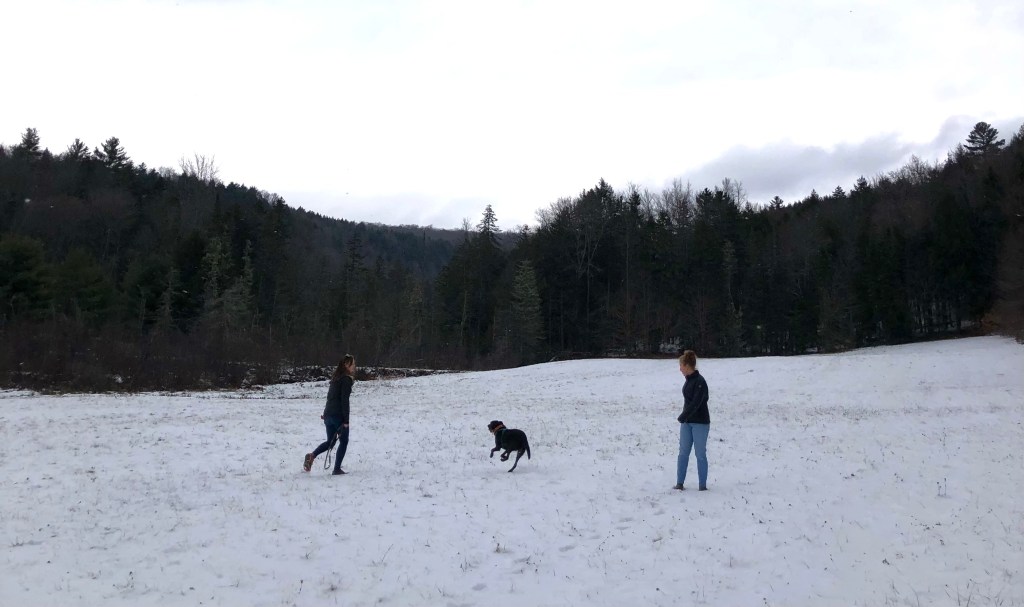
In the beaver dam realm, we spy the quicksilver flash of wet fur, bright eyes. The ice there is thin, barely beginning its winter’s work. We cross the snow-shallow field, then head into the woods and cut down again where the swamp lies in the fold between two hillsides, ghostly in its black-water, dead tree beauty. Then up, up, up we trudge, the dogs eager. We find bootprints in the snow, a few drops of blood from a wounded prey, and then we’re back again to the dirt road. All day, the light seems like twilight, and then we pass through twilight and into the night, and still we’re awake, talking, circling back to the same old subjects. In the morning’s dark, I scrape ashes from the stove and carry out the hot bucket. My brother stands on the porch, watching his dog nose at my herb garden. The damp rushes at my face.

“Like Maine,” I say.

“Yeah,” my brother answers. “But it’s Vermont.”

Happy Thanksgiving, wherever you might be.

“Assurance”

You will never be alone, you hear so deep a sound when autumn comes. Yellow pulls across the hills and thrums, or in the silence after lightning before it says its names — and then the clouds’ wide-mouthed apologies. You were aimed from birth: you will never be alone. Rain will come, a gutter filled, an Amazon, long aisles — you never heard so deep a sound, moss on rock, and years. You turn your head — that’s what the silence meant: you’re not alone. The whole wide world pours down.

— William Stafford