Here’s one (not particularly recommended) way to approach a holiday meal: a couple of years ago, I had a harvest lunch/Thanksgiving meal at my daughter’s nice elementary school. Afterward, an older student read a story aloud about, naturally, the original Thanksgiving. At the end, the child read the last page, an addendum likely tacked on, of historic American dates. That’s when I should have just quietly walked out. From there on, as the girl read in her clear, sweet voice, in that sunny room filled with such decent and well-meaning people, I sat there brooding, History is a brutal business.
And yet.
Last night, the too-warm winds of this too-warm November blowing grit in our eyes and mouths, my daughters and brother and I stood beneath the full moon in her radiant splendor. The moonlight flowed so rich and bright that it pooled in reflections around the house: in a pile of windows, a car’s hubcap, the neighbors’ house distantly through the leafless forest.
At times, I remind myself to assess my strengths, get a read on my bearings. There’s no quibbling history is a nasty and bloody story, but this same ethereal moon outdistances the human saga, this heavenly body present for those famous Pilgrims, and long, long, long before that, too.
Leave the door open for the unknown, the door into the dark. That’s where the most important things come from, where you yourself came from, and where you will go.
– Rebecca Solnit
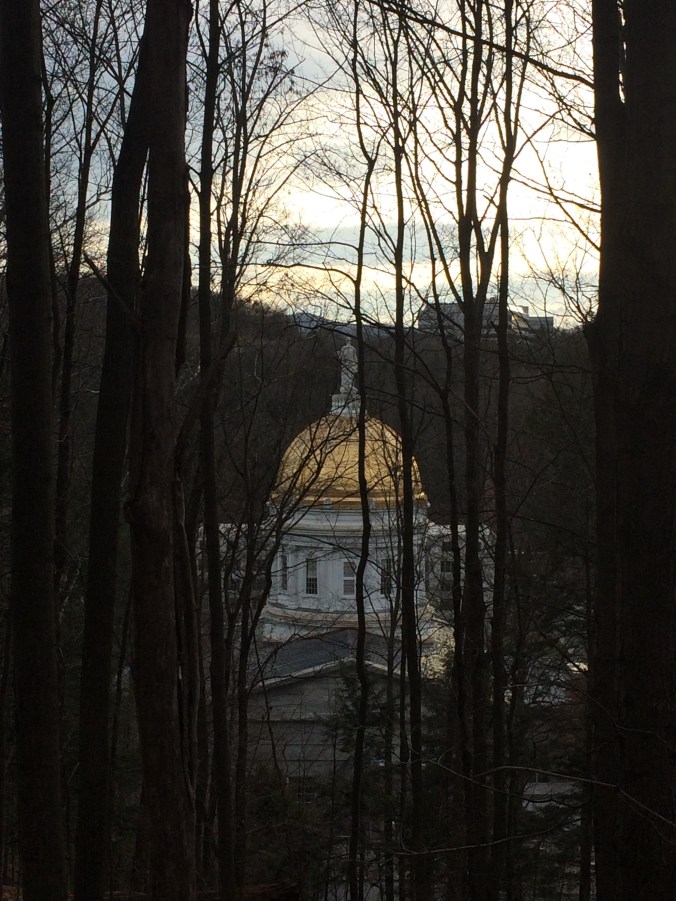
Montpelier, Vermont/photo by Molly S.
 Stony Soil Vermont