Half Moon

I step around the barn in the twilight and see the half moon shimmering above the barn’s back corner, like a surprise.

I empty the ash bucket and set it on the cement step, waiting for my daughters and our twilight walk, as the dusk shakes down.

A year ago, my oldest was in New Mexico, visiting my parents and hanging out with my brother and his girlfriend. After a wild wind and rain storm, the power went out, and my youngest and I ate take-out by candlelight. Always, at this time of year, as the days perceptibly shorter, I realize how profoundly cold and dark has wound into my life, spread physically and metaphorically into the life I’ve shaped as a woman and a mother.

What’s different this year is the collective darkness of disease as the rates of Covid increase around our little world, of the unraveling political world relentlessly marching along.

And yet — there’s that ancient silent moon.

My daughters are laughing as they walk towards me.

What? I ask.

They look at each other again, and my oldest says, Nothing, Mom, and then they laugh again.

“I am more convinced than ever that we are shards of others.”

— Jenn Shapland, My Autobiography of Carson McCullers
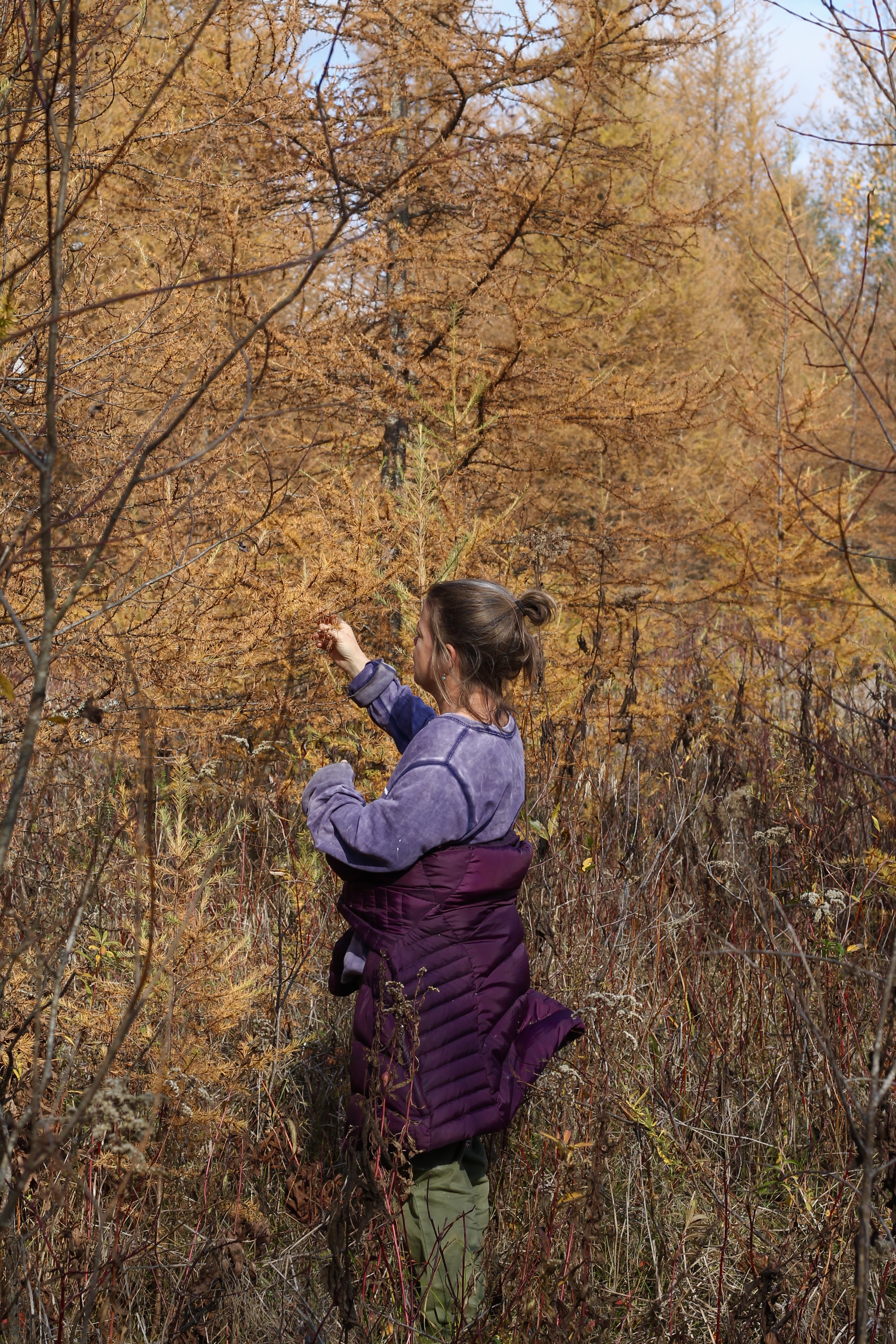
Photo by Molly S.

Starting Stick Season

At the end of our dead-end road, my neighbor and I call to each other, checking in, seeking news.

Their 5-year-old loves kindergarten, cut his own hair, lost his first tooth, and is learning to read.

My neighbor laughs at all this, holding a giant box of diapers. When they came down with a cold, he and his wife had to get a Covid test — negative! hurray! — and daycare has been screwed up as their provider had to get her own Covid test.

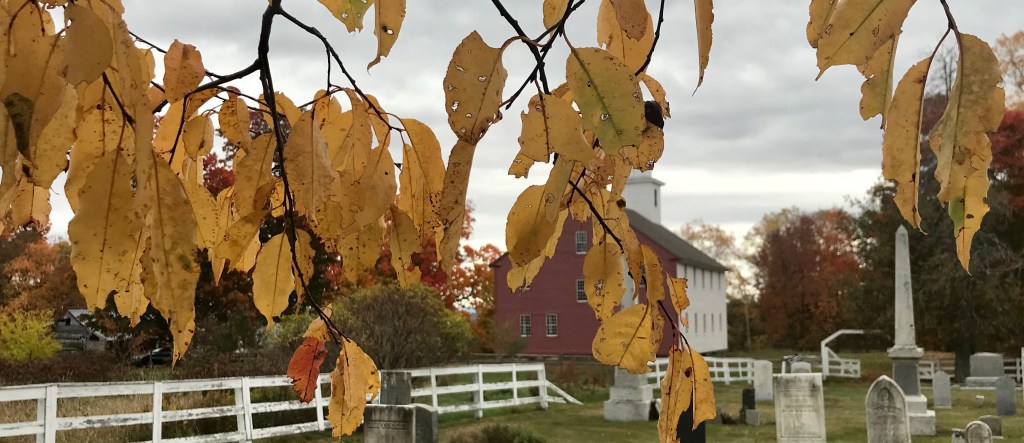
The old lilac bushes surrounding our houses turned a particularly pretty shade of gold this year, but those little leaves have fallen now. Across the cemetery from our two houses, one sugar maple determinedly holds its leaves, a shimmering reflective pool for sunlight in the afternoon.

And so life goes on.

The kindergartner jumps down the front porch steps, sees me, and points into his mouth. See!

From my distance, I nod and cheer. And so Saturday goes.

A few words

In the middle of a rainy morning, I was at the muddy dead-end of a road, listening to a passionate young man who’s taken over the family farm, as he explained an argument he’s had with the road crew and plowing.

Over his shoulder, I stared at a line of tamaracks, their feathery branches ignited autumn gold.

What? he asked, seeing I wasn’t listening.

Tamaracks, I nodded.

He glanced over his shoulder for a moment, and then kept on with his explanation.

Let this be the silent word of the day: tamaracks, and their silent gold.

It should not be denied… that being footloose has always exhilarated us. It is associated in our minds with escape from history and oppression and law and irksome obligations, with absolute freedom…
― Wallace Stegner

Maple and ash, old quarry site, Woodbury, Vermont

The Obvious

In a terrible mood on Friday afternoon, I’m driving too fast through town when I round a corner and see a rainbow spread over Hardwick.

The arc shines so brilliantly and near I imagine I can reach out and touch its particularly vibrant green. I pull into the Village Market, and a woman I know gets out of her car, wearing a mask, too. For a moment we stand there, marveling, then walk towards the market door.

Another woman — vaguely familiar to me, in the way of small town Vermont — is loading her car with groceries. My companion and I urge her to go see the rainbow; it’s just a few steps around the building.

She shakes her head, saying she can’t see it.

But we insist and walk those few steps with her. The rainbow by then has morphed into a double arc. Then, as we watch, the rainbow fades.

Over her mask, the woman looks at us and says, “Well, that’s a nice thing after all today. Something good.”

October 5. So much more winter to come. Watch for rainbows.

It was the Rainbow gave thee birth,

And left thee all her lovely hues;

“The Kingfisher” by William Henry Davies

Goodness

This morning, hearing news of the Trumps’ positive test results, I think of where I was just a few hours ago, on a hillside in Greensboro.

The Nature Conservancy owns pieces of land all around where we live, some unmarked, others with a trailhead and sign, beckoning in the curious foot traveler.

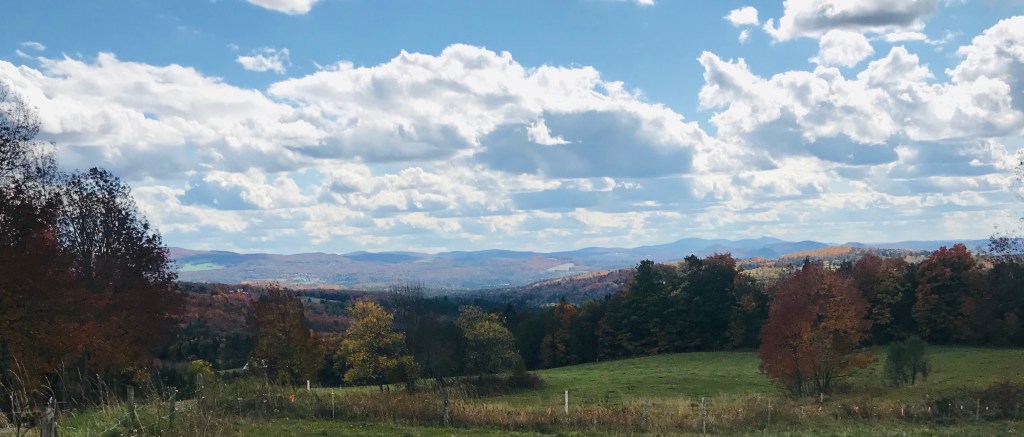
At Barr Hill yesterday, I didn’t have time to walk that short loop, but paused to admire the view, the little crickets leaping over my shoes. A couple, seeing me, put on their masks, got into their car, and drove away. So for a little while, it was just me and the postcard-stunning autumn — yellow and red mountains, the shining patch of lake, the sky.

The land was donated years ago by a local family. In Greensboro, there’s deep channels of money, its origins often hidden — “old money” — and in Greensboro, too, there’s runnels of poverty, far away from the lake’s summer wonderland, but just as real and alive.

Whatever happens with the Trumps, the virus will go on, until it’s finished, one way or another. But all through this time, these long months and what will inevitably stretch ahead, my daughters and I have gone into the wilderness around us. At the library where I work, often these days I walk along the wetlands, even just for a handful of minutes, breathing in.

Try to do some good in this life, I think. Keep land open. Write a book. Teach a kid to read. Use what’s at hand…

“If you want to live, it’s good to be friendly.” 

― Art Spiegelman, Maus

Pastimes

I wake before dawn thinking of shuffleboard and listen to the rain pattering.

It’s Wednesday, and my high school daughter is home today. With high school in session two days a week, she’s patched together a strange schedule. Yesterday, she walked to school around ten (skipping the idiocy of study hall in the gym), had algebra and driver’s ed, and spent the afternoon playing soccer.

I lie in the dark, grateful beyond grateful for soccer.

When her father and I divorced, I kept thinking, my god, we need to do better for this girl. So it goes with school this year. Really? I keep thinking. Is this the best I can do?

I remind myself, again, that I’m part of the problem. At 15, she’s stepped into a kind of college schedule, coming and going, utterly responsible for her own work, burrowed on the couch with her school-issued Chrome book, determined.

The truth is, the best has long since slipped out of vision. Hence, perhaps, the appeal of a shipboard game, hours of leisurely chat, surrounded by the glittering sea.

I’m not about to get that shuffleboard option. I rise and feed the hungry cats, brew coffee and open my laptop.

Rain falls steadily — a welcome sound. The chaos of the world is clamoring loudly. Meanwhile, my daughter leans into her work. I brew more coffee. Day by day — the only way to parent.