Mad World, Abundant Wildflowers.

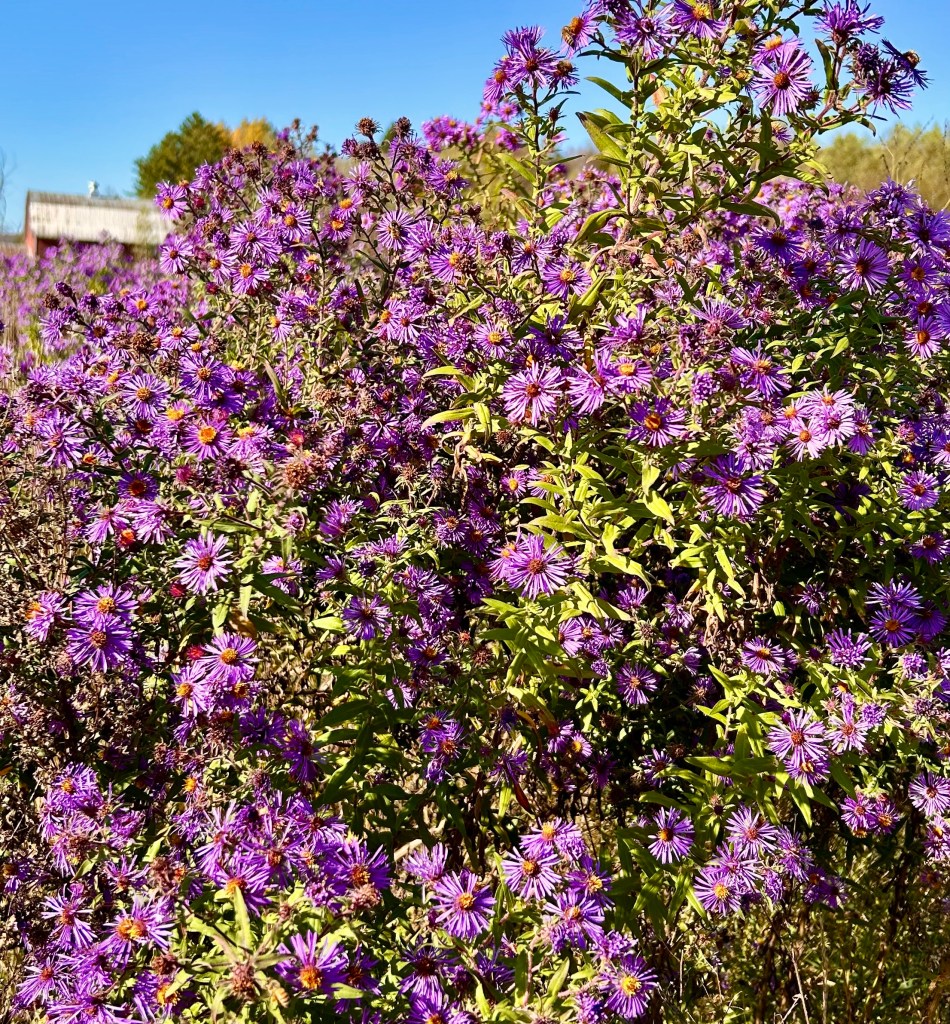
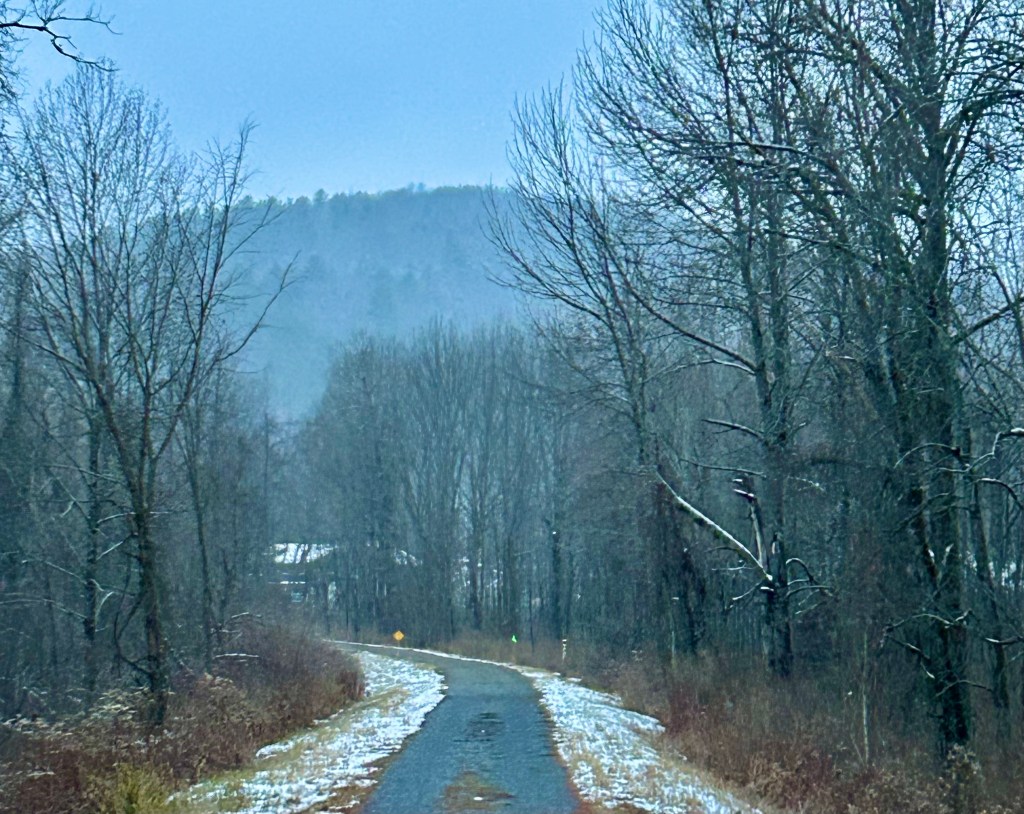
For no particular reason, I walk on the path along the river which leads to the road where I once lived. In the meadows and beside the trail, the wildflowers blossom abundantly: yellow toadflax and pink asters, bluets and Black-eyed Susans, cinquefoil.

I dawdle at the dirt road. At a turnout, long ago I had a carpool meeting spot. Over the years, my daughters and I passed hours there. In the afternoons, I lingered with my friend, the girls lingered with their friends. The girls played in a brook. The fields have been used for hay, vegetables, seeds, THC. In the past few years, the flooding river dumped sand in these acres. Burdock and thistle claim this terrain now. These fields are for sale again.

A few pickups zoom by. When my ex and I were splitting up, we’d meet here, too. I’d run down the mountain road and leave the girls at home, baking cookies or riding bikes. In my then-husband’s truck, we’d argue about our lives. That autumn as an early dusk washed in, I leaned my head against the truck window and watched two coyotes running across the field. He kept talking and talking and I kept thinking about our daughters who would be hungry for dinner. Someone else lives in that house now. Our lives have long ago moved on.

A friend pulls up, and I get in her car. We talk about kids and aging parents, about money and oranges. The world around us is falling apart. What we see now might be just the cracks of a shifting society. Yet, our lives spin on. My friend and I keep talking and talking. Children grow up. The fields’ bounty changes. I no longer live a few stones’ throws down an empty road from this friend, but how I love her.

I walk back slowly on that trail, under the cool shading trees. Chicory, knapweed, Canada lily. In the covered railroad bridge, I pause in its interior dimness, light at either end. There’s no one around at all. I soak it in.

The heart’s actions
are neither the sentence nor its reprieve. 

Salt hay and thistles, above the cold granite. 
One bird singing back to another because it can’t not.

~ Jane Hirshfield

“… hard wind and the rain that unsettled the creek…”

Evening, I linger on the porch swing, talking with my siblings as the long July day ebbs down to twilight. My neighbor texts me that a bear’s been seen in our neighborhood. As the gloaming, like a tide, washes in, I water the tomato plants. The white hydrangeas hover like magical pompoms in the dusk.

July, Vermont’s growing month. Walking with my neighbor, she points out the height of the wild grasses and flowers around her house. Already, this summer, taller than she’s ever seen. The heat and the rain have propelled immense growth. The box elders rub my house; I’ll need to ask another favor from someone with a saw.

I have not forgotten this winter when I drifted from one variation of cold to another, my body and mind fiercely bent to the intertwined goal of finishing cancer treatments and remaining alive. On the other side, what remains is what plagued me before, my own variation of hard wind and rain. And yet, a whole July hangs like a promise: sunshine all day, pink cottage roses, laughter with my neighbor about the burgeoning woodchucks.

In the late afternoon, I take a long walk in the town forest to the reservoir’s edge. Deer prints press into the mud. On this walk, I don’t see a soul. In the distance, children call to each other.

“Kitchen Sink”
Today she would change nothing,
not even the wallpaper peeling,
like dead bark. Nor, outside, the shadows
approaching the yard where ants
toil like women in their houses of sand.
Never mind that the sun will be setting.

When she was young she felt afraid
of hard wind and the rain that unsettled the creek.
But the earth never left her,
not once did the floods reach her feet.
The reward of a long life is faith
in what’s left. Dishes stacked on a strong table,
Jars of dried beans. Scraps of cloth,
And the ten thousand things of her own thoughts,
Incessant as creek water. She has been able
to lay up her treasures on earth,
as if heaven were here, worth believing.
In the water her hands reach
like roots grown accustomed to living,the roots of the cat-briar that hold to the hillside
and can never be torn free of this earth completely.

~ Kathryn Stripling Byer

Small Kindnesses.

Writing a novel, you pay attention to action. What are the characters doing? And why? At the midpoint, the action often switches; the protagonist ceases to react and, instead, acts — and not without mishap, without complications.

I’ve long thought of labor as a metaphor. The mother’s cervix dilates (helped, sure, by walking, by receptivity), followed by the uncertainty of transition just before the mother engages in the pushing phase, the brief or lengthy or sometimes stigmied phase of bringing this child into the world.

I’m in the transition phase again in my life, beneficiary of cancer treatments and so much medical care. Mornings this winter when I woke, I began each day with a survival mindset; I would endure my body’s illness. Now, June, the birds wake me, the feathered creatures intend on nest-building, procreation, survival, maybe the joy of communal singing. In the garden, the tithonia abruptly deepen their green, expand their leaves. The hydrangeas sprawl into a fortress.

At my desk, I lean into my day’s work, hours and hours unspooling.

Late afternoon, my friend arrives with her little girl, and the three of us walk in the cool town forest. The child removes her shoes and runs over the pine-needle-spread paths. She buries her bare feet in the shallow stream’s mucky mud. Yes, June…

Mostly, we don’t want to harm each other.

We want to be handed our cup of coffee hot,

and to say thank you to the person handing it… 

We have so little of each other, now. So far 

from tribe and fire. Only these brief moments of exchange.

What if they are the true dwelling of the holy, these

fleeting temples we make together when we say, “Here,

have my seat,” “Go ahead — you first,” “I like your hat.”

~ from “Small Kindnesses” by Danusha Laméris

“Where are you going?”

Photo above taken in a courtyard garden at Dartmouth-Hitchcock. Inside the building, there’s a short flight of stairs to a sunroom. Glass doors lead to the garden. Much of this winter, I couldn’t walk those half-dozen steps. When I finally could, I proofread my daughter’s college essays in the sunroom. We stared out at the blowing snow and wondered what grew in the spring garden.

Today, mid-June, an appointment of good news. The Good Doctor reminds me that I’ve finished treatments, that I’m in remission. Go on and live your life. Gain weight and muscle.

I’ve been so far out of the everyday world that, after this appointment, waiting in a gas line, seems like a small event. For some reason, I remembered the gas station a few miles from my father’s house in Santa Fe, New Mexico. On a random summer morning, I pumped gas and then stood for a moment, breathing in the spiciness from the station’s kitchen vent and staring up at the flawlessly blue sky. The desert’s hot breath touched my cheeks, my hands, my bare knees – at once so familiar to me (my birthplace the New Mexican desert) and enchantingly unknown. The day lay before us like a pie that could be cut any which way, and the result would be enjoyable.

That’s how I felt, leaving the cancer center, walking up the stairs in the parking garage – light – as if I had shed that caul of cancer and pain. I mean nothing easy or innocent about this lightness. One afternoon when I could barely walk around the high school, I sat in a friend’s car and imagined myself as gray – my face ashen, my bones crumpling to cinders. I wondered how I would survive. In December, wandering the halls of yet another hospital, I turned around and couldn’t recognize the only other person in the hallway, my friend Jo who was even calling my name. “Brett, where are you going?”

Living with cancer taught me that we are not creatures of the mind; we live in our bodies. Cancer may return in my flesh this summer, two years from now, or never. I may perish falling down stairs, or expire as an old woman in my bed beneath a quilt my mother sewed. Any hubris I once had about eating organic brown rice and my garden’s bounty vanished this winter; mortality’s blade is ubiquitous, final.

Nonetheless, this day…

Driving home on the interstate, my daughter and I mused about hurried drives through snow to the ER, the repeated treks, northward, home, where we scrutinized roadside trees for the faintest blush of spring green. This time, my daughter pointed out patches of lupines, purple and pink and white, sure sign of summer.

You must do something to make the world more beautiful.

~ Barbara Cooney, Miss Rumphius

Wood.

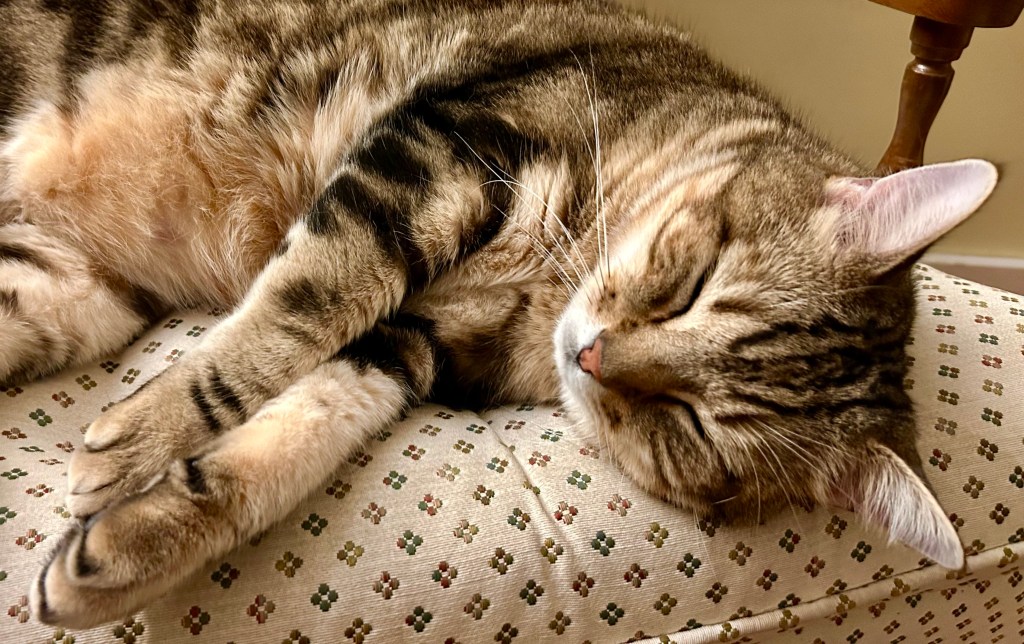
The wood man delivers cord wood not long after dawn. I’m in the kitchen with a manuscript spread over the table when I hear his truck beeping as he backs around the car my daughter left in the driveway’s middle late last night, returning from work. I lay clean spoons over my pages to keep them steady from my cat, who cares nothing about words or order.

The morning’s chilly, sunlight snagged in the crabapple blossoms, downy white.

I hand him a check, and we talk for a bit about maple sugaring and sap sugar content, about his mighty 17,000 taps, and burning wood. Can’t people remember to order their own firewood every year, anyway? He dumps the load and drives off into the rising day. Freshly split, the wood’s redolent with sweet sap, that forest scent.

Two weeks and one day out from surgery, each day I’m pulling along further. After a winter of chemo, I now have a gnash in my middle, a non-bikini scar, that renders all the more real this cancer. Nonetheless, I ordered a small $16 tree, a witch hazel. One daughter digs a hole, the other plants the tree. Healing, I’m required to restrain myself from stacking that wood, digging holes, tugging out last year’s Brussels sprout stalks that lingered all winter, blackening and rotting. My daughter rips up a stalk and shakes the soil loose. The plant’s tendril-like roots spread skyward.

Amazing, I say, what comes from a tiny seed, isn’t it?

She shakes it again, then tosses the stalk in the garden cart and moves on to the next plant.

“Tree”

It is foolish
to let a young redwood
grow next to a house.

Even in this 
one lifetime,
you will have to choose.

That great calm being,
this clutter of soup pots and books–

Already the first branch-tips brush at the window.
Softly, calmly, immensity taps at your life.
― Jane Hirshfield

Don’t these greens taste good…

My oldest daughter attended preschool for a year on the second floor of a Unitarian Church in a little village on a pristine glacial lake. The village is heavy on the white clapboard quaintness. To get to the town, we drove through acres of farm fields. In May, the fields gleamed with dandelion gold. The merry month of May: bumblebees and blossoms. Revel on…

My daughters visited me yesterday at Dartmouth, a repeat that’s become bizarrely routine — a repeated I’m determined to break. They came bearing gifts of peonies and good cheer. Sunday, we wandered through the wide and mostly empty halls. The hospital is designed to pour natural light into the building, and the sunny afternoon showed its success. We admired the blooming crabapples and wandered through garden courtyards. I gathered more reading material.

I rarely post photos of myself, but here’s me, in my daughter’s sweatshirt, in a photo snapped in an elevator. Dandelion from the youngest tucked into my zipper.

The First Green of Spring

Out walking in the swamp picking cowslip, marsh marigold,
this sweet first green of spring. Now sautéed in a pan melting
to a deeper green than ever they were alive, this green, this life,

harbinger of things to come. Now we sit at the table munching
on this message from the dawn which says we and the world
are alive again today, and this is the world’s birthday. And

even though we know we are growing old, we are dying, we
will never be young again, we also know we’re still right here
now, today, and, my oh my! don’t these greens taste good.

~ David Budbill