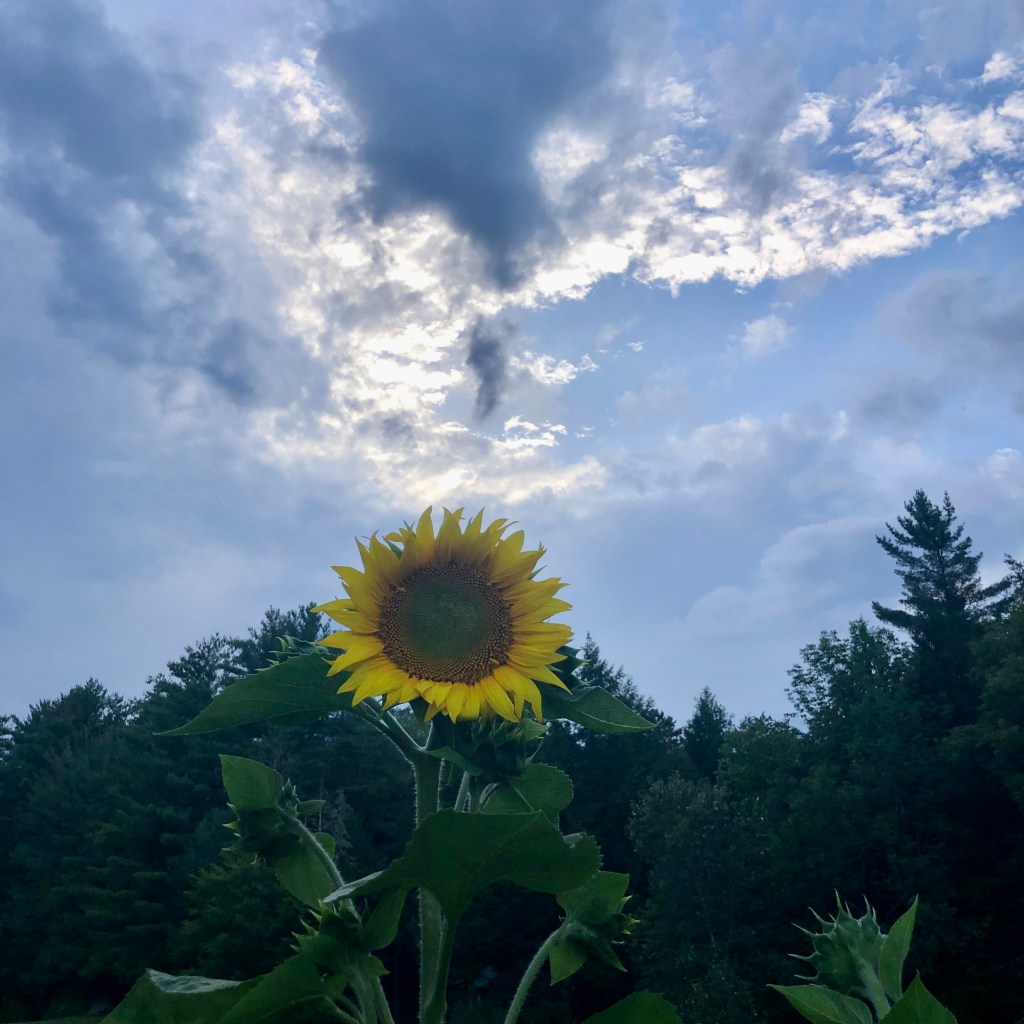
Peak Foliage, Thursday 1:35 p.m.

… or so I predict. Such a silly thing. The branches of some trees have already blown bare, others are just beginning their radiance. It’s later that the torches of tamaracks will begin.

On these stunningly beautiful autumn days, the cats and I wake early. They’re easily satisfied with a few morsels of cat food, a rub on their furry heads, a few more sticks in the wood stove. The two of them stretch on the rug before the stove, worshipping.

Daughter and I go about our day. Coffee and dishes and firewood. At night, I dream of spring peepers.

Here’s not the famous lines from Robert Frost that rattle through my mind these days. Instead, Ezra Pound:

IN A STATION OF THE METRO

The apparition of these faces in the crowd:
Petals on a wet, black bough.

— Ezra Pound

Some Miles.

So many miles passed this weekend. Two trips to Vermont’s big city of Burlington for the Green Mountain Book Festival — Saturday as a participant, Sunday as audience. One trip alone, one trip with a friend. This past summer, I put some genuine effort into what I named my own personal healing project from the isolation and sadness of the pandemic — a project I admittedly dabbled in, without real expectation of success.

Here’s what I did: I gardened, spent as much time outside as possible, swam whenever I could, slept under the stars, and basically tried hard not to care very much (or maybe be distracted) by things that don’t mean very much.

What a pleasure to be back among the literary world, where people walked in and out of rooms in the lovely Fletcher Free Library, listening to poets and writers, the young and the very old, talk about writing. In an innate kind of way, these are my people.

Outside, rain fell in a dismal September day. I’m not a cardholder at this library and have only intermittently walked through its doors. Sitting in the main reading room in my raspberry-jam-hue sweater, I could have kept listening to the stories, language pared down and muscular, judicious with adjectives, evocative of Vermont and the people living here.

Media spin notwithstanding, the pandemic hasn’t vanished. Our world has been upended. And yet we move on.

A few lines from Jay Parini who graciously read beside me this weekend:

“It is not an easy thing to alter the trajectory of your life. People have expectations on your behalf. You come to believe them yourself.” 

And, last, I’ve kindly been invited to the North Danville Library this coming Tuesday, 7 p.m.
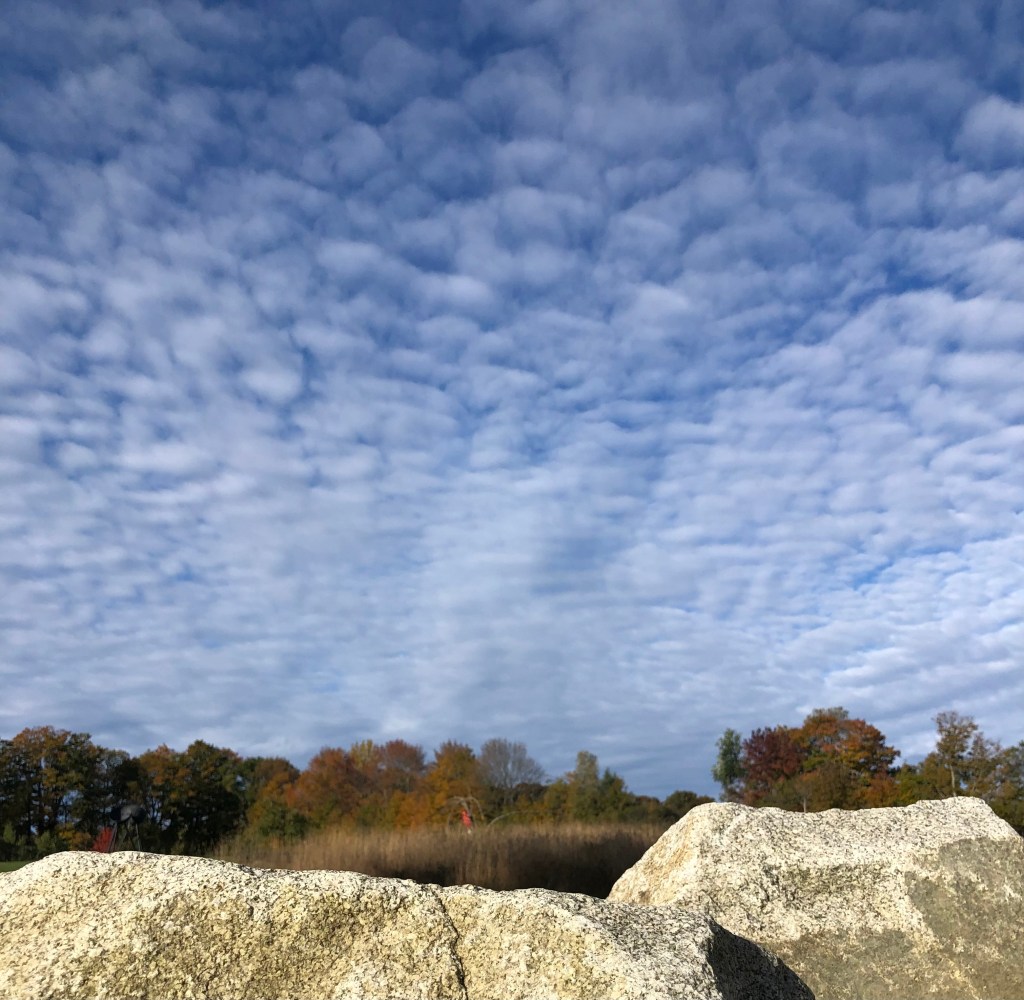
Here we are…

Above pretty much sums up where we are now. 23 years into this parenting gig, it’s now me and the teen, and if a housecat has moved into a box on the kitchen table for the winter? Well, so be it. And the other cat refuses to drink water except on the kitchen sink? Well, so be that, too.

As a young mother, I read a literal library of parenting advice and made a trillion mistakes. I take my (diminished) reading time much more seriously these days. I continue to make mistakes. And I’ve decided the cats are fine companions, even on the table.

In so many versions of my previous life, this wouldn’t fly. Now, listening to Biden talk about his proclaimed End of the Pandemic, I wonder, What’s all that about? Who gets to decide what, anyway, and why believe anyone else when your experience doesn’t jive?

Rain comes down in buckets. A friend gives us a bucket of apple drops. I cook bacon in the oven and buy the best loaf of bread I can find for our dinner. Our tomato and basil plants are still churning out their delectables. Sure, winter is in the near offing. Much more than winter, too. Our cat is the happiest creature I’ve ever loved. We offer him drops of milk on our fingertips, licks of butter from a smooth silver knife, tender kisses on his head.

As the cat
climbed over
the top of

the jamcloset
first the right
forefoot

carefully
then the hind
stepped down
into the pit of
the empty
flowerpot

— William Carlos Williams

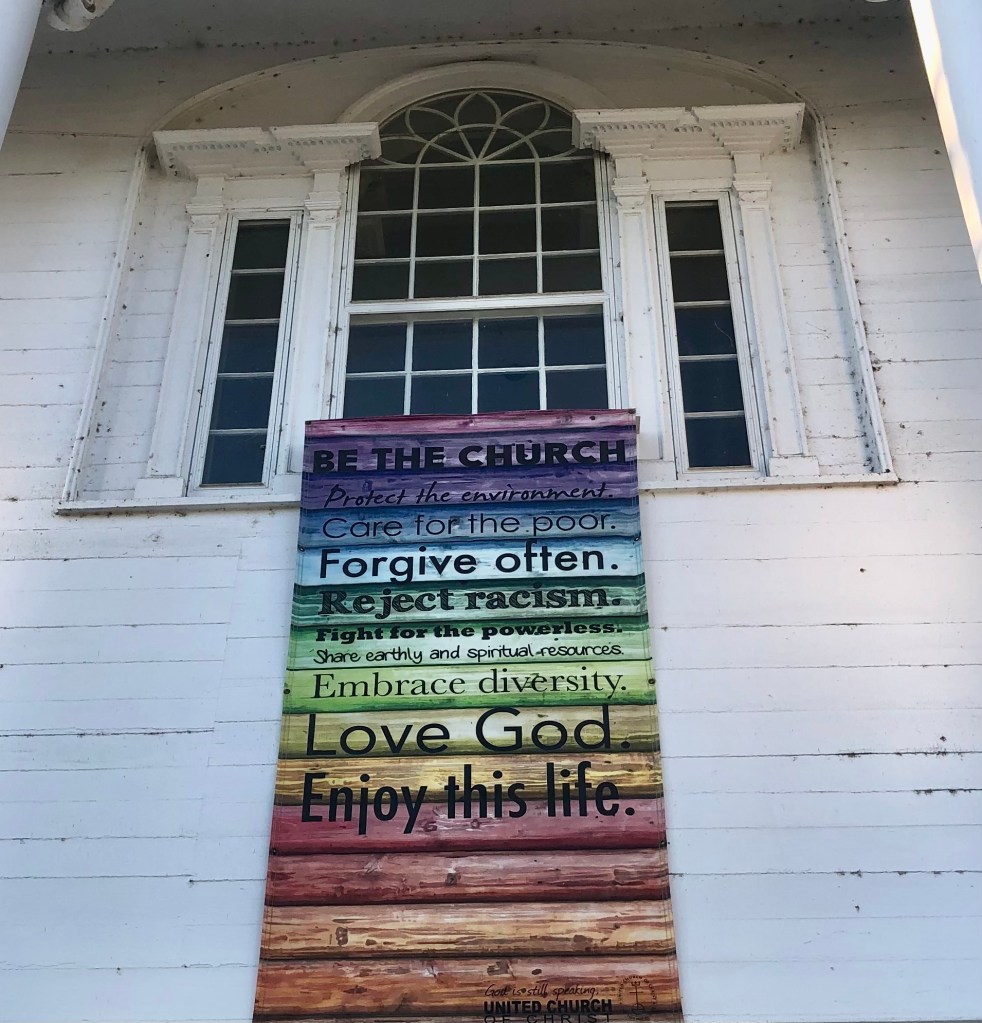
Found Sign: Enjoy this life.

Late on a Friday night, I’m reading on the couch when my oldest calls. There’s no heat, yet, in her apartment. The evening is tinged with near frostiness. I’ve returned home from an interstate drive in the darkness, thinking over the pieces of my manuscript. In my imagination, I see Lena, my main character, with her emerald green haircut.

A half-moon rises in the darkness as I drive along the Connecticut River. These days — long days — I’m grateful for these imposed breaks, for the opportunity to see the moon rise along an unfamiliar horizon, to stop before a church and read the congregation’s exhortation: Enjoy this life.

My dear cats are sprawled before our glowing wood stove. Listening to my daughter reminds me of my mother — our spunk and sassy irreverence and love of flowers — but my daughter is utterly herself. I close Beth Macy’s Raising Lazarus, and our conversation unfolds over the few miles between us. September, and the swimming season has passed. I hope for decades ahead to see what my daughter makes of her life. For now, this September evening.

... I like driving at night
in summer and in Vermont:
the brown road through the mist

of mountain-dark, among farms
so quiet...
Hayden Carruth

Four Conversations.

A local radio station asks me to call in for a morning show this week. To cut down on the background birdsongs, I dial from my glassed-in front porch and stand looking out the windows at the hydrangeas which are particularly pink this year. My cat knocks over a glass of water. The water spills around my bare foot just as the announcer patches me on.

Radio’s particularly fun because the conversation moves quickly. The mystery of our conversation — the host and I talking about things that matter — travels invisibly into people’s living rooms and studios and cars and job sites. Meanwhile, my cat splashes water on my ankles. When I hang up, a friend phones me. As I tie my shoes to head to work, we talk quickly and make a plan to meet.

At the end of the week, I’m at a soccer game, watching the girls’ team, listening to the conversation behind me. Two men talk about roadside mowing along a stretch of back road I happen to know. I think I know this stretch really well, but listening to the men and how they describe the dips in the roads, the rocks in the ditches, the proximity of houses to the road, I realize there’s plenty I don’t know about this road at all. In the hot, late afternoon, I smell the sweetness of fresh sap mingled with two-cycle oil on their clothes.

Last night, my youngest and I were talking with my brother on the phone when my oldest called. My youngest patched her in. For a few moments, the four of spoke together — from two houses and a car mired in road construction. My oldest said, I’m calling to tell you the full moon is red. We each hung up and headed out to admire the night sky.

As season come
And seasons go
The moon will always glow

— Basho

August: Complex Fatigue

On this August evening, a sparrow flies out of the wild raspberries along my walk and startles me just the slightest. Stunned a little from its flight through the leaves and small prickles, the sparrow fumbles from foot to foot on the path and then rises up on its wings and disappears. The swifts are out, too.

A downpour has fallen and the humidity has thickened right up again. I walk through the village, and folks are hanging out on porches. A three-quarters moon hangs over the empty high school soccer field, stunning. I’d write that it’s otherworldly in its beauty — but in this slow, sticky night it’s hard to imagine a sweeter world, even this one chockfull with chaos.

In the heat, tempers are either short or silly. Tomorrow is Vermont’s primary, so much fervor, and I wonder what all that might come to. In the evening, I talk to my cat, a tête-à-tête about why he cowers at the slightest noise, as if the house might be under attack by coyotes. You’re a housecat, I remind him, one of the most pampered creatures on the planet. He looks at me, poor ignorant thing that I am, and wisely keeps his ears pressed down and low like a spooked owl.

August. Time to share again one of the loveliest poems.

The world is a 

complex fatigue. The moth tries

once more, wavering desperately

up the screen, beating, insane,

behind the geranium. It is an

immense geranium,

the biggest I’ve ever seen,

with a stem like a small tree

branching, so that the two thick arms

rise against the blackness of

this summer sky, and hold up

ten blossom clusters, bright bursts

of color.

Hayden Carruth, “August First”