The Horizon’s Edge.

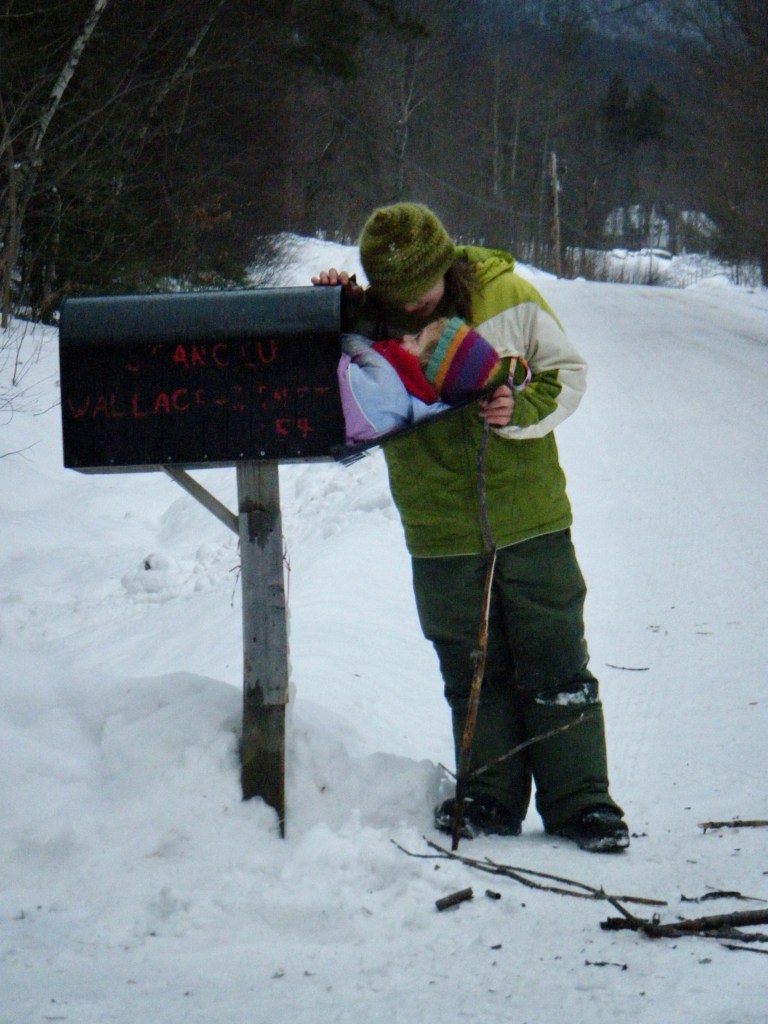
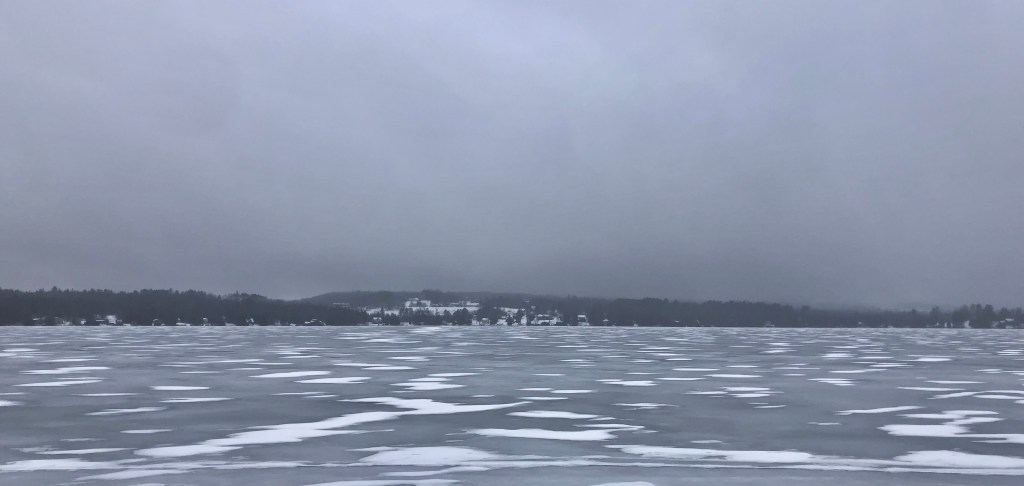
Photo by Diane Grenkow

Many years ago, one of my daughters’ playmates wandered through our sugarhouse with a huge pine branch over her shoulder. My then-husband and I were working in the kind of frantic way we often did in those days, sap-turning-to-syrup boiling fiercely in the pans. The playmate was a slight and quiet child. She moved through us and then disappeared outside again, enmeshed in whatever imaginative world.

On this below zero morning, heading towards my oldest daughter’s birthday, this photo taken by my friend comes into my email, which reminded me how much of my approach to parenting little kids was let them wander around the world. More than a few times, that seemed to have evolved into a kind of what the heck is happening now sense from the kids.

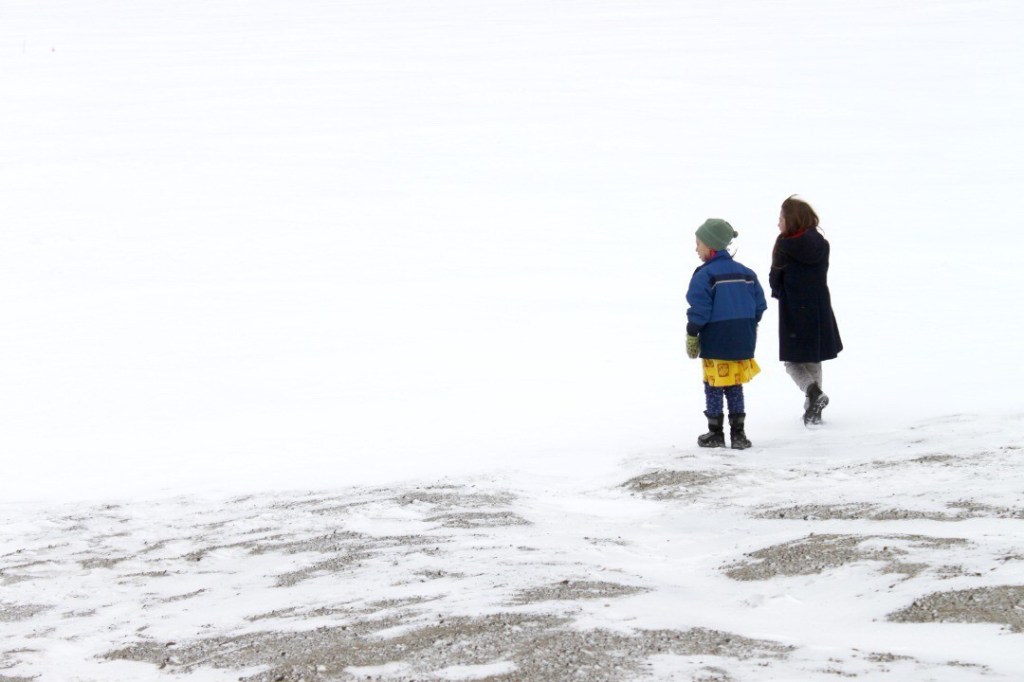
Just for the record, we swam a great deal at this beach, too, although never in the frozen months.

The horizon’s edge, the flying seacrow, the fragrance of saltmarsh and shoremud;
These became part of that child who went forth every day, and who now goes and will always go forth every day,
And these become of him or her that peruses them now.
— Walt Whitman

Midwinter.

On a Wednesday washed out of color, this mid-January has the taste of February, wet, the wind wicking up wildly then dropping down again to the sodden snow. January is the season of work, of leaning in hard to a task at hand, for pleasure, for wage, for cleanliness, for the way work sweeps us out, makes something new. In its own way, winter’s short, pinwheeling along to spring, to the radiance of summer.

Here’s a perfect poem for today.

To go in the dark with a light is to know the light.

To know the dark, go dark. Go without sight,

and find that the dark, too, blooms and sings,

and is traveled by dark feet and dark wings.

— Wendell Berry

Water. Ice. Rain. Cold. Mud.

The light is slowly returning; I repeat this to myself in defiance of the gray and brown. How bright a fresh sparkle of snow would feel.

Is it mud season? Sugaring season? Has winter barely begun? One thing that does seem evident is that cabin fever has set in extraordinarily early this year. At work, a stranger phones in and asks for info. I offer the facts, just the facts, and then the stranger remarks, What I’d really like is a small piece of good news to start the new year. I can’t resist; I laugh. I note his bar is pretty darn low. I tell him about seeing a flock of evening grosbeaks Christmas morning in the box elders behind our porch.

That’s something, he agrees. He asks me a few more questions, then remarks that he doesn’t even need to care about these questions, anyway. He could let this go. He says thank you, goodbye, and hangs up. In a strange circumstantial way, I realize I was his good news.

“Caring for each other is a form of radical survival that we don’t always take into account.” 

― Ada Limon

Glass. Packages. Blood.

My daughters spent years playing with glass containers. Sure, we also had the usual endless assortment of empty yogurt containers, the odd plastic collection, the paper cups such as the beloved Easter bunny cups (known lovingly as cups-with-bunnies), but we made and sold maple syrup for years.

At one point, wedding favors in leaf or heart bottles was a chunk of our livelihood. I made endless trips to different maple distributors, loading up the back of my station wagon and often around my daughters in carseats with cardboard boxes of glass. That 8oz maple leaf with a gold foil top? Top seller.

I packed and shipped maple syrup in the PO’s flat rate boxes. Those boxes made shipping syrup a viable family endeavor, and I knew all the post offices in my small sphere of travel. Headed to story hour at the library? I swung by the Greensboro post office. Picking up more glass? East Montpelier post office. Need bike parts? Morrisville.

I had a “well, duh,” moment this week at the post office when I weighed a package to my parents. The clerk kindly handed me a flat rate box, tape, and a mailing label. I asked for use of a pen, too, then stripped off my winter coat and hat, and went to repackaging work in the PO corner. I sliced my fingertip on the blade of the knife dispenser and bled on the label and then on my check. All those years, so many bottles filled with sand and pebbles, with colored water and concoctions of leaves and flower blossoms, and I don’t remember a single glass cut on my daughters’ little hands.

I ripped up the check I’d bloodied and wrote another, left-handed and nearly illegible.

Cutting into with the ax,

I was surprised at the scent of.

The winter trees.

— Issa

Winter Koan.

I stop in at the former Hardwick Gazette building, now turned into the Civic Standard, an organization trying to figure out itself. An acquaintance and I stand at the windows in the building’s rear, staring down at the Lamoille, where ice feathers only along the edges. The water is low enough that the rocks are mighty in the rushing current.

I drink coffee and sit crosslegged on the couch, and we talk for hours. I finally vaguely inquire if we haven’t had enough of our own words, and then we go on and on again. The building itself seems marooned in the 1970s, and even in 1972 the building likely felt stranded in 1957. An old printing press hulks beside us. One of us has an Hungarian immigrant family, and our conversation inevitably weaves in the first half of the 20th century.

December in Vermont is as good a time as any to ponder the Zen koan chop wood, carry water in the pieces of my life. Sunlight on the living room floor. Kim chi and brown rice. Reading Ruth Ozeki’s The Face on the rug.

Sunday afternoon, light snow sifts down, the sweetest gift, its fresh cold sweeping away our stale human layers of mind and emotion. I carry in an armful of wood to feed our little stove for the night. The snowflakes melt in my eyebrows. Finally, I think, finally, a scattering of snow. Then I quit thinking, close my eyes, and listen to the falling snow.

“The past is weird. I mean, does it really exist ? It feels like it exists, but where is it ? And if it did exists, but doesn’t now, then where did it go ?” 

— Ruth Ozeki

The Whole World.

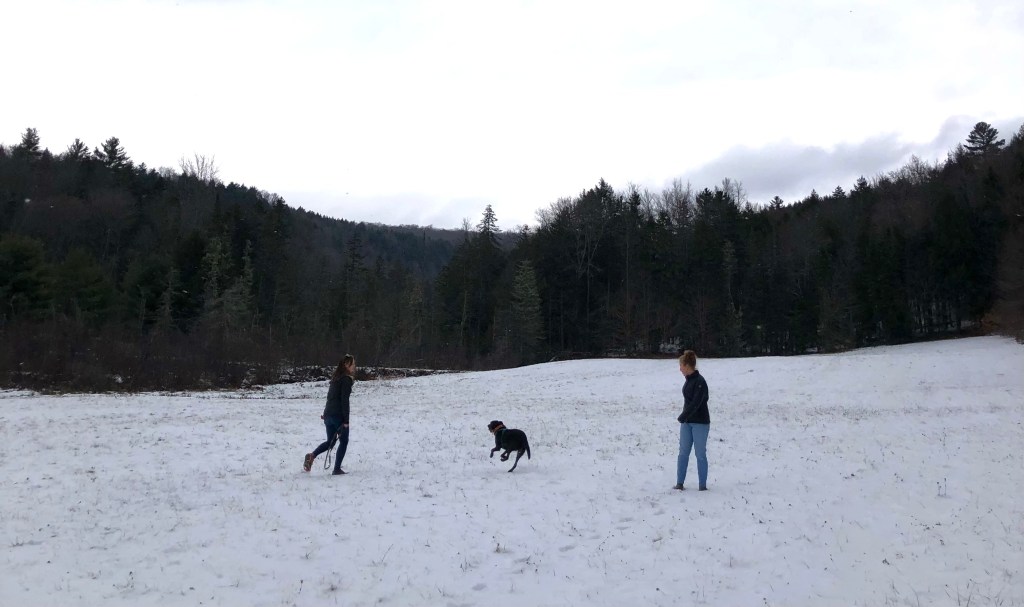
In the beaver dam realm, we spy the quicksilver flash of wet fur, bright eyes. The ice there is thin, barely beginning its winter’s work. We cross the snow-shallow field, then head into the woods and cut down again where the swamp lies in the fold between two hillsides, ghostly in its black-water, dead tree beauty. Then up, up, up we trudge, the dogs eager. We find bootprints in the snow, a few drops of blood from a wounded prey, and then we’re back again to the dirt road. All day, the light seems like twilight, and then we pass through twilight and into the night, and still we’re awake, talking, circling back to the same old subjects. In the morning’s dark, I scrape ashes from the stove and carry out the hot bucket. My brother stands on the porch, watching his dog nose at my herb garden. The damp rushes at my face.

“Like Maine,” I say.

“Yeah,” my brother answers. “But it’s Vermont.”

Happy Thanksgiving, wherever you might be.

“Assurance”

You will never be alone, you hear so deep a sound when autumn comes. Yellow pulls across the hills and thrums, or in the silence after lightning before it says its names — and then the clouds’ wide-mouthed apologies. You were aimed from birth: you will never be alone. Rain will come, a gutter filled, an Amazon, long aisles — you never heard so deep a sound, moss on rock, and years. You turn your head — that’s what the silence meant: you’re not alone. The whole wide world pours down.

— William Stafford